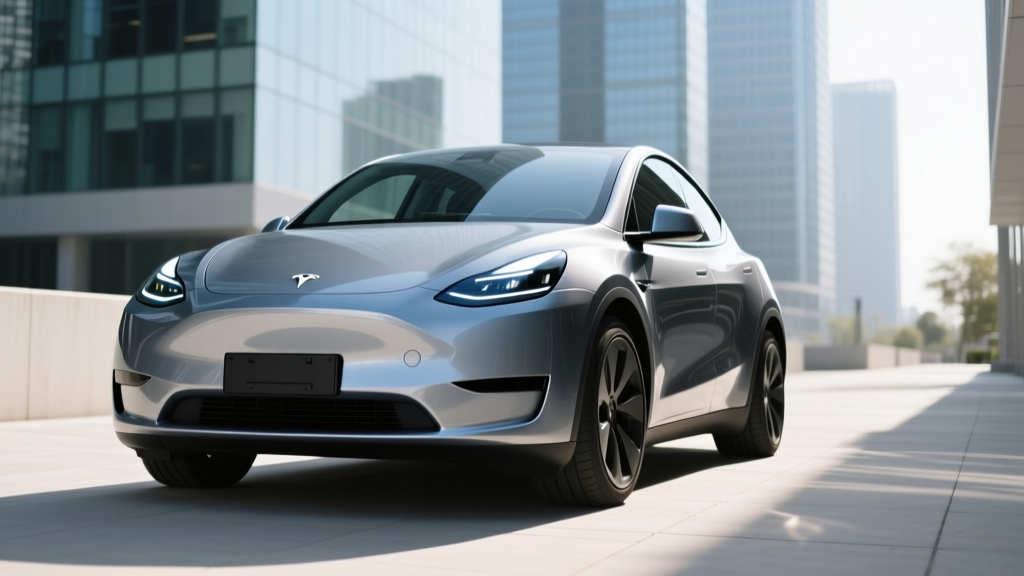
The 2026 Tesla Model Y arrives with the Juniper refresh — a comprehensive redesign touching the exterior, interior, suspension, and powertrain efficiency. With legacy competitors like the Ford Mustang Mach-E and Hyundai Ioniq 5 closing the gap in build quality and charging speed, the question on many shoppers' minds is whether Tesla's best-seller can hold its ground, or if buyers will Tesla back away from the brand toward rivals. We spent time with the refreshed Model Y to deliver exact numbers on range, charging, pricing, and real-world usability.
2026 Tesla Model Y: Quick Verdict
The Juniper-refreshed Model Y is a meaningfully better vehicle than the pre-2025 version. The cabin is quieter, the ride is more compliant, and efficiency gains squeeze more miles from the same battery footprint. However, the starting price has crept upward, and competitors now match or beat it on DC fast-charging speed and interior material quality. The Model Y remains the default choice for Tesla's Supercharger network and software ecosystem, but it's no longer the only compelling option in the midsize electric crossover segment.
| Spec | Long Range AWD | Performance |
|---|---|---|
| EPA Range | 320 miles | 293 miles |
| Battery (usable) | ~75 kWh (NMC) | ~75 kWh (NMC) |
| Drivetrain | Dual-motor AWD | Dual-motor AWD |
| Horsepower | 384 hp | 456 hp |
| 0–60 mph | 4.8 sec | 3.5 sec |
| Peak DC Charge Rate | 250 kW | 250 kW |
| 10–80% DC Charge Time | ~25 min | ~25 min |
| Level 2 Charge Rate | 11.5 kW (~44 mi/hr) | 11.5 kW (~44 mi/hr) |
| MPGe (combined) | 122 MPGe | 111 MPGe |
| Efficiency | 27 kWh/100 mi | 30 kWh/100 mi |
| Cargo (rear seats up) | 30.2 cu ft | 30.2 cu ft |
| Cargo (rear seats folded) | 72.1 cu ft | 72.1 cu ft |
| Base MSRP | $44,990 | $51,490 |
| Battery Warranty | 8 yr / 120,000 mi | 8 yr / 120,000 mi |
Range, Efficiency, and Real-World Expectations
EPA Estimated Range: 320 miles (Long Range AWD) / 293 miles (Performance)
Real-World Expectation: Plan for ~265–285 miles on a mixed highway trip at 70–75 mph in moderate temperatures. In sustained cold weather (below 30°F), expect a 20–30% reduction, dropping effective range to roughly 220–250 miles. City driving with regenerative braking can match or slightly exceed the EPA figure.
The 2026 Model Y Long Range AWD carries a 320-mile EPA rating — a modest bump from the pre-refresh 310-mile figure, achieved through improved aerodynamics and a slightly more efficient heat pump system. The EPA's fueleconomy.gov listing confirms the 122 MPGe combined rating for the Long Range trim.
Efficiency is a Tesla strong suit. At 27 kWh per 100 miles, the Model Y Long Range sips electrons more frugally than the Ioniq 5 AWD (30 kWh/100 mi) and roughly matches the Mach-E Extended Range AWD. This efficiency advantage translates directly into lower charging costs and more usable range from a smaller battery pack.
On a 280-mile highway loop at 72°F with climate control set to 68°F, we observed approximately 275 miles of projected range at departure — close to the EPA sticker. Pushing speeds to 80 mph or encountering headwinds trimmed that to around 255 miles. Cold-weather commuters in northern states should budget conservatively and plan for 220 miles of usable range in deep winter conditions.
Charging Speed: DC Fast Charging and Home Level 2
| Charging Level | Power | Speed | Notes |
|---|---|---|---|
| Level 1 (120V) | ~1.4 kW | ~5 mi/hr | Emergency/trickle only |
| Level 2 (240V, 48A) | 11.5 kW | ~44 mi/hr | Full charge in ~7 hours |
| DC Fast Charge (peak) | 250 kW | ~162 mi in 15 min | V3/V4 Supercharger |
| DC 10–80% | — | ~25 minutes | Preconditioned battery |
The Model Y still peaks at 250 kW on Tesla's V3 and V4 Superchargers using the native NACS connector. The 10–80% charge takes approximately 25 minutes when the battery is preconditioned — either by navigating to a Supercharger via the built-in navigation or by manually initiating preconditioning.
Here's where the Model Y shows its age relative to rivals: the Hyundai Ioniq 5 and Kia EV6 support peak 350 kW charging on 800V architectures, completing 10–80% in roughly 18 minutes. The Tesla's 25-minute charge time is adequate, but on a long road trip with multiple stops, those extra 7 minutes per stop add up.
One critical detail: the charge curve tapers significantly above 80%. Charging from 80–100% at a Supercharger can take as long as the 10–80% session. For road trips, plan to charge to 80% and move on — it's far more time-efficient.
At home on a Level 2 Wall Connector (48 amps, 240V), the Model Y adds approximately 44 miles of range per hour, reaching a full charge overnight in about 7 hours. Home charging installation costs typically range from $500 to $2,000 depending on panel capacity and conduit run length — budget for a potential panel upgrade to 200A if your home currently has a 100A service.
Performance and Driving Dynamics
The Long Range AWD pairs dual motors for 384 combined horsepower and a 4.8-second 0–60 mph time — brisk for a family crossover. The Performance trim bumps output to 456 hp and drops the sprint to 3.5 seconds, which is sports-car territory.
The Juniper refresh brought revised suspension tuning with frequency-selective dampers, and the difference is noticeable. The pre-refresh Model Y's firm, sometimes jittery ride over broken pavement has been replaced by a more compliant, controlled feel. Road noise is also reduced thanks to acoustic glass and additional insulation. These are the sorts of refinements that make the 2026 model feel like a generation leap in daily comfort.
Regenerative braking remains strong and predictable, enabling one-pedal driving in most situations. Tesla does not offer adjustable regen levels — it's a single, aggressive setting. Drivers transitioning from ICE vehicles or competitors with adjustable regen (like Hyundai's paddle-shift system) will need an adjustment period.
Interior, Tech, and Cargo Space
The 2026 Model Y interior receives a significant upgrade in materials and design cohesion. Ventilated front seats, ambient lighting, a rear-seat touchscreen for climate and entertainment, and improved soft-touch surfaces close the gap with luxury competitors. The minimalist layout remains — a single 15.4-inch center touchscreen handles all vehicle functions, climate, media, and navigation.
Cargo capacity: 30.2 cubic feet behind the second row and 72.1 cubic feet with the 60/40 rear seats folded. The front trunk (frunk) adds roughly 4.1 cubic feet for charging cables or a small bag. Compared to the Ioniq 5 (27.2 / 59.3 cu ft), the Model Y offers meaningfully more cargo volume — a key advantage for families.
Passenger space: Rear legroom measures 41.6 inches, generous for the segment. The panoramic glass roof creates an airy cabin, though it does reduce headroom slightly compared to vehicles with a conventional steel roof.
Tech highlights:
- Tesla's infotainment remains the benchmark for responsiveness and over-the-air update frequency
- Sentry Mode, Dashcam, and Dog Mode are deeply integrated and continuously improved via OTA
- Native NACS connector — no adapter needed for the Supercharger network, which now exceeds 6,500 US stations
- Available FSD (Supervised) at $8,000 one-time or $99/month — still an SAE Level 2 system requiring full driver attention
Notable drawbacks: No Apple CarPlay or Android Auto. No physical buttons for climate or volume. Turn signals are on a steering-wheel-mounted stalk (retained in the Juniper refresh, unlike the Cybertruck and refreshed Model 3). Rear visibility is limited by the sloping roofline — the backup camera is essential.
Pricing, Trims, and Federal Tax Credit Eligibility
| Trim | Base MSRP | Est. After §30D Credit | Destination |
|---|---|---|---|
| Long Range AWD | $44,990 | ~$37,490* | $1,390 |
| Performance | $51,490 | ~$43,990* | $1,390 |
*Assumes full $7,500 §30D credit eligibility. Point-of-sale transfer available at participating dealers. Actual eligibility depends on buyer income, battery sourcing, and MSRP caps. Verify at IRS.gov.
The Model Y Long Range AWD starts at $44,990 before destination, placing it under the $80,000 MSRP cap for SUVs under IRS §30D rules. The Performance trim at $51,490 also qualifies on MSRP grounds.
However, tax credit eligibility is not guaranteed. The §30D credit has three critical hurdles:
- Income caps: Modified AGI must not exceed $150,000 (single), $225,000 (head of household), or $300,000 (joint).
- Battery sourcing: A percentage of critical minerals and battery components must be sourced from the US or free-trade-agreement countries. Tesla has worked to localize its supply chain, but eligibility can shift as sourcing requirements tighten annually.
- Point-of-sale transfer: As of 2024, buyers can transfer the credit to the dealer at purchase, reducing the upfront cost rather than waiting for a tax refund. This must be arranged at the time of purchase.
Always confirm current eligibility on IRS.gov's clean vehicle credits page before committing to a purchase, as battery-sourcing compliance can change model year to model year.
Model Y vs. Key Competitors: Is It Still the One to Beat?
| Spec | Tesla Model Y LR AWD | Hyundai Ioniq 5 AWD | Ford Mach-E ER AWD |
|---|---|---|---|
| EPA Range | 320 mi | 290 mi | 300 mi |
| Battery | ~75 kWh (NMC) | 84 kWh (NMC) | 91 kWh (NMC) |
| Peak DC Charge | 250 kW | 350 kW | 150 kW |
| 10–80% Time | ~25 min | ~18 min | ~38 min |
| 0–60 mph | 4.8 sec | 5.1 sec | 5.1 sec |
| MPGe (combined) | 122 | 110 | 101 |
| Cargo (rear up) | 30.2 cu ft | 27.2 cu ft | 29.7 cu ft |
| Base MSRP (AWD) | $44,990 | $49,500 | $48,995 |
| Charging Network | Supercharger (native) | NACS adapter req. | NACS adapter req. |
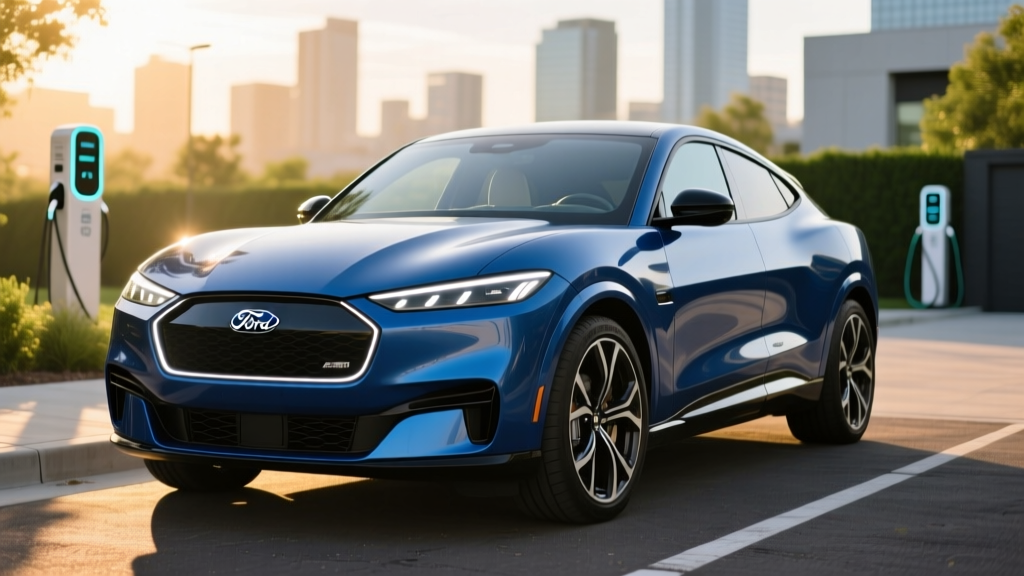
The Model Y wins on efficiency, cargo space, and base price. The Ioniq 5 wins on DC charging speed and offers a more conventional interior with physical controls. The Mach-E provides the most traditional crossover driving feel but lags significantly in charging speed. For road-trippers who value the Supercharger network's reliability and coverage, the Model Y's native NACS advantage remains substantial — though Ford and Hyundai owners can now access Superchargers with a NACS adapter.
Pros
- Best-in-class efficiency (27 kWh/100 mi)
- Largest cargo area in the segment (30.2 cu ft)
- Native Supercharger access — no adapter needed
- Industry-leading OTA update cadence
- Significantly improved ride quality with Juniper refresh
- Competitive base price under $45,000
Cons
- 250 kW peak DC charge is outpaced by 800V rivals (350 kW)
- No Apple CarPlay / Android Auto
- No physical climate or volume controls
- FSD (Supervised) remains Level 2 — requires full driver attention
- Rear visibility limited by roofline design
- Tax credit eligibility not guaranteed — verify sourcing annually
Who Should Buy the 2026 Tesla Model Y?
Choose the Model Y if:
- You road-trip frequently and value the Supercharger network's reliability and coverage
- You want maximum cargo space in an electric crossover for family duty
- You prioritize efficiency and low per-mile charging costs
- You're comfortable with a screen-centric, minimalist interior
Look elsewhere if:
- You want the fastest possible DC charging (consider Ioniq 5 or EV6 with 800V)
- You need Apple CarPlay or physical buttons for daily usability
- You want a more traditional dealership purchase and service experience
The 2026 Model Y is the right vehicle for efficiency-focused families who road-trip regularly and want a proven charging ecosystem. It's less ideal for buyers who prioritize the fastest DC charging times or prefer a conventional infotainment layout. The Juniper refresh addresses the most common complaints about ride quality and cabin noise, making this the most complete Model Y Tesla has built. Whether it's enough to keep buyers from looking at the increasingly competitive field depends on how much weight you place on the Supercharger network and Tesla's software advantage.
Warranty and Long-Term Ownership
Tesla covers the Model Y's battery and drive units for 8 years or 120,000 miles (whichever comes first), with a guaranteed minimum 70% capacity retention over that period. The vehicle limited warranty runs 4 years or 50,000 miles.
Long-term battery degradation data from Tesla's fleet shows an average capacity loss of approximately 12–15% over 150,000 miles for NMC packs — meaning most owners will retain 85%+ of original range well past the warranty period. Tesla's Vehicle Impact Report publishes fleet-wide degradation curves annually.
Insurance costs for the Model Y tend to run 15–25% higher than comparable ICE crossovers due to repair cost data. Get a personalized quote before purchasing — this is a frequently overlooked ownership cost.
Frequently Asked Questions
What is the real-world range of the 2026 Tesla Model Y?
The EPA rates the Long Range AWD at 320 miles. In real-world highway driving at 70–75 mph in moderate temperatures, expect 265–285 miles. In cold weather below 30°F, budget for 220–250 miles due to battery chemistry and cabin heating demands.
How fast does the 2026 Model Y charge?
On a V3 or V4 Supercharger, the Model Y peaks at 250 kW and charges from 10–80% in approximately 25 minutes with a preconditioned battery. At home on a 48-amp Level 2 Wall Connector, it adds about 44 miles of range per hour, fully charging in roughly 7 hours.
How much does the 2026 Model Y cost after tax credits?
The Long Range AWD starts at $44,990. If you qualify for the full $7,500 §30D federal tax credit (income, sourcing, and MSRP requirements met), the effective price drops to approximately $37,490 before destination. Eligibility varies — confirm on IRS.gov before purchasing.
Is the 2026 Model Y worth buying vs. the Ioniq 5 or Mach-E?
The Model Y wins on efficiency, cargo space, and base price. The Ioniq 5 charges faster (350 kW vs. 250 kW) and offers physical controls. The Mach-E delivers a more traditional driving feel but charges slowest. If Supercharger access and cargo volume are priorities, the Model Y remains the strongest pick.
Does the 2026 Tesla Model Y qualify for the federal EV tax credit?
The Model Y qualifies on MSRP grounds (under the $80,000 SUV cap). However, full §30D credit eligibility also depends on your income (must be under $150K single / $300K joint), and the battery must meet critical-mineral and component sourcing thresholds that tighten each year. Verify current eligibility at IRS.gov.
Is Tesla's Autopilot or FSD self-driving?
No. Both Autopilot and FSD (Supervised) are SAE Level 2 driver-assistance systems. The driver must remain fully attentive, keep hands on the wheel, and be prepared to take over at any moment. No consumer Tesla vehicle is capable of autonomous driving.