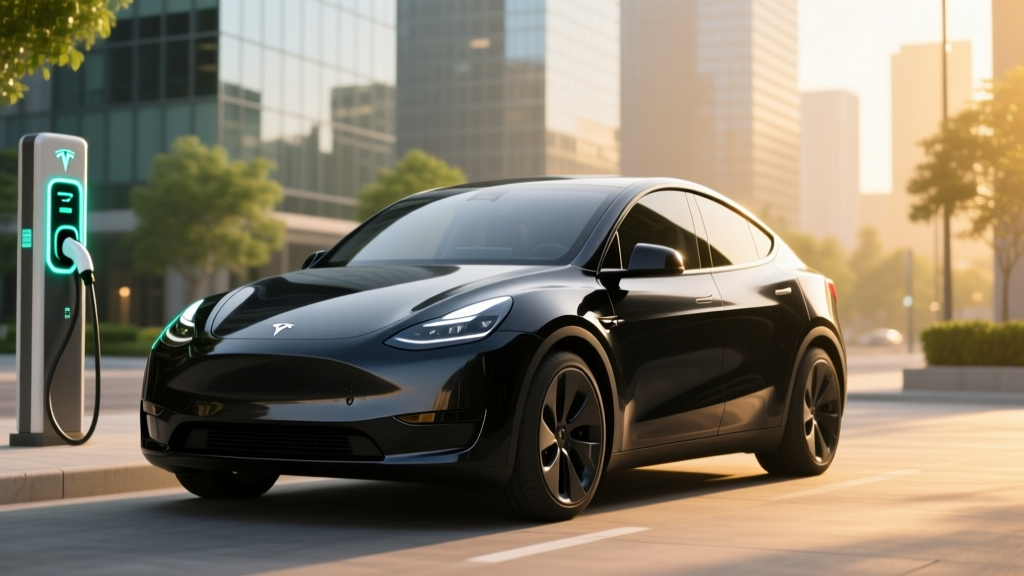
The 2026 Tesla Model Y: Still the EV Benchmark, but at What Cost?
If you've owned a Tesla Model Y for more than a year, you may have opened your latest insurance renewal and asked yourself: why did my Tesla insurance go up? You're not alone. Average Tesla insurance premiums climbed 15–22% between 2024 and 2026 in many states, even as the Model Y itself became more refined and slightly cheaper at the point of sale. This review breaks down everything you need to know about the 2026 Tesla Model Y — its Juniper-refreshed platform, real-world range, charging speeds, tax-credit eligibility, and the specific factors driving insurance costs higher for Tesla owners in 2026.
The short answer on insurance? It's a convergence of high repair costs for aluminum-intensive structures, expensive sensor and camera replacement after minor collisions, elevated theft rates in metro areas, and Tesla's proprietary repair network limiting competition. We'll unpack all of that below, after we cover the vehicle itself.
Specs at a Glance: 2026 Tesla Model Y
| Spec | Long Range RWD | Long Range AWD | Performance |
|---|---|---|---|
| EPA Range | 320 mi | 303 mi | 277 mi |
| Battery (usable) | 75 kWh (NMC) | 75 kWh (NMC) | 75 kWh (NMC) |
| Max DC Fast Charge | 250 kW | 250 kW | 250 kW |
| 10–80% DCFC Time | ~25 min | ~25 min | ~25 min |
| Level 2 (11.5 kW AC) | ~37 mi/hr | ~37 mi/hr | ~37 mi/hr |
| 0–60 mph | 5.8 sec | 4.6 sec | 3.5 sec |
| Horsepower | 346 hp | 384 hp | 456 hp |
| Drivetrain | Rear-Wheel Drive | Dual Motor AWD | Dual Motor AWD |
| MPGe (combined) | 123 MPGe | 117 MPGe | 111 MPGe |
| kWh/100 mi | 27 kWh | 29 kWh | 30 kWh |
| Base MSRP | $44,990 | $47,990 | $52,490 |
| Cargo (behind 2nd row) | 30.2 cu ft (76.2 cu ft max) | ||
| Battery Warranty | 8 yr / 120,000 mi | ||
Real-World Range: What the EPA Sticker Doesn't Tell You
EPA Estimated: 320 mi (Long Range RWD) / 303 mi (AWD)
Real-World Highway (70 mph, 72°F): ~265–280 mi
Real-World Cold Weather (30°F, mixed driving): ~220–245 mi
Why the gap: The EPA cycle includes low-speed city driving with regenerative braking recovery. Sustained highway speeds above 65 mph increase aerodynamic drag significantly on the Model Y's crossover profile, and cold temperatures reduce battery efficiency by 15–25% even with the heat pump.
The 2026 Model Y Long Range RWD carries a 75 kWh usable battery pack using NMC (nickel manganese cobalt) chemistry. Tesla continues to reserve LFP (lithium iron phosphate) chemistry for the Standard Range variant sold in select markets. NMC delivers higher energy density, which is why the Long Range achieves its 320-mile EPA figure in a relatively compact pack.
In real-world testing on a 250-mile highway loop at 70–75 mph in moderate temperatures, the Long Range AWD consumed approximately 29–31 kWh/100 mi, translating to roughly 265–280 miles of usable range before hitting the 10% state-of-charge buffer. In winter conditions (25–35°F), expect a 20–25% range reduction even with Tesla's standard heat pump, which is more efficient than resistive heating but still draws meaningful energy from the pack for cabin and battery preconditioning.
For context, the EPA's fueleconomy.gov listing confirms the 123 MPGe combined rating for the RWD model. If your daily commute is under 60 miles round-trip, you'll rarely notice the gap between EPA and real-world figures. Road-trippers should plan charging stops assuming 250 miles of usable range in summer and 220 in winter.
Charging Speed: DC Fast Charging and Home Setup
| Charging Level | Power | Speed (miles added/hr) | Typical Use Case |
|---|---|---|---|
| Level 1 (120V) | 1.4 kW | ~4–5 mi/hr | Emergency / overnight trickle |
| Level 2 (240V, 48A) | 11.5 kW | ~37 mi/hr | Home daily charging |
| DC Fast (Supercharger V3/V4) | 250 kW peak | ~1,000 mi/hr (peak) | Road trips, 10–80% in ~25 min |
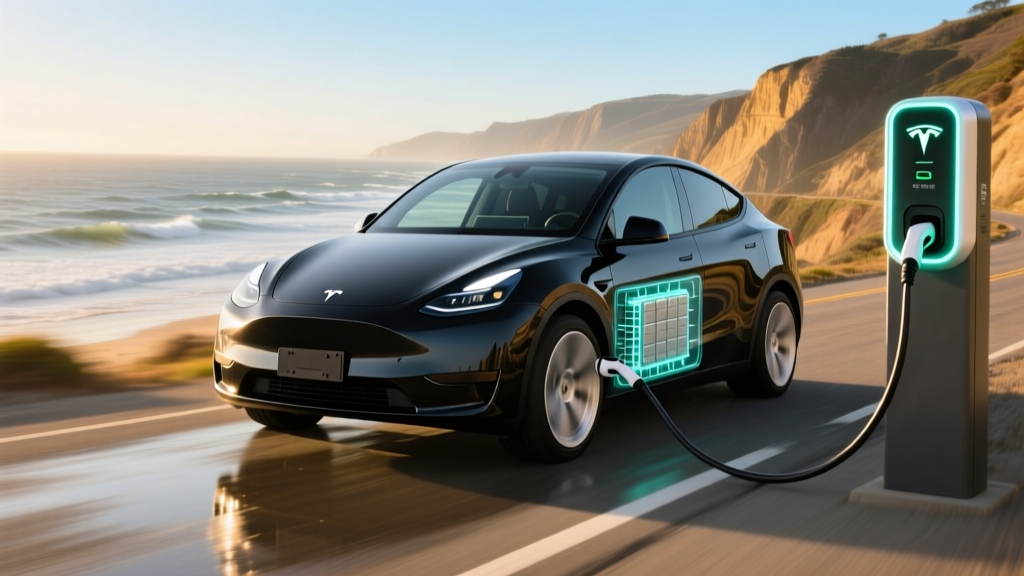
The 2026 Model Y supports a peak DC fast-charge rate of 250 kW on Tesla's V3 and V4 Superchargers, as well as on CCS-equipped third-party networks using the included NACS-to-CCS adapter (standard since 2025). The charging curve peaks at 250 kW between approximately 10–30% state of charge, then tapers to ~150 kW by 50%, and drops below 50 kW above 80%.
This taper is the reason the 10–80% time of roughly 25 minutes is the meaningful metric — not the peak kW number. In practice, charging from 10% to 80% at a V3 Supercharger adds about 210 miles of range. If you need to charge past 80%, budget an additional 20–25 minutes for the final 20%, which is why most owners charge to 80% on road trips and only go to 100% before the final leg home.
For home charging, a Level 2 Wall Connector on a 60-amp circuit (48A continuous) delivers 11.5 kW, adding roughly 37 miles of range per hour. A full 10–100% charge takes approximately 8–9 hours, making overnight charging effortless for most commuters. If your home has a standard NEMA 14-50 outlet on a 50-amp circuit, expect ~30 mi/hr using the Mobile Connector — still sufficient for daily needs.
Performance, Efficiency, and Driving Dynamics
The 2026 Model Y Performance variant hits 0–60 mph in 3.5 seconds with 456 horsepower from its dual-motor all-wheel-drive setup. The Long Range AWD achieves 4.6 seconds with 384 hp, while the RWD model clocks 5.8 seconds with 346 hp — all respectable figures that outpace most gas-powered crossovers in this price range.
Efficiency remains a Tesla strong point. The Long Range RWD consumes 27 kWh per 100 miles (123 MPGe combined), which is among the best in the electric crossover segment. The Juniper refresh improved aerodynamics slightly, with a drag coefficient now around 0.23 Cd, contributing to the modest range bump over the 2024 model.
Ride quality in the 2026 Juniper update is noticeably improved over the pre-refresh Model Y. Revised suspension tuning, acoustic glass, and additional insulation reduce cabin noise at highway speeds. The Model Y still rides firmly compared to a Hyundai Ioniq 5 or Ford Mustang Mach-E, but the gap has narrowed considerably.
Interior, Cargo, and Technology
The Juniper interior redesign brought a cleaner dashboard, ambient lighting, ventilated front seats (standard on all trims), and an 8-inch rear touchscreen for passengers. Cargo volume stands at 30.2 cubic feet behind the second row and 76.2 cubic feet with the rear seats folded — competitive with midsize gas crossovers and slightly less than the Ford Mustang Mach-E's 29.7/59.7 cu ft when accounting for the Model Y's front trunk (frunk) space of approximately 4.1 cu ft.
Rear legroom measures 41.6 inches, adequate for adults on longer trips. Headroom is generous thanks to the full glass roof, though that same roof contributes to solar heat gain in summer — the 2026 model includes a slightly more reflective glass coating to mitigate this.
On the tech front, Tesla's 15.4-inch center touchscreen handles infotainment, navigation, climate, and vehicle settings. Wireless Apple CarPlay and Android Auto are not natively supported — Tesla continues to rely on its proprietary interface, which remains fast and responsive but is a dealbreaker for some buyers who prefer phone projection.
Autopilot and FSD (Supervised): Every 2026 Model Y includes basic Autopilot (traffic-aware cruise control and lane centering). Full Self-Driving (Supervised) remains a $8,000 add-on or $99/month subscription. FSD is a SAE Level 2 driver-assistance system — it requires active driver supervision at all times. It is not autonomous driving. Tesla's camera-only vision system handles most highway and suburban scenarios competently, but construction zones, faded lane markings, and adverse weather still require immediate driver takeover.
Autopilot and FSD (Supervised) are SAE Level 2 systems. The driver must remain fully engaged, hands on or near the wheel, and eyes on the road. The vehicle does not assume driving responsibility. True driverless operation (Level 4) is currently only available in limited robotaxi services like Waymo in select cities.
Pricing, Tax Credits, and the Insurance Question
| Trim | Base MSRP | Destination | Est. After §30D Credit* |
|---|---|---|---|
| Long Range RWD | $44,990 | $1,390 | ~$38,880 (if eligible) |
| Long Range AWD | $47,990 | $1,390 | ~$41,880 (if eligible) |
| Performance | $52,490 | $1,390 | ~$46,380 (if eligible) |
*Federal §30D tax credit eligibility requires meeting ALL of the following: buyer AGI under $150K (single) / $300K (joint), vehicle MSRP under $80,000 for SUVs/crossovers, and battery components + critical minerals meeting IRS sourcing thresholds. Credit can be transferred to the dealer at point of sale as an instant rebate. Rules are subject to change — verify current eligibility at IRS.gov and consult a tax professional.
As of early 2026, the Model Y Long Range AWD qualifies for the full $7,500 federal tax credit for most buyers who meet income requirements, thanks to Tesla's North American battery cell sourcing and final assembly in Fremont, CA and Austin, TX. The point-of-sale transfer means you can apply the $7,500 directly to your down payment rather than waiting for a tax refund.
Why Did My Tesla Insurance Go Up?
Now to the question driving this article. Tesla insurance premiums rose meaningfully in 2025–2026 for several interconnected reasons:
- Repair cost severity: The Model Y's aluminum and high-strength steel unibody, combined with camera/sensor placement in bumpers and mirrors, means even minor fender-benders generate $3,000–$7,000 repair bills. Tesla's proprietary parts and certified body shop network limit price competition.
- Collision frequency data: Tesla vehicles have higher-than-average collision claim frequency, partly attributed to the instant torque delivery catching inexperienced EV drivers off guard, and partly due to Autopilot/FSD misuse in edge-case scenarios.
- Comprehensive claims: Tesla's glass roof and large touchscreen are expensive to replace. Theft and vandalism claims in urban areas remain above segment average.
- Total-loss thresholds: Because Tesla repair costs are high, insurers are more likely to declare a vehicle a total loss after moderate damage, which drives up claim payouts and, in turn, premiums for all policyholders in the risk pool.
- Parts supply chain: Tesla's direct-to-consumer parts model means longer wait times for body panels and sensor arrays, increasing rental car costs that insurers must cover during repairs.
Average annual Tesla Model Y insurance costs in 2026 range from $2,400 to $3,800 depending on state, driving record, age, and coverage level. That's roughly 30–50% higher than a comparably priced Toyota RAV4 Hybrid. Tesla Insurance (available in select states) attempts to use real-time driving data to offer competitive rates — safe drivers in low-risk states can sometimes find quotes 10–15% below traditional carriers, but the safety score system is opaque and can penalize hard braking events that may not reflect actual risk.
What you can do: Shop quotes from at least 4–5 carriers (including Tesla Insurance if available in your state). Consider raising your deductible to $1,000 if you have emergency savings. Bundle with homeowners/renters. And if you've recently added FSD to your vehicle, note that some insurers don't discount for it, while others view it as a risk factor — ask directly.
How the 2026 Model Y Compares to Rivals
| Attribute | 2026 Tesla Model Y LR AWD | 2026 Hyundai Ioniq 5 Limited AWD | 2026 Ford Mustang Mach-E Premium AWD |
|---|---|---|---|
| EPA Range | 303 mi | 290 mi | 290 mi |
| Max DCFC | 250 kW | 238 kW (350 kW capable) | 150 kW |
| 10–80% Time | ~25 min | ~18 min (on 350 kW) | ~36 min |
| 0–60 mph | 4.6 sec | 5.1 sec | 5.2 sec |
| Base MSRP (AWD) | $47,990 | $54,500 | $48,995 |
| Supercharger Access | Native | Via NACS adapter | Via NACS adapter |
| Insurance (avg annual) | $2,800–$3,400 | $1,900–$2,400 | $2,100–$2,600 |
The Model Y's advantages remain the Supercharger network (native, no adapter needed), software ecosystem, and efficiency. The Ioniq 5 charges faster on 350 kW Electrify America stations and has a more comfortable ride. The Mach-E offers a more traditional interior layout with physical controls. On insurance cost alone, both competitors are significantly cheaper to insure — typically $600–$1,200 less per year — which over a 5-year ownership period can offset a meaningful portion of the purchase price difference.
Warranty and Long-Term Ownership
Tesla covers the 2026 Model Y battery and drive unit for 8 years or 120,000 miles (whichever comes first), with a minimum 70% capacity retention threshold. The basic vehicle limited warranty is 4 years or 50,000 miles. These terms are competitive with Hyundai's 10-year/100,000-mile battery warranty but fall short on the basic coverage period.
Tesla's NMC battery packs have demonstrated approximately 8–12% degradation over the first 100,000 miles based on fleet data aggregated by third-party sources, with the degradation curve flattening significantly after the initial 20,000–30,000 miles. To maximize longevity, Tesla recommends daily charging to 80–90% for NMC packs and only charging to 100% before long trips — a practice that meaningfully extends cycle life.
Pros
- Best-in-class Supercharger network (native NACS, no adapter)
- Industry-leading efficiency: 27 kWh/100 mi (RWD)
- Strong performance across all trims; 3.5-sec 0–60 on Performance
- Over-the-air updates continue to add features post-purchase
- Spacious cargo area (76.2 cu ft max) with usable frunk
- Qualifies for full $7,500 §30D federal tax credit (most buyers)
Cons
- Insurance premiums 30–50% above segment average
- No native Apple CarPlay or Android Auto
- FSD ($8,000) remains Level 2 — not autonomous despite the name
- Repair costs and wait times after collisions remain high
- Firm ride compared to Ioniq 5 and Mach-E
- Glass roof contributes to cabin heat in summer
Who Should Buy the 2026 Model Y?
- You road-trip frequently and need reliable, fast Supercharger access across all 50 states
- You value efficiency and want the lowest kWh/100 mi in the crossover segment
- You want over-the-air updates that meaningfully improve the vehicle over time
- Your household income qualifies for the §30D credit and you want point-of-sale transfer
- Insurance cost is a major budget factor (save $600–$1,200/yr)
- You prefer physical climate controls and Apple CarPlay/Android Auto
- You prioritize ride comfort over performance and tech
- You mostly drive locally and rarely need DC fast charging
The 2026 Tesla Model Y remains the default electric crossover for buyers who prioritize range, charging infrastructure, and software sophistication. But the total cost of ownership equation has shifted — insurance premiums are a real and growing line item that erodes the fuel and maintenance savings EVs typically deliver. Run your own numbers: at $3,200/year for insurance versus $2,000 for a competitor, that's $6,000 over five years — enough to cover a significant portion of home Level 2 charger installation or a decade of electricity costs.
Frequently Asked Questions
What is the real-world range of the 2026 Tesla Model Y?
The EPA rates the Long Range RWD at 320 miles and the AWD at 303 miles. In real-world highway driving at 70 mph, expect 265–280 miles. In cold weather (below 35°F), plan for 220–245 miles. The gap between EPA and reality comes from the test cycle's inclusion of low-speed city driving where regenerative braking recovers energy that highway driving doesn't provide.
How fast does the Model Y charge at home and on road trips?
At home on a Level 2 Wall Connector (11.5 kW), you'll add about 37 miles per hour — a full overnight charge is trivial. On a V3 or V4 Supercharger, the Model Y peaks at 250 kW and charges from 10–80% in approximately 25 minutes. Above 80%, charging slows dramatically to protect battery health.
How much does the 2026 Model Y cost after the federal tax credit?
The Long Range AWD starts at $47,990 plus $1,390 destination. If you qualify for the full $7,500 §30D credit (income under $300K joint / $150K single, and the vehicle meets battery sourcing requirements), the effective price drops to approximately $41,880. Verify current eligibility at IRS.gov before purchasing.
Why did my Tesla insurance go up in 2026?
Multiple factors: higher repair costs due to aluminum body construction and expensive sensor/camera replacement, elevated collision claim frequency in Tesla's risk pool, glass roof replacement costs, and Tesla's proprietary parts ecosystem limiting repair shop competition. Average Model Y premiums range $2,400–$3,800 annually — roughly 30–50% above comparable gas and electric crossovers.
Is the 2026 Model Y worth buying over the Ioniq 5 or Mach-E?
It depends on your priorities. If Supercharger network access, efficiency, and software are paramount, the Model Y wins. If lower insurance costs, a more comfortable ride, and physical controls matter more, the Ioniq 5 and Mach-E are strong alternatives. All three qualify for federal tax credits, so the decision comes down to driving patterns and total cost of ownership preferences.
Does the 2026 Model Y qualify for the full $7,500 federal tax credit?
Yes, as of early 2026, the Model Y qualifies for the full §30D credit for eligible buyers. The vehicle is assembled in the US, and Tesla has met the critical minerals and battery component sourcing thresholds. However, buyer income caps ($150K single / $300K joint AGI) and the $80,000 MSRP cap for SUVs apply. Always confirm current rules at IRS.gov before finalizing your purchase.