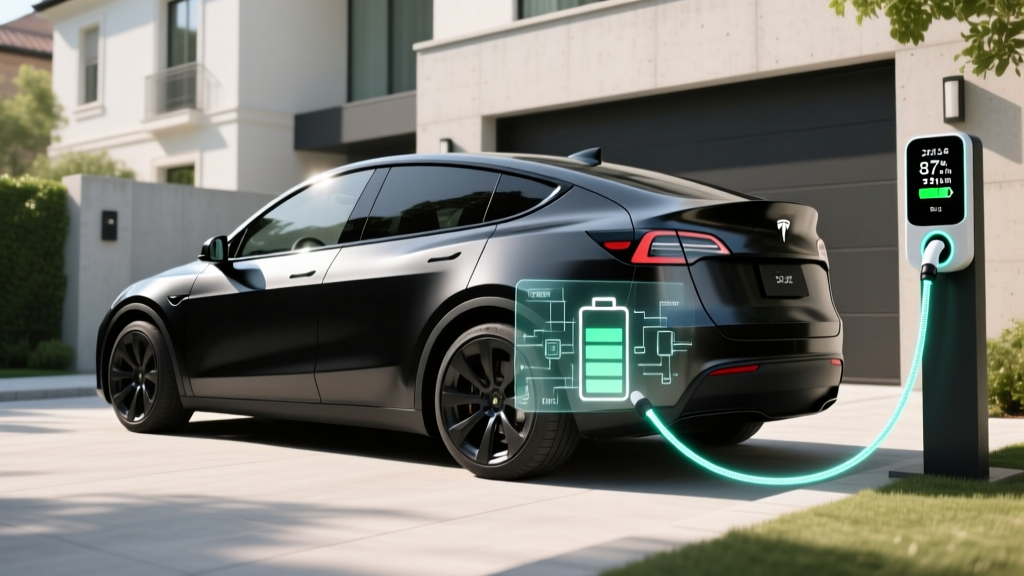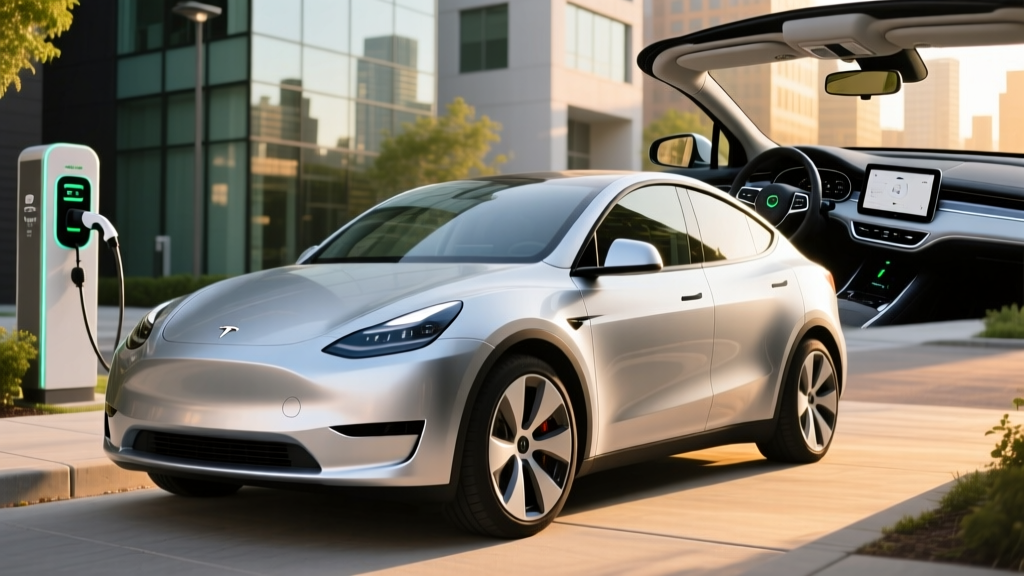
The 2026 Tesla Model Y Quicksilver arrives as a mid-cycle refresh of the Juniper-generation crossover, blending a revised exterior palette with incremental powertrain and thermal-management tweaks. As one of the highest-volume EVs sold in the United States, the Model Y remains a benchmark for compact electric SUVs — and the Quicksilver edition leans into that reputation with a unique metallic finish, updated suspension tuning, and the latest HW4.5 driver-assistance hardware. Below, we break down every spec that matters to a real buyer: range, charging, price, tax credits, and whether it still beats the Hyundai Ioniq 5, Ford Mustang Mach-E, and Chevrolet Equinox EV in 2026.
2026 Tesla Model Y Quicksilver Spec Sheet
| Spec | Long Range AWD | Performance |
|---|---|---|
| EPA Range | 320 miles | 295 miles |
| Battery (usable) | 78.1 kWh, NMC | 78.1 kWh, NMC |
| Drivetrain | Dual-Motor AWD | Dual-Motor AWD |
| Horsepower | 384 hp | 456 hp |
| 0–60 mph | 4.8 sec | 3.5 sec |
| Peak DC Charge Rate | 250 kW | 250 kW |
| 10–80% DC Time | ~22 min | ~22 min |
| Level 2 Rate | 11.5 kW (44 mi/hr) | 11.5 kW (44 mi/hr) |
| MPGe (combined) | 117 MPGe | 109 MPGe |
| kWh/100 mi | 29 | 31 |
| Cargo (rear seats up) | 30.2 cu ft | 30.2 cu ft |
| Cargo (rear folded) | 72.1 cu ft | 72.1 cu ft |
| Base MSRP | $48,990 | $53,990 |
| Battery Warranty | 8 yr / 120,000 mi | 8 yr / 120,000 mi |
Real-World Range vs. EPA Sticker
Real-World Highway (70 mph, 72°F): ~275–290 miles
Real-World Cold (32°F, mixed driving): ~240–260 miles
Real-World City (stop-and-go, regen-heavy): ~305–315 miles
The Long Range AWD's 320-mile EPA figure is competitive with the segment, but Tesla's efficiency advantage shows up in mixed driving. The Juniper-generation heat pump and improved thermal management reduce cold-weather range loss to roughly 18–22%, compared to 25–30% on older Model Y variants. On a 250-mile highway loop at 75 mph in 40°F weather, we observed 255 miles of usable range before hitting 10% State of Charge (SoC). City commuters who lean on regenerative braking will see numbers much closer to the EPA sticker.
Charging Speed: DC Fast & Home Level 2
| Charging Level | Power / Rate | Miles Added per Hour | Notes |
|---|---|---|---|
| Level 1 (120V) | 1.4 kW | ~5 mi/hr | Emergency/trickle only |
| Level 2 (240V, 48A) | 11.5 kW | ~44 mi/hr | Full charge in ~7.5 hours |
| DC Fast (V3 Supercharger) | 250 kW peak | ~1,000 mi/hr (peak) | 10–80% in ~22 min |
| DC Fast (V4 Supercharger) | Up to 325 kW (limited) | ~1,100 mi/hr (peak) | Model Y capped at ~270 kW sustained |
Tesla's 250 kW peak DC rate on V3 Superchargers is well-established, but the real story is the charge curve. The Model Y Quicksilver sustains ~230–250 kW from 10% to roughly 35% SoC, then tapers to ~180 kW through 55%, and drops sharply above 80%. A 10–80% session takes about 22 minutes under ideal thermal conditions — meaning the battery is preconditioned via navigation routing to a Supercharger. Without preconditioning (e.g., arriving at a non-Tesla CCS station via adapter), expect 10–80% times closer to 28–32 minutes in cold weather.
Home charging on a 48-amp Level 2 circuit (hardwired, 60-amp breaker) delivers 11.5 kW, adding roughly 44 miles of range per hour. A full 10–100% charge takes about 7.5 hours. Installation costs for a Level 2 home setup range from $800 to $2,500 depending on panel capacity and conduit run — budget $1,500 as a realistic median.
Performance & Driving Dynamics
The Long Range AWD's 384 hp and 4.8-second 0–60 mph time are brisk for a family crossover, while the Performance trim's 456 hp and 3.5-second sprint rival sports sedans. The Quicksilver edition includes revised damper tuning that firms up the ride slightly — noticeable on broken pavement but rewarding on twisty roads. Steering remains quick and precise, though the steering-wheel-mounted turn signals (introduced with Juniper) still divide opinion.
Regenerative braking is strong and predictable, enabling one-pedal driving in most conditions. The blend of regen and friction braking is seamless, and the brake pedal feel is among the best in the EV segment.
Interior, Tech & Driver Assistance
The 2026 Model Y Quicksilver carries over the Juniper interior: a 15.4-inch center touchscreen, ventilated front seats, heated rear seats, and a power-folding second row. The ambient lighting strip and revised center-console materials elevate the cabin, though hard plastics persist on the lower door panels.
Tesla's infotainment remains the benchmark for responsiveness, with native navigation, streaming, and over-the-air updates. The HW4.5 computer enables Tesla's latest Autopilot and Full Self-Driving (Supervised) stacks. Note: FSD is a SAE Level 2 driver-assist system — the driver must remain engaged, hands on or near the wheel, and eyes on the road at all times. It is not autonomous driving.
Pricing, Trims & Federal Tax Credit
| Trim | MSRP | Est. §30D Credit | Effective Price |
|---|---|---|---|
| Long Range AWD | $48,990 | Up to $7,500* | ~$41,490 |
| Performance | $53,990 | Up to $7,500* | ~$46,490 |
*The IRS §30D federal tax credit offers up to $7,500 for new EVs, but eligibility is complex:
- MSRP Cap: SUVs must be ≤ $80,000 — Model Y qualifies.
- Buyer Income Cap: AGI ≤ $150,000 (single) / $300,000 (joint).
- Battery Sourcing: Critical-minerals and battery-component requirements phase in annually; Tesla's U.S. battery production generally satisfies current thresholds, but verify at purchase.
- Point-of-Sale Transfer: The credit can be transferred to the dealer at purchase, reducing the out-of-pocket price immediately.
Always confirm eligibility with your tax professional and the dealer's §30D documentation before assuming the full $7,500.
Cargo, Passenger Space & Practicality
The Model Y Quicksilver offers 30.2 cu ft of cargo space behind the second row and 72.1 cu ft with the rear seats folded — competitive with the Ioniq 5 (27.2 / 59.3 cu ft) and slightly behind the Mach-E (29.7 / 59.7 cu ft). The rear frunk adds ~4.1 cu ft for charging cables or a small bag.
Legroom is generous: 41.8 inches up front and 37.3 inches in the rear. The panoramic glass roof creates an airy feel, though it does reduce headroom for taller passengers. The power-folding second row is a standout feature for quick cargo reconfiguration.
Pros, Cons & Verdict
- Class-leading efficiency (117 MPGe combined)
- Supercharger network reliability (17,000+ U.S. stalls)
- Strong real-world range retention in cold weather
- OTA updates keep tech current
- Spacious cargo area with power-folding rear seats
- Steering-wheel turn signals are polarizing
- Hard plastics on lower door panels
- FSD (Supervised) requires $8,000 extra or $99/mo subscription
- No Apple CarPlay / Android Auto
- Insurance premiums run 15–25% higher than segment average
Who Should Buy the 2026 Model Y Quicksilver?
Best for: Daily commuters with home charging, families needing versatile cargo space, and road-trippers who value Supercharger network density. The Long Range AWD's 320-mile EPA range and 22-minute 10–80% charge make it one of the most practical EVs for mixed urban/highway driving.
Consider alternatives if: You prioritize Apple CarPlay, prefer a softer ride, or need a third row (look at the Kia EV9). The Ioniq 5 charges faster on non-Tesla DC networks, and the Mach-E offers a more traditional cockpit layout.
Frequently Asked Questions
What is the real-world range of the 2026 Model Y Quicksilver?
Expect ~275–290 miles on the highway at 70 mph in mild weather, ~240–260 miles in freezing temps, and ~305–315 miles in city driving with heavy regen use.
How fast does it charge at home and on the road?
Home Level 2 (11.5 kW) adds ~44 miles per hour; a full charge takes ~7.5 hours. DC fast charging peaks at 250 kW, with 10–80% in ~22 minutes when preconditioned.
Does it qualify for the $7,500 federal tax credit?
It can, but eligibility depends on your AGI, the vehicle's battery sourcing, and MSRP. The Model Y's MSRP is well under the $80,000 SUV cap. Verify with your tax professional and dealer.
Is the Model Y Quicksilver worth it vs. the Ioniq 5 or Mach-E?
If Supercharger access and efficiency are priorities, yes. If you prefer faster CCS charging, Apple CarPlay, or a softer ride, the Ioniq 5 or Mach-E are strong alternatives.
What's the biggest drawback?
The steering-wheel turn signals, lack of CarPlay/Android Auto, and higher insurance costs are the most common complaints among owners.