Quick Verdict: The Benchmark Gets Sharper
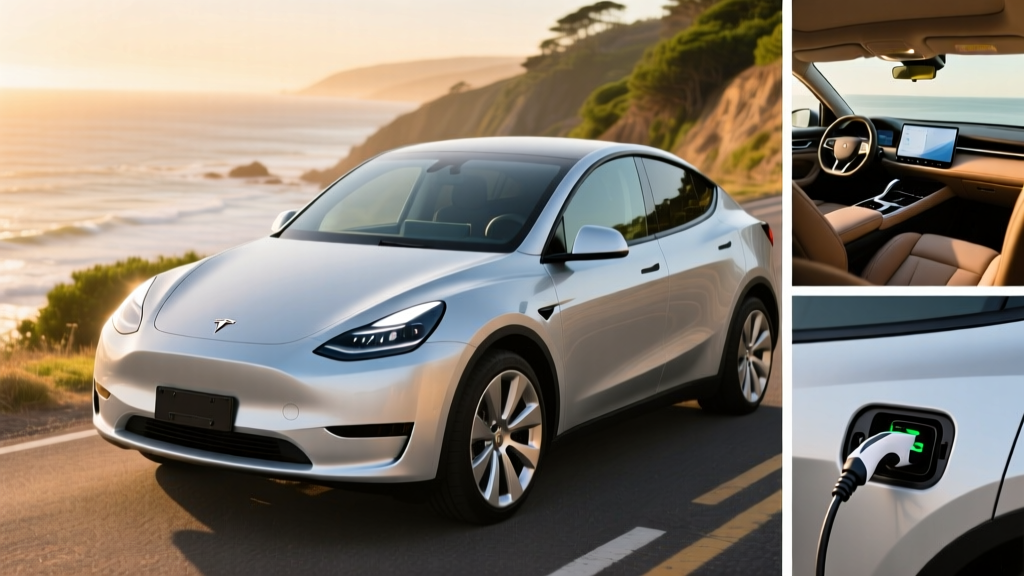
The 2026 Tesla Model Y Premium (formerly Long Range AWD) arrives with the Juniper refresh architecture: a stiffer chassis, ventilated front seats, ambient lighting, a rear touchscreen for passengers, and a redesigned interior that finally addresses the cabin-noise complaints that plagued the pre-2025 generations. Under the skin, the powertrain carries over the proven dual-motor all-wheel-drive layout with a ~75 kWh usable NMC battery, delivering an EPA-estimated 320 miles of range. At a base MSRP of $44,990 (before destination), it undercuts the BMW iX and Audi Q8 e-tron while outperforming most rivals on efficiency and charging speed. But the real story for 2026 buyers is tax credit eligibility: the Model Y Premium qualifies for the full $7,500 §30D federal credit when taken as a point-of-sale reduction, bringing the effective starting price to approximately $37,490 for income-eligible buyers.
| Spec | Value |
|---|---|
| EPA Range | 320 miles |
| Battery (usable) | ~75 kWh, NMC (nickel manganese cobalt) |
| Drivetrain | Dual-motor AWD |
| Horsepower | 384 hp combined |
| 0–60 mph | 4.8 seconds |
| Peak DC Fast Charge | 250 kW (CCS via NACS adapter or native NACS) |
| 10–80% DC Charge Time | ~25 minutes |
| Level 2 Home Charge Rate | 11.5 kW (~44 mi/hr) |
| EPA Efficiency | 111 MPGe combined / 30 kWh/100 mi |
| Cargo (rear seats up) | 30.2 cu ft |
| Cargo (rear seats folded) | 72.1 cu ft |
| Rear Legroom | 41.6 inches |
| Battery Warranty | 8 years / 120,000 miles (70% retention) |
| Base MSRP | $44,990 (+ $1,390 destination) |
Range and Efficiency: EPA vs. the Real World
EPA Sticker: 320 miles
Real-World Expectation: 270–295 miles on mixed highway/city driving at 70°F; 230–260 miles in sustained sub-30°F winter conditions; up to 310+ miles in moderate city/regen-heavy driving.
Tesla's efficiency engineering remains a competitive moat. The Model Y Premium achieves 30 kWh per 100 miles on the EPA combined cycle — meaning it extracts more distance from each kilowatt-hour than the Ford Mustang Mach-E Extended Range AWD (33 kWh/100 mi) or the Hyundai Ioniq 5 AWD (34 kWh/100 mi). The heat pump, now standard across the lineup since 2023, reduces winter cabin-heating energy draw significantly compared to resistive heaters.
That said, the EPA figure assumes a mix of city and highway driving at moderate temperatures. On a 75-mph highway run in summer, expect approximately 275–290 miles before the battery buffer engages. In cold weather (20°F or below), range drops 15–25% depending on whether you precondition the cabin and battery. Tesla's trip planner in the navigation system is generally accurate within 5–8% when you let it precondition the pack for Supercharger stops — a habit every owner should adopt.
The usable battery capacity of approximately 75 kWh (gross capacity is higher, with a top and bottom buffer to protect long-term health) uses NMC chemistry. This offers higher energy density than LFP (lithium iron phosphate), which is why Tesla reserves LFP for the Standard Range RWD model. The trade-off: NMC benefits from staying between 20–80% state of charge for daily use, while LFP can be charged to 100% regularly without accelerated degradation. For road-trip-heavy owners, the NMC pack's density advantage matters; for daily commuters who can charge to 100% nightly, the LFP Standard Range may be more practical.
Charging Speed: Supercharger Network and Home Setup
| Level | Power | Speed | Notes |
|---|---|---|---|
| Level 1 (120V household) | ~1.4 kW | ~5 mi/hr | Emergency/trickle only |
| Level 2 (240V home, 48A) | 11.5 kW | ~44 mi/hr | Full overnight charge in ~7–8 hours |
| DC Fast (Tesla Supercharger V3/V4) | Peak 250 kW | 10–80% in ~25 min | Curve tapers sharply above 80% |
| DC Fast (non-Tesla CCS stations) | Up to 250 kW | 10–80% in ~25–30 min | Requires NACS-to-CCS adapter (included) |
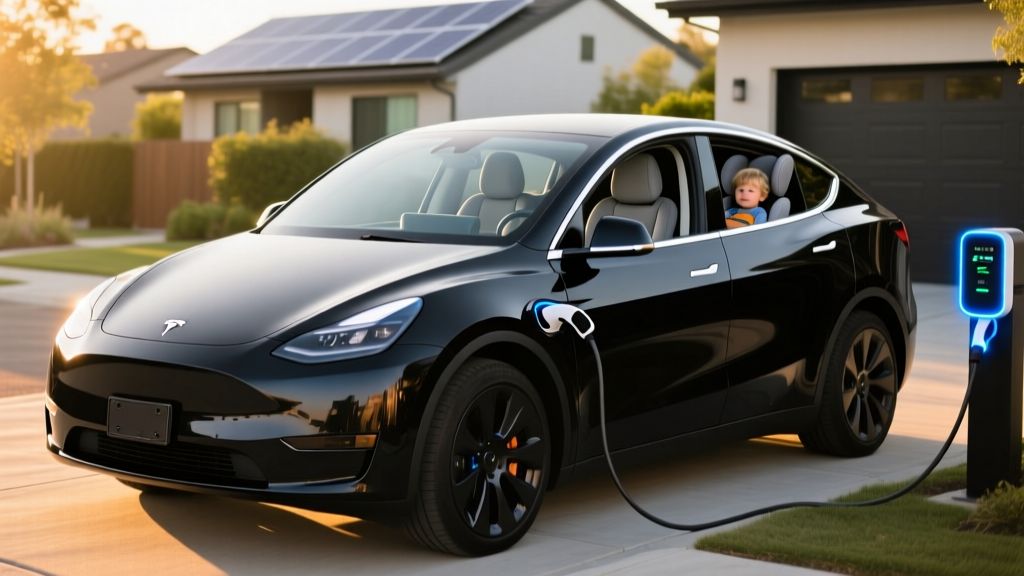
The Model Y Premium's onboard charger accepts up to 11.5 kW on Level 2 (48 amps), which is competitive with the segment. A full charge from 10% to 100% on a home Wall Connector takes roughly 7–8 hours — easily overnight. Installation of a 240V/60A circuit for the Wall Connector typically runs $800–$2,000 depending on panel proximity and whether your electrical panel needs a 200A upgrade (a $1,500–$3,000 additional cost in older homes).
On DC fast charging, the 250 kW peak is real but brief. The charge curve peaks near 250 kW around 10–20% state of charge, holds above 200 kW through roughly 35%, then steps down progressively. From 10% to 80%, expect approximately 25 minutes at a V3 or V4 Supercharger. Above 80%, the rate drops to under 50 kW — so topping from 80% to 100% at a DC charger is painfully slow and should be avoided unless necessary. This is physics, not a Tesla flaw: all lithium-ion packs taper charge rate at high SoC to protect cell health.
The 2026 Model Y uses the NACS (North American Charging Standard) connector natively. Tesla's Supercharger network now exceeds 25,000 stalls in North America, and with major automakers (Ford, GM, Rivian, Hyundai, and others) having adopted NACS, congestion at popular corridors is a growing concern. However, Tesla's reliability and uptime rates remain the industry benchmark. According to fueleconomy.gov, the Model Y AWD achieves 111 MPGe combined.
Performance and Driving Dynamics
The dual-motor AWD powertrain produces 384 horsepower and launches the Model Y Premium to 60 mph in 4.8 seconds. That's quick enough to merge onto any freeway with authority and pass without hesitation, though it's a half-second behind the pre-refresh Long Range — a result of the Juniper chassis adding sound-deadening mass and structural rigidity.
The Juniper refresh transforms the driving experience in ways that numbers don't capture. Acoustic glass, additional insulation, and retuned suspension bushings reduce cabin noise by a noticeable margin at highway speeds. The ride quality is firmer than a Hyundai Ioniq 5 but more controlled than the outgoing Model Y, striking a balance that works well for spirited driving without punishing passengers on rough pavement.
Regenerative braking remains single-mode (strong) in Tesla's current software — there's no adjustable regen slider as you'd find in a Kia EV6 or Hyundai Ioniq 5. Most owners adapt within a week and appreciate the one-pedal driving experience, but if you're transitioning from a conventional vehicle, expect a learning curve.
Towing capacity is rated at 3,500 pounds when equipped with the factory tow hitch ($1,000 option). This is adequate for a small camper or utility trailer but trails the Ford F-150 Lightning and Rivian R1S. Towing cuts range roughly in half — expect approximately 150–170 miles on a flat highway at 65 mph with a loaded trailer.
Interior, Tech, and the Juniper Cabin Overhaul
The 2026 Juniper interior is a material upgrade. Ventilated front seats (finally), a power-folding second row, ambient lighting integrated into the dashboard and door panels, and a rear 8-inch touchscreen for rear passengers address the most common criticisms of the pre-2025 cabin. The 15.4-inch front touchscreen remains the nerve center for all vehicle controls — there are still no physical buttons for climate or mirrors, which continues to polarize buyers.
Infotainment runs Tesla's proprietary OS, which includes Netflix, YouTube, and Spotify streaming (while parked), a full web browser, and over-the-air updates that regularly add features. Apple CarPlay and Android Auto are still not supported — a dealbreaker for some buyers who prefer phone-mirrored navigation and music. Tesla's native navigation is excellent and integrates Supercharger routing with battery preconditioning, so the omission is less painful than in competitors with inferior native systems.
Cargo space measures 30.2 cubic feet behind the second row and 72.1 cubic feet with the rear seats folded. The front trunk (frunk) adds approximately 4.1 cubic feet — useful for charging cables, groceries, or a small bag. Rear legroom of 41.6 inches is generous for adults, and the flat floor (no transmission tunnel) makes the middle seat usable for short trips.
Driver Assistance: Autopilot, FSD Supervised, and SAE Reality
SAE Automation Level: Tesla Autopilot and Full Self-Driving (Supervised) are SAE Level 2 driver-assistance systems. The driver must remain fully attentive, keep hands on the steering wheel (or demonstrate engagement via torque), and be prepared to take over at any moment. These are not self-driving systems. Only Level 4 services like Waymo operate without a human driver in defined zones.
Standard Autopilot includes Traffic-Aware Cruise Control and Autosteer (lane-centering on highways). It works well on well-marked freeways and reduces fatigue on long drives. FSD (Supervised), a $8,000 one-time purchase or $99/month subscription as of 2026, adds automatic lane changes, Navigate on Autopilot (on-ramp to off-ramp), traffic light and stop sign recognition, and city-street autosteer.
FSD (Supervised) has improved substantially since its 2023 neural-network rewrite, but it remains a supervision-required system. In our experience, it handles 85–90% of suburban driving scenarios competently but still requires intervention for construction zones, unusual lane configurations, and aggressive cut-ins. It is not a substitute for an attentive driver, and NHTSA continues to monitor Tesla's Autopilot/FSD crash data through its Standing General Order crash-reporting requirement.
What FSD (Supervised) Does NOT Do: It does not make the Model Y a self-driving car. It does not handle all weather conditions (heavy rain, snow, fog degrade performance). It does not replace your insurance obligation or liability. You are the driver at all times.
Pricing, Tax Credit Eligibility, and Total Cost
| Item | Amount |
|---|---|
| Base MSRP | $44,990 |
| Destination Fee | $1,390 |
| As-Tested (with FSD, tow hitch, paint) | $56,870 |
| Federal §30D Credit (if eligible) | –$7,500 |
| Effective Base Price (after credit, POS transfer) | ~$37,490 + destination |
The 2026 Model Y Premium qualifies for the full $7,500 federal EV tax credit under IRS §30D, provided you meet all eligibility requirements. Since 2024, the credit can be transferred to the dealer at point of sale, meaning you receive the $7,500 as an instant reduction on your purchase price rather than waiting to claim it on your tax return.
§30D Eligibility Requirements (2026):
- MSRP Cap: Vehicle MSRP must not exceed $55,000 for SUVs (Model Y qualifies at base; loaded configs may exceed cap)
- Buyer Income Cap: Modified AGI ≤ $300,000 (married filing jointly), ≤ $225,000 (head of household), ≤ $150,000 (single)
- Battery Sourcing: Critical minerals and battery components must meet escalating domestic/free-trade-agreement thresholds — Tesla's Austin-built Model Y has met these requirements through 2026
- Assembly: Final assembly must be in North America (Austin, TX plant qualifies)
- One-Time Use: Each buyer can claim the credit once per calendar year, and the vehicle must be for personal use
Consult a tax professional before purchase. Rules are subject to legislative change. Verify current eligibility on irs.gov.
For a buyer in the 22% federal tax bracket who qualifies for the full credit, the effective cost of ownership drops dramatically. Over five years and 75,000 miles, the Model Y Premium's electricity cost (at $0.14/kWh national average) is approximately $3,150, compared to roughly $9,400 in gasoline for a 25 MPG AWD gas SUV — a fuel savings of over $6,250. Combined with lower maintenance (no oil changes, fewer brake replacements due to regen), the total cost of ownership advantage is substantial for buyers who can charge at home.
Competitive Comparison: Model Y Premium vs. the Field
| Spec | Tesla Model Y Premium | Ford Mustang Mach-E ER AWD | Hyundai Ioniq 5 AWD |
|---|---|---|---|
| EPA Range | 320 mi | 290 mi | 260 mi |
| Battery | ~75 kWh NMC | ~88 kWh NMC | ~77.4 kWh NMC |
| Peak DC Charge | 250 kW | 150 kW | 235 kW |
| 10–80% DC Time | ~25 min | ~38 min | ~18 min |
| 0–60 mph | 4.8 sec | 5.1 sec | 5.1 sec |
| EPA Efficiency | 111 MPGe | 101 MPGe | 98 MPGe |
| Cargo (seats up) | 30.2 cu ft | 29.7 cu ft | 27.2 cu ft |
| Base MSRP | $44,990 | $48,995 | $49,850 |
| §30D Credit Eligible | Yes | Partial (varies) | No (Korea-built) |
The Model Y Premium's combination of range, efficiency, charging infrastructure access, and price (especially after the §30D credit) is difficult to match. The Ioniq 5 charges faster (18 minutes 10–80% on a 350 kW charger) and offers a more conventional interior with physical controls, but it sacrifices range and is not currently eligible for the federal credit due to South Korean assembly. The Mach-E offers a more car-like driving feel and Ford dealer service access, but its 150 kW peak charge rate is a generation behind.
Choose the Tesla Model Y Premium if: You prioritize range and efficiency, want access to the Supercharger network for road trips, value OTA updates, and qualify for the §30D credit.
Choose the Hyundai Ioniq 5 AWD if: You want the fastest DC charging in the segment, prefer physical buttons and CarPlay, and don't rely on the federal credit.
Choose the Ford Mustang Mach-E if: You want traditional dealer service, prefer a more engaging driving feel, and find a compelling lease deal.
Ownership Considerations: Warranty, Insurance, and Long-Term Value
Tesla covers the Model Y Premium with a 4-year/50,000-mile basic warranty and an 8-year/120,000-mile battery and drive unit warranty, guaranteeing 70% capacity retention over that period. Based on historical data from Tesla's fleet, NMC packs in the Model Y have shown approximately 8–12% degradation over 100,000 miles — well within the warranty threshold. Battery replacement outside warranty currently runs $12,000–$16,000, though prices continue to decline as cell manufacturing scales.
Insurance premiums for the Model Y remain higher than the segment average. National average annual premiums range from $2,200–$3,100 depending on state, driving record, and coverage level. Tesla's own insurance product (available in most states) uses real-time driving data and can be 10–25% cheaper for safe drivers, though it penalizes aggressive driving and Autopilot disengagement frequency.
Depreciation has been a sore spot for Tesla owners post-2023, when aggressive price cuts hammered resale values. The 2026 Model Y's pricing has stabilized, and the Juniper refresh gives it a generational advantage over 2023–2024 models on the used market. Expect 3-year residual values around 55–60% — competitive with the EV segment but below Toyota/Honda ICE benchmarks.
Pros
- Class-leading efficiency (111 MPGe / 30 kWh/100 mi)
- Access to 25,000+ Supercharger stalls with native NACS routing
- $7,500 §30D credit brings effective price below $39,000
- Juniper cabin is materially quieter and more refined
- Strong OTA update cadence adds features post-purchase
- 30.2 cu ft cargo with excellent frunk utility
Cons
- No Apple CarPlay or Android Auto
- All controls via touchscreen — no physical buttons
- Insurance premiums above segment average
- FSD (Supervised) remains SAE Level 2 — not self-driving
- NMC battery requires 20–80% daily discipline for longevity
- Service center wait times in some metro areas remain long
Frequently Asked Questions
What is the real-world range of the 2026 Tesla Model Y Premium?
The EPA rates it at 320 miles. In real-world mixed driving at moderate temperatures, expect 270–295 miles. In cold weather below 30°F, range drops to approximately 230–260 miles unless you precondition the battery and cabin while plugged in.
How fast does the Model Y Premium charge at home and on the road?
On a 240V Level 2 home charger (48A), it charges at 11.5 kW, adding about 44 miles per hour — a full charge takes 7–8 hours. On a Tesla V3/V4 Supercharger, it peaks at 250 kW and charges from 10% to 80% in approximately 25 minutes.
Does the 2026 Model Y Premium qualify for the $7,500 federal EV tax credit?
Yes, provided the buyer meets income caps ($150K single / $300K joint), the vehicle MSRP stays under the $55,000 SUV cap, and battery sourcing requirements are met. The credit can be applied at point of sale as an instant price reduction. Verify current rules on irs.gov.
Is the Model Y Premium worth buying over the Ford Mach-E or Hyundai Ioniq 5?
For buyers who prioritize range, efficiency, and road-trip charging infrastructure, the Model Y Premium is the strongest choice — especially after the §30D credit. The Ioniq 5 charges faster and offers CarPlay; the Mach-E provides dealer service familiarity. Your priorities determine the winner.
How long will the Model Y battery last?
Tesla warranties the battery for 8 years / 120,000 miles with 70% capacity retention. Real-world fleet data suggests 8–12% degradation at 100,000 miles. Keeping daily charge between 20–80% and avoiding frequent DC fast charging will maximize longevity. Replacement cost outside warranty is approximately $12,000–$16,000 as of 2026.
Is Tesla's FSD actually self-driving?
No. FSD (Supervised) is an SAE Level 2 driver-assist system. You must remain fully attentive, keep your hands available, and be prepared to take over at any moment. It handles many highway and city scenarios but requires supervision and does not replace the driver.