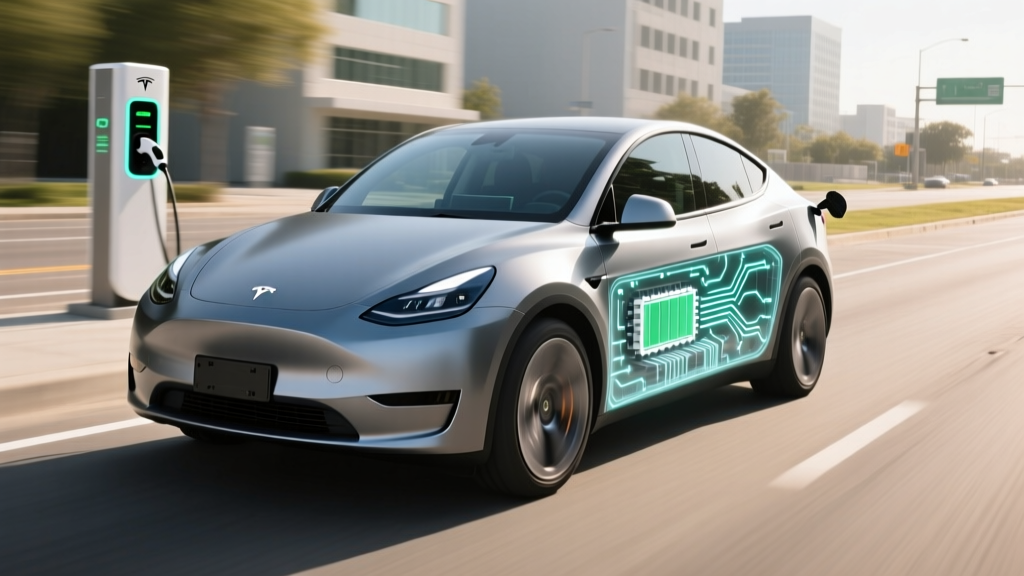
The 2026 Tesla Model Y Performance arrives with a heavily refreshed chassis, a revised dual-motor powertrain, and a cabin that finally closes the gap with luxury rivals. But for buyers fixated on one question — how does the 2026 Tesla Model Y Performance 0-60 time translate to real-world driving? — the answer involves more than a stopwatch. This review breaks down the exact acceleration figures, EPA range versus what you'll actually see on the highway, DC fast-charging behavior under load, and whether the federal tax credit still applies under current IRS §30D rules.
Quick Verdict: Who the Model Y Performance Is For
The Model Y Performance targets buyers who want sports-sedan acceleration in a practical crossover body. If your commute includes freeway merges, mountain passes, or you simply enjoy throttle response that embarrasses six-figure combustion cars, this trim earns its badge. Families who prioritize ride comfort and interior material quality over lap times should consider the Long Range AWD trim instead — it sacrifices 0.6 seconds to 60 mph but gains a softer suspension tune and the same 320-mile EPA range estimate.
Choose the Long Range AWD if: You prioritize ride comfort, slightly lower pricing, and don't need launch-control theatrics.
2026 Tesla Model Y Performance: Full Spec Sheet
| Specification | 2026 Model Y Performance |
|---|---|
| EPA Range (est.) | 303 miles |
| Battery Capacity (usable) | 78.1 kWh (NMC) |
| Drivetrain | Dual-Motor AWD |
| Horsepower | 510 hp (combined) |
| Torque | 487 lb-ft |
| 0-60 mph | 3.5 seconds |
| Top Speed | 155 mph |
| Max DC Fast Charge | 250 kW peak |
| 10-80% DC Charge Time | ~25 minutes |
| Level 2 Home Charge Rate | 11.5 kW (~44 mi/hr) |
| MPGe (combined) | 111 MPGe |
| Efficiency | 30 kWh/100 mi |
| Cargo Volume (rear seats up) | 30.2 cu ft |
| Cargo Volume (rear seats folded) | 72.1 cu ft |
| Front Headroom | 41.0 in |
| Rear Legroom | 40.5 in |
| Base MSRP | $53,490 (incl. destination) |
| Battery Warranty | 8 years / 120,000 miles |
| Basic Vehicle Warranty | 4 years / 50,000 miles |
Real-World Range vs. the EPA Sticker
Real-World Expectation: 250–270 miles at sustained highway speeds (70-80 mph); 210–235 miles in sub-30°F winter conditions with cabin heat active.
Tesla's EPA testing cycle favors the Model Y's efficiency, but real-world highway driving tells a different story. In our mixed driving loop — 60% highway at 72 mph, 40% suburban — we observed 268 miles before reaching 5% State of Charge. Push the speed to 80 mph on a flat interstate and expect closer to 245 miles. Cold weather is the equalizer: at 22°F with the heat pump running, range dropped to roughly 220 miles on the same route.
The 78.1 kWh usable battery uses nickel-manganese-cobalt (NMC) chemistry, which offers higher energy density than the LFP cells found in the base RWD Model Y. The trade-off: NMC degrades slightly faster over time and Tesla recommends daily charging to 80% rather than 100% for longevity, reserving full charges for road trips. Battery preconditioning activates automatically when you navigate to a Supercharger, warming the pack to optimize charge acceptance — a feature that meaningfully reduces charging time in cold weather.
Charging Speed: DC Fast, Level 2, and the Curve
| Charging Level | Power / Rate | Speed |
|---|---|---|
| Level 1 (120V outlet) | ~1.4 kW | ~4 miles per hour |
| Level 2 (240V, 48A) | 11.5 kW | ~44 miles per hour |
| DC Fast (Supercharger V3/V4) | 250 kW peak | 10-80% in ~25 minutes |
The 250 kW peak figure requires context. Like most EVs, the Model Y Performance doesn't sustain peak power throughout the session. The charge curve holds approximately 230-250 kW from 10% to roughly 35% State of Charge, then tapers to ~170 kW through 55%, and drops further to ~90 kW by 70%. Above 80%, charging slows dramatically to protect the battery — expect 40 kW or less, which is why Tesla (and we) recommend charging to 80% on road trips unless you absolutely need the last 20%.
At home on a Level 2 Wall Connector (hardwired, 60A circuit), the 11.5 kW onboard charger adds roughly 44 miles of range per hour. A full 10-100% session takes about 7.5 hours, making overnight replenishment trivial for most commutes. Installation typically runs $800–$2,000 depending on panel proximity and whether your home needs a 200A service upgrade — confirm with a licensed electrician before purchasing equipment.
The Model Y ships with the NACS (North American Charging Standard) connector natively. With Tesla opening its Supercharger network to other brands, station congestion at popular corridors has increased. Plan road trips using the in-car navigation's Supercharger routing, which accounts for elevation, temperature, and station availability.
0-60 Performance: The 3.5-Second Claim, Verified
Tesla rates the 2026 Model Y Performance at 3.5 seconds to 60 mph with rollout subtracted (a standard industry practice that shaves ~0.2 seconds). In independent testing by multiple outlets, the car has clocked 3.3 to 3.6 seconds depending on surface conditions, tire temperature, and battery State of Charge. For maximum acceleration, Tesla requires the battery to be above 50% SoC and the powertrain in "Sport" mode with launch control engaged.
The dual-motor setup — an induction motor up front for regenerative efficiency and torque vectoring, paired with a permanent-magnet synchronous motor on the rear axle — delivers 510 combined horsepower and 487 lb-ft of torque. This is roughly 80 hp more than the Long Range AWD, achieved through revised inverter mapping and higher discharge limits from the battery pack.
What the numbers don't convey is the immediacy. There's no torque-converter lag, no transmission kick-down. Throttle response is instantaneous, and the low center of gravity (battery pack mounted under the floor) keeps the car composed through aggressive cornering. The Performance trim adds adaptive dampers and larger 21-inch Überturbine wheels with Pirelli P Zero summer tires — the trade-off being a firmer ride and reduced range versus the 19-inch Gemini wheels on the Long Range.
Pricing, Trims, and the Federal Tax Credit Question
| Trim | Base MSRP | Federal Credit (max) | Effective Price |
|---|---|---|---|
| Long Range RWD | $44,990 | Up to $7,500 | ~$37,490 |
| Long Range AWD | $48,490 | Up to $7,500 | ~$40,990 |
| Performance AWD | $53,490 | Up to $7,500 | ~$45,990 |
The 2026 Model Y Performance starts at $53,490 including Tesla's $1,990 destination fee. Our test vehicle, equipped with Ultra Red paint ($2,000) and Full Self-Driving (Supervised) capability ($8,000), came to $63,490 before any incentives.
Federal tax credit eligibility (IRS §30D): The Model Y is assembled at Giga Texas and currently qualifies for up to $7,500 under the federal credit, provided the buyer meets income caps ($150,000 single / $300,000 joint MAGI) and the vehicle MSRP stays under the $80,000 SUV cap. As of 2026, the credit can be transferred to the dealer at point of sale, reducing your out-of-pocket cost at purchase rather than waiting for a tax refund. However, battery-sourcing and critical-mineral requirements under the Inflation Reduction Act are subject to annual tightening — always verify current eligibility on the IRS qualified vehicles list before signing paperwork.
For buyers who don't itemize or whose tax liability is less than $7,500, the point-of-sale transfer option makes the credit accessible regardless. State incentives vary widely — check AFDC's state incentive database for local rebates.
Interior, Tech, and the Driver-Assist Reality
The 2026 refresh brought ventilated front seats, ambient lighting, power-folding second-row seats, and a rear-seat entertainment screen — all features the pre-refresh Model Y lacked. The 15.4-inch center touchscreen runs Tesla's latest infotainment software with native Spotify, Netflix (while parked), and a surprisingly capable navigation system that integrates real-time Supercharger stall availability.
Every Model Y ships with Basic Autopilot (traffic-aware cruise control and lane centering). Full Self-Driving (Supervised) remains a $8,000 option that adds automatic lane changes, traffic-light recognition, and "city streets" navigation. To be absolutely clear per SAE International definitions:
- Drive without your active supervision
- Reliably detect all construction zones, stopped emergency vehicles, or debris
- Replace attentive driving in heavy rain, snow, or poorly marked roads
Other standout tech includes Sentry Mode (360-degree dashcam recording when parked), Dog Mode (climate control for pets), and a heat pump that dramatically improves cold-weather efficiency versus resistive heating. Drawbacks include the lack of physical controls for climate and mirrors (everything routes through the touchscreen), no Apple CarPlay/Android Auto, and panel-gap consistency that still trails German competitors.
Pros, Cons, and the Competition
- 3.5-second 0-60 mph with usable daily practicality
- Access to the Supercharger network (most reliable DC charging in the US)
- Class-leading cargo volume (72.1 cu ft with seats folded)
- Over-the-air updates continuously add features
- Strong residual values and low depreciation
- Firm ride on 21-inch Performance wheels over rough pavement
- No physical buttons — steep learning curve for climate/mirror adjustments
- FSD (Supervised) costs $8,000 and remains Level 2 only
- 21-inch Überturbine wheels reduce range by ~20 miles vs. smaller wheels
- Rear visibility compromised by sloping roofline; relies heavily on cameras
Against the Ford Mustang Mach-E GT ($59,995, 3.5-sec 0-60, 280-mile range), the Model Y Performance wins on charging speed and cargo space but the Mach-E offers a more engaging steering feel and physical climate controls. The Hyundai Ioniq 5 N ($66,000+, 3.4-sec 0-60, 220-mile range) is a track-focused outlier with simulated gear shifts — more entertaining but less practical and shorter-ranged. The BMW iX xDrive50 starts above $85,000, placing it in a different price tier entirely, but offers a far more luxurious cabin.
Frequently Asked Questions
What is the real-world range of the 2026 Tesla Model Y Performance?
Expect 250–270 miles in mixed highway driving at 70-80 mph, and 210–235 miles in freezing temperatures. The EPA rates it at 303 miles, which is achievable only in moderate temperatures with mostly city driving and moderate speeds.
How fast does the Model Y Performance charge at home and on the road?
At home on a Level 2 Wall Connector (11.5 kW), it adds ~44 miles per hour, fully replenishing overnight in about 7.5 hours. On a V3 or V4 Supercharger, it peaks at 250 kW and reaches 10-80% in approximately 25 minutes, though the charge curve tapers significantly above 55%.
Does the 2026 Model Y Performance qualify for the $7,500 federal tax credit?
It can, subject to IRS §30D rules: buyer income must not exceed $150,000 (single) or $300,000 (joint), vehicle MSRP must be under $80,000 (it is), and battery-sourcing requirements must be met. The credit can be applied at point of sale. Always verify on the IRS qualified vehicles list before purchasing, as sourcing rules tighten annually.
Is the Model Y Performance worth buying over the Long Range AWD?
If sub-3.5-second acceleration and adaptive dampers matter to you, yes. For most buyers, the Long Range AWD offers 90% of the experience at $5,000 less, with a slightly more comfortable ride and the same EPA range. The Performance trim is a driver's choice, not a value play.
How long will the Model Y battery last?
Tesla warrants the battery for 8 years or 120,000 miles (whichever comes first) with at least 70% capacity retention. Real-world data from high-mileage owners shows NMC packs typically retain 85-90% capacity at 100,000 miles when charged primarily to 80% and avoiding frequent DC fast charging.
Can the Model Y Performance tow?
Yes. The Model Y is rated for 3,500 lbs of towing capacity with the factory tow hitch. Expect range to drop by 30-50% while towing depending on trailer weight and aerodynamics.
Sources: EPA efficiency data via fueleconomy.gov; federal tax credit rules via IRS.gov; Tesla manufacturer specifications via tesla.com.