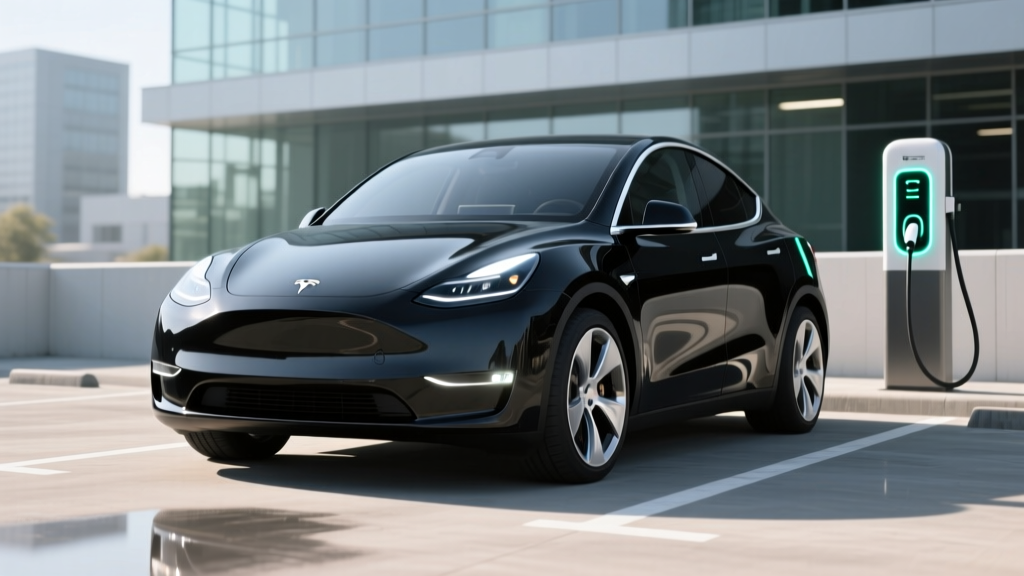
Tesla periodically rolls out lease promotions on the Model Y to move inventory, and the current 2026 offers have caught the attention of EV shoppers weighing their options. But a low monthly payment only matters if the underlying vehicle fits your driving life. This review dissects the 2026 Tesla Model Y Long Range AWD — the trim most commonly featured in Tesla lease promotions — with exact EPA numbers, real-world range expectations, charging data, and a hard look at whether leasing or buying makes more financial sense right now.
2026 Tesla Model Y: Quick Verdict
The 2026 Model Y Long Range AWD remains one of the most capable all-around electric SUVs on the market. With an EPA-estimated 320 miles of range, access to the Supercharger network (now open to non-Tesla EVs but still the most reliable), and strong efficiency, it suits commuters and road-trippers alike. Tesla's current lease promotions can drop monthly payments below the cost of financing, but lessees forfeit the $7,500 federal tax credit and face mileage restrictions. If you drive under 12,000 miles annually and want predictable payments, the lease is compelling. If you plan to keep the car 5+ years, buying and claiming the credit is usually cheaper long-term.
Range, Battery, and Real-World Efficiency
EPA Estimated: 320 miles (Long Range AWD)
Real-World Highway (70 mph, 75°F): ~265–285 miles
Real-World Cold Weather (30°F, mixed driving): ~225–255 miles
Highway driving at sustained speeds and cold temperatures significantly reduce range. Plan road trips around 200–230 miles between stops for a comfort buffer.
The 2026 Model Y Long Range AWD uses a 75 kWh usable battery pack built on NMC (nickel manganese cobalt) chemistry. NMC offers higher energy density than LFP, giving the Long Range its 320-mile EPA rating in a relatively compact pack. The trade-off is that NMC batteries degrade slightly faster than LFP over hundreds of cycles and Tesla recommends daily charging to 80% rather than 100% for longevity.
Efficiency is rated at 122 MPGe combined (city/highway), which translates to roughly 27 kWh per 100 miles. That's among the best in the midsize electric SUV segment, thanks to Tesla's heat pump (standard on all trims) and strong aerodynamic optimization. On the base Rear-Wheel Drive trim, the EPA range is 300 miles with a slightly smaller LFP battery (~60 kWh usable) — that LFP pack can be charged to 100% daily without degradation concerns, making it a smart pick for drivers with reliable home charging who don't need maximum range.
Charging Speed: DC Fast, Level 2, and Level 1
| Charging Level | Power / Rate | Speed (Miles Added) | Notes |
|---|---|---|---|
| Level 1 (120V household) | ~1.4 kW | ~3–5 mi/hr | Emergency/top-up only |
| Level 2 (240V home, 48A) | 11.5 kW | ~37–44 mi/hr | Full charge in ~7–8 hours |
| DC Fast Charge (Supercharger V4) | Peak 250 kW | ~175 mi in 15 min | 10–80% in ~25 min; tapers above 80% |
The Model Y Long Range AWD peaks at 250 kW on DC fast chargers, though sustained rates average closer to 150–180 kW across the 10–80% window. The charge curve tapers noticeably above 60% state of charge (SoC), which is typical for NMC packs. Expect a 10–80% session in approximately 25 minutes at a V3 or V4 Supercharger. At third-party CCS networks (now accessible via Tesla's included NACS-to-CCS adapter or native NACS at newer stations), speeds depend on the station's output — a 350 kW Electrify America stall won't push the Model Y beyond its 250 kW ceiling.
For home charging, the onboard charger accepts up to 11.5 kW (48 amps) on a 240V Level 2 circuit. A full overnight charge from 20% to 80% takes roughly 5 hours. Installation of a 60-amp dedicated circuit with a Tesla Wall Connector typically runs $800–$2,000 depending on panel proximity — factor this into your first-year ownership cost.
Performance and Drivetrain
| Spec | RWD (Base) | Long Range AWD | Performance |
|---|---|---|---|
| Drivetrain | Rear-Wheel Drive | Dual-Motor AWD | Dual-Motor AWD |
| Horsepower | ~295 hp | ~384 hp | ~456 hp |
| 0–60 mph | 6.6 sec | 4.8 sec | 3.5 sec |
| Top Speed | 135 mph | 135 mph | 155 mph |
| EPA Range | 300 mi | 320 mi | 285 mi |
The Long Range AWD's dual-motor setup provides confident all-weather traction and a 4.8-second 0–60 time that outpaces most gas-powered midsize SUVs. Regenerative braking is strong enough for one-pedal driving in most conditions, and the heat pump ensures cabin heating doesn't decimate range in winter as severely as resistive heaters do.
Interior, Cargo, and Technology
The Model Y's minimalist interior centers on a 15.4-inch touchscreen that handles everything from climate to navigation. There's no instrument cluster — speed and range info live in the upper-left corner of the main display. Rear legroom measures 41.6 inches, adequate for adults on longer trips, though the sloping roofline cuts into headroom for taller passengers.
Cargo volume: 30.2 cubic feet behind the second row, expanding to 72.1 cubic feet with seats folded. The front trunk (frunk) adds 4.1 cubic feet. That's competitive with the Hyundai Ioniq 5 (behind-row: 27.2 cu ft) and slightly less than the Ford Mustang Mach-E (29.7 cu ft behind row, but a larger frunk).
Standard tech includes Tesla's Basic Autopilot (SAE Level 2 — lane centering and adaptive cruise, not self-driving), over-the-air updates, Sentry Mode dashcam recording, and phone-as-key entry. Full Self-Driving (Supervised) remains a $8,000 add-on or $99/month subscription — it's still a Level 2 system requiring active driver supervision despite the name. Navigation with real-time Supercharger routing and battery preconditioning (warming the pack before arrival for faster charging) is among the best in the industry.
Tesla Autopilot and FSD (Supervised) are SAE Level 2 driver-assistance systems. The driver must keep hands on the wheel and eyes on the road at all times. These are not autonomous or "self-driving" systems. True driverless operation (SAE Level 4) is currently limited to geofenced robotaxi services like Waymo in select cities.
Pricing, Lease Promotion, and Tax Credit Math
| Detail | Long Range AWD |
|---|---|
| Base MSRP | $47,990 |
| As-Tested (w/ FSD + Paint) | $57,490 |
| Destination Fee | $1,390 |
| Typical Lease (36 mo / 10k mi) | $499–$599/mo* |
| Lease Due at Signing | $3,500–$5,500 |
| Federal Tax Credit (§30D) | $7,500 (purchase only) |
| Effective Price After Credit (Purchase) | ~$41,880 |
*Tesla lease promotions vary by quarter and region. Rates shown reflect advertised offers as of early 2026 with qualifying credit (720+). Confirm current terms on Tesla.com.
Here's the core math dilemma with the Tesla lease promotion: leased vehicles do not qualify for the $7,500 federal EV tax credit under IRS §30D. The credit is available only to purchasers, and it's subject to buyer income caps ($150,000 single / $300,000 joint modified AGI), vehicle MSRP caps ($80,000 for SUVs), and battery critical-mineral and component sourcing requirements. The 2026 Model Y Long Range AWD currently meets sourcing requirements and falls under the MSRP cap, making it eligible — but only if you buy.
If you purchase at $49,380 (MSRP + destination) and claim the full $7,500 credit (via point-of-sale transfer at delivery, reducing your financed amount), your effective cost is ~$41,880. Over a 36-month lease at $549/month with $4,500 down, you'll pay $24,264 total — and hand the car back with no equity. If your annual mileage stays under 10,000 and you prefer swapping vehicles every three years, the lease makes sense. If you'll keep the car 5+ years, buying and claiming the credit is significantly cheaper on a per-year basis.
For complete §30D eligibility rules, consult the IRS Clean Vehicle Credit page. Tax situations vary — we recommend confirming eligibility with a tax professional before relying on the credit.
Pros, Cons, and Who Should Lease the Model Y
- 320-mile EPA range (best-in-class for the segment)
- Supercharger network access with reliable uptime
- Best-in-class efficiency (122 MPGe combined)
- Strong OTA updates add features post-purchase
- Spacious cargo area (72.1 cu ft max)
- Battery preconditioning optimizes fast-charge speed
- No physical buttons — everything through touchscreen
- Rear visibility limited by sloping roofline
- Lease forfeits $7,500 federal tax credit
- FSD (Supervised) expensive and still Level 2 only
- Insurance premiums 15–30% higher than gas equivalents
- Build quality inconsistencies still reported
Who should lease: Drivers who want a new EV every 3 years, drive under 12,000 miles annually, have reliable home Level 2 charging, and value predictable monthly payments over long-term cost savings. The lease promotion works especially well for those whose income exceeds §30D caps (making them ineligible for the purchase credit anyway).
Who should buy: High-mileage commuters, owners planning 5+ years of ownership, and anyone who qualifies for the full $7,500 tax credit. The effective post-credit price makes the Model Y Long Range one of the best value-per-mile EVs available.
Warranty and Long-Term Battery Health
Tesla covers the Model Y with a 4-year/50,000-mile basic vehicle warranty and an 8-year/120,000-mile battery and drive unit warranty. The battery warranty guarantees retention of at least 70% of original capacity during the coverage period. Real-world degradation data from Tesla's fleet shows NMC packs typically retain 88–92% capacity at 100,000 miles when charged primarily to 80%.
For lessees, the 36-month lease term falls well within both warranty periods, meaning any battery or drivetrain issue is fully covered. For buyers, the 8-year battery warranty provides meaningful protection, though replacement costs outside warranty currently run $12,000–$16,000 for the Long Range pack.
Frequently Asked Questions
Does the Tesla Model Y qualify for the $7,500 federal tax credit?
Yes — if you purchase (not lease). The 2026 Model Y Long Range AWD meets current §30D battery sourcing requirements and falls under the $80,000 SUV MSRP cap. Buyer income must not exceed $150,000 (single) or $300,000 (joint). The credit can be transferred to the dealer at point of sale, reducing your purchase price directly. Always verify current eligibility on IRS.gov and with a tax professional.
What's the real-world range of the Model Y Long Range?
The EPA rates it at 320 miles. In real-world highway driving at 70 mph in moderate temperatures, expect 265–285 miles. In cold weather (below freezing), range drops to roughly 225–255 miles due to cabin heating demands and reduced battery efficiency. The onboard heat pump helps, but physics still applies.
How fast does the Model Y charge on a road trip?
At a Tesla V3/V4 Supercharger, the Long Range peaks at 250 kW and reaches 10–80% in about 25 minutes. Actual speed depends on battery temperature (preconditioning helps), state of charge, and station load. Plan for 20–30 minute stops every 200–220 miles on road trips.
Is the Tesla lease promotion better than buying?
It depends. If you qualify for the $7,500 tax credit and plan to keep the car 4+ years, buying is almost always cheaper. If you don't qualify for the credit (income too high), prefer new cars every 3 years, or drive under 10,000 miles annually, the lease promotion offers attractive monthly payments with zero maintenance worry.
How does the Model Y compare to the Hyundai Ioniq 5 or Ford Mach-E?
The Model Y leads in range (320 vs. Ioniq 5's 303 and Mach-E's 312) and efficiency. The Ioniq 5 charges faster (10–80% in ~18 min at 350 kW stations) and offers 800V architecture. The Mach-E has a more conventional interior with physical controls. All three are strong — the Model Y wins on Supercharger access and cargo space, while the Ioniq 5 wins on charging speed and interior design.
Sources: EPA range and efficiency data from fueleconomy.gov. Pricing and specifications from Tesla's official configurator. Tax credit rules from IRS §30D guidance.