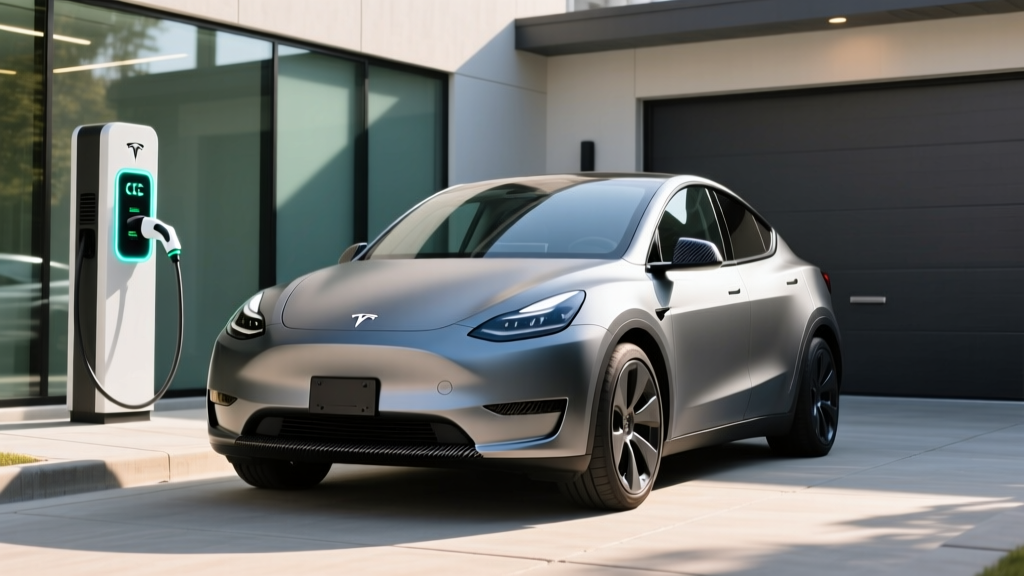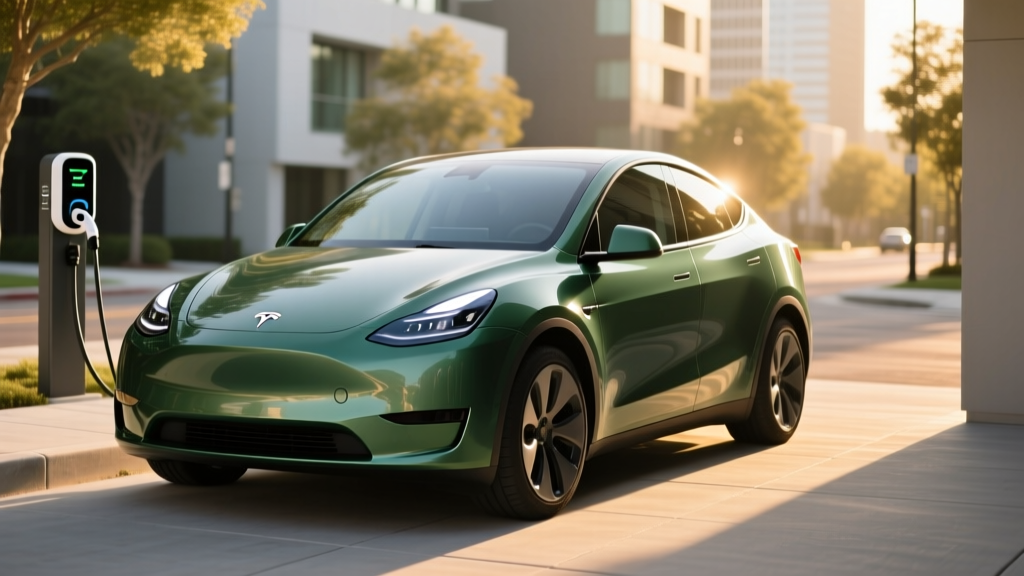
The Tesla Model Y has been the best-selling EV in the world for good reason — practical crossover packaging, access to the Supercharger network, and competitive efficiency. For 2026, Tesla rolls out the comprehensive "Juniper" refresh that debuted in early 2025, bringing a redesigned exterior, a reworked interior with ventilated seats and ambient lighting, improved suspension tuning, and modest range gains. The 2026 Model Y Juniper isn't a ground-up reinvention, but it addresses the most common owner complaints: ride harshness, cabin noise, and dated interior materials.
With competition intensifying from the Hyundai Ioniq 5, Ford Mustang Mach-E, and Chevrolet Equinox EV, the refreshed Model Y needs to defend its segment lead on more than just the Supercharger advantage. Here's every spec, real-world figure, and ownership cost you need before ordering.
2026 Model Y Juniper: Core Specifications at a Glance
| Spec | Long Range AWD | Performance AWD |
|---|---|---|
| EPA Range | 320 miles | 295 miles |
| Battery (usable) | ~78 kWh (NMC) | ~78 kWh (NMC) |
| Peak DC Fast Charge | 250 kW | 250 kW |
| 10–80% DC Time | ~23 minutes | ~23 minutes |
| Level 2 Home Charge | 11.5 kW (~44 mi/hr) | 11.5 kW (~44 mi/hr) |
| 0–60 mph | 4.8 seconds | 3.5 seconds |
| Horsepower | 384 hp | 456 hp |
| Drivetrain | Dual-motor AWD | Dual-motor AWD |
| MPGe (combined) | 111 MPGe | 102 MPGe |
| Efficiency | 30 kWh/100 mi | 33 kWh/100 mi |
| Base MSRP | $44,990 | $51,490 |
| Battery Warranty | 8 yr / 120,000 mi | 8 yr / 120,000 mi |
Note: A rear-wheel-drive Standard Range variant with an LFP battery (~60 kWh, ~260-mile EPA range) is expected later in the 2026 model year. Specs above reflect the currently available Long Range AWD and Performance trims.
Real-World Range: What the EPA Number Doesn't Tell You
EPA sticker: 320 miles (Long Range AWD)
Real-world highway (70–75 mph, moderate temps): ~265–285 miles
Real-world cold weather (below 32°F, mixed driving): ~220–250 miles
Real-world city/commuter (moderate climate): ~295–315 miles
The EPA's 320-mile rating for the Long Range AWD represents a modest bump over the pre-Juniper Model Y, thanks to improved aerodynamics (drag coefficient reduced to approximately 0.226 Cd) and a slightly larger usable battery buffer. But EPA range is a blended-cycle test, and real-world results depend heavily on how you drive.
On a 300-mile highway road trip at sustained 70–75 mph speeds in 65–75°F weather, expect to arrive with roughly 15–20% remaining — meaning usable highway range lands around 265–285 miles. The Model Y's heat pump, now standard across all trims, helps limit cold-weather losses compared to older resistance-heating EVs, but you'll still see a 20–30% range reduction in sub-freezing temperatures. Winter highway range of 220–250 miles is realistic in the upper Midwest or Northeast.
For daily commuting under 50 miles round-trip, the Model Y's efficiency shines. City driving with frequent regenerative braking opportunities can yield 295+ miles on a charge, close to the EPA number. The Juniper's updated thermal management system also reduces energy wasted on battery conditioning during short trips.
Charging Speed: Supercharger Access and Home Setup
| Charging Level | Power / Rate | Miles Added per Hour | Best For |
|---|---|---|---|
| Level 1 (120V outlet) | ~1.4 kW | ~4–5 miles/hr | Emergency / overnight trickle |
| Level 2 (240V, 48A) | 11.5 kW | ~44 miles/hr | Daily home charging |
| DC Fast (V3 Supercharger) | Peak 250 kW | ~1,000 mi/hr at peak | Road trips |
| DC Fast (V4 Supercharger) | Peak 250 kW* | ~1,000 mi/hr at peak | Road trips (newer stations) |
*Tesla's V4 Supercharger cabinets can deliver higher power, but the 2026 Model Y's onboard architecture caps at 250 kW.
The Model Y Juniper retains a peak DC fast-charge rate of 250 kW on Tesla's V3 and V4 Superchargers. In practice, you'll see that peak rate only in a narrow state-of-charge window — roughly 10% to 30% SoC — before the charge curve tapers. The 10–80% charge takes approximately 23 minutes at a V3 Supercharger with a preconditioned battery. From 80% to 100%, expect another 20–25 minutes due to aggressive tapering, which is why Tesla (and all EV makers) recommend charging to 80% on road trips.
One key advantage: the Model Y's native NACS (North American Charging Standard) connector gives it plug-and-charge access to the entire Supercharger network — over 6,500 V3/V4 stalls in the U.S. as of early 2026 — without an adapter. As other automakers adopt NACS, Supercharger congestion at popular corridors may increase, though Tesla continues to expand capacity.
For home charging, the onboard 11.5 kW charger adds roughly 44 miles of range per hour on a 240V/48A Wall Connector circuit. A full 10–100% home charge takes about 8 hours — easily accomplished overnight. Installation of a Tesla Wall Connector on a dedicated 60A circuit typically costs $800–$1,800 including electrician labor and permit, depending on your panel's proximity to the garage. Homes with older 100A electrical panels may need a $2,000–$4,000 panel upgrade to support a 60A EV circuit — consult a licensed electrician before ordering equipment.
Performance, Ride Quality, and the Juniper Suspension Update
The Long Range AWD's dual-motor powertrain produces 384 horsepower and rockets to 60 mph in 4.8 seconds — quick by any measure, and more than adequate for highway merging and passing. The Performance trim bumps output to 456 hp and cuts the 0–60 time to 3.5 seconds, which borders on sports-car territory in a five-seat crossover.
The bigger Juniper story is ride quality. Pre-refresh Model Y owners consistently cited the firm, sometimes jarring suspension as a top complaint. Tesla has retuned the dampers, added frequency-selective suspension components, and improved sound deadening throughout the cabin. The result is a noticeably more compliant ride over rough pavement and expansion joints, while retaining the composed handling that makes the Model Y feel planted in corners. Road noise at highway speed is reduced by several decibels — a meaningful improvement for long-distance comfort.
The Model Y is not a towing-focused vehicle. Maximum towing capacity remains 3,500 pounds with the optional tow hitch — sufficient for a small utility trailer or a pair of dirt bikes, but not a camper. If you need serious tow capacity, the Ford F-150 Lightning or Rivian R1S are more appropriate choices.
Interior, Cargo, and Juniper's Tech Upgrades
The Juniper interior overhaul addresses the "spartan" criticism that dogged earlier Model Y cabins. New features include:
- Ventilated front seats — a first for Model Y, and a welcome addition for warm climates
- Ambient lighting with customizable color zones across the dashboard and door panels
- Power-folding second-row seats for easier cargo configuration
- Rear-seat touchscreen (8 inches) for climate and entertainment control
- Updated materials — soft-touch surfaces replace hard plastics on the dash and door uppers
Cargo capacity remains one of the Model Y's strongest practical attributes. Behind the second row, you get 30.2 cubic feet of space — more than a BMW X3 or Audi Q5. Fold the rear seats flat and capacity expands to 72.1 cubic feet. The front trunk (frunk) adds 4.1 cubic feet for charging cables or a small bag. Rear-seat legroom measures 41.6 inches, adequate for adults on longer trips, though the sloping roofline cuts into headroom for passengers over 6 feet tall.
The 15.4-inch center touchscreen continues to serve as the command center for navigation, media, climate, and vehicle settings. The Juniper adds a new "Adaptive Display" mode that simplifies the UI while driving to reduce distraction. Wireless phone charging now supports up to 25W, and two USB-C ports (65W each) in the rear can charge laptops.
Autopilot, FSD (Supervised), and Driver Assistance
Tesla Autopilot and Full Self-Driving (Supervised) are Level 2 driver-assistance systems per the SAE J3016 standard. The driver must remain fully attentive, keep hands on the wheel, and be prepared to take over at any moment. These are not self-driving systems. Only Level 4 services like Waymo operate without a human driver in defined areas.
The 2026 Model Y comes standard with Tesla's basic Autopilot suite: Traffic-Aware Cruise Control and Autosteer (lane-centering on highways). The $8,000 FSD (Supervised) upgrade adds Navigate on Autopilot (automatic highway interchanges), Auto Lane Change, Autopark, and Summon. Tesla's vision-only approach — no lidar or radar — continues to improve through neural-network updates, but FSD (Supervised) still requires active driver monitoring and occasionally makes puzzling routing decisions in construction zones or unmapped areas.
Standard active safety features include automatic emergency braking, blind-spot monitoring, lane-departure warning, and rear cross-traffic alert. The Model Y earns top marks from both the NHTSA (5-star overall) and the IIHS (Top Safety Pick+ when equipped with acceptable headlights).
Pricing, Trims, and Federal Tax Credit Eligibility
| Trim | Base MSRP | Destination | Total Before Credit | Est. After §30D Credit |
|---|---|---|---|---|
| Long Range AWD | $44,990 | $1,390 | $46,380 | ~$38,880* |
| Performance AWD | $51,490 | $1,390 | $52,880 | ~$45,380* |
*Estimated price after the $7,500 federal EV tax credit. Actual eligibility depends on individual circumstances — see below.
The 2026 Model Y Long Range AWD starts at $44,990 before the $1,390 destination fee. Adding common options — $1,500 for a premium paint color, $2,000 for 20-inch wheels, or $8,000 for FSD (Supervised) — can push an as-tested Long Range to $55,000+. The Performance trim starts at $51,490 and includes the lowered suspension, 21-inch wheels, and performance brakes as standard.
Federal tax credit (IRS §30D) eligibility for 2026: The Model Y qualifies for up to $7,500 in federal tax credits, subject to the following requirements per current IRS rules:
- MSRP cap: The vehicle's base MSRP must not exceed $80,000 for SUVs — both Model Y trims clear this easily.
- Buyer income cap: Modified adjusted gross income (MAGI) must not exceed $150,000 (single), $225,000 (head of household), or $300,000 (joint filers).
- Battery sourcing: The $7,500 credit is split into two halves — $3,750 for critical-minerals sourcing and $3,750 for battery-component manufacturing. Tesla's battery supply chain has progressively shifted to comply, but sourcing requirements tighten annually. Verify current-year compliance on Tesla's website or with your tax professional before ordering.
- Point-of-sale transfer: As of 2024, eligible buyers can transfer the credit to the dealer (Tesla) at purchase, reducing the purchase price upfront rather than waiting for a tax refund. This effectively makes the Long Range AWD ~$38,880 at point of sale for qualifying buyers.
Federal EV tax credit rules under §30D are subject to change and depend on your individual tax situation, the vehicle's battery component and critical-mineral sourcing at time of delivery, and annual income limits. Always verify eligibility at irs.gov and consult a tax professional before making a purchase decision based on credit assumptions.
Ownership Costs: Efficiency, Insurance, and the 5-Year Picture
At 111 MPGe combined (30 kWh/100 mi), the Model Y Long Range AWD is one of the most efficient electric crossovers on sale. Charging at the U.S. average residential electricity rate of $0.17/kWh, a full 78 kWh battery costs roughly $13.26 — yielding a cost per mile of approximately $0.05. Compare that to a gas-powered Toyota RAV4 AWD at 29 MPG combined and $3.30/gallon, which costs about $0.11 per mile. Over 15,000 annual miles, the Model Y saves roughly $900/year in energy costs alone.
Insurance remains a pain point. The Model Y's average annual premium runs $2,200–$2,800 depending on state, driving record, and coverage level — 20–40% higher than comparable gas crossovers, driven by Tesla's higher repair costs and parts pricing. Shop multiple insurers and ask about EV-specific discounts.
Tesla's battery warranty covers 8 years or 120,000 miles (whichever comes first) with a minimum 70% capacity retention threshold. Real-world degradation data from Tesla's fleet shows an average capacity loss of approximately 12% at 150,000 miles — meaning most owners will retain well above the warranty threshold. The NMC battery chemistry in the Long Range offers higher energy density than LFP, though LFP batteries (expected in the Standard Range trim) typically show slower long-term degradation and tolerate regular 100% charging better.
Pros, Cons, and Who the Model Y Juniper Is For
- 320-mile EPA range with class-leading efficiency (111 MPGe)
- Native NACS / Supercharger network access — best public charging experience
- Significantly improved ride quality and cabin quietness (Juniper)
- 30.2 cu ft cargo + 4.1 cu ft frunk — best-in-class practicality
- Strong performance (4.8s 0–60) without sacrificing range
- OTA updates continue to add features post-purchase
- Excellent safety ratings (NHTSA 5-star, IIHS TSP+)
- Insurance premiums 20–40% higher than gas crossovers
- FSD (Supervised) costs $8,000 and remains Level 2 — not self-driving
- Minimal physical controls — everything through the touchscreen
- Supercharger congestion increasing as NACS adoption grows
- Rear headroom tight for tall passengers (sloping roofline)
- No Apple CarPlay or Android Auto integration
- Performance trim rides firmly despite Juniper improvements
- Daily commuters who can charge at home and want minimal fuel cost — the efficiency and 320-mile range mean charging once or twice a week.
- Families needing crossover cargo space and road-trip capability — the Supercharger network makes long-distance travel more predictable than any competing EV.
- Tech-forward buyers who value OTA updates, the Tesla app ecosystem, and over-the-air feature additions.
- Not ideal for: Buyers who prefer physical buttons, need Apple CarPlay, want Level 4 autonomy, or require heavy towing capacity (look to the F-150 Lightning or Rivian R1S).
2026 Model Y Juniper vs. Key Competitors
| Spec | Tesla Model Y LR AWD | Hyundai Ioniq 5 Limited AWD | Ford Mustang Mach-E Ext. Range AWD |
|---|---|---|---|
| EPA Range | 320 mi | 290 mi | 312 mi |
| Battery | ~78 kWh NMC | 84 kWh NMC | 91 kWh NMC |
| Peak DC Charge | 250 kW | 238 kW | 150 kW |
| 10–80% Time | ~23 min | ~18 min (350 kW cap) | ~36 min |
| 0–60 mph | 4.8s | 5.1s | 5.1s |
| Cargo (rear seats up) | 30.2 cu ft | 27.2 cu ft | 29.7 cu ft |
| Base MSRP (AWD) | $44,990 | $53,200 | $48,995 |
| Native Connector | NACS | NACS (2025+) | NACS (adapter) |
The Model Y's combination of range, efficiency, and Supercharger access remains difficult to beat. The Ioniq 5 charges faster on compatible 350 kW chargers (18-minute 10–80%) and offers a more driver-centric interior with physical controls, but its range trails and the Supercharger experience still favors Tesla natively. The Mach-E is a compelling alternative with competitive range, but its slower DC charging is a road-trip drawback. As Hyundai and Ford gain Supercharger access via NACS adoption in 2025–2026, Tesla's charging moat narrows — but Tesla owners still enjoy the most seamless plug-and-charge experience.
Frequently Asked Questions
What is the real-world range of the 2026 Tesla Model Y Juniper?
The EPA rates the Long Range AWD at 320 miles. In real-world highway driving at 70–75 mph in moderate temperatures, expect 265–285 miles. In cold weather below freezing, plan for 220–250 miles. City driving with regenerative braking can approach the EPA sticker figure.
How fast does the 2026 Model Y charge at home and on the road?
On a home Level 2 charger (240V, 48A), the Model Y charges at 11.5 kW, adding about 44 miles of range per hour — a full overnight charge takes roughly 8 hours. On a V3 Supercharger at peak 250 kW, the 10–80% charge takes approximately 23 minutes with a preconditioned battery.
Does the 2026 Model Y qualify for the $7,500 federal EV tax credit?
The Model Y is eligible for up to $7,500 under IRS §30D, provided the buyer meets income caps ($150K single / $300K joint), the vehicle MSRP stays under $80,000 (both trims qualify), and battery sourcing requirements are met at time of delivery. The credit can be transferred at point of sale to reduce the purchase price directly. Always verify current eligibility at irs.gov.
Is the Model Y Juniper worth buying over the Hyundai Ioniq 5 or Ford Mach-E?
If Supercharger access, maximum range, and cargo space are your priorities, the Model Y remains the benchmark. If you prefer physical controls, faster DC charging on non-Tesla networks, or a more traditional interior layout, the Ioniq 5 is a strong alternative. The Mach-E appeals to buyers wanting a sportier design and Ford dealer service proximity, but its slower charging is a trade-off.
What is the battery warranty on the 2026 Model Y?
Tesla covers the battery and drive unit for 8 years or 120,000 miles (whichever comes first) with a guaranteed minimum 70% capacity retention. Fleet data suggests average degradation of approximately 12% at 150,000 miles, well within the warranty threshold for most owners.
Does the Model Y Juniper have Apple CarPlay or Android Auto?
No. Tesla uses its proprietary infotainment system exclusively. The system supports Bluetooth audio streaming, Spotify integration, and a built-in web browser, but there is no CarPlay or Android Auto support — a deliberate choice by Tesla that remains a dealbreaker for some buyers.