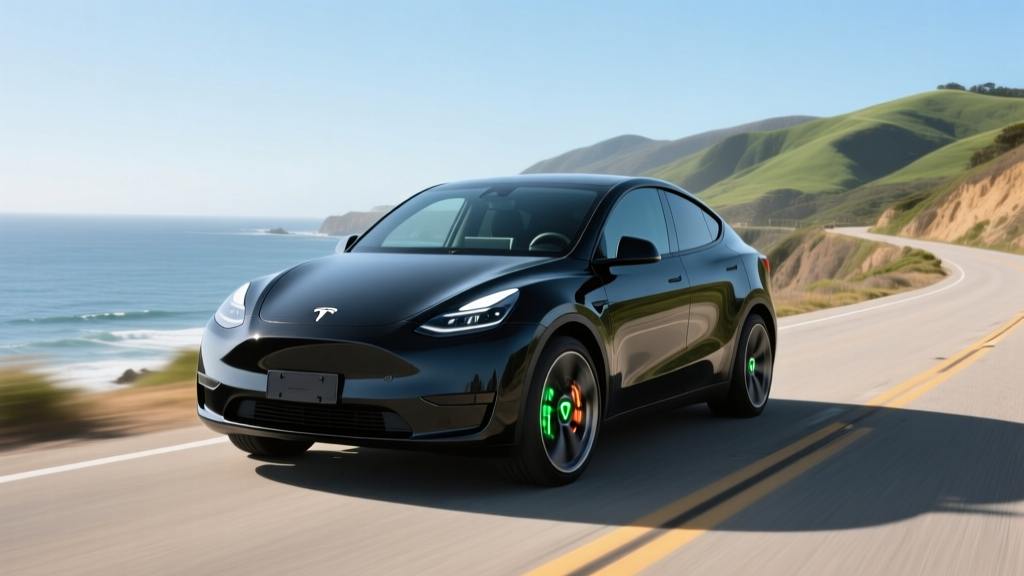
The Tesla Model Y remains the best-selling electric vehicle in the United States for good reason: it threads the needle between range, charging speed, cargo utility, and software sophistication better than almost any crossover on the market. For 2026, Tesla has carried over the significant "Juniper" interior refresh introduced for the 2025 model year, refining materials, adding a rear touchscreen, and improving cabin quietness — while preserving the efficiency gains from the updated aerodynamic profile.
If you're researching the 2026 Tesla Model Y interior alongside its powertrain and ownership economics, this review covers every number that matters — from EPA range and real-world highway expectations to DC fast-charging curves, federal tax credit eligibility, and how it stacks up against the Hyundai Ioniq 5, Ford Mustang Mach-E, and Chevrolet Equinox EV.
Quick Verdict: Who Should Buy the 2026 Model Y?
The 2026 Model Y is the default choice for buyers who want a midsize electric crossover with proven Supercharger network access, class-leading software, and strong efficiency. It's ideal for tech-forward families, daily commuters covering 30-80 miles round trip, and road-trippers who value 250 kW DC fast-charging and a mature public charging network. It is less ideal for buyers who prioritize physical button controls, plush ride quality, or maximum rear headroom for tall passengers.
Consider competitors if: You prefer traditional luxury interior materials (Genesis GV70 Electrified), need hands-free Level 2 highway driving (Ford Mach-E with BlueCruise), or want a lower entry price (Chevrolet Equinox EV).
2026 Tesla Model Y Interior: What Changed and What You Get
The headline for the 2026 model year is continuity. Tesla's "Juniper" redesign — launched in early 2025 — brought the Model Y's cabin in line with the refreshed Model 3 Highland, and those improvements carry into 2026 with minor color and trim tweaks.
Cabin Materials and Noise
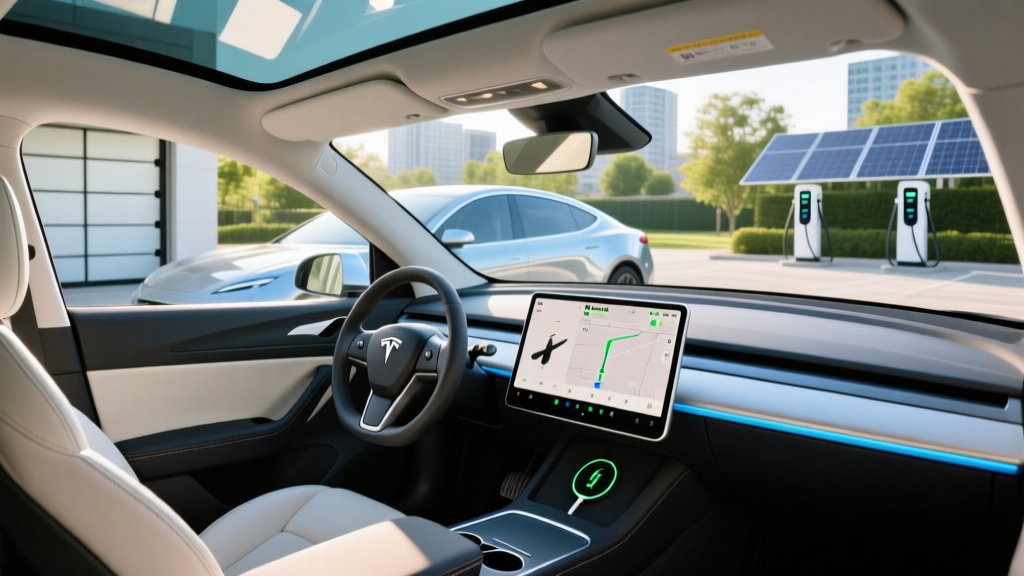
Tesla replaced the previous generation's hard plastics with ventilated synthetic leather (standard on Long Range and Performance trims), acoustic glass on all four doors, and additional sound-deadening material throughout the floor and firewall. The result is a noticeably quieter cabin at highway speeds — roughly a 3-5 dB reduction in road noise compared to the pre-2025 Model Y, based on independent testing. Ambient lighting now runs along the dashboard and door panels, and a textile dash trim replaces the previous wood option on most configurations.
Screens and Infotainment
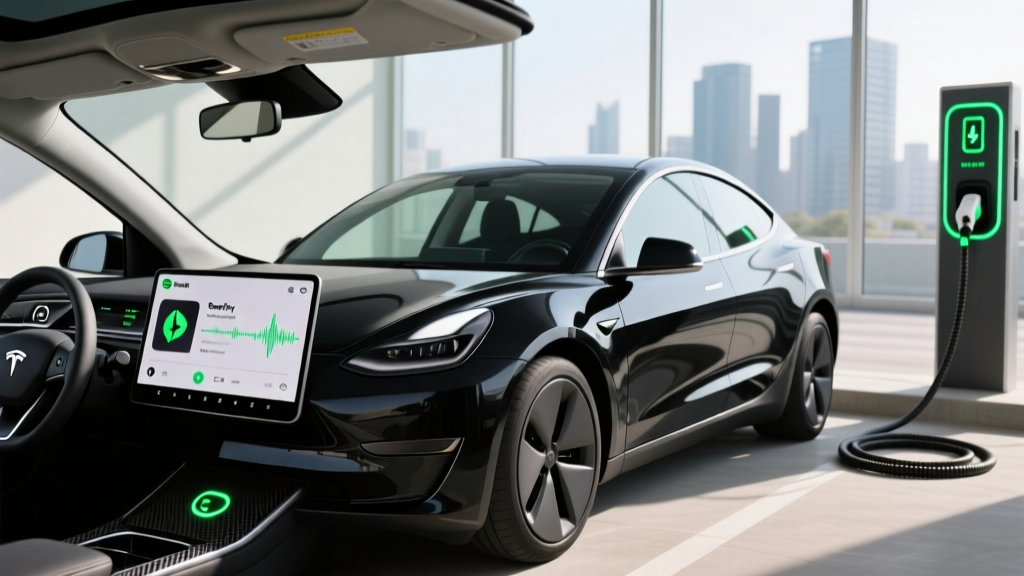
The 15.4-inch front touchscreen remains the command center for navigation, climate, media, and vehicle settings. New for the Juniper generation and carried into 2026: an 8-inch rear touchscreen for passengers, controlling rear climate, seat heaters, and media. The front display supports Netflix, YouTube, and gaming while parked, and Tesla's navigation with real-time Supercharger routing remains best-in-class for trip planning.
Notable omission: there is still no Apple CarPlay or Android Auto. Tesla's native interface is robust, but buyers who rely on phone projection will need to adapt.
Seating and Space
The 2026 Model Y retains its 5-passenger layout (a 7-seat option was discontinued after 2023). Front seats are power-adjustable, heated, and ventilated on Long Range and Performance trims. Rear seat comfort improved with a longer bottom cushion and revised recline angle.
| Dimension | Measurement |
|---|---|
| Front headroom | 41.0 in |
| Front legroom | 41.8 in |
| Rear headroom | 37.7 in |
| Rear legroom | 38.4 in |
| Cargo (behind 2nd row) | 30.2 cu ft |
| Cargo (seats folded) | 72.1 cu ft |
| Front trunk (frunk) | 4.1 cu ft |
For context, the Hyundai Ioniq 5 offers slightly more rear legroom (41.7 in) but less total cargo volume. The Model Y's hatchback design and flat load floor make it one of the most practical EVs in its class for strollers, groceries, and camping gear.
Range, Battery, and Efficiency
The 2026 Model Y is offered in three configurations. Here's how the numbers break down according to EPA estimates on fueleconomy.gov:
| Spec | Long Range AWD | Performance AWD | Rear-Wheel Drive (Standard Range) |
|---|---|---|---|
| EPA Range | 320 mi | 295 mi | ~275 mi (est.) |
| Battery (usable) | ~78 kWh (NMC) | ~78 kWh (NMC) | ~60 kWh (LFP) |
| Efficiency (combined) | 119 MPGe / 28 kWh/100mi | 111 MPGe / 30 kWh/100mi | ~120 MPGe (est.) |
| Horsepower | 384 hp | 456 hp | ~295 hp (est.) |
| 0-60 mph | 4.8 sec | 3.5 sec | ~6.5 sec (est.) |
| Drivetrain | Dual-motor AWD | Dual-motor AWD | Single-motor RWD |
| Top Speed | 125 mph | 155 mph | 135 mph |
LFP vs. NMC: Which Battery Chemistry Is in Your Model Y?
Tesla sources batteries from multiple suppliers (CATL, Panasonic, LG Energy Solution), and chemistry varies by trim:
- Long Range and Performance: Nickel Manganese Cobalt (NMC) — higher energy density, better cold-weather performance, but Tesla recommends charging to 80% daily and 100% only for trips.
- Rear-Wheel Drive (Standard Range): Lithium Iron Phosphate (LFP) — slightly lower energy density, but can be charged to 100% daily without harming longevity. LFP also uses no cobalt or nickel, easing supply-chain and ethical concerns.
If you charge at home every night and want a "set it and forget it" routine, the LFP RWD model has a practical edge despite the lower range.
Charging Speed: DC Fast, Level 2, and Level 1
Charging speed is where the Model Y continues to excel, thanks to Tesla's Supercharger network (now open to non-Tesla EVs via the NACS standard, but still optimized for Tesla vehicles) and the vehicle's strong charge curve.
| Charging Level | Power / Rate | Miles Added per Hour | Notes |
|---|---|---|---|
| Level 1 (120V household) | ~1.4 kW | ~4-5 mi/hr | Emergency/trickle only |
| Level 2 (240V home, 48A) | 11.5 kW | ~38-44 mi/hr | Full charge overnight (~8-9 hrs) |
| Level 2 (240V, 32A Mobile Connector) | 7.7 kW | ~26-30 mi/hr | Included with vehicle |
| DC Fast (Tesla Supercharger V3/V4) | Peak 250 kW | Up to ~1,000 mi/hr (peak) | 10-80% in ~25 min |
| DC Fast (non-Tesla CCS via adapter) | Peak ~170-200 kW | Varies | Depends on station capability |
Understanding the Charge Curve
The 250 kW peak rate on a V3 Supercharger is not sustained across the entire session. The Model Y holds near-peak power from roughly 10% to 45% State of Charge (SoC), then tapers progressively. From 80% to 100%, charging slows dramatically — often below 30 kW — to protect the battery. For road trips, the optimal strategy is to charge from 10% to 80% (about 25 minutes) and drive on. Charging past 80% at a Supercharger is rarely time-efficient unless you're at your destination overnight.
For home charging, a 48-amp Level 2 wall connector on a 60-amp circuit adds roughly 40 miles per hour of charging — enough to fully replenish even the Long Range battery in a single night. Installation costs typically range from $800 to $2,500 depending on panel capacity and conduit run; always consult a licensed electrician for a site-specific quote.
Pricing, Trims, and Federal Tax Credit Eligibility
The 2026 Model Y lineup is simpler than many competitors, with three core trims. Pricing reflects Tesla's direct-to-consumer model (no dealer markups or discounts, though Tesla occasionally adjusts MSRPs mid-year).
| Trim | Base MSRP | Est. After §30D Credit* | Destination |
|---|---|---|---|
| Long Range AWD | $47,990 | ~$40,490 | $1,390 (included above) |
| Performance AWD | $52,990 | ~$45,490 | $1,390 (included above) |
| Rear-Wheel Drive | ~$44,990 (est.) | ~$37,490 (est.) | $1,390 (included above) |
*Federal tax credit amounts shown assume full $7,500 eligibility under IRS §30D rules. Eligibility is not guaranteed — see checklist below.
§30D Federal Tax Credit Eligibility Checklist
- MSRP cap: Vehicle must have an MSRP at or below $80,000 for SUVs/crossovers (Model Y qualifies — it is classified as an SUV by the IRS).
- Buyer income cap: Modified Adjusted Gross Income (MAGI) must not exceed $300,000 (joint filers), $225,000 (head of household), or $150,000 (single filers).
- Battery sourcing: A percentage of critical minerals and battery components must be sourced from the U.S. or free-trade-agreement partners. Tesla has worked to qualify the Model Y, but sourcing requirements tighten annually — verify current-year eligibility on the IRS clean vehicle credit page before purchase.
- Point-of-sale transfer: As of 2024, buyers can transfer the credit to the dealer (Tesla) at purchase, reducing the purchase price directly rather than waiting for a tax refund. This is available for the Model Y.
- Final assembly: Must occur in North America. Model Y is assembled in Fremont, CA, and Austin, TX — both qualify.
Important: Tax credit eligibility changes frequently based on battery sourcing rules and IRS guidance. Consult a tax professional and check the official IRS clean vehicle credit page before finalizing your order. State incentives (e.g., California, Colorado, New York) may stack on top but vary by jurisdiction.
Performance and Driving Dynamics
The 2026 Model Y's dual-motor AWD powertrain delivers confident acceleration and sure-footed handling in rain and light snow. The Long Range's 4.8-second 0-60 mph time is brisk for a family crossover, while the Performance trim's 3.5-second sprint rivals sports sedans. Both use Tesla's heat pump for efficient cabin heating, reducing range loss in cold weather compared to resistive heaters.
Ride quality improved with the Juniper refresh — the suspension is tuned slightly softer than pre-2025 models, absorbing highway imperfections more gracefully. The 20-inch wheels (standard on Long Range) strike a better comfort-vs-efficiency balance than the Performance's 21-inch setup. Steering is precise but light, and regenerative braking offers strong one-pedal driving capability (adjustable in settings).
Towing
The Model Y is rated to tow up to 3,500 pounds (with the factory tow hitch). This covers small boat trailers, bike racks, and light utility trailers. Towing will reduce range by approximately 30-45% depending on trailer weight and aerodynamics — plan charging stops accordingly.
Driver Assistance: Autopilot and FSD (Supervised)
Every 2026 Model Y includes Tesla's Basic Autopilot: adaptive cruise control and lane centering on highways. Full Self-Driving (FSD) Supervised is available as a $8,000 one-time purchase or $99/month subscription, adding automatic lane changes, traffic light and stop sign recognition, and city-street navigation.
Competitors like Ford's BlueCruise and GM's Super Cruise offer hands-free driving on pre-mapped divided highways — a more relaxed experience for long interstate stretches, though with more limited coverage. Tesla's camera-only vision system (no LiDAR or radar) remains a philosophical choice that works well in clear conditions but can struggle in heavy rain, fog, or direct sun glare.
Warranty and Ownership Costs
| Coverage | Term |
|---|---|
| Basic Vehicle Limited Warranty | 4 years / 50,000 miles |
| Battery & Drive Unit (Long Range / Performance, NMC) | 8 years / 120,000 miles (min 70% retention) |
| Battery & Drive Unit (RWD, LFP) | 8 years / 100,000 miles (min 70% retention) |
| Roadside Assistance | 4 years / 50,000 miles |
Tesla's battery warranty guarantees that the pack will retain at least 70% of its original capacity during the warranty period. Independent data from sources like Recurrent Auto suggests that Tesla NMC batteries typically retain 90%+ capacity after 100,000 miles under normal use, with LFP packs showing even slower degradation curves thanks to their chemistry. A full battery replacement outside warranty, however, is estimated at $12,000-$16,000 — a cost to factor into long-term ownership planning.
Insurance and Maintenance
Insurance premiums for the Model Y tend to run 15-25% higher than comparable gas crossovers, reflecting repair costs and Tesla's direct-service model. Tesla Insurance (available in select states) can be competitive — get quotes from both Tesla and third-party insurers. Maintenance is minimal: no oil changes, no transmission fluid, and cabin air filter replacement every 2-3 years. Tire rotation every 6,250 miles is the primary recurring service.
Pros and Cons
- Class-leading Supercharger network access (NACS native)
- Excellent efficiency: 119 MPGe combined (Long Range)
- Spacious cargo area (72.1 cu ft with seats folded) and practical frunk
- Strong over-the-air update cadence keeps software current
- Quiet, refined interior post-Juniper refresh
- LFP battery option for worry-free daily 100% charging
- Competitive pricing after §30D credit (as low as ~$37,500 est.)
- No Apple CarPlay or Android Auto
- All controls via touchscreen — no physical buttons for climate or volume
- Rear headroom tight for passengers over 6'2"
- FSD (Supervised) is expensive and remains Level 2 — not autonomous
- Insurance premiums above segment average
- Ride can still feel firm on broken pavement vs. luxury rivals
- Panel gaps and paint quality inconsistent (improving but not class-leading)
How It Compares to Key Competitors
| Spec | Tesla Model Y LR AWD | Hyundai Ioniq 5 Limited AWD | Ford Mustang Mach-E Premium AWD |
|---|---|---|---|
| EPA Range | 320 mi | 290 mi | ~290 mi |
| Peak DC Charge | 250 kW | 350 kW (800V) | 150 kW |
| 10-80% DC Time | ~25 min | ~18 min | ~38 min |
| Cargo (rear seats up) | 30.2 cu ft | 27.2 cu ft | 29.7 cu ft |
| Starting MSRP | $47,990 | ~$53,000 | ~$48,000 |
| CarPlay/Android Auto | No | Yes | Yes |
| Hands-Free L2 Assist | No (FSD is hands-on) | No | Yes (BlueCruise) |
The Ioniq 5 charges faster on 350 kW stations (a meaningful advantage on Electrify America corridors) and offers a more traditional interior with physical buttons. The Mach-E's BlueCruise is a genuine differentiator for highway commuters. But the Model Y's combination of range, Supercharger reliability, cargo space, and software polish keeps it at the top of the segment for most buyers.
Frequently Asked Questions
What is the real-world range of the 2026 Tesla Model Y?
The EPA rates the Long Range AWD at 320 miles. In real-world highway driving at 70-75 mph, expect 260-280 miles. In cold weather (below 30°F), plan for 220-250 miles. The Performance trim delivers roughly 8% less range due to larger wheels and wider tires.
How fast does the 2026 Model Y charge at home and on the road?
At home on a 48-amp Level 2 charger (240V), the Model Y adds approximately 40 miles per hour and fully charges in 8-9 hours. On a Tesla V3 Supercharger, it peaks at 250 kW and charges from 10% to 80% in about 25 minutes. Charging slows significantly above 80% SoC to protect the battery.
Does the 2026 Model Y qualify for the $7,500 federal EV tax credit?
It can, but eligibility depends on your income (MAGI caps: $300K joint / $150K single), the vehicle's MSRP (under $80K for SUVs — Model Y qualifies), and current battery-sourcing requirements under IRS §30D rules. The credit can be transferred at point of sale to reduce your purchase price. Always verify on the IRS clean vehicle credit page before ordering, as sourcing rules tighten annually.
Is the 2026 Model Y worth buying over the Hyundai Ioniq 5 or Ford Mach-E?
If Supercharger access, cargo volume, and software integration are priorities, the Model Y remains the strongest all-around choice. If you want faster DC charging on non-Tesla networks, the Ioniq 5's 800V architecture is superior. If hands-free highway driving matters, the Mach-E with BlueCruise is the pick. Test-drive all three before deciding.
What are the biggest drawbacks of the 2026 Model Y interior?
The all-touchscreen interface (no physical buttons) frustrates some buyers. Rear headroom is limited for tall passengers. There's no Apple CarPlay or Android Auto. And while the Juniper refresh improved materials and noise insulation, panel-gap consistency still lags behind legacy luxury automakers.
Does FSD make the Model Y self-driving?
No. Full Self-Driving (Supervised) is an SAE Level 2 driver-assistance system. The driver must remain fully engaged, monitor the road, and be ready to take control at any time. It does not operate the vehicle autonomously.