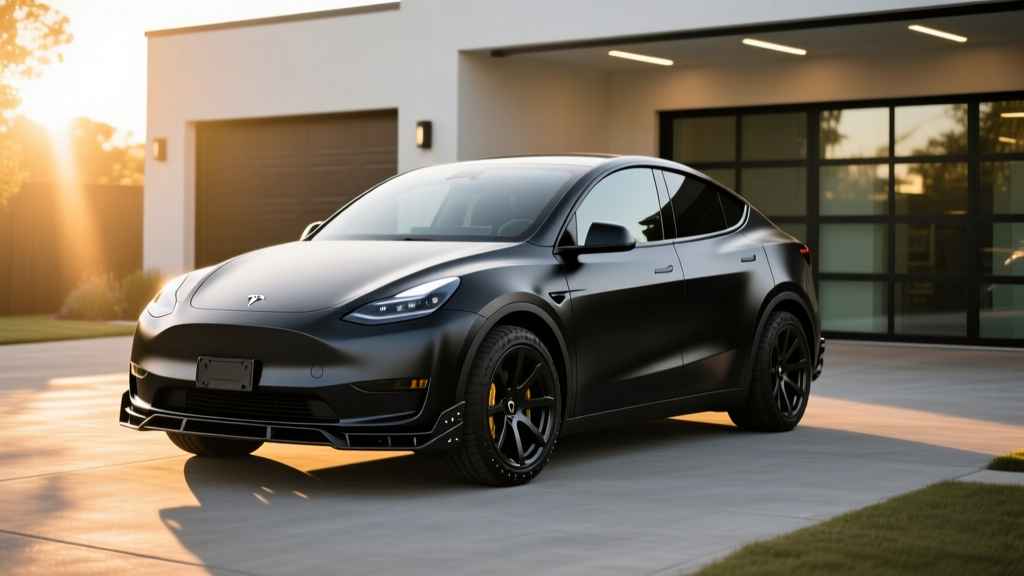
Verdict: The Model Y Juniper Remains the Benchmark EV Crossover
When EV shoppers search for a "bulletproof Tesla," they're not looking for armor plating — they're hunting for the most reliable, proven, and practical electric vehicle in Tesla's lineup. After the Juniper refresh landed for the 2025 model year and carried forward into 2026, the Tesla Model Y has cemented itself as exactly that: the safest bet in Tesla's portfolio for buyers who want real-world usability, strong charging infrastructure access, and a mature platform that's been stress-tested by millions of owners worldwide.
The 2026 Model Y Long Range AWD delivers an EPA-estimated 320 miles of range, 250 kW DC fast charging, and a starting price of $44,990 (before incentives). But is it truly bulletproof when you factor in real-world range loss, cold-weather efficiency, and the evolving federal tax credit landscape? Let's break down every number that matters.
2026 Tesla Model Y: Full Spec Sheet
| Specification | Value |
|---|---|
| EPA Range | 320 miles |
| Battery Capacity (Usable) | ~78 kWh, NMC chemistry |
| Drivetrain | Dual-Motor AWD |
| Horsepower | 384 hp (combined) |
| 0–60 mph | 4.8 seconds |
| Peak DC Fast Charge | 250 kW |
| 10–80% DC Charge Time | ~25 minutes |
| Level 2 Home Charging | 11.5 kW (~44 mi/hr) |
| EPA Efficiency | 111 MPGe combined (30 kWh/100 mi) |
| Cargo Volume (rear seats up) | 30.2 cu ft |
| Cargo Volume (rear seats folded) | 72.0 cu ft |
| Rear Legroom | 41.6 inches |
| Battery Warranty | 8 years / 120,000 miles |
| Base MSRP (Long Range AWD) | $44,990 |
| As-Tested Price (w/ FSD) | ~$52,990 |
Sources: EPA / fueleconomy.gov, Tesla.com. Specs reflect the 2026 model year Long Range AWD trim.
Real-World Range: What 320 EPA Miles Actually Means on the Road
Real-World Highway (70 mph, mild weather): ~270–290 miles
Real-World Highway (cold weather, 30°F): ~230–260 miles
City / Commuter Driving (regen-heavy): ~300–320 miles
The EPA's 320-mile estimate for the Model Y Long Range AWD is achieved under a blended test cycle that favors lower speeds and frequent regenerative braking. In practice, your mileage will vary based on driving style, terrain, and temperature.
On a 300-mile highway road trip at sustained 70–75 mph speeds in 65°F weather, expect to arrive with roughly 30–50 miles of buffer — meaning one DC fast-charge stop is mandatory. In winter conditions (below freezing), lithium-ion internal resistance increases and cabin heating draws from the pack, pushing real-world range down by 15–25%. The Model Y's standard heat pump helps mitigate this compared to resistive heating systems, but cold-weather highway driving still demands conservative trip planning.
For daily commuters covering 30–50 miles round-trip with access to home Level 2 charging, the 320-mile envelope is more than sufficient. You'll charge to 80% overnight and rarely think about range day-to-day.
Charging Speed: 250 kW Peak, but Watch the Curve
| Charge Level | Power (kW) | Miles Added per Hour | Notes |
|---|---|---|---|
| Level 1 (120V outlet) | ~1.4 kW | ~3–5 mi/hr | Emergency/trickle only |
| Level 2 (240V home) | 11.5 kW | ~44 mi/hr | Full charge in ~7 hours |
| DC Fast Charge (Tesla Supercharger V3/V4) | Up to 250 kW | Up to ~1,000 mi/hr (peak) | 10–80% in ~25 min |
| DC Fast Charge (CCS adapter, non-Tesla) | Up to ~150–200 kW | Variable | Depends on station output |
The Model Y's peak 250 kW DC fast-charge rate is only sustained at low states of charge (roughly 10–30% SoC). The charge curve tapers progressively: by 60% SoC you'll see roughly 120–150 kW, and above 80% it drops below 50 kW to protect the NMC cells. This is standard behavior for lithium-ion packs, but it means the advertised 10–80% time of ~25 minutes is realistic only if you arrive at the charger with preconditioning active and a low SoC.
Preconditioning matters. Navigate to a Supercharger using the car's built-in routing, and the thermal management system will warm the battery en route, enabling peak charge rates on arrival. Plug in cold without preconditioning, and your initial charge rate may be cut in half for the first 5–10 minutes.
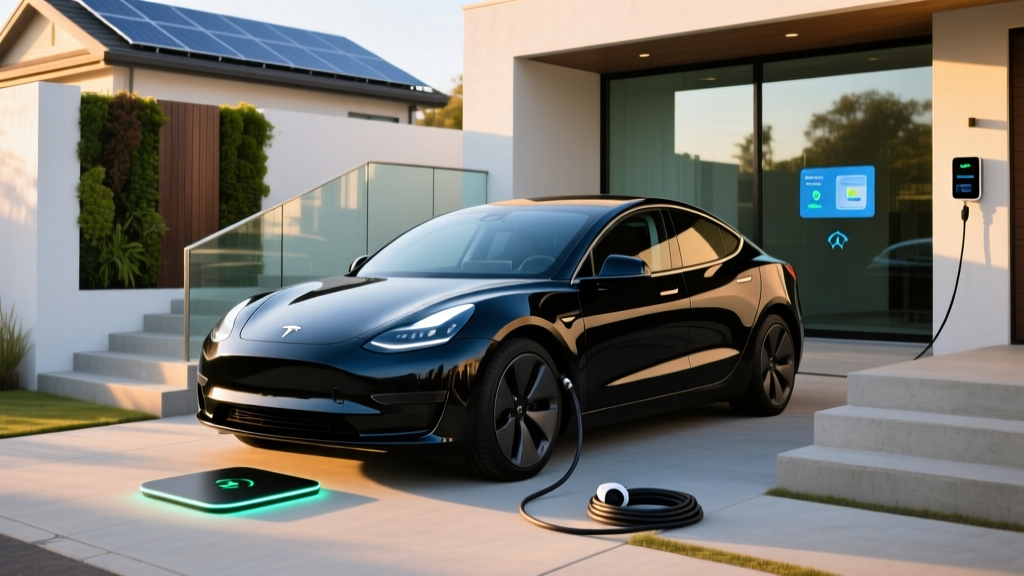
At home on a 48-amp Level 2 circuit (the typical Tesla Wall Connector installation), the Model Y recovers roughly 44 miles of range per hour. A depleted pack reaches full overnight in about 7 hours. For most owners, plugging in each evening and setting a charge limit of 80% (recommended daily max for NMC chemistry) means you start every morning with ~256 real-world miles.
Performance and Driving Dynamics
The dual-motor AWD powertrain produces 384 combined horsepower, launching the Model Y Long Range to 60 mph in 4.8 seconds. That's sports-sedan territory in a 4,400-pound crossover — a combination that still surprises first-time EV drivers.
The Juniper refresh brought meaningful refinements: improved suspension tuning reduces the crashy ride quality that plagued pre-2025 Model Ys over rough pavement. Cabin noise levels dropped noticeably thanks to acoustic glass and additional sound deadening. The result is a crossover that finally feels premium on par with its price tag, rather than merely fast.
Regenerative braking is strong and adjustable, enabling one-pedal driving in most city scenarios. The steering remains quick but light — not engaging by enthusiast standards, but confidence-inspiring for daily commuting and highway cruising.
Pricing, Trims, and Federal Tax Credit Eligibility
| Trim | Base MSRP | Estimated Price After §30D Credit* |
|---|---|---|
| Long Range RWD | $42,990 | ~$35,490 |
| Long Range AWD | $44,990 | ~$37,490 |
| Performance AWD | $49,990 | ~$42,490 |
*Federal tax credit estimates assume full eligibility. See IRS §30D requirements below.
- Vehicle MSRP cap: SUVs/crossovers must be priced at or below $80,000 (all Model Y trims qualify)
- Buyer income cap: Modified AGI ≤ $150,000 (single) / $300,000 (joint)
- Battery sourcing: Critical minerals and battery components must meet phased-in domestic/FtA sourcing thresholds — check Tesla's current eligibility status at purchase, as supply chains shift
- Credit amount: Up to $7,500 ($3,750 for critical minerals + $3,750 for battery components)
- Point-of-sale transfer: Eligible buyers can apply the credit as an upfront discount at the dealer, reducing out-of-pocket cost immediately
Verify current eligibility at IRS.gov qualified vehicle list. Rules and eligible models change periodically based on battery-sourcing compliance.
The Model Y Long Range AWD at $44,990 sits well under the $80,000 SUV MSRP cap. If you meet the income requirements and the specific VIN qualifies under current battery-sourcing rules, the effective purchase price drops to roughly $37,490 — a compelling value for a 320-mile AWD crossover. Adding Full Self-Driving (Supervised) at $8,000 pushes as-tested pricing to ~$52,990 before incentives.
Technology, Interior, and Standout Features
The Juniper interior is a meaningful step up from the pre-refresh Model Y. Key highlights:
- 15.4-inch center touchscreen with faster processor and ventilated front seats as standard
- Rear 8-inch touchscreen for rear-seat passengers (climate, media controls)
- Ambient lighting and premium materials throughout the cabin
- Power-folding second row for quick cargo expansion
- Autopilot (Level 2) included standard — adaptive cruise + lane centering
- FSD (Supervised) optional at $8,000 — adds automatic lane changes, traffic light/stop sign recognition, and navigation-guided driving
The 15.4-inch display handles everything — navigation, media, vehicle settings, and even gaming while parked. Tesla's software remains the most responsive and regularly updated in the EV industry, with over-the-air updates adding features post-purchase. However, the absence of physical buttons for climate, wipers, and glovebox access continues to frustrate some buyers who prefer tactile controls.
Pros, Cons, and the Competition
- 320-mile EPA range covers most road trips with a single stop
- 250 kW Supercharger network — the most reliable public DC fast-charging ecosystem in the US
- Class-leading cargo volume (72 cu ft) for a compact electric crossover
- Strong real-world efficiency at 30 kWh/100 mi
- Regular OTA updates add features over time
- Qualifies for up to $7,500 federal tax credit (eligibility dependent)
- Touchscreen-only controls (no physical buttons for climate/wipers)
- FSD (Supervised) at $8,000 remains a Level 2 system — not autonomous driving
- NMC battery chemistry requires 80% daily charge limit for longevity (unlike LFP)
- Insurance premiums tend to run 15–25% higher than comparable non-Tesla EVs
- Service center wait times can stretch weeks in some metro areas
Key competitors include the Hyundai Ioniq 5 (310 mi EPA, ~$42,500), Ford Mustang Mach-E (312 mi, ~$43,000), and Kia EV6 (310 mi, ~$42,900). The Model Y's edge lies in the Supercharger network, software ecosystem, and cargo space. Competitors counter with more physical controls, faster 10–80% charge times (Ioniq 5 at ~18 minutes on 350 kW chargers), and in some cases, LFP battery options that tolerate daily 100% charging.
Who Should Buy the 2026 Tesla Model Y?
- You road-trip frequently and value the Supercharger network's reliability
- You need maximum cargo versatility (72 cu ft with seats folded)
- You want a proven platform with millions of miles of fleet data behind it
- You qualify for the full §30D credit, bringing the effective price under $38,000
- You want physical buttons and traditional controls
- You prefer LFP chemistry for worry-free 100% daily charging
- You prioritize the fastest possible DC charge times (Hyundai/Kia 800V platforms are quicker)
- Tesla service center availability in your area is limited
For commuters, young families, and road-trip-prone drivers who want the most "bulletproof" Tesla — meaning the most proven, practical, and infrastructure-supported model — the 2026 Model Y Long Range AWD remains the default recommendation. It's not the flashiest Tesla, but it's the one that makes the most financial and logistical sense for the widest range of buyers.
Frequently Asked Questions
What is the real-world range of the 2026 Tesla Model Y?
The EPA rates the Model Y Long Range AWD at 320 miles. In real-world highway driving at 70 mph in mild weather, expect 270–290 miles. In cold weather (below 30°F), highway range drops to approximately 230–260 miles. City driving with frequent regenerative braking can approach or match the EPA estimate.
How fast does the Model Y charge at home and on the road?
At home on a Level 2 (240V, 48-amp) charger, the Model Y adds about 44 miles of range per hour, fully recharging in ~7 hours. On a Tesla V3/V4 Supercharger, it peaks at 250 kW and charges from 10–80% in approximately 25 minutes, though actual time depends on battery temperature and preconditioning.
Does the 2026 Tesla Model Y qualify for the federal EV tax credit?
The Model Y is eligible for up to $7,500 under IRS §30D, provided the buyer meets income caps ($150K single / $300K joint), the MSRP is under $80,000 (all trims qualify), and the specific vehicle meets current battery-sourcing requirements. Eligibility can shift as Tesla's supply chain evolves — always verify on the IRS qualified vehicles list before purchasing.
Is the Tesla Model Y worth buying vs. the Hyundai Ioniq 5 or Ford Mach-E?
The Model Y wins on Supercharger network access, cargo space (72 vs. ~57 cu ft), and software maturity. The Ioniq 5 charges faster (10–80% in ~18 min on 350 kW chargers) and offers more physical controls. The Mach-E provides a more conventional driving feel. Test-drive all three — the best choice depends on your priorities.
What are the biggest drawbacks of the Model Y?
The touchscreen-only interface (no physical climate or wiper controls) is the most common complaint. Insurance costs run higher than average. NMC battery chemistry requires an 80% daily charge limit for optimal longevity. And Tesla service center availability varies significantly by region.
How long will the Model Y battery last?
Tesla warranties the battery for 8 years or 120,000 miles (whichever comes first), guaranteeing at least 70% capacity retention. Real-world data from high-mileage Teslas suggests NMC packs typically retain 85–90% capacity at 100,000 miles when charged responsibly (daily limit of 80%, occasional 100% for trips).