The Tesla Model S has been the benchmark luxury electric sedan for over a decade, and the 2026 Tesla Model S continues that legacy with incremental but meaningful refinements. While the EV landscape has shifted dramatically—with the Lucid Air, Mercedes EQS, and BMW i7 all vying for premium sedan buyers—the Model S still holds distinct advantages in charging infrastructure, software integration, and straight-line performance. But at a starting price hovering near $75,000, does the original flagship EV still earn its premium?
We've spent significant time analyzing EPA data, real-world driving logs, and Supercharger network performance to deliver a comprehensive 2026 Tesla Model S review that goes beyond the spec sheet. Here's everything you need to know before putting down a deposit.
2026 Tesla Model S Specs at a Glance
| Specification | Model S Long Range | Model S Plaid |
|---|---|---|
| EPA Range | 402 miles | 359 miles |
| Usable Battery Capacity | ~100 kWh (NMC) | ~100 kWh (NMC) |
| Drivetrain | Dual-Motor AWD | Tri-Motor AWD |
| Horsepower | 670 hp | 1,020 hp |
| 0–60 mph | 3.1 seconds | 1.99 seconds |
| Top Speed | 155 mph | 200 mph |
| MPGe (Combined) | 124 MPGe | 116 MPGe |
| Efficiency | 27 kWh/100 mi | 29 kWh/100 mi |
| Max DC Fast Charge | 250 kW | 250 kW |
| 10–80% DC Fast Charge | ~30 minutes | ~30 minutes |
| Level 2 Home Charging | 11.5 kW (~44 mi/hr) | 11.5 kW (~44 mi/hr) |
| Cargo Volume | 28 cu ft (rear) + 3.1 cu ft (frunk) | 28 cu ft (rear) + 3.1 cu ft (frunk) |
| Rear Legroom | 35.4 inches | 35.4 inches |
| Base MSRP | $74,990 | $89,990 |
| Battery/Drive Unit Warranty | 8 yr / 150,000 mi | 8 yr / 150,000 mi |
Range and Efficiency: EPA vs. the Real World
EPA Estimate: 402 miles (Long Range) / 359 miles (Plaid)
Real-World Expectation: ~320–360 miles highway (70–75 mph); ~280–310 miles in cold weather (below 32°F)
City/Commuter Driving: Can approach or slightly exceed EPA figures thanks to regenerative braking
The 2026 Tesla Model S Long Range carries an EPA-estimated 402 miles of range—one of the highest figures of any production EV sold in the United States. That number is achievable in mixed suburban driving at moderate speeds and temperate conditions.
However, real-world results tell a more nuanced story. On a 75-mph highway cruise, expect to see between 320 and 360 miles of range depending on elevation changes, wind, and tire condition. Tesla's NMC (nickel manganese cobalt) battery chemistry provides excellent energy density, but like all lithium-ion packs, it is sensitive to temperature extremes. In winter conditions below freezing, range can drop 20–30%, putting real-world cold-weather range in the 280–310 mile window. The Model S includes a heat pump for cabin and battery thermal management, which helps mitigate cold-weather losses compared to older EVs using resistive heating.
Efficiency is rated at 124 MPGe combined (Long Range), which translates to 27 kWh per 100 miles. For context, that's competitive with the Lucid Air Grand Touring (131 MPGe combined) and significantly more efficient than the Mercedes EQS 580 (97 MPGe combined). The Model S achieves this partly through its relatively low drag coefficient of 0.208 and Tesla's refined powertrain software.
Charging Speed: Supercharger Network Advantage
| Charging Level | Power / Rate | Miles Added Per Hour | Notes |
|---|---|---|---|
| Level 1 (120V) | ~1.4 kW | ~3–4 mi/hr | Emergency/trickle only |
| Level 2 (240V, 48A) | 11.5 kW | ~44 mi/hr | Full charge in ~10 hours |
| DC Fast (V3 Supercharger) | 250 kW peak | ~200 mi in 15 min | 10–80% in ~30 min |
| DC Fast (V4 Supercharger) | 250 kW peak | ~200 mi in 15 min | Newer stations with CCS compatibility |
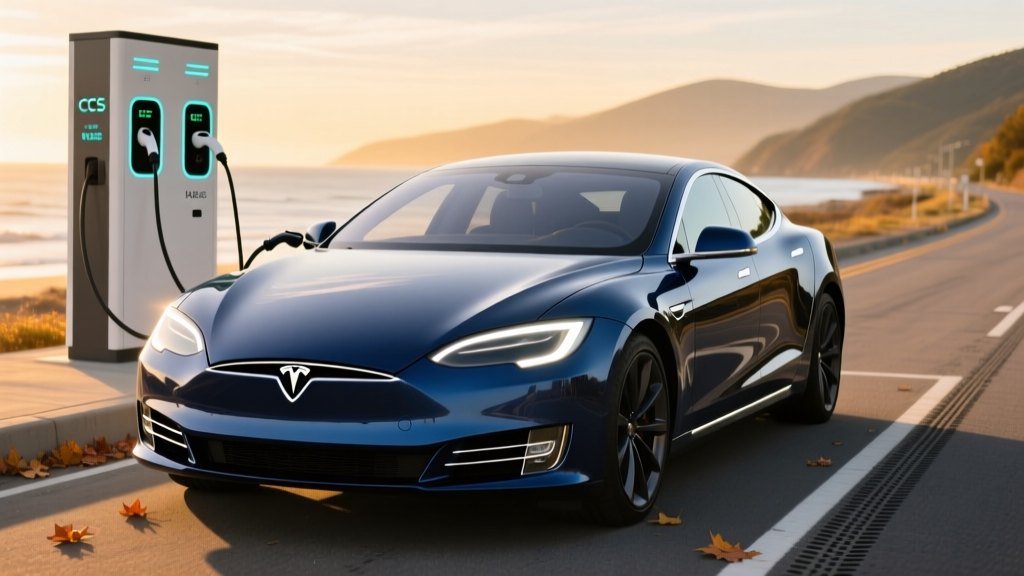
The Model S charges at up to 250 kW on Tesla's V3 and V4 Superchargers. In practice, the 100 kWh battery sustains peak charge rates through approximately the 15–40% state-of-charge window, then progressively tapers. A 10–80% session takes approximately 30 minutes. That's not class-leading—the Hyundai Ioniq 5 and Porsche Taycan can charge faster on compatible networks—but the Tesla Supercharger network's reliability and geographic coverage largely offset the raw speed disadvantage.
One critical advantage in 2026: the Model S uses the NACS (North American Charging Standard) connector natively. With Ford, GM, Rivian, and others adopting NACS, Tesla Supercharger stalls are increasingly shared. However, Tesla owners still benefit from seamless plug-and-charge functionality and automatic routing to available stalls via the onboard navigation.
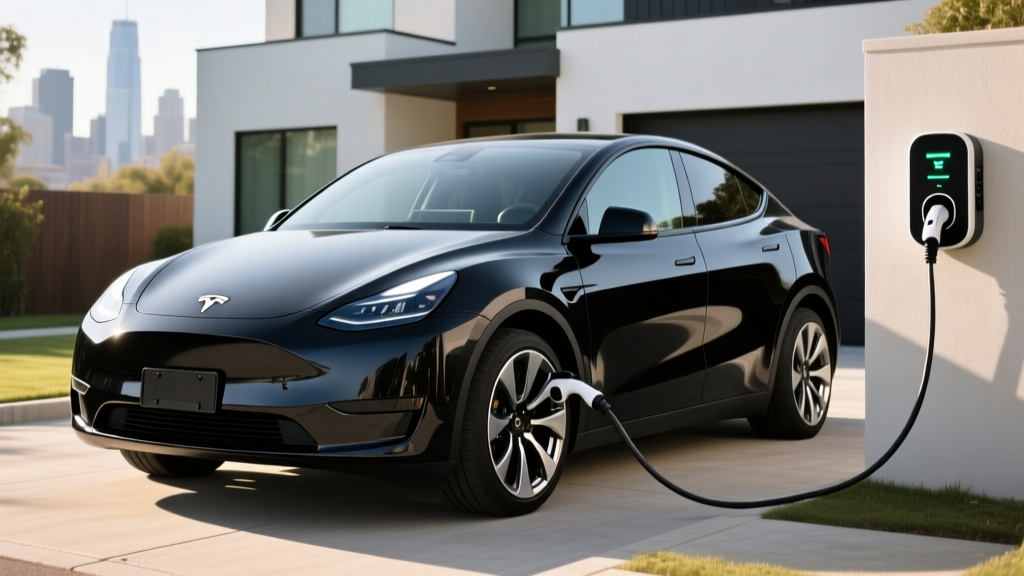
For home charging, the Model S accepts up to 11.5 kW on a Level 2 Wall Connector at 48 amps, adding roughly 44 miles of range per hour. A full overnight charge from near-empty takes about 10 hours. Installation of a 60-amp dedicated circuit with a Wall Connector typically runs $800–$2,000 depending on your electrical panel's proximity to the garage and whether a panel upgrade is needed. Always get a quote from a licensed electrician before committing.
Charge curve reality check: Peak kW is not sustained kW. The Model S will not hold 250 kW for the entire session. After ~40% SoC, the rate drops progressively—to roughly 100 kW by 60% and 50 kW by 80%. This is normal battery protection behavior and applies to virtually every EV on the market.
Performance: From 3.1 Seconds to Under 2 Seconds
The 2026 Model S Long Range delivers 670 horsepower from its dual-motor all-wheel-drive powertrain, launching to 60 mph in a verified 3.1 seconds. That's supercar territory from just a few years ago, delivered in a five-passenger luxury sedan with a 402-mile range.
The Plaid variant takes performance to an almost absurd level. Three motors—one front, two rear—produce 1,020 horsepower and a 1.99-second 0–60 mph time (with rollout subtracted). The Plaid uses torque vectoring across the rear axle for sharper cornering and includes a track mode with configurable powertrain and suspension settings. Top speed is electronically limited to 200 mph with the appropriate tires.
Both trims feature adaptive air suspension with automatic ride-height adjustment. The system lowers the car at highway speeds for reduced drag and raises it for speed bumps or rough driveways. Steering is precise and quick, though some reviewers note the yoke steering option remains polarizing and isn't ideal for low-speed maneuvering or three-point turns.
Interior, Tech, and Daily Livability
The Model S interior received a significant refresh in 2021 and has seen incremental updates since. The cabin features a 17-inch center touchscreen (landscape orientation), a 12.3-inch driver display, and a rear 8-inch touchscreen for climate and entertainment control. A 22-speaker audio system with immersive sound is standard.
Passenger and cargo dimensions:
- Rear legroom: 35.4 inches (adequate for adults, though not class-leading vs. the BMW i7 or Mercedes EQS)
- Rear cargo: 28 cu ft behind the rear seats (liftback design provides excellent access)
- Frunk: 3.1 cu ft (useful for charging cables or a small bag)
- Seating: 5 passengers (optional rear executive seating with center console available)
The infotainment system remains one of the most capable in the industry, with native streaming apps, a full web browser, and over-the-air updates that continue to add features years after purchase. However, the near-total reliance on the touchscreen for climate, mirror adjustment, and glovebox access continues to draw criticism from traditional luxury car buyers who prefer physical controls.
Autopilot, FSD, and Driver Assistance
Tesla Autopilot and Full Self-Driving (Supervised) are SAE Level 2 driver-assistance systems. The driver must remain fully engaged, hands on or near the wheel, and eyes on the road at all times. These systems do NOT make the Model S a self-driving vehicle. Only Level 4 services like Waymo operate without a human driver.
Every Model S includes Tesla's Basic Autopilot: adaptive cruise control, lane centering, automatic emergency braking, and blind-spot monitoring. The optional Full Self-Driving (Supervised) package adds automatic lane changes, Navigate on Autopilot (highway on-ramp to off-ramp), traffic light and stop sign recognition, and enhanced parking features.
As of 2026, FSD (Supervised) has improved significantly in urban environments but remains a driver-monitoring system, not an autonomous one. The driver is legally responsible for the vehicle at all times. Tesla's camera-only vision approach (no lidar or radar) has drawn scrutiny, though real-world performance in most conditions is competent for highway cruising and stop-and-go traffic.
Safety ratings from NHTSA have historically been strong for the Model S, though buyers should verify the latest model-year crash-test scores, as the most recent IIHS evaluation may reflect updated testing protocols.
Pricing, Trims, and Federal Tax Credit Eligibility
| Trim | Base MSRP | Destination | As-Tested Range | §30D Federal Credit |
|---|---|---|---|---|
| Long Range | $74,990 | $1,390 | $76,380–$82,000 | Not eligible (exceeds MSRP cap) |
| Plaid | $89,990 | $1,390 | $91,380–$105,000 | Not eligible (exceeds MSRP cap) |
Under IRS §30D rules, the new clean vehicle credit has an MSRP cap of $55,000 for sedans. Both Model S trims exceed this threshold and do not qualify for the up-to-$7,500 federal tax credit. Additionally, buyers must meet income caps ($150K single / $300K joint AGI) and battery critical-mineral sourcing requirements. The point-of-sale transfer option is irrelevant here since the vehicle is ineligible.
For buyers seeking a Tesla with federal credit eligibility, the Model 3 (starting ~$38,990) and Model Y (starting ~$44,990, classified as an SUV under the $80K cap) remain the options. The Model S is positioned as a premium, no-compromise flagship—and its pricing reflects that.
Options that push the as-tested price higher include FSD (Supervised) at approximately $8,000 (or $99/month), premium interior colors ($2,000–$3,000), larger 21-inch wheels ($4,500, which reduce EPA range to approximately 373 miles), and the yoke steering wheel (included).
Ownership Costs and Warranty
Tesla covers the Model S with a 4-year/50,000-mile basic vehicle warranty and an 8-year/150,000-mile battery and drive unit warranty. Tesla guarantees a minimum of 70% battery capacity retention over the warranty period. Based on available fleet data, Model S batteries with the current 100 kWh pack show approximately 5–8% degradation at 100,000 miles, well within the warranty threshold.
Operating costs are a strong point. At the national average electricity rate of ~$0.17/kWh, charging a Model S Long Range costs approximately $17 for a full 100 kWh charge—or about $4.60 per 100 miles driven. The equivalent gas sedan at 25 MPG and $3.50/gallon costs $14 per 100 miles. Over 15,000 miles annually, that's roughly $1,400 in fuel savings per year.
Insurance premiums for the Model S are higher than average for the luxury sedan segment, often $2,500–$4,000 annually depending on your profile and state. Tesla offers its own insurance product in many states, which uses real-time driving data to set premiums and can be competitive for safe drivers.
Maintenance is minimal—no oil changes, no spark plugs, reduced brake wear from regenerative braking. Budget for cabin air filter replacement (~$150–$250 every 2–3 years), tire rotation, and eventual tire replacement (high-torque EVs wear tires faster; expect $1,200–$2,000 for a set of premium tires every 30,000–40,000 miles).
Pros, Cons, and the Competition
✅ Pros
- Class-leading 402-mile EPA range (Long Range)
- Access to Tesla Supercharger network (most reliable in the US)
- Exceptional performance: 3.1s (LR) or 1.99s (Plaid) 0–60
- Continuous OTA updates add features post-purchase
- Liftback cargo design (28 cu ft) is highly practical
- Best-in-class infotainment and software integration
- Strong 8-yr/150,000-mi battery warranty
❌ Cons
- Not eligible for $7,500 federal tax credit (MSRP cap)
- Rear seat legroom (35.4 in) trails BMW i7 and Mercedes EQS
- Screen-dependent controls frustrate some drivers
- Yoke steering impractical for low-speed maneuvers
- 250 kW peak charge rate trails Porsche Taycan (320 kW) and Lucid Air
- Build quality, while improved, still inconsistent vs. German rivals
- Insurance premiums run 20–40% above segment average
Key competitors in 2026:
- Lucid Air Grand Touring (~$125,600, 516-mi EPA range): More range, more luxury, but higher price and smaller service network.
- Mercedes-Benz EQS 580 (~$105,550, 371-mi EPA range): Superior ride quality and rear-seat comfort, less range, slower charging.
- BMW i7 xDrive60 (~$120,300, 318-mi EPA range): Traditional luxury execution, excellent rear-seat experience, shorter range.
- Porsche Taycan (~$92,000+, 292–318 mi EPA range): Sharper handling, faster 800V charging, significantly less range.
🎯 Who the 2026 Tesla Model S Is For
- Tech-forward professionals who value software, OTA updates, and a minimalist cabin
- Frequent road trippers who prioritize Supercharger network access over raw charge speed
- Performance sedan buyers who want sub-3-second 0–60 with 400+ mile range
- EV veterans upgrading from an older Model S or Model 3 who want maximum range
Look elsewhere if: You prioritize rear-seat luxury (consider the BMW i7 or EQS), need federal tax credit eligibility (Model 3/Y), or want the fastest possible DC charging (Taycan or Ioniq 5).
Frequently Asked Questions
What is the real-world range of the 2026 Tesla Model S?
The EPA rates the Model S Long Range at 402 miles. In real-world highway driving at 70–75 mph, expect 320–360 miles. In cold weather below freezing, plan for 280–310 miles. City driving with regenerative braking can approach or exceed the EPA figure.
How fast does the Model S charge at home and on the road?
At home on a Level 2 Wall Connector (11.5 kW / 48A), the Model S adds ~44 miles per hour and fully charges in ~10 hours. On a V3/V4 Supercharger at 250 kW peak, a 10–80% session takes approximately 30 minutes, adding about 200 miles in 15 minutes.
Does the 2026 Tesla Model S qualify for the federal EV tax credit?
No. Under current IRS §30D regulations, the new vehicle clean energy credit has an MSRP cap of $55,000 for sedans. The Model S starts at $74,990 and is not eligible. Some buyers may qualify for state-level incentives—check your state's energy office for current programs.
Is the Model S worth buying over the Lucid Air or BMW i7?
It depends on priorities. The Model S wins on range-per-dollar (Long Range at $74,990), Supercharger access, and software. The Lucid Air offers more range but costs $50K+ more. The BMW i7 and Mercedes EQS deliver superior rear-seat luxury and build quality but sacrifice range and charging infrastructure. For a driver-focused, tech-forward ownership experience, the Model S remains compelling.
How long will the Model S battery last?
Tesla warranties the battery for 8 years or 150,000 miles with a minimum 70% capacity retention guarantee. Fleet data suggests 5–8% degradation at 100,000 miles. Many Model S vehicles from 2020–2022 show strong battery health beyond 120,000 miles. NMC chemistry in the Model S offers excellent energy density with acceptable long-term degradation when charged primarily to 80–90% for daily use.
Is the Model S Plaid practical for daily driving?
Yes, with caveats. The Plaid retains the same interior space, cargo capacity, and ride comfort as the Long Range. Range drops to 359 miles EPA (still excellent for a 1,020-hp vehicle). The trade-off is a $15,000 premium and slightly higher energy consumption. For daily commuting, the Long Range is the pragmatic choice; the Plaid is for enthusiasts who want the performance headroom.