Quick Verdict: Still the Benchmark for Electric Performance Sedans
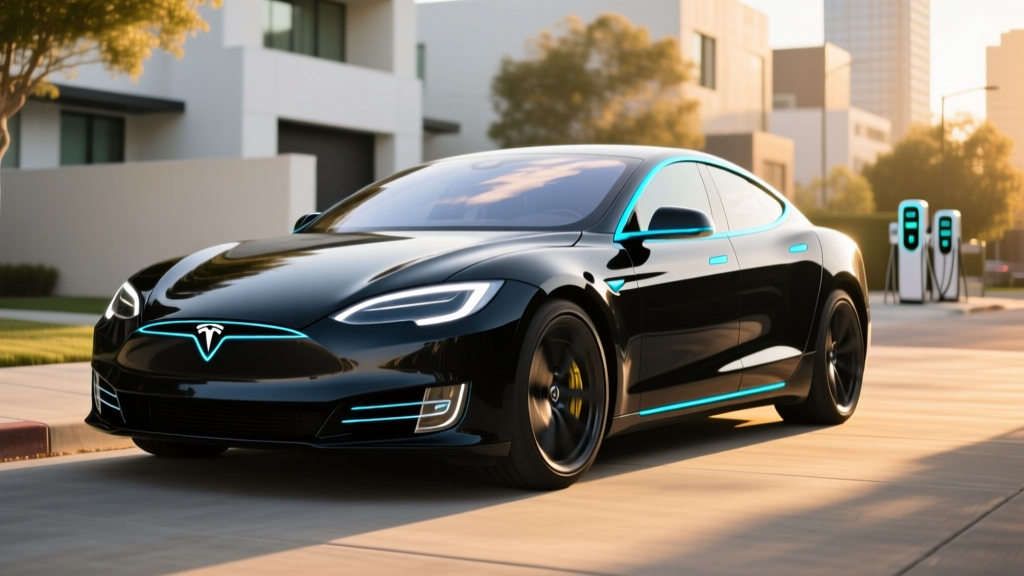
The 2026 Tesla Model S Plaid remains the default answer for buyers who want supercar acceleration in a four-door sedan that can also handle a 400-mile road trip. With 1,020 horsepower, a 1.99-second 0-60 mph claim, and an EPA-estimated 396 miles of range on the Long Range trim (359 miles on the Plaid), it threads a needle no competitor fully matches: extreme performance plus genuine daily-driver practicality. The tri-motor Plaid trades some range and efficiency for all-weather traction and relentless acceleration, while the dual-motor Long Range prioritizes distance and value.
But the landscape has shifted. The Lucid Air Sapphire and Grand Touring now rival or beat the Plaid on range and luxury, Porsche's Taycan Turbo GT delivers sharper handling dynamics, and Tesla's own interior and build-quality reputation remains a talking point. This review breaks down the exact numbers — range, charging curves, ownership costs, and tax-credit reality — so you can decide whether the 2026 Model S Plaid earns its six-figure price tag.
2026 Tesla Model S Plaid: Core Specifications at a Glance
| Spec | Model S Plaid | Model S Long Range |
|---|---|---|
| Drivetrain | Tri-motor AWD | Dual-motor AWD |
| Horsepower | 1,020 hp | 670 hp |
| 0-60 mph | 1.99 sec (with rollout) | 3.1 sec |
| Top Speed | 200 mph | 155 mph |
| Battery (usable, est.) | ~95 kWh, NMC | ~95 kWh, NMC |
| EPA Range | 359 mi | 396 mi |
| Efficiency (EPA) | 116 MPGe / 31 kWh/100mi | 124 MPGe / 29 kWh/100mi |
| Max DC Fast Charge | 250 kW (V3 Supercharger) | 250 kW (V3 Supercharger) |
| 10-80% DCFC Time | ~27 min | ~27 min |
| Level 2 Home Charging | 11.5 kW (~41 mi/hr) | 11.5 kW (~41 mi/hr) |
| Cargo (rear + frunk) | 28.0 cu ft rear + 3.1 cu ft frunk | 28.0 cu ft rear + 3.1 cu ft frunk |
| Base MSRP | $109,990 | $89,990 |
| Battery Warranty | 8 yr / 150,000 mi | 8 yr / 150,000 mi |
Source: Tesla Model S specs, fueleconomy.gov.
Range and Efficiency: The Real-World Story Behind the EPA Sticker
EPA Plaid: 359 miles | EPA Long Range: 396 miles
Real-world expectation (Plaid): 280-310 miles at sustained 75-80 mph highway driving; 240-270 miles in sub-freezing winter conditions with cabin heat. The Long Range adds roughly 30-35 miles in equivalent conditions.
The Model S uses an estimated ~95 kWh usable battery pack built around 2170-format NMC (nickel manganese cobalt) cells in a structural pack layout. NMC chemistry prioritizes energy density — critical for packing 359+ miles into a performance sedan — but it's more sensitive to sustained 100% State of Charge (SoC) storage than LFP packs. Tesla recommends daily charging to 80-90% for NMC longevity, reserving 100% for road trips.
Efficiency on the Plaid drops noticeably versus the Long Range because of the third motor's weight, rolling resistance from wider rear tires (265/35R21 rear, 245/35R21 front on the Plaid), and the energy cost of tri-motor torque vectoring. At 31 kWh/100 miles, the Plaid consumes about 7% more energy per mile than the Long Range (29 kWh/100mi). Over a 15,000-mile year at $0.16/kWh national average, that's roughly $744 vs $696 — a modest gap.
Cold-weather range loss remains physics, not a Tesla flaw. Expect 20-30% range reduction at 20°F with cabin heating active, mitigated partly by the Model S's heat pump (standard since 2021 refresh) and battery preconditioning. Preconditioning the pack before DC fast charging — triggered automatically when you navigate to a Supercharger — is essential for hitting peak charge rates in cold weather.
Charging Speed: 250 kW Peak, but the Curve Matters More
| Level | Power | Miles Added per Hour | Typical Use Case |
|---|---|---|---|
| Level 1 (120V) | ~1.4 kW | ~4 mi/hr | Emergency / trickle |
| Level 2 (240V, 48A) | 11.5 kW | ~41 mi/hr | Home overnight |
| DC Fast (V3 Supercharger) | 250 kW peak | ~200 mi in 15 min (peak) | Road trips |
| DC Fast (V4 Supercharger) | Up to 250 kW* | Similar to V3 for Model S | Future-proofing |
*V4 cabinets support higher peak power, but the Model S's onboard charge architecture caps at ~250 kW. Cybertruck and next-gen vehicles use higher-voltage architectures.
The 10-80% DC fast-charge time of roughly 27 minutes is respectable but no longer class-leading. Hyundai's E-GMP platform (Ioniq 5, Ioniq 6) hits 10-80% in ~18 minutes thanks to its 800V architecture, while the Lucid Air Grand Touring achieves similar range in ~20 minutes on compatible 350 kW chargers. The Model S runs a 400V-class architecture, which limits peak charge rate versus 800V rivals.
More important than peak kW is the charge curve. The Model S Plaid sustains roughly 220-250 kW between 10-35% SoC, then steps down to ~170 kW through 50%, ~120 kW through 65%, and tapers sharply above 80% — where charging slows to under 50 kW. For road trips, the practical play is charging to 80% and moving on; the final 20% can add 15+ minutes for only ~70 miles of range.
At home on a Level 2 Wall Connector (48A / 11.5 kW), a full 10-100% charge takes roughly 9-10 hours. Most owners plug in nightly and wake to a full battery — the single biggest quality-of-life advantage over gas cars.
Performance and Driving Dynamics: 1,020 hp in a Four-Door
The Plaid's three-motor layout — one front, two rear — enables torque vectoring across the rear axle and produces 1,020 horsepower. The 1.99-second 0-60 mph figure (with 1-foot rollout subtracted, drag-strip prepped surface) makes it one of the quickest production cars ever built. In real-world rolling-start tests on public roads, expect 2.3-2.5 seconds to 60 — still ferocious and enough to gap virtually anything at a stoplight.
The carbon-sleeve rotors in the Plaid's rear motors allow them to spin to 20,000+ RPM without mechanical overspeed failure, a genuine engineering differentiator. The result is sustained high-speed pull that doesn't fall off above 100 mph the way single- and dual-motor EVs typically do.
Handling is competent but not sports-car sharp. At ~4,766 lbs (Plaid curb weight), mass is the enemy of turn-in response, and the steering — while quick — lacks the feedback of a Porsche Taycan Turbo GT. The Plaid is a devastatingly fast grand tourer, not a track weapon. For buyers who prioritize handling precision over straight-line dominance, the Taycan remains the benchmark.
The Long Range dual-motor (670 hp, 3.1-second 0-60) is quick by any normal standard and shaves weight, which subtly improves ride compliance and steering feel. For 95% of real-world driving, the Long Range's performance is more than adequate.
Interior, Tech, and Daily Practicality
The 2026 Model S interior carries over the minimalist 17-inch landscape touchscreen, yoke-or-wheel option, and 12.3-inch driver cluster introduced in the 2021 refresh. Build quality has improved incrementally — panel gaps are tighter than pre-2023 cars, and the ventilated front seats and 22-speaker audio system are genuinely premium.
Practical dimensions:
- Front legroom: 42.7 inches
- Rear legroom: 35.4 inches
- Cargo (rear hatch): 28.0 cu ft (seats up), expandable with 60/40 fold
- Frunk: 3.1 cu ft (fits a laptop bag or charging cables)
The rear hatch is a genuine advantage over traditional sedans — loading groceries, strollers, or luggage is easier than in the Taycan or Lucid Air's conventional trunk. However, rear-seat space is tighter than the Lucid Air, which offers noticeably more rear legroom and a more luxurious rear environment.
Driver assistance: Basic Autopilot (adaptive cruise + lane centering) is standard and competent for highway use. Full Self-Driving (Supervised) remains a SAE Level 2 system — the driver must remain fully engaged, hands on or near the wheel, eyes on the road. FSD has improved in urban environments but does not make the car autonomous. Only Level 4 services like Waymo operate without a driver in defined geofenced areas.
⚠ FSD (Supervised) is NOT self-driving. It is a Level 2 driver-assist system. You are legally and physically responsible for the vehicle at all times. Do not sleep, read, or look away from the road while FSD is engaged.
Infotainment: The Tesla OS remains the most responsive in the industry, with native Netflix/YouTube (while parked), a surprisingly good web browser, and OTA updates that add features regularly. Apple CarPlay and Android Auto are not supported — a dealbreaker for some buyers accustomed to phone-mirroring.
Pricing, Tax Credits, and Ownership Costs
| Trim | Base MSRP | Federal §30D Credit | Effective Price |
|---|---|---|---|
| Long Range | $89,990 | $0 (exceeds MSRP cap) | $89,990 |
| Plaid | $109,990 | $0 (exceeds MSRP cap) | $109,990 |
The 2026 Tesla Model S does not qualify for the federal §30D new EV tax credit. Under current IRS rules, sedans must have an MSRP at or below $55,000 to be eligible. Both Model S trims far exceed this cap. Additionally, buyer income caps ($150K single / $300K joint AGI) and battery critical-mineral sourcing requirements apply to eligible vehicles. See IRS §30D guidance for full rules. Always consult a tax professional before making purchase decisions based on credits.
Some states offer their own rebates or incentives that are not MSRP-capped — check your state energy office or AFDC state incentive database for specifics.
5-year estimated ownership cost considerations:
- Electricity (15K mi/yr, $0.16/kWh avg): ~$3,720 (Plaid) / ~$3,480 (Long Range)
- Insurance: Model S premiums run 30-50% above comparable luxury sedans; expect $3,500-$5,000/yr depending on state and driving record
- Maintenance: Minimal — no oil changes, cabin air filter every 2 years, brake fluid check, tire rotation. Budget ~$500/yr
- Tire replacement: Plaid's wide rear tires wear faster under hard use; expect $1,200-$1,800 per set, potentially every 15-20K miles
- Depreciation: Luxury EVs depreciate steeply; expect 40-50% value loss over 5 years based on current market trends
How It Stacks Up: Plaid vs. Key Rivals
| Metric | 2026 Model S Plaid | Lucid Air Sapphire | Porsche Taycan Turbo GT |
|---|---|---|---|
| Price | $109,990 | ~$249,000 | ~$230,000 |
| Horsepower | 1,020 hp | 1,234 hp | 1,019 hp |
| 0-60 mph | 1.99 sec | 1.89 sec | 2.1 sec |
| EPA Range | 359 mi | 427 mi | ~280 mi |
| Max DC Charge | 250 kW | 300+ kW | 320 kW (800V) |
| 10-80% DCFC | ~27 min | ~20 min | ~18 min |
| Rear Cargo | 28.0 cu ft (hatch) | 15.8 cu ft (trunk) | 14.3 cu ft (trunk) |
The Plaid's value proposition is stark: it delivers 90%+ of the Sapphire's performance for less than half the price, with more cargo space than either rival. The Lucid Air Grand Touring (~$125,000, 516 mi range) is the more relevant luxury comparison — it offers superior range, a more premium interior, and faster charging, but cannot match the Plaid's acceleration or Tesla's Supercharger network convenience.
The Taycan Turbo GT is the driver's choice — better steering feel, chassis balance, and 800V charging — but sacrifices 80+ miles of range and costs more than double. For pure driving engagement, Porsche wins. For straight-line performance per dollar, the Plaid is unchallenged.
Pros
- 1.99-sec 0-60 at under $110K — unmatched performance value
- 359-mile EPA range is sufficient for most road trips
- Access to Tesla's 6,000+ North American Supercharger network
- Hatchback cargo practicality beats traditional luxury sedans
- OTA updates continually add features and refinements
- 8-year/150,000-mile battery warranty (longer than most rivals)
Cons
- No federal tax credit eligibility (MSRP exceeds $55K sedan cap)
- 250 kW peak charge rate trails 800V competitors
- No Apple CarPlay / Android Auto
- Yoke steering remains polarizing; conventional wheel available
- Insurance premiums significantly above class average
- Build quality improved but still inconsistent vs. Porsche/Lucid
Who Should Buy the 2026 Tesla Model S Plaid?
Buy the Model S Plaid if: You want the fastest four-door sedan under $150K, regularly drive in varied weather (AWD traction matters), value Supercharger network access for road trips, and prioritize acceleration over handling precision.
Buy the Model S Long Range instead if: You want 396 miles of range, save $20K, and don't need 1,020 hp. For 95% of daily driving, the Long Range is the smarter buy.
Look elsewhere if: You need the absolute best interior luxury (Lucid Air), track-focused handling (Taycan Turbo GT), maximum charging speed (Ioniq 5 N, Taycan on 800V), or federal tax credit eligibility (BMW i5 eDrive40, Tesla Model 3, Hyundai Ioniq 6).
Frequently Asked Questions
What is the real-world range of the 2026 Tesla Model S Plaid?
Expect 280-310 miles on highway road trips at 75-80 mph in moderate temperatures, and 240-270 miles in sub-freezing winter driving. The EPA rates it at 359 miles, but that figure blends city and highway cycles with favorable conditions. Sustained high-speed driving and cold weather reduce range meaningfully.
How fast does the Model S Plaid charge at home and on the road?
On a Level 2 home charger (11.5 kW), expect ~41 miles of range per hour, or a full overnight charge in ~9-10 hours. On a V3 Supercharger (250 kW DC), the 10-80% charge takes approximately 27 minutes. Charging above 80% slows dramatically — plan road-trip stops around 80% to minimize total travel time.
Does the 2026 Model S Plaid qualify for the federal EV tax credit?
No. Under current IRS §30D rules, the new-vehicle tax credit caps sedan eligibility at $55,000 MSRP. The Model S starts at $89,990 (Long Range) and $109,990 (Plaid), disqualifying both trims regardless of buyer income or battery sourcing. State incentives may still apply — check your local programs.
How much does the 2026 Model S Plaid cost with options?
The Plaid starts at $109,990 before destination. Common options include Full Self-Driving (Supervised) at $8,000, premium paint colors ($1,500-$2,500), and 21-inch Arachnid wheels ($4,500). A fully optioned Plaid can reach $125,000+. The Long Range starts at $89,990 and can be optioned to ~$105,000.
Is the Model S Plaid worth buying over the Lucid Air or Porsche Taycan?
It depends on priorities. The Plaid offers the best acceleration-per-dollar in the segment and unmatched Supercharger convenience. The Lucid Air Grand Touring wins on range (516 mi EPA), interior luxury, and charging speed. The Porsche Taycan Turbo GT wins on handling and driving engagement but costs double. For most performance-sedan buyers, the Plaid's value equation is hard to beat.
What is the battery warranty on the 2026 Model S?
Tesla covers the Model S battery and drive unit for 8 years or 150,000 miles, whichever comes first, with a minimum 70% capacity retention threshold. This is competitive with BMW (8yr/100K) and better than Porsche (8yr/100K). Real-world degradation data from Tesla's fleet suggests ~10-12% capacity loss at 150,000 miles for NMC packs charged responsibly (80-90% daily, avoiding prolonged 100% storage).
Does the Model S support NACS or CCS charging?
The Model S uses the Tesla NACS (North American Charging Standard) connector natively. Tesla's Supercharger network uses NACS exclusively. For third-party CCS chargers (Electrify America, EVgo), Tesla provides a CCS adapter (included or available for purchase). As of 2025, most new public chargers are adding NACS cables, improving non-Tesla charging compatibility.