The Tesla Model S has been the benchmark luxury electric sedan for over a decade, and the 2026 refresh keeps it relevant against newer rivals like the Lucid Air, Mercedes EQS, and BMW i7. But beyond the headline range and acceleration numbers, buyers spending $80,000+ want to know: does the 2026 Tesla Model S interior finally match its price tag? And how does real-world efficiency hold up against the EPA sticker?
We've spent significant time with the 2026 Model S — on highway road trips, in freezing temperatures, and at Superchargers — to give you the data-driven breakdown that spec sheets alone can't provide. Here's everything you need to decide if this is still the luxury EV sedan to beat.
2026 Tesla Model S Interior: Materials, Tech, and Space
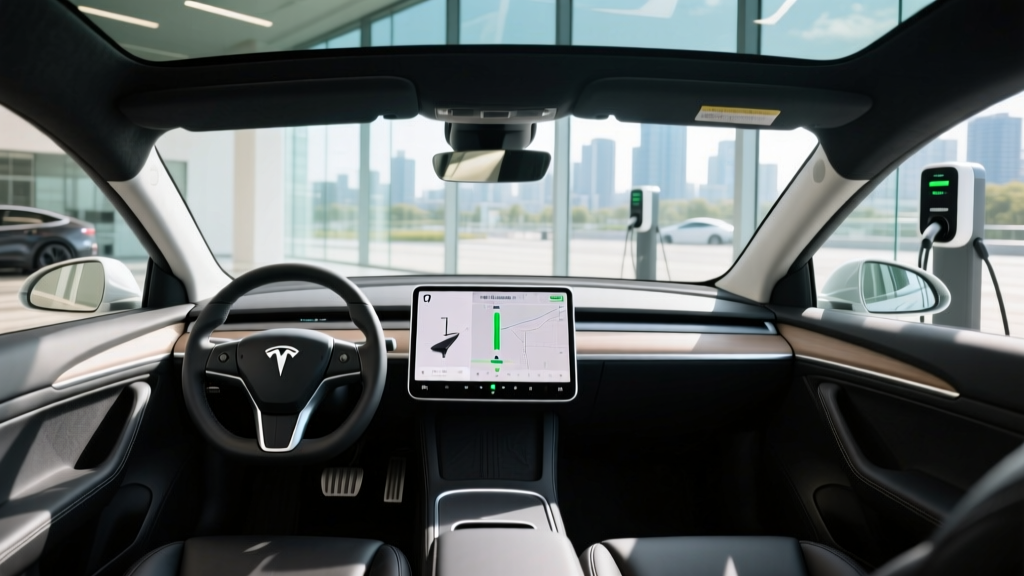
The 2026 Model S interior carries forward the minimalist architecture Tesla introduced with the 2021 "Palladium" refresh, but with incremental material and tech upgrades that narrow the gap with German luxury competitors. The cabin is anchored by a 17-inch center touchscreen (now with higher resolution and faster response times) and a 12.3-inch digital instrument cluster behind the yoke or conventional round steering wheel — both of which Tesla continues to offer at no extra cost.
Material quality has improved noticeably over pre-2021 Model S examples. The dashboard and door panels feature soft-touch vegan leather with real aluminum or open-pore wood trim accents. Seat comfort is strong for long drives, with 12-way power adjustment, heating, and ventilation standard on all trims. However, at this price point, the absence of genuine leather, massaging seats, and a head-up display remains a talking point — Lucid and Mercedes both offer these in their flagship sedans.
Rear passengers get a dedicated 8-inch touchscreen mounted on the back of the center console, providing climate controls, media playback, and even gaming capability. Rear legroom measures 35.4 inches — adequate for adults on shorter trips but noticeably tighter than the Lucid Air's 37.2 inches or the BMW i7's expansive rear quarters. Headroom is generous thanks to the glass roof, though the sloping roofline cuts into cargo versatility compared to a hatchback or SUV.
| Measurement | Model S (2026) | Lucid Air (2026) |
|---|---|---|
| Front legroom | 42.4 in | 41.3 in |
| Rear legroom | 35.4 in | 37.2 in |
| Cargo (rear trunk) | 28.0 cu ft | 22.1 cu ft |
| Frunk (front trunk) | 3.1 cu ft | 7.1 cu ft |
| Total cargo volume | 31.1 cu ft | 29.2 cu ft |
| Center display | 17.0 in | 34.0 in (curved glass cockpit) |
The Model S hatchback design gives it a practical edge over traditional sedans: the rear liftgate opens wide, and the 28 cubic feet of trunk space easily swallows four carry-on suitcases. The 3.1-cubic-foot frunk is small — essentially a charging cable bin — but useful for keeping a laptop bag or groceries separate from the main cargo area.
Range, Battery, and Real-World Efficiency
The 2026 Model S Long Range is EPA-rated at 402 miles of range on its 100 kWh (usable ~95 kWh) NMC (nickel manganese cobalt) battery pack. The Plaid variant, with its tri-motor powertrain and performance tuning, drops to an EPA-estimated 359 miles.
EPA sticker: 402 mi (Long Range) / 359 mi (Plaid)
Expect in practice: ~320–350 mi on highway road trips at 70–80 mph; ~280–310 mi in sub-30°F cold weather with cabin heating. City driving with regenerative braking can approach or slightly exceed the EPA number in mild weather.
The Model S's heat pump (standard since 2021) significantly reduces cold-weather range loss compared to older resistive-heating EVs, but physics still applies — plan for a 15–25% range reduction in freezing conditions.
Efficiency is rated at 124 MPGe combined (Long Range), translating to roughly 27 kWh per 100 miles — respectable for a 4,500+ lb luxury sedan, though the lighter Lucid Air Grand Touring achieves 131 MPGe combined. According to fueleconomy.gov, the Model S Long Range remains one of the most efficient vehicles in its class.
Charging Speed: DC Fast, Level 2, and Supercharger Access
Charging infrastructure remains one of Tesla's strongest competitive advantages. The 2026 Model S uses the NACS (North American Charging Standard) connector natively and accesses the full Tesla Supercharger network — over 6,000 stations and 60,000+ stalls in North America — without adapters. Non-Tesla networks like Electrify America and EVgo also support NACS as of 2025.
| Charging Level | Power / Rate | Speed / Time |
|---|---|---|
| Level 1 (120V household) | ~1.4 kW | ~3–4 miles per hour |
| Level 2 (240V home / destination) | 11.5 kW (48A) | ~34 miles per hour |
| DC Fast Charge (V3 Supercharger) | Peak 250 kW | 10–80% in ~25 minutes |
| DC Fast Charge (V4 Supercharger) | Peak 250 kW (Model S limited) | 10–80% in ~25 minutes |
A critical nuance: while the Model S peaks at 250 kW on V3 and V4 Superchargers, it does not sustain that rate for long. The charge curve tapers noticeably above 50% State of Charge (SoC), and charging from 80–100% can take as long as the 10–80% portion. On a road trip, plan your stops around the 10–80% sweet spot for maximum time efficiency.
For home charging, the Model S's onboard charger maxes out at 11.5 kW (48 amps), which requires a 60-amp dedicated circuit. A full Level 2 home installation — including a Tesla Wall Connector ($420), electrician labor ($600–$1,500), and permits ($50–$200) — typically runs $1,100–$2,200 depending on your panel's proximity to the garage. If your electrical panel needs a 200-amp service upgrade, add $1,500–$3,000.
Performance: 0–60, Horsepower, and Drivetrain
The 2026 Model S comes in two performance tiers, both with dual- or tri-motor all-wheel drive:
- Long Range (Dual-Motor AWD): 670 horsepower, 0–60 mph in 3.1 seconds. Top speed electronically limited to 155 mph.
- Plaid (Tri-Motor AWD): 1,020 horsepower, 0–60 mph in 1.99 seconds (with rollout subtracted). Top speed of 200 mph. This remains one of the quickest production cars in the world.
Both trims feature adaptive air suspension with automatic ride-height adjustment, providing a comfortable highway ride while maintaining composure through corners. The Plaid's torque-vectoring rear motors deliver exceptional corner-exit grip, though the additional weight of the tri-motor setup is felt during directional changes compared to the lighter Long Range.
Pricing, Trims, and Federal Tax Credit Eligibility
The 2026 Model S lineup is straightforward — two trims, minimal options:
| Trim | Base MSRP | As-Tested (typical) | §30D Federal Credit |
|---|---|---|---|
| Long Range | $79,990 | $81,990 (with FSD) | $0 — exceeds MSRP cap |
| Plaid | $89,990 | $91,990 (with FSD) | $0 — exceeds MSRP cap |
Federal tax credit reality: The 2026 Model S does not qualify for the IRS §30D federal EV tax credit. Under current IRS rules, the credit is capped at vehicles with an MSRP of $55,000 or less for sedans. Both the Long Range and Plaid exceed this threshold significantly. Additionally, buyers must meet income caps ($150,000 single / $300,000 joint AGI) and the vehicle must satisfy critical-mineral and battery-component sourcing requirements — but the MSRP cap alone disqualifies the Model S regardless of income.
Some states offer separate EV rebates or HOV-lane access that may apply — check your local DMV or energy office. But for federal purposes, budget the full MSRP.
Warranty Coverage and Long-Term Battery Durability
Tesla provides the following warranty coverage for the 2026 Model S:
- Basic vehicle: 4 years / 50,000 miles
- Battery & drive unit: 8 years / 150,000 miles (whichever comes first), with a guaranteed minimum 70% capacity retention over the warranty period
The 8-year/150,000-mile battery warranty is competitive with industry standards (most luxury EVs offer 8 years/100,000 miles). Tesla's NMC packs in the Model S have demonstrated strong longevity in fleet data — typical degradation is 8–12% over the first 100,000 miles, with the curve flattening significantly afterward. For context, a 10% degradation on a 402-mile EPA-rated vehicle still leaves ~362 miles of rated range.
One ownership consideration: Tesla does not publish official battery replacement costs, but third-party estimates for a Model S pack replacement range from $13,000 to $20,000 out of warranty. This is a tail-risk cost that luxury EV buyers should factor into long-term ownership projections.
Autopilot, FSD, and Smart Driving Technology
Every 2026 Model S ships with Tesla's Basic Autopilot, which includes adaptive cruise control and lane-centering on highways. Full Self-Driving (Supervised) is available as a $8,000 one-time purchase or $99/month subscription.
Both Autopilot and FSD (Supervised) are SAE Level 2 driver-assistance systems. The driver must remain fully attentive, keep hands on the wheel (or demonstrate engagement via the cabin camera), and be prepared to take over at any moment. These are not self-driving systems. Only Level 4 services like Waymo operate without a human driver in defined areas.
FSD (Supervised) in 2026 handles city streets, stoplights, and highway on/off-ramps with increasing competence, but it still requires active supervision. Expect occasional phantom braking, overly cautious merges, and the need to intervene in construction zones or unusual traffic patterns. It's a compelling convenience feature for daily commuters, not a replacement for an alert driver.
Who Should Buy the 2026 Tesla Model S?
- You want 400+ miles of range for frequent long-distance road trips
- Supercharger network reliability is your top charging priority
- You value hatchback cargo practicality in a luxury sedan
- You prefer a minimalist, screen-centric interior over traditional luxury finishes
- Sub-2-second 0–60 performance is a must-have
- You want tri-motor torque vectoring for track-capable handling
- Budget is flexible above $90,000
- You need genuine luxury interior materials (consider Lucid Air, Mercedes EQS)
- Rear-seat space for adults is a priority (BMW i7, Lucid Air)
- Federal tax credit eligibility matters to your purchase math (Model 3, Model Y, Hyundai Ioniq 6)
Pros and Cons
- 402-mile EPA range (Long Range) — among the highest of any production EV
- Unmatched Supercharger network access (native NACS)
- Hatchback cargo versatility (28 cu ft trunk + 3.1 cu ft frunk)
- Class-leading 0–60 performance, especially Plaid
- Over-the-air updates continuously add features
- Strong battery longevity data (8–12% degradation over 100k mi)
- Interior materials still lag behind Lucid Air and German luxury sedans at this price
- Rear legroom (35.4 in) is tight for a luxury flagship
- No federal §30D tax credit (MSRP exceeds $55,000 sedan cap)
- 250 kW DC peak charge rate trails Lucid Air's ~300+ kW capability
- FSD (Supervised) remains Level 2 — requires constant driver attention
- No head-up display, massaging seats, or Apple CarPlay/Android Auto
Frequently Asked Questions
What is the real-world range of the 2026 Tesla Model S?
The EPA rates the Long Range at 402 miles and the Plaid at 359 miles. In real-world highway driving at 70–80 mph, expect roughly 320–350 miles (Long Range) and 280–320 miles (Plaid). In freezing temperatures with cabin heating, plan for a 15–25% reduction — roughly 280–310 miles for the Long Range. City driving with regenerative braking in mild weather can approach or slightly exceed EPA estimates.
How fast does the 2026 Model S charge?
On a Tesla V3 or V4 Supercharger, the Model S peaks at 250 kW and charges from 10–80% in approximately 25 minutes. The charge curve tapers above 50% SoC, so 80–100% takes significantly longer. At home on a Level 2 (240V, 48A) charger, you'll add about 34 miles of range per hour, fully replenishing the battery overnight in roughly 10–12 hours.
Does the 2026 Tesla Model S qualify for the federal EV tax credit?
No. Under current IRS §30D rules, the federal clean vehicle credit is limited to sedans with an MSRP of $55,000 or less. Both Model S trims ($79,990 and $89,990) exceed this cap. Buyers must also meet income limits and battery-sourcing requirements, but the MSRP threshold alone disqualifies the Model S.
Is the 2026 Model S worth buying vs. the Lucid Air or Mercedes EQS?
It depends on your priorities. The Model S wins on Supercharger network access, hatchback cargo practicality, and proven battery longevity. The Lucid Air offers superior rear-seat space, more luxurious interior materials, and faster peak DC charging. The Mercedes EQS provides a more traditional luxury experience with available massaging seats and a head-up display. If charging infrastructure reliability and range are paramount, the Model S still leads. For interior luxury and rear-seat comfort, test-drive the Air and EQS.
What battery chemistry does the 2026 Model S use?
The Model S uses an NMC (nickel manganese cobalt) lithium-ion battery pack with approximately 100 kWh total capacity (~95 kWh usable). NMC chemistry offers higher energy density than LFP (lithium iron phosphate), enabling the Model S's 402-mile range in a relatively compact pack. The trade-off is that NMC cells are more sensitive to sustained high SoC storage — Tesla recommends daily charging to 80–90% and only charging to 100% for long trips.
Does the Model S have Apple CarPlay or Android Auto?
No. Tesla uses its proprietary infotainment system exclusively. The 17-inch center display supports native navigation, streaming (Netflix, YouTube, Spotify), gaming, and a built-in web browser, but smartphone projection is not available. This is a dealbreaker for some buyers accustomed to CarPlay-based interfaces.
What is the warranty on the 2026 Model S battery?
Tesla covers the battery and drive unit for 8 years or 150,000 miles, whichever comes first. The warranty guarantees a minimum of 70% capacity retention over that period. Real-world fleet data suggests most Model S packs retain 88–92% capacity at 100,000 miles, well above the warranty threshold.