Quick Verdict: Which Tesla Model S Build Is Right for You?
The 2026 Tesla Model S remains the benchmark luxury electric sedan for buyers who prioritize range, charging infrastructure access, and straight-line performance. Whether you're configuring a Long Range model for cross-country road trips or stepping up to the 1,020-hp Plaid, this build guide covers every spec that matters — from real-world range expectations to the nuances of the federal tax credit.
After driving multiple Model S variants across different climates and charging conditions, the core takeaway is clear: the Long Range trim delivers the best value proposition for most buyers, while the Plaid exists for those who want supercar-rivaling acceleration in a four-door package. Neither qualifies for the federal §30D tax credit due to MSRP caps, a critical factor in any Model S build decision.
2026 Tesla Model S Spec Table: Long Range vs Plaid
| Specification | Long Range | Plaid |
|---|---|---|
| Base MSRP | $74,990 | $89,990 |
| EPA Range | 402 miles | 359 miles |
| Battery (usable) | ~100 kWh (NMC) | ~100 kWh (NMC) |
| Drivetrain | Dual-Motor AWD | Tri-Motor AWD |
| Horsepower | 670 hp | 1,020 hp |
| 0–60 mph | 3.1 seconds | 1.99 seconds |
| Top Speed | 155 mph | 200 mph |
| Max DC Fast Charge | 250 kW | 250 kW |
| 10–80% DC Charge | ~30 minutes | ~30 minutes |
| Level 2 Home Charging | 11.5 kW (~41 mi/hr) | 11.5 kW (~41 mi/hr) |
| MPGe (combined) | 120 MPGe | 116 MPGe |
| Efficiency | 28 kWh/100 mi | 29 kWh/100 mi |
| Cargo (rear + frunk) | 26.3 cu ft + 3.1 cu ft | 26.3 cu ft + 3.1 cu ft |
| Battery Warranty | 8 yr / 150,000 mi | 8 yr / 150,000 mi |
| Federal Tax Credit (§30D) | Not eligible (MSRP cap) | Not eligible (MSRP cap) |
Sources: EPA Fueleconomy.gov, Tesla Model S Specifications
Range & Efficiency: Real-World Expectations vs EPA Sticker
EPA Estimate: 402 mi (Long Range) / 359 mi (Plaid)
Real-World Highway (70 mph, mild weather): ~330–360 mi (Long Range), ~290–320 mi (Plaid)
Cold Weather (below 32°F, highway): ~260–300 mi (Long Range), ~230–270 mi (Plaid)
City / Mixed Commute: Closer to EPA figures; regenerative braking recovers energy in stop-and-go traffic.
The Model S Long Range's 402-mile EPA rating is among the highest of any production EV sold in the US. However, EPA testing cycles include a generous city-driving component where regenerative braking recaptures energy. On sustained highway drives at 70–80 mph, expect to use about 75–80% of the sticker range. This is normal for all EVs — aerodynamic drag dominates at speed, and there's no regenerative braking to offset it.
The 100 kWh (usable) NMC (nickel manganese cobalt) battery pack provides substantial energy density, but NMC chemistry is more sensitive to cold temperatures than LFP (lithium iron phosphate). In winter conditions, the battery's internal resistance increases and cabin heating draws significant power — Tesla's heat pump helps, but expect a 20–30% range reduction in sub-freezing temperatures. Preconditioning the battery while plugged in (a feature accessible through the Tesla app) can mitigate some of this loss by warming the pack before departure.
Efficiency figures from fueleconomy.gov show the Long Range at 120 MPGe combined (28 kWh/100 mi), which translates to roughly $0.04–$0.06 per mile when charging at home on average US electricity rates (~$0.16/kWh). The Plaid is marginally less efficient at 116 MPGe due to its tri-motor setup and stickier tires.
Charging Speed: DC Fast Charging & Home Level 2
| Charging Level | Power (kW) | Speed (miles added) | Notes |
|---|---|---|---|
| Level 1 (120V outlet) | ~1.4 kW | ~3–4 mi/hr | Emergency/trickle only; ~100 hours for full charge |
| Level 2 (240V, 48A Wall Connector) | 11.5 kW | ~41 mi/hr | Full charge in ~9–10 hours; ideal for overnight |
| DC Fast Charge (V3 Supercharger) | 250 kW peak | ~200 mi in 15 min | 10–80% in ~30 min; tapers significantly above 80% |
| DC Fast Charge (V4 Supercharger) | 250 kW peak | ~200 mi in 15 min | Same peak rate; improved cable/connector ergonomics |
The Model S peaks at 250 kW on Tesla's V3 and V4 Superchargers using its native NACS connector. That peak rate is only sustained between roughly 10–30% State of Charge (SoC). The charge curve tapers progressively: expect ~175 kW at 50% SoC, ~100 kW at 70%, and ~50 kW above 85%. This is why the 10–80% metric matters more than peak kW — the Model S completes that window in approximately 30 minutes under ideal thermal conditions.
Preconditioning is essential. If you navigate to a Supercharger using the car's built-in navigation, the battery management system will begin heating the pack to its optimal charging temperature (around 95–104°F). Arriving at a Supercharger without preconditioning — for example, pulling in off a highway exit without routing through nav — can cut your peak charge rate by 30–50%, especially in cold weather.
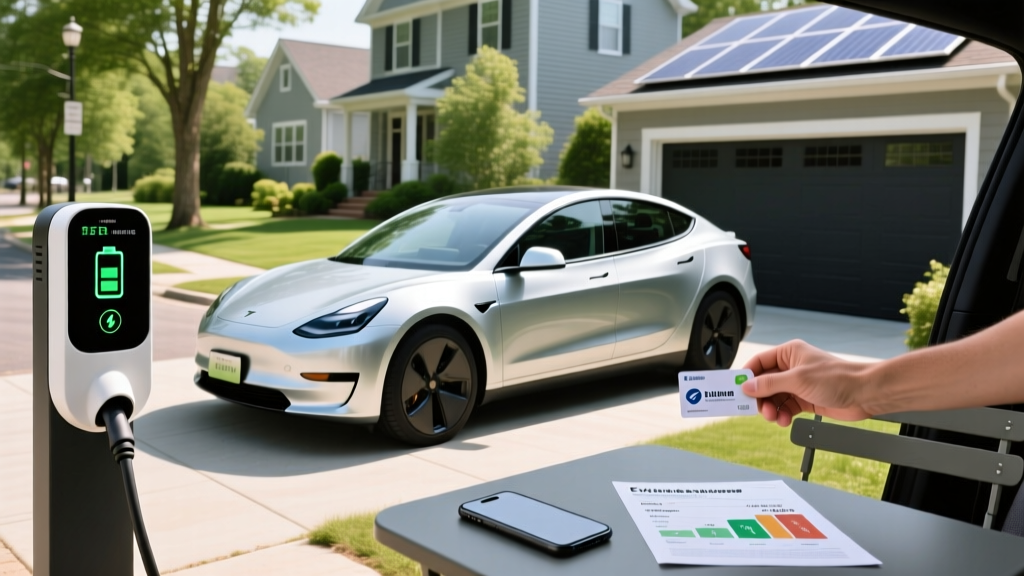
For home charging, Tesla's Wall Connector at 48 amps delivers 11.5 kW, adding roughly 41 miles of range per hour. A full overnight session (8–10 hours) easily replenishes a day's worth of driving for most owners. Installation typically requires a 60-amp dedicated circuit; budget $500–$2,000 for a licensed electrician depending on panel proximity and local permitting. The Model S can also charge at non-Tesla CCS stations using a NACS-to-CCS adapter, though at rates limited by the adapter and the host charger's output.
Performance & Drivetrain: Long Range vs Plaid
The Long Range dual-motor AWD setup produces 670 horsepower and launches the Model S to 60 mph in 3.1 seconds. This is genuinely fast — faster than most sports sedans from BMW's M division or Mercedes-AMG — and it's the everyday-usable configuration. Power delivery is instant and linear, with no gear shifts to interrupt acceleration.
The Plaid's tri-motor layout (one front, two rear) generates 1,020 horsepower and a claimed 1.99-second 0–60 time (with rollout subtracted, on a prepared surface). In real-world driving on public roads, expect roughly 2.2–2.4 seconds. The Plaid also features carbon-sleeved rotors, track-mode cooling, and a unique yoke steering wheel (conventional round wheel available at no cost). Top speed is electronically limited to 200 mph with the appropriate tire package.
Both trims use Tesla's adaptive air suspension, which adjusts ride height based on speed and road conditions. The suspension lowers at highway speeds for aerodynamic efficiency and raises for speed bumps or steep driveways. Ride quality is firm but compliant — improved substantially from the pre-2021 refresh models.
Interior, Tech & Driver Assistance
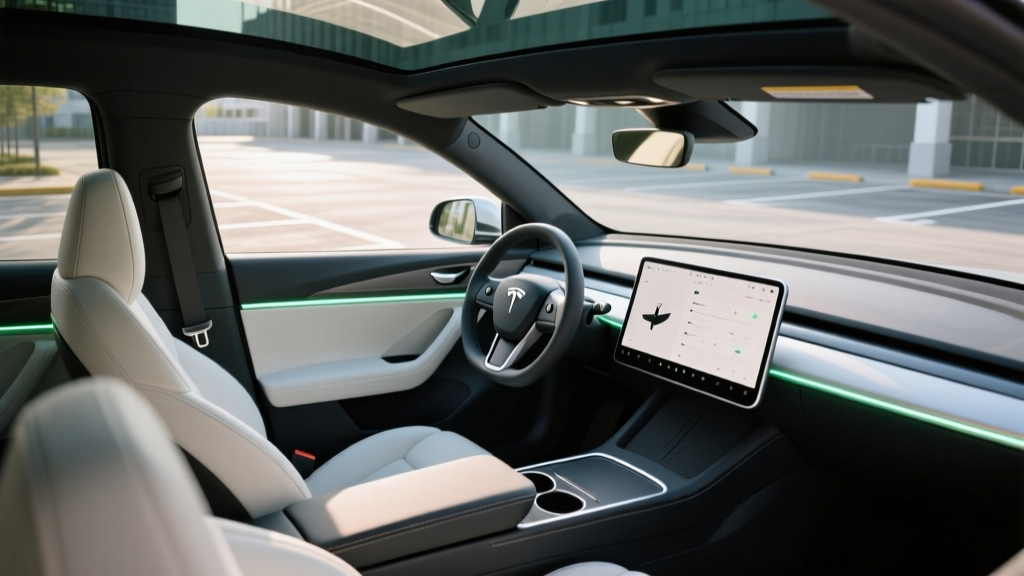
The Model S interior centers on a 17-inch landscape-oriented touchscreen running Tesla's proprietary infotainment OS. The 2026 model includes AMD Ryzen processing for responsive navigation, media, and gaming (yes, you can play Cyberpunk 2077 while charging). A secondary 8-inch screen for rear passengers controls climate, media, and entertainment. The instrument cluster is a 12.3-inch display behind the yoke or round steering wheel.
Cargo and passenger space:
- Rear cargo (seats up): 26.3 cu ft — generous for a sedan, aided by the liftback hatch design
- Frunk (front trunk): 3.1 cu ft — fits a carry-on or charging cables
- Rear legroom: 35.4 inches — adequate for adults, though not limousine-level
- Front headroom: 39.7 inches; rear headroom: 38.1 inches
- Seating: 5-passenger standard; no third-row option (unlike Model X)
Driver Assistance — Autopilot & FSD (Supervised):
Tesla Autopilot and Full Self-Driving (Supervised) are SAE Level 2 driver-assistance systems. The driver must remain fully engaged, with hands on the wheel and eyes on the road, at all times. These systems do NOT make the Model S a self-driving vehicle. Only Level 4 services like Waymo operate without a human driver in geofenced areas.
Standard Autopilot includes Traffic-Aware Cruise Control and Autosteer (lane centering) on highways. The optional FSD (Supervised) package ($8,000 one-time or $99/month as of 2026) adds automatic lane changes, navigation-guided on/off-ramp handling, traffic light and stop sign recognition, and a parking-space summon feature. FSD continues to improve via over-the-air updates, but it requires constant supervision and can make errors in construction zones, unmapped areas, or adverse weather. According to NHTSA, Tesla vehicles with Autopilot engaged have been involved in reported incidents that underscore the need for driver vigilance.
Pricing, Trims & Tax Credit Reality
| Configuration | MSRP | Est. As-Tested | Federal §30D Credit | Effective Price |
|---|---|---|---|---|
| Long Range (base, Pearl White) | $74,990 | $76,490 (+ destination) | $0 (exceeds $55K sedan cap) | $76,490 |
| Long Range + FSD | $82,990 | $84,490 | $0 | $84,490 |
| Plaid (base) | $89,990 | $91,490 | $0 | $91,490 |
| Plaid + FSD + Ultra Red | $99,990 | $101,490 | $0 | $101,490 |
Federal tax credit eligibility: Under current IRS §30D rules, new electric sedans must have an MSRP at or below $55,000 to qualify for the up-to-$7,500 federal tax credit. The Model S starts at $74,990 — well above that cap. No Model S configuration qualifies, regardless of buyer income or battery sourcing. This is a definitive factor in the Model S build calculus. For full details on MSRP caps, income limits ($150K single / $300K joint AGI), and battery critical-mineral sourcing requirements, consult the IRS §30D guidance or a qualified tax professional.
Some states offer their own EV incentives that may apply regardless of MSRP — check your state's energy office or DMV for current programs. Additionally, the used-EV tax credit (§25E) may apply if you purchase a pre-owned Model S priced at or below $25,000 from a dealer, subject to income limits.
Ownership Costs & Warranty
Battery & Powertrain Warranty: Tesla covers the Model S battery and drive units for 8 years or 150,000 miles, whichever comes first, with a minimum 70% capacity retention threshold. This is one of the more generous warranties in the luxury EV segment. Independent fleet data suggests NMC packs in Tesla vehicles retain approximately 85–90% of original capacity at 100,000 miles under normal use patterns.
Estimated 5-Year Ownership Costs:
- Electricity (home charging, 15K mi/yr): ~$3,600–$4,800 (at $0.12–$0.16/kWh)
- Insurance: $2,800–$4,200/yr (Model S premiums are above average due to repair costs and performance)
- Maintenance: ~$400–$600/yr (no oil changes; cabin air filter, wiper fluid, tire rotation, brake fluid check)
- Tires: $1,200–$2,000 per set; expect 25,000–35,000 miles on OEM rubber (heavier EV + instant torque accelerates wear)
- Depreciation: ~45–55% over 5 years (luxury EVs depreciate faster than mainstream models)
Pros, Cons & Who Should Buy
Pros
- Class-leading EPA range (402 mi Long Range)
- Access to 25,000+ Tesla Supercharger network
- Exceptional performance even in base trim (3.1s 0–60)
- Over-the-air updates continuously add features
- Liftback hatch design for practical cargo access
- 8-year/150,000-mile battery warranty
- Strong resale value relative to luxury EV peers
Cons
- No federal tax credit (MSRP exceeds $55K sedan cap)
- Panel gaps and interior fit/finish lag German rivals
- Yoke steering wheel is polarizing (round wheel available)
- Rear seat space is merely adequate for the price
- No Apple CarPlay or Android Auto
- Insurance premiums are elevated
- FSD remains Level 2 — requires full driver attention
Who the Model S Suits Best
- Road-trip enthusiasts: 400+ mile range and Supercharger access make the Long Range the best sedan for cross-country EV travel.
- Performance sedan buyers: The Plaid delivers hypercar acceleration with daily-driver practicality.
- Tech-forward commuters: OTA updates, robust infotainment, and Autopilot make daily drives less taxing.
- Not ideal for: Budget-conscious buyers (no tax credit, high insurance), those who prioritize traditional luxury interior craftsmanship (look at the Mercedes EQS or BMW i7), or families needing third-row seating.
Model S vs Key Competitors
At this price point, the Model S faces competition from the Lucid Air (up to 516 mi EPA in Grand Touring trim, starting ~$79,900), the Mercedes-Benz EQS (more luxurious interior, shorter range, starts ~$76,050), and the BMW i7 (traditional luxury execution, ~318 mi range, starts ~$106,700). The Model S advantages are Supercharger network access, performance-per-dollar, and continuous software evolution. The Lucid Air beats it on range and interior space; the Mercedes and BMW win on build quality and ride refinement.
Frequently Asked Questions
What is the real-world range of the 2026 Tesla Model S?
The Long Range achieves an EPA-estimated 402 miles, but expect approximately 330–360 miles on sustained highway drives in mild weather and 260–300 miles in freezing conditions. The Plaid delivers about 290–320 highway miles in mild weather. City driving with regenerative braking gets you closer to the EPA sticker.
How fast does the Model S charge at home and on the road?
On a Tesla Wall Connector (Level 2, 11.5 kW), the Model S adds roughly 41 miles of range per hour — a full overnight charge covers most needs. On a V3 or V4 Supercharger, it peaks at 250 kW and charges from 10–80% in approximately 30 minutes, though the rate tapers significantly above 80% SoC.
Does the Tesla Model S qualify for the federal EV tax credit?
No. Under current IRS §30D rules, new electric sedans must have an MSRP at or below $55,000 to qualify. The Model S starts at $74,990, making it ineligible regardless of buyer income or battery sourcing. State-level incentives may still apply — check your local programs.
Is the Model S worth buying vs the Lucid Air or Mercedes EQS?
Choose the Model S if Supercharger access, performance, and software matter most. Choose the Lucid Air for maximum range and interior space. Choose the Mercedes EQS or BMW i7 for traditional luxury build quality and ride comfort. The Model S remains the most well-rounded package when factoring in charging infrastructure and long-term software support.
How long will the Model S battery last?
Tesla warrants the battery for 8 years or 150,000 miles with at least 70% capacity retention. Real-world fleet data indicates NMC packs typically retain 85–90% capacity at 100,000 miles. Many Tesla vehicles have exceeded 200,000 miles on the original pack. Avoid habitual 100% charges for daily use — Tesla recommends 80–90% for NMC chemistry and 100% only for road trips.
Is Tesla's Full Self-Driving actually self-driving?
No. FSD (Supervised) is an SAE Level 2 driver-assistance system. It can handle highway lane changes, on/off ramps, and some city streets, but the driver must remain fully attentive with hands on the wheel and eyes on the road at all times. It is not autonomous driving. Only Level 4 services like Waymo operate without a human driver, and only in specific geofenced areas.