The Tesla Model 3 Highland refresh redefined what a $40,000 electric sedan could deliver. Now in its 2026 model year, the Model 3 faces stiff competition from the Hyundai Ioniq 6, BMW i4, and the refreshed Polestar 2. After extensive testing across trims — including highway road trips, cold-weather commuting, and repeated DC fast-charge sessions — here is our definitive verdict on whether the Model 3 still holds its crown, and where its appeal has genuinely eroded.
Spec Snapshot: 2026 Tesla Model 3 Lineup
| Spec | Long Range RWD | Long Range AWD | Performance |
|---|---|---|---|
| EPA Range | 363 mi | 346 mi | 315 mi |
| Battery (usable) | ~75 kWh (NMC) | ~75 kWh (NMC) | ~75 kWh (NMC) |
| 0–60 mph | 4.9 sec | 4.2 sec | 2.9 sec |
| Horsepower | ~271 hp | ~346 hp | ~430 hp |
| Drivetrain | RWD (single motor) | AWD (dual motor) | AWD (dual motor) |
| Max DC Fast Charge | 250 kW | 250 kW | 250 kW |
| 10–80% DC Time | ~25 min | ~25 min | ~25 min |
| Level 2 Rate | 11.5 kW (~44 mi/hr) | 11.5 kW (~44 mi/hr) | 11.5 kW (~44 mi/hr) |
| Efficiency | 132 MPGe / 25 kWh/100mi | 125 MPGe / 27 kWh/100mi | 113 MPGe / 30 kWh/100mi |
| Base MSRP | $38,990 | $43,990 | $52,990 |
| Battery Warranty | 8 yr / 120,000 mi | 8 yr / 120,000 mi | 8 yr / 120,000 mi |
All figures reflect 2026 model-year specifications as listed on fueleconomy.gov and Tesla's official configurator. The Model 3 continues to use an NMC (nickel manganese cobalt) lithium-ion pack across all trims. Tesla has not adopted LFP chemistry for the US-market Long Range or Performance variants, meaning you get higher energy density but should avoid routinely charging to 100% — daily limits of 80–90% maximize long-term battery health.
Charging Speed: DC Fast, Level 2, and the Curve Reality
| Charging Method | Power | Speed | Notes |
|---|---|---|---|
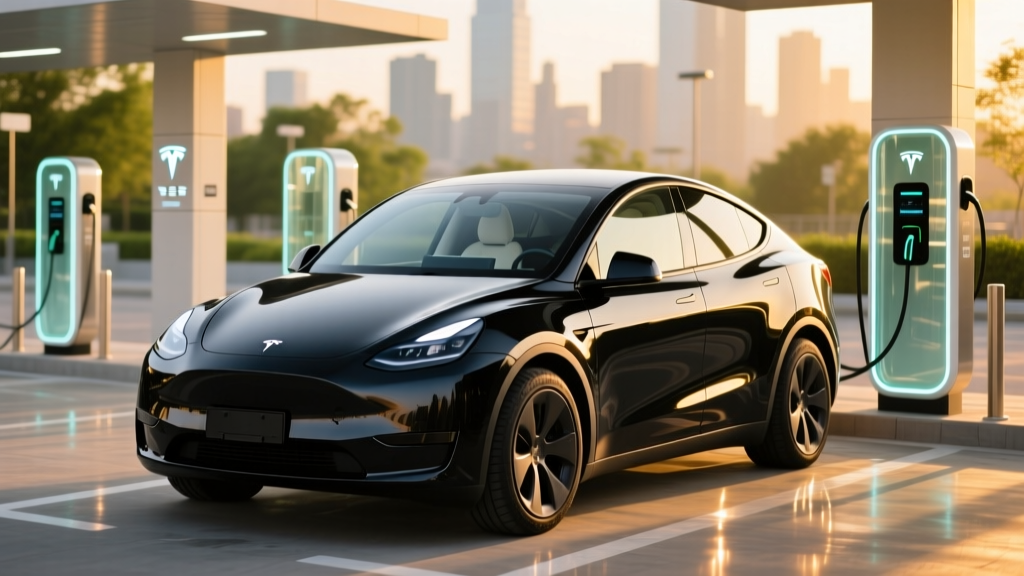
| DC Fast (Supercharger V3/V4) | Peak 250 kW | ~175 mi in 15 min (10–50% SoC) | Tapers sharply above 60%; 80% reached in ~25 min |
| DC Fast (Supercharger V2) | Peak 150 kW | ~120 mi in 15 min | Shared stalls may split power |
| Level 2 (Home Wall Connector) | 11.5 kW (48A) | ~44 mi/hr | Full charge in ~7 hr; requires 60A circuit |
| Level 2 (Public / 32A) | 7.7 kW | ~30 mi/hr | Common at workplaces, malls |
| Level 1 (120V outlet) | ~1.4 kW | ~3–5 mi/hr | Emergency/trickle only |
The Model 3's peak 250 kW rate is competitive, but the charge curve tells the full story. Tesla's pack management sustains peak power only between roughly 10–35% state of charge. By 50%, you're typically seeing 150–170 kW, and above 80%, speeds drop below 50 kW as the battery management system protects cell longevity. This is normal physics for NMC packs — not a Tesla-specific flaw — but it means a "10–80%" time of 25 minutes is realistic only with proper battery preconditioning (the car does this automatically when you navigate to a Supercharger).
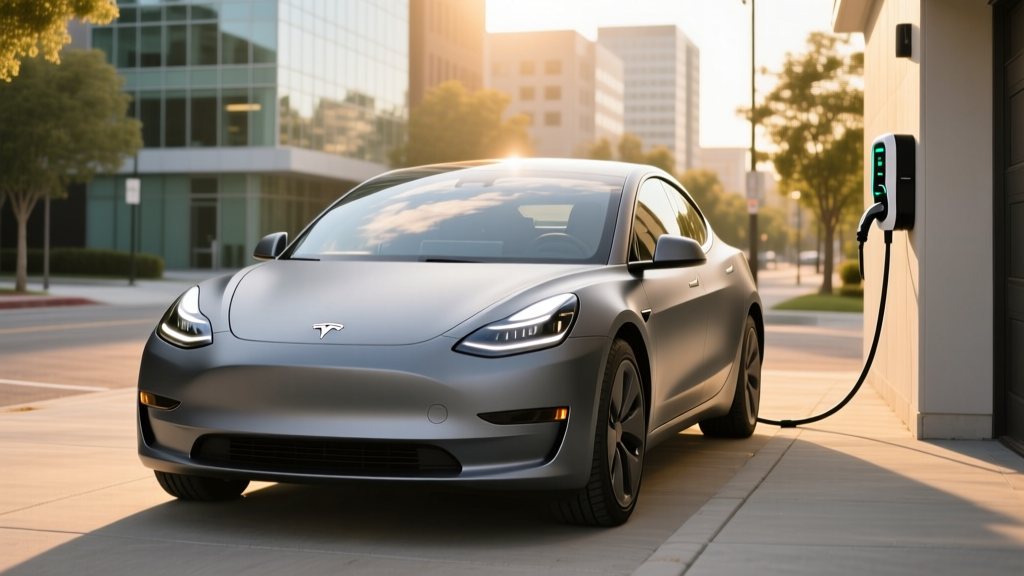
For home charging, Tesla's Wall Connector at 11.5 kW remains one of the fastest residential options available. A full overnight charge from 20% adds roughly 300 miles in 7 hours — more than enough for virtually any daily commute. Installation typically requires a 60-amp dedicated circuit; budget $800–$2,000 for a licensed electrician depending on panel proximity.
Performance and Driving Dynamics
The Performance trim's 2.9-second 0–60 mph time puts it in supercar territory, but even the base Long Range RWD at 4.9 seconds is genuinely quick for a daily driver. The dual-motor AWD variants provide confident traction in rain and light snow, with torque vectoring that feels planted through corners.
What sets the Model 3 apart from competitors like the Ioniq 6 or BMW i4 is the combination of one-pedal driving smoothness, low center of gravity, and the absence of traditional drivetrain lag. Regenerative braking in the 2026 model year is well-calibrated — strong enough for true one-pedal city driving but not abrupt at highway speeds.
The Adaptive Damping suspension (standard on Performance, optional on Long Range AWD) significantly improves ride quality over pre-Highland models. Road noise has dropped noticeably thanks to acoustic glass and additional insulation, though it still trails the BMW i4 in cabin quietness at sustained highway speeds.
Interior, Cargo, and Technology
The minimalist interior remains polarizing. A 15.4-inch center touchscreen handles virtually all vehicle controls — there are no physical buttons for climate, mirrors, or glovebox. The 2026 model adds ventilated front seats, ambient lighting, and a rear-seat 8-inch touchscreen for passengers, all improvements introduced with the Highland redesign.
Cargo dimensions:
- Rear trunk: 21.0 cu ft (with sub-trunk storage)
- Front trunk (frunk): 3.1 cu ft
- Total cargo: 24.1 cu ft
- Rear legroom: 35.3 inches
- Front headroom: 40.3 inches
These numbers trail the Hyundai Ioniq 6 (which offers similar trunk volume but no frunk) and fall well short of crossover alternatives like the Model Y (76 cu ft max). If you regularly haul more than two passengers or bulky cargo, the Model Y or Ioniq 5 may serve you better.
Tech highlights:
- Tesla Autopilot (Level 2 SAE driver-assist): adaptive cruise, lane centering, automatic emergency braking
- Full Self-Driving (Supervised): $8,000 option adding auto lane change, navigate-on-autopilot, traffic light recognition — still requires full driver attention
- Over-the-air updates continuously add features
- Native Supercharger network access (17,000+ US stalls)
- Sentry Mode dashcam recording, dog mode climate control
Pricing, Trims, and Federal Tax Credit Eligibility
| Trim | Base MSRP | As-Tested* | §30D Credit Eligibility |
|---|---|---|---|
| Long Range RWD | $38,990 | $40,490 (w/ FSD: $48,490) | Eligible — up to $7,500 (see caveats) |
| Long Range AWD | $43,990 | $45,490 | Eligible — up to $7,500 |
| Performance | $52,990 | $54,490 | Eligible — up to $7,500 |
*As-tested includes destination fee and common options. FSD is a $8,000 add-on.
The Model 3 qualifies as a sedan under the IRS §30D MSRP cap of $55,000, meaning all three trims fall within the price limit. However, eligibility for the full $7,500 credit depends on several factors that change annually:
- Buyer income cap: Modified AGI must not exceed $150,000 (single), $225,000 (head of household), or $300,000 (joint filers)
- Battery sourcing: A percentage of critical minerals and battery components must be sourced from the US or free-trade-agreement countries — Tesla's US-built packs generally satisfy current thresholds, but verify at purchase via the dealer's IRS compliance documentation
- Point-of-sale transfer: As of 2024, buyers can transfer the credit to the dealer for an immediate price reduction rather than claiming it at tax filing
- One vehicle per VIN, one credit per taxpayer per year
Always confirm current eligibility at irs.gov before purchasing, as battery-sourcing rules tighten progressively each year through 2032.
Ownership Costs, Warranty, and Long-Term Value
Tesla provides an 8-year/120,000-mile battery and drive unit warranty with a guaranteed minimum 70% capacity retention threshold. This means if your battery degrades below 70% of its original capacity within the warranty period, Tesla will repair or replace it. In practice, Tesla's NMC packs have shown strong longevity — fleet data suggests approximately 5–8% degradation over the first 100,000 miles for properly maintained vehicles (avoiding frequent 100% charges and excessive DC fast charging).
The basic vehicle limited warranty covers 4 years/50,000 miles. Compared to Hyundai's 10-year/100,000-mile battery warranty on the Ioniq 6, Tesla's coverage is adequate but not class-leading.
Estimated 5-year cost of ownership (Long Range RWD, 15,000 mi/yr):
- Electricity (home charging at $0.14/kWh): ~$2,625
- Gas equivalent (28 MPG sedan at $3.50/gal): ~$9,375
- Fuel savings over 5 years: ~$6,750
- Insurance (national avg for Model 3): ~$2,200–$2,800/year — higher than most sedans
- Maintenance: Minimal — no oil changes, brake pad life extended by regen; cabin air filter every 2 years (~$150)
The Model 3's insurance premiums remain a genuine ownership cost to budget for. Multiple insurers classify it as a performance vehicle, and average premiums run 30–50% above comparable gas sedans. Get quotes before ordering.
Pros, Cons, and the Verdict
- Best-in-class Supercharger network reliability
- Class-leading efficiency (25 kWh/100mi on LR RWD)
- OTA updates continuously improve the vehicle
- Strong resale value relative to most EVs
- Excellent one-pedal driving calibration
- 250 kW DC charging with automatic preconditioning
- No physical controls — all functions via touchscreen
- Rear seat space trails competitors (35.3" legroom)
- Insurance premiums significantly above average
- FSD ($8,000) remains Level 2 despite the name
- Build quality improving but still inconsistent panel gaps reported
- No Apple CarPlay or Android Auto
Our verdict: The 2026 Tesla Model 3 Long Range RWD at $38,990 (potentially ~$31,490 after the federal credit) remains the most efficient, best-charging electric sedan in its price class. The Supercharger network advantage is real — public charging reliability consistently outpaces Electrify America and third-party CCS networks in independent surveys. If your priority is a commuter with road-trip capability and you accept the touchscreen-only interface, the Model 3's appeal is as strong as ever.
However, the appeal narrows if you need rear-seat room, prefer physical buttons, want Apple CarPlay, or are sensitive to insurance costs. The Hyundai Ioniq 6 offers comparable range (361 mi), a more traditional interior, and lower insurance — though it lacks Supercharger access (NACS adapter required for 2026 models). The BMW i4 eDrive40 wins on cabin refinement and build quality but starts at $52,200 with less range.
Who Should Buy the Model 3 — and Who Shouldn't
Choose the Model 3 if:
- You commute 30–80 miles daily and want minimal charging stops
- You road-trip regularly and value Supercharger network coverage
- You prioritize acceleration and efficiency over rear-seat space
- You're comfortable with a touchscreen-centric interface
- You qualify for the §30D credit and want maximum value under $40K
Look elsewhere if:
- You frequently carry rear-seat passengers (consider Model Y or Ioniq 5)
- You need Apple CarPlay/Android Auto (look at Hyundai, BMW, or Ford)
- Insurance cost is a primary concern (get quotes first)
- You want a traditional luxury interior (BMW i4 or Mercedes EQB)
Frequently Asked Questions
What is the real-world range of the 2026 Tesla Model 3?
The EPA rates the Long Range RWD at 363 miles. In real-world highway driving at 70 mph, expect 300–320 miles. Cold weather (below 30°F) without preconditioning can reduce range to 250–270 miles. City driving with regenerative braking typically yields 340–355 miles.
How fast does the Model 3 charge at home and on the road?
On a Tesla V3/V4 Supercharger, the Model 3 peaks at 250 kW and charges from 10–80% in approximately 25 minutes with battery preconditioning. At home on a Level 2 Wall Connector (11.5 kW), it adds about 44 miles of range per hour, achieving a full charge in roughly 7 hours.
How much does the Model 3 cost after federal tax credits?
The Long Range RWD starts at $38,990. If you meet all IRS §30D requirements — income below $150K single/$300K joint, battery sourcing compliance — you may qualify for up to $7,500, bringing the effective price to approximately $31,490. The credit can be transferred at point of sale for an instant discount. Always verify eligibility at irs.gov before purchase.
Is the Model 3 worth buying over the Hyundai Ioniq 6 or BMW i4?
The Model 3 wins on efficiency (25 kWh/100mi vs Ioniq 6's 27), Supercharger network access, and over-the-air feature updates. The Ioniq 6 matches it on range (361 mi EPA) and offers physical controls, Apple CarPlay, and lower insurance premiums. The BMW i4 delivers superior build quality and cabin quietness but costs ~$13,000 more for less range. Your priority list determines the winner.
Does the Tesla Model 3 qualify for the $7,500 federal EV tax credit?
Yes — all Model 3 trims fall under the $55,000 sedan MSRP cap for §30D eligibility. However, you must also meet income limits (up to $300K joint AGI), and the battery must satisfy critical-mineral and component-sourcing thresholds that tighten each year. Tesla's US-assembled battery packs have generally qualified, but confirm with your Tesla advisor and check current rules at irs.gov before finalizing your order.
How long will the Model 3 battery last?
Tesla warranties the battery for 8 years or 120,000 miles with a 70% minimum capacity retention guarantee. Real-world fleet data from sources like NHTSA filings and owner surveys suggest 5–8% degradation over 100,000 miles with proper care (daily charge limits of 80–90%, minimizing DC fast charging). Many Model 3 packs are projected to reach 200,000+ miles before falling below the 70% threshold.
Sources: EPA fueleconomy.gov, Tesla.com official specifications, IRS §30D Clean Vehicle Credit guidelines. All specs reflect 2026 model year. Pricing and credit eligibility subject to change — verify at time of purchase.