Quick Verdict: The Benchmark Affordable EV Sedan
The 2026 Tesla Model 3 Standard Range (officially badged as the Model 3 Rear-Wheel Drive) remains the entry point into Tesla's ecosystem and one of the most efficient electric sedans on the market. With an EPA-estimated 272 miles of range, a starting MSRP of $38,990, and access to Tesla's Supercharger network, it sets a bar that competitors like the Hyundai Ioniq 6 and BMW i4 eDrive35 struggle to match on total value. But the base Model 3 isn't without compromises — rear-seat space is tight, the minimalist interior demands touchscreen dependency, and the LFP battery's cold-weather behavior requires planning. Here's every number that matters.
Range, Battery, and Efficiency: What the EPA Sticker Doesn't Tell You
The 2026 Model 3 RWD packs a 60 kWh usable lithium iron phosphate (LFP) battery supplied by CATL. Tesla rates it at 272 miles EPA combined, with an efficiency of 132 MPGe combined (approximately 25 kWh/100 mi). That efficiency figure is among the best in the segment — the Ioniq 6 SE achieves 140 MPGe but with a larger 77.4 kWh pack and a higher price.
EPA Sticker: 272 miles
Mixed driving (city/highway 50/50): ~250–265 miles
Sustained 75 mph highway: ~225–240 miles
Cold weather (below 32°F, highway): ~185–210 miles (LFP chemistry is more susceptible to cold-range loss than NMC)
Tesla's heat pump helps mitigate cabin energy draw in winter, but LFP cells inherently lose more usable capacity at low temperatures than nickel-based chemistries. Preconditioning the battery via the Tesla app before departure recovers some of that loss.
| Spec | Value |
|---|---|
| EPA Range | 272 miles |
| Battery (usable) | 60 kWh, LFP |
| Efficiency | 132 MPGe / 25 kWh/100 mi |
| Drivetrain | Rear-Wheel Drive (single motor) |
| Horsepower | 271 hp |
| 0–60 mph | 5.8 seconds |
| Top Speed | 125 mph |
| Max DC Fast Charge | 170 kW (peak) |
| 10–80% DC Charge | ~25 minutes |
| Level 2 Charge Rate | 11 kW (44 mi/hr at 48A) |
| Cargo Volume | 23 cu ft (trunk + frunk) |
| Rear Legroom | 35.2 inches |
| Base MSRP | $38,990 |
| Battery Warranty | 8 years / 100,000 miles |
Charging Speed: Supercharger Access and the LFP Curve
The 2026 Model 3 RWD peaks at 170 kW on DC fast charging via the NACS connector, native to Tesla's Supercharger network. The 10–80% session takes approximately 25 minutes under optimal thermal conditions. That's slower than the Long Range AWD's ~250 kW peak, and notably behind the Hyundai Ioniq 6's 350 kW capability on 800V architecture.
| Level | Power | Rate |
|---|---|---|
| Level 1 (120V) | ~1.4 kW | ~5 mi/hr |
| Level 2 (240V, 48A) | 11 kW | ~44 mi/hr |
| DC Fast (Supercharger V3/V4) | 170 kW peak | 10–80% in ~25 min |
Charging curve reality: The 170 kW peak holds roughly from 10% to 45% SoC, then tapers progressively. Expect ~110 kW from 45–65%, dropping below 60 kW past 80%. Tesla's navigation system automatically preconditions the battery when routing to a Supercharger, which is essential for achieving advertised speeds — arriving cold can cut peak rates by 30–40%.
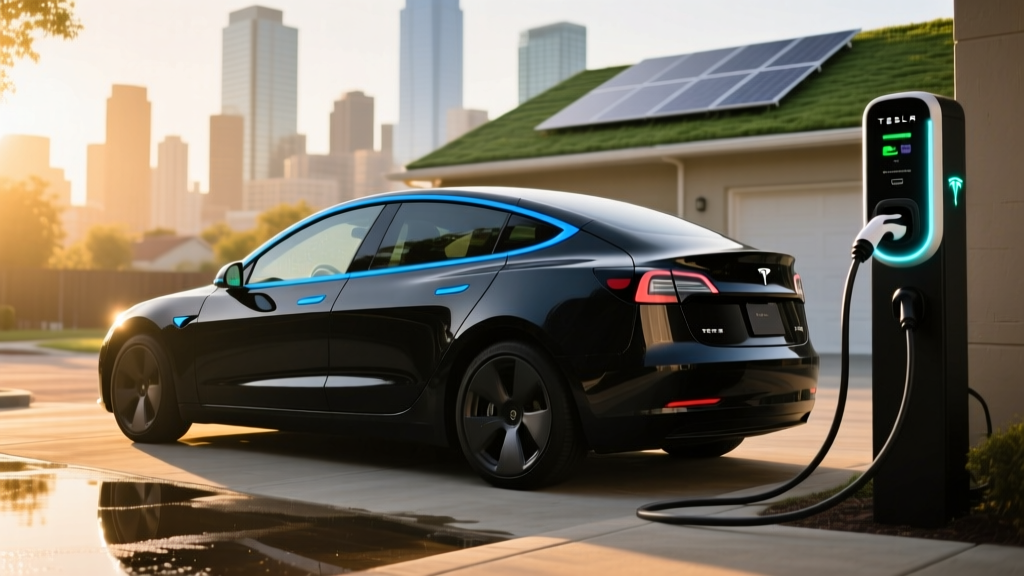
At home on a Wall Connector (48A/240V), the onboard 11 kW charger replenishes the pack from empty in about 6 hours. This is adequate for overnight top-ups and among the faster Level 2 rates in the class.
Performance and Driving Dynamics
The single rear-mounted motor produces 271 horsepower and launches the Model 3 RWD to 60 mph in 5.8 seconds. That's quick enough for confident highway merging and passing, though it trails the dual-motor Long Range's 4.2-second sprint. The RWD layout gives the car a playful, balanced feel that enthusiasts appreciate — the steering is direct, and the low center of gravity from the under-floor battery keeps body roll minimal.
Regenerative braking is strong and essentially enables one-pedal driving in most conditions. Tesla removed the user-adjustable regen setting several model years ago; the system manages blending automatically. Ride quality improved significantly with the 2024 "Highland" refresh — the updated suspension absorbs pavement imperfections more gracefully than the pre-refresh Model 3, though 19-inch sport wheels (optional) firm things up noticeably.
Interior, Tech, and Cargo: Minimalism With Trade-Offs
The Model 3 cabin is dominated by a single 15.4-inch center touchscreen that handles everything: climate, mirrors, glovebox, media, and navigation. There are no physical instrument clusters or stalks — turn signals live on the steering wheel, and the gear selector is a touchscreen swipe (with a backup overhead button). This radical minimalism is polarizing: some owners love the clean aesthetic, others find it distracting.
What works: The infotainment system is the fastest and most responsive in the EV segment. Over-the-air updates continuously add features. The premium audio system (9 speakers on the RWD) is excellent for the price point. Ventilated front seats and a panoramic glass roof are now standard across trims.
What doesn't: Rear-seat legroom at 35.2 inches is tight for adults on longer trips — the Hyundai Ioniq 6 offers 37.4 inches. Cargo space totals 23 cubic feet (trunk plus a modest front trunk), which is competitive but trails hatchback rivals like the Ioniq 5. The glass roof, while beautiful, can make the cabin warm in direct summer sun despite UV tinting.
Pricing, Trims, and Federal Tax Credit Eligibility
The 2026 Model 3 lineup starts with the RWD at $38,990 (before destination). The Long Range AWD steps up to $45,990, and the Performance variant sits at $52,990. Destination adds $1,390.
| Trim | MSRP | Est. After §30D Credit |
|---|---|---|
| RWD (Standard Range) | $38,990 | ~$31,490* |
| Long Range AWD | $45,990 | ~$38,490* |
| Performance AWD | $52,990 | ~$45,490* |
*Federal tax credit caveat: The IRS §30D Clean Vehicle Credit provides up to $7,500, but eligibility is not automatic. For 2026, the Model 3 qualifies on MSRP (sedan cap: $55,000). Buyer income caps apply ($150,000 single / $300,000 joint modified AGI). The critical-mineral and battery-component sourcing requirements determine whether the full $7,500 or a partial $3,750 credit applies — Tesla sources LFP cells from CATL (China), and the sourcing rules tighten annually. As of early 2026, the RWD trim qualifies for a partial credit; check fueleconomy.gov for the most current eligibility before purchasing. The credit can be transferred to the dealer as a point-of-sale discount.
Warranty and Long-Term Battery Outlook
Tesla covers the Model 3's battery and drive unit for 8 years or 100,000 miles (whichever comes first) with a minimum 70% capacity retention guarantee. The basic vehicle warranty is 4 years / 50,000 miles. LFP chemistry offers a meaningful longevity advantage: these cells typically sustain 3,000+ full charge cycles with minimal degradation, compared to ~1,500–2,000 for NMC. Tesla also recommends charging LFP batteries to 100% at least weekly for accurate state-of-charge calibration — unlike NMC, where daily 80% limits are preferred.
Real-world degradation data from high-mileage Model 3 owners suggests LFP packs lose approximately 5–8% capacity over the first 100,000 miles, well within warranty thresholds. Replacement cost, should it ever be needed out of warranty, currently ranges from $12,000–$16,000 for the 60 kWh pack.
Autopilot and Driver Assistance: Level 2, Not Self-Driving
Every 2026 Model 3 ships with Tesla's Basic Autopilot (traffic-aware cruise control and lane centering). The optional Full Self-Driving (Supervised) package adds automated lane changes, traffic-light recognition, and city-street navigation. However, FSD remains a SAE Level 2 driver-assistance system — the driver must remain fully engaged, hands on the wheel, and eyes on the road at all times. This is not autonomous driving. Level 4 robotaxi services (Waymo, Zoox) operate in geofenced areas without a driver; Tesla's system does not meet that threshold.
The $8,000 FSD (Supervised) add-on remains a contentious purchase. Its capabilities are impressive on divided highways but inconsistent on complex urban streets. For most buyers, the included Basic Autopilot is sufficient for daily commuting. Enhanced Autopilot ($6,000) offers a middle ground with auto lane-change and Navigate on Autopilot.
Pros and Cons at a Glance
- Best-in-class efficiency (132 MPGe combined)
- Native Supercharger network access (17,000+ US stalls)
- LFP battery longevity and 100% daily charging capability
- Fastest infotainment system in the segment
- Competitive pricing after potential tax credit
- Strong over-the-air update cadence
- DC charging peak (170 kW) trails 800V rivals
- Rear-seat legroom is tight for adults (35.2 in)
- Touchscreen-only controls require learning curve
- LFP cold-weather range loss is significant (~25–30%)
- Partial tax credit eligibility due to battery sourcing
- No Apple CarPlay / Android Auto
Who Should Buy the 2026 Model 3 Standard Range?
Choose the Model 3 RWD if: You're a daily commuter with home Level 2 charging, prioritize efficiency and low running costs, want Supercharger road-trip access, and value tech-forward minimalism over rear-seat comfort.
Look elsewhere if: You regularly carry rear-seat adults (consider the Ioniq 6 or BMW i4), need maximum DC charging speed for frequent long trips, live in extreme cold climates without a garage (the LFP range penalty stings), or prefer physical controls and phone integration.
Frequently Asked Questions
What is the real-world range of the 2026 Tesla Model 3 Standard Range?
Expect 250–265 miles in mixed driving, 225–240 miles on sustained highway trips at 75 mph, and 185–210 miles in freezing temperatures. The EPA sticker reads 272 miles, but real-world conditions — especially cold weather with the LFP battery — consistently reduce that figure.
How fast does it charge at home and on the road?
On DC fast charging, the Model 3 RWD peaks at 170 kW and reaches 10–80% in about 25 minutes. At home on a 240V/48A Level 2 charger, it adds approximately 44 miles per hour of charging, fully replenishing overnight in ~6 hours.
Does the 2026 Model 3 qualify for the federal EV tax credit?
It qualifies on MSRP (under the $55,000 sedan cap), but buyer income limits and battery-sourcing rules apply. The CATL-sourced LFP battery may limit the credit to $3,750 rather than the full $7,500 depending on current-year critical-mineral and component requirements. Verify at fueleconomy.gov and consult a tax professional.
Is it worth buying over the Hyundai Ioniq 6 or BMW i4?
For total cost of ownership and charging infrastructure, the Model 3 RWD leads. The Ioniq 6 SE offers slightly better efficiency (140 MPGe) and faster 350 kW charging but lacks Supercharger access and costs more. The BMW i4 eDrive35 is a premium alternative with better rear-seat space but a significantly higher starting price ($52,200). The Model 3 wins on value; the Ioniq 6 wins on charging speed and rear comfort.
How long will the LFP battery last?
LFP cells are rated for 3,000+ full cycles with minimal degradation. Real-world data suggests 5–8% capacity loss over 100,000 miles. Tesla's warranty guarantees 70% retention for 8 years / 100,000 miles. With proper care (regular 100% charges as Tesla recommends for LFP), the pack should outlast the vehicle's useful life.
What are the biggest drawbacks?
The 170 kW DC charging peak is the most significant limitation for road-trippers accustomed to 250+ kW rivals. Rear-seat space is cramped, the all-touchscreen interface frustrates some drivers, cold-weather range loss is more pronounced than NMC-equipped EVs, and the lack of Apple CarPlay/Android Auto is a dealbreaker for some buyers.