Quick Verdict: The Signature Tesla That Bridges Luxury and Efficiency
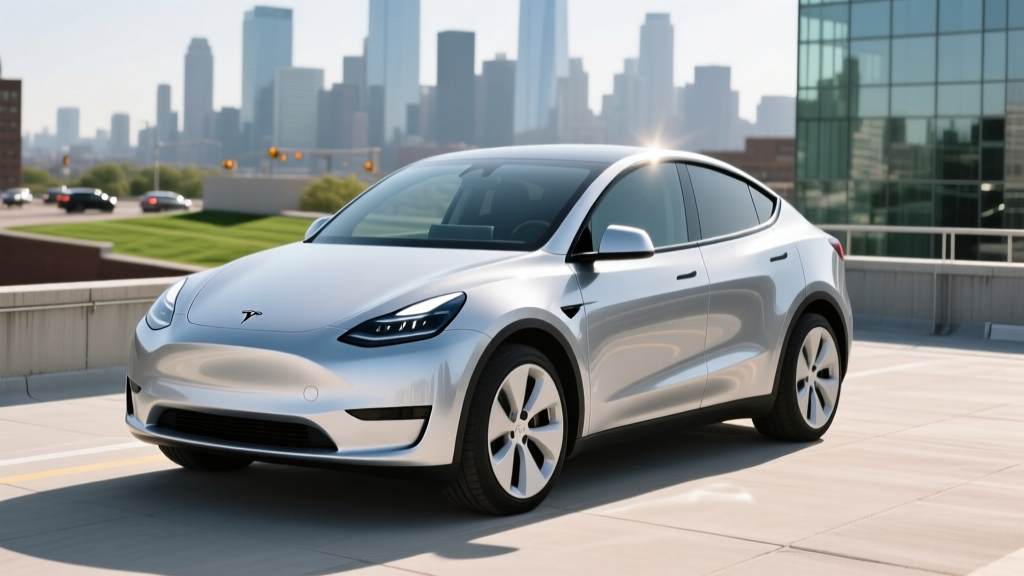
The 2026 Tesla Model 3 Long Range AWD has become what many buyers consider the signature Tesla — the model that best represents the brand's blend of range, performance, software sophistication, and increasingly competitive pricing. With an EPA-estimated 363 miles of range, access to the industry's most reliable DC fast-charging network, and a starting MSRP of $47,130 (before potential incentives), the Model 3 Long Range remains the benchmark against which every other premium electric sedan is measured.
But benchmark status doesn't mean it's perfect. The minimalist interior still divides buyers, the absence of traditional driver-assist redundancy sensors (lidar, ultrasonic proximity) is a philosophical choice rather than a technical necessity, and insurance costs continue to run higher than segment averages. This review breaks down every number that matters — from real-world highway range to charging-curve taper — so you can decide whether the Model 3 Long Range AWD is the right electrified vehicle for your driveway.
| Specification | Value |
|---|---|
| EPA Range | 363 miles |
| Battery (usable) | ~79 kWh (NMC chemistry) |
| Drivetrain | Dual-motor AWD |
| Horsepower | ~384 hp (combined) |
| 0–60 mph | 4.2 seconds |
| Peak DC Fast Charge | 250 kW (CCS via adapter / NACS native) |
| 10–80% DC Charge Time | ~27 minutes |
| Level 2 Home Charge Rate | 11.5 kW (~44 mi/hr) |
| MPGe (combined) | 131 MPGe |
| Efficiency | 25 kWh/100 mi |
| Cargo Volume | 23 cu ft (trunk + frunk combined) |
| Rear Legroom | 35.3 inches |
| Base MSRP | $47,130 (incl. destination) |
| Battery Warranty | 8 years / 120,000 miles |
| Basic Vehicle Warranty | 4 years / 50,000 miles |
Range and Efficiency: EPA Sticker vs. Real-World Miles
The 2026 Model 3 Long Range AWD carries an EPA-estimated 363 miles of range — placing it among the longest-range EVs available under $55,000. That figure is derived from the EPA's standardized city and highway test cycles, which blend stop-and-go and steady-speed driving.
- City / mixed commuting: 340–365 miles (regen braking recovers energy in stop-and-go traffic)
- Highway (70–80 mph sustained): 290–320 miles (aerodynamic drag dominates at speed)
- Cold weather (below 32°F): 240–280 miles (cabin heating and battery resistance reduce efficiency by 20–30%)
- Hot weather with A/C (above 95°F): 320–340 miles (moderate HVAC draw; heat pump helps)
On a 250-mile highway road trip in 45°F weather with moderate rain, expect to arrive with roughly 15–20% state of charge remaining — workable, but plan a brief Supercharger stop if temperatures drop further.
Efficiency is rated at 131 MPGe combined, which translates to roughly 25 kWh per 100 miles. In real-world mixed driving, owners typically report 23–27 kWh/100 mi depending on climate and driving style. The Model 3's low drag coefficient (Cd 0.219) is a major contributor to its highway efficiency advantage over taller, boxier EVs.
Battery Chemistry: NMC in the Long Range, LFP in the Standard
The Long Range AWD uses an NMC (nickel manganese cobalt) battery pack with approximately 79 kWh of usable capacity. NMC offers higher energy density than LFP (lithium iron phosphate), which is why Tesla reserves it for the Long Range and Performance trims. The trade-off: NMC batteries are best kept between 20–80% state of charge for daily use, whereas the LFP pack in the Model 3 Rear-Wheel Drive (Standard Range) can be charged to 100% regularly without accelerated degradation concerns.
Tesla's battery management system (BMS) is among the most sophisticated in the industry, with active liquid thermal management that preconditions the pack during navigation-routed charging sessions — a feature that directly improves DC fast-charge speeds in cold weather.
Charging Speed: Supercharger Network and Home Level 2
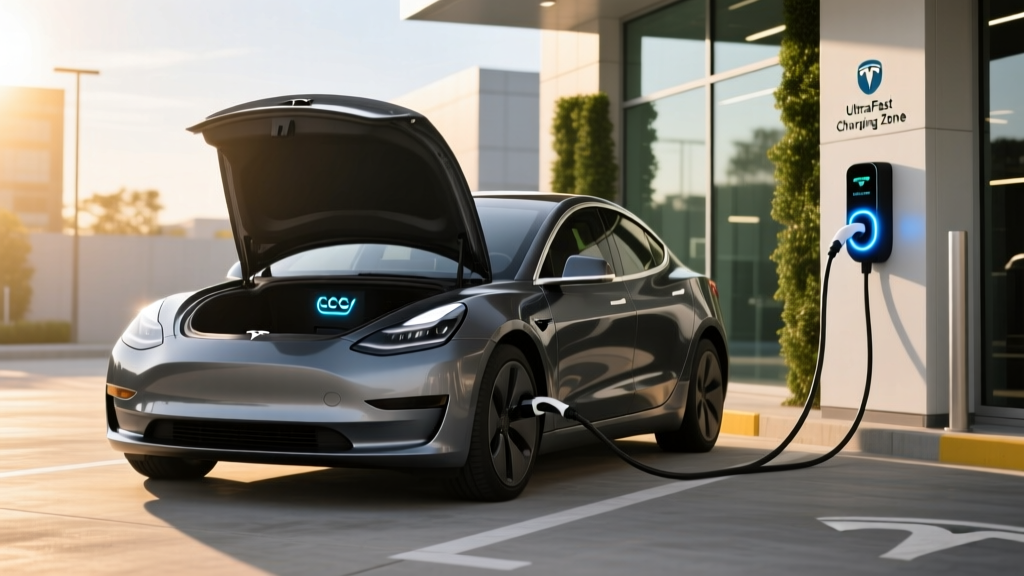
Charging capability is where the Model 3's ecosystem advantage becomes tangible. Tesla's Supercharger network remains the most reliable and geographically comprehensive DC fast-charging infrastructure in North America, with over 6,000 stations and 65,000+ individual stalls as of early 2026.
| Charge Level | Connector | Max Power | Speed (mi/hr added) | Notes |
|---|---|---|---|---|
| Level 1 (120V) | NACS / J1772 adapter | ~1.4 kW | ~4–5 mi/hr | Emergency/trickle only |
| Level 2 (240V home) | NACS (Wall Connector) | 11.5 kW | ~44 mi/hr | Full charge in ~7 hours |
| Level 2 (public) | J1772 adapter or NACS | Up to 11.5 kW | ~44 mi/hr | Varies by station output |
| DC Fast (V3 Supercharger) | NACS native | 250 kW peak | Up to 175 mi in 15 min | 10–80% in ~27 minutes |
| DC Fast (V4 Supercharger) | NACS native | 250 kW peak* | Similar to V3 | *Model 3 architecture caps at ~250 kW |
| DC Fast (CCS station) | NACS-to-CCS adapter | Up to 250 kW | Varies | Requires Tesla CCS adapter ($175) |
Understanding the Charging Curve
The 250 kW peak charge rate is not sustained across the entire session. Like all EVs, the Model 3's charge curve tapers as the battery fills:
- 10–30% SoC: Near-peak rates (~220–250 kW), adding roughly 4–5 miles per minute
- 30–60% SoC: Sustained ~150–180 kW
- 60–80% SoC: Tapers to ~80–100 kW
- Above 80% SoC: Drops sharply to ~30–50 kW (charging past 80% is slow and generally unnecessary for road trips)
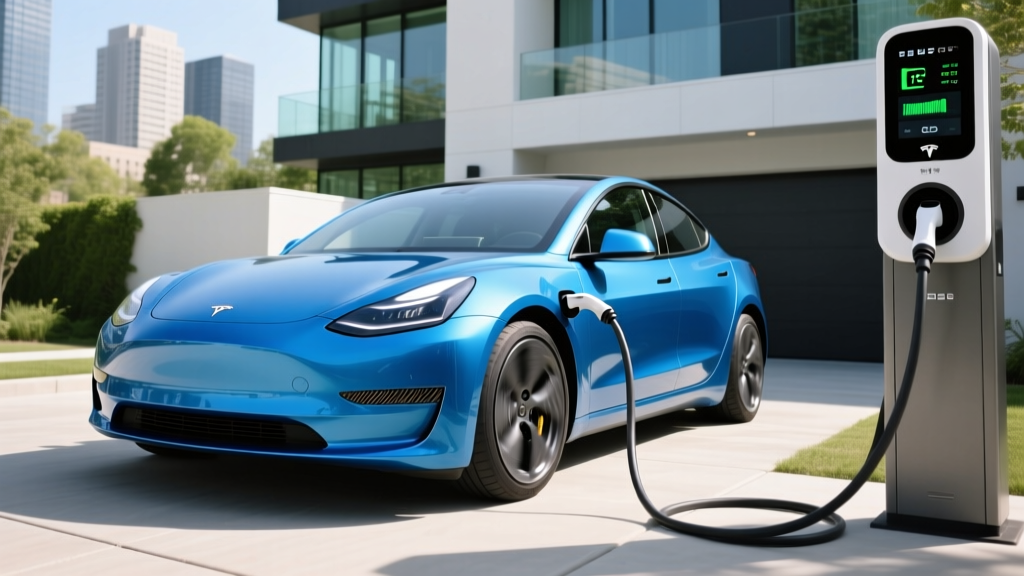
For home charging, the Tesla Wall Connector at 48 amps (11.5 kW on a 60-amp circuit) delivers roughly 44 miles of range per hour of charging. A typical overnight session from 20% to 80% takes about 4.5 hours — more than sufficient for daily replenishment. Installation costs for a dedicated 240V/60A circuit typically range from $500 to $2,000 depending on panel proximity and local permitting, though some homes may require a panel upgrade ($1,500–$3,000 additional) if existing service is 100 amps or less.
Performance: Dual-Motor AWD and Acceleration
The Long Range AWD pairs a permanent-magnet synchronous motor on the rear axle with an induction motor up front. Combined output is approximately 384 horsepower and 360 lb-ft of torque, propelling the Model 3 from 0–60 mph in 4.2 seconds. That's brisk enough to merge confidently onto any freeway and overtake without hesitation, though buyers seeking track-day thrills will want the Performance trim (3.1 seconds to 60 mph).
The dual-motor AWD system provides excellent traction in rain and light snow, with torque vectoring between axles managed entirely by software. Regenerative braking is adjustable (Standard and Low modes), and the one-pedal driving experience — where lifting off the accelerator slows the car significantly — is well-calibrated and predictable.
Ride quality on the 2026 Model 3 has improved noticeably over pre-2024 "Highland" refresh models, with revised damper tuning and additional sound-deadening material reducing road noise at highway speeds. The 18-inch Photon wheels (standard) offer the best ride comfort; the optional 19-inch Nova wheels look sharper but transmit more imperfections into the cabin.
Interior, Cargo, and Technology
Minimalist Cabin with Premium Materials
The 2026 Model 3 interior continues Tesla's minimalist philosophy: a single 15.4-inch touchscreen dominates the dashboard, with virtually no physical buttons. The 8-inch rear touchscreen (added in the Highland refresh) gives back-seat passengers climate and media controls. Material quality has stepped up with ventilated front seats (standard on Long Range), ambient lighting, and improved soft-touch surfaces on the dash and door panels.
Practical dimensions:
- Front headroom: 40.3 inches
- Front legroom: 42.7 inches
- Rear headroom: 37.8 inches
- Rear legroom: 35.3 inches (adequate for adults up to ~6'1", tight for taller passengers)
- Trunk: 21 cu ft (including lower compartment)
- Frunk (front trunk): 3.1 cu ft
- Total cargo: ~23 cu ft (seats up), expandable with 60/40 rear fold
Software and Infotainment
Tesla's software remains the gold standard for EV infotainment. The system includes native navigation with real-time Supercharger routing, over-the-air (OTA) updates that regularly add features, a built-in dashcam and Sentry Mode surveillance system, Spotify/Apple Music/Tidal integration, and a theater mode for streaming Netflix/YouTube while parked. There is no Apple CarPlay or Android Auto — Tesla's ecosystem is self-contained, which is either a feature or a dealbreaker depending on your smartphone attachment.
Driver Assistance: Autopilot and FSD (Supervised)
Every Model 3 comes with Basic Autopilot, which includes adaptive cruise control and lane-centering on divided highways. The optional Enhanced Autopilot ($6,000) adds automatic lane changes, Navigate on Autopilot (highway on/off-ramp guidance), Autopark, and Summon. The top-tier Full Self-Driving (Supervised) package ($8,000 or $99/month) extends to city-street traffic-light and stop-sign recognition, though it still requires constant driver supervision.
Pricing, Trims, and Federal Tax Credit Eligibility
The 2026 Tesla Model 3 is offered in three trims:
| Trim | MSRP (incl. destination) | EPA Range | Drivetrain | §30D Credit Potential |
|---|---|---|---|---|
| Rear-Wheel Drive (Standard Range) | $38,630 | 272 mi | RWD | Up to $7,500* |
| Long Range AWD | $47,130 | 363 mi | Dual-motor AWD | Up to $7,500* |
| Performance | $54,130 | 315 mi | Dual-motor AWD | Up to $7,500* |
*Eligibility for the full $7,500 federal tax credit under IRS §30D depends on multiple requirements. See checklist below.
Federal Tax Credit (§30D) Eligibility Checklist
The IRS §30D Clean Vehicle Credit provides up to $7,500 for qualifying new EVs, but eligibility is not automatic. For 2026, the following requirements apply:
- MSRP cap: Sedans must be ≤ $55,000 MSRP. All Model 3 trims qualify.
- Buyer income cap (modified AGI): $150,000 single / $225,000 head of household / $300,000 joint filers.
- Battery component sourcing: A percentage of battery components must be manufactured or assembled in North America (threshold increases annually).
- Critical minerals sourcing: A percentage of critical minerals must be sourced from the U.S. or FTA partners (threshold increases annually).
- Point-of-sale transfer: As of 2024+, the credit can be transferred to the dealer at purchase, reducing the sale price directly — rather than waiting to claim it on your tax return.
- FEOC restriction: Vehicles with battery components from a "foreign entity of concern" (certain Chinese entities) may lose partial or full credit eligibility.
The Model 3 Long Range AWD at $47,130 sits under the $55,000 sedan cap, making it potentially eligible for the full $7,500. However, battery-sourcing requirements tighten each year, and the exact credit amount available at point of sale depends on Tesla's current supply-chain compliance. Always verify current eligibility on fueleconomy.gov before purchasing and consult a tax professional for your specific situation.
Who Should Buy the 2026 Model 3 Long Range AWD?
- You want 350+ miles of real-world commuting range without daily charging anxiety
- You take regular road trips and value Supercharger network reliability
- You prefer a sedan form factor with a low center of gravity and sporty handling
- You want OTA software updates that improve the car over time
- You have (or can install) home Level 2 charging
- You need three rows of seating or SUV cargo height (consider Model Y or Rivian R1S)
- You strongly prefer Apple CarPlay/Android Auto integration
- You want physical buttons and a traditional instrument cluster
- You live in an apartment with no charging access and no reliable public infrastructure nearby
- Insurance costs in your area are prohibitive for Tesla vehicles (get a quote before buying)
Best use case: The Model 3 Long Range AWD excels as a daily commuter that can also handle 300+ mile road trips with a single 20-minute Supercharger stop. It's ideal for one- or two-person households (or families with young children in car seats, where rear legroom is less critical) who have home charging access and value technology-forward ownership.
Pros and Cons
Pros
- Class-leading EPA range (363 mi) at this price point
- Supercharger network reliability and geographic coverage
- 250 kW DC fast charging with battery preconditioning
- Best-in-class software, navigation, and OTA updates
- Strong efficiency (25 kWh/100 mi) keeps charging costs low
- Qualifies under $55K sedan MSRP cap for §30D credit
- Improved ride quality and cabin quietness (post-Highland)
Cons
- No Apple CarPlay or Android Auto
- Rear seat legroom (35.3 in) is tight for tall adults
- Minimalist interior lacks physical controls (climate, mirrors adjusted via screen)
- FSD (Supervised) remains Level 2 — expensive for what it delivers
- Insurance premiums run 20–40% above segment average
- No head-up display or traditional instrument cluster
- CCS adapter required for non-Tesla DC fast chargers
How It Stacks Up Against Key Competitors
The Model 3 Long Range AWD competes directly with the Hyundai Ioniq 6 Long Range AWD (~320 mi EPA, ~$49,000), the BMW i4 xDrive40 (~307 mi, ~$57,000), and the upcoming refreshed Polestar 2 Long Range Dual Motor (~340 mi, ~$53,000). The Model 3 wins on range and charging-network access; the Ioniq 6 offers a more conventional interior and CarPlay; the BMW i4 delivers superior build quality and driving dynamics at a higher price. The Model 3's value proposition is strongest when the §30D credit applies, effectively bringing the Long Range AWD to approximately $39,630 — a price no competitor matches at this range level.
Frequently Asked Questions
What is the real-world range of the 2026 Tesla Model 3 Long Range?
The EPA estimates 363 miles, but real-world results vary. Expect 340–365 miles in city/mixed driving, 290–320 miles at sustained highway speeds (70–80 mph), and 240–280 miles in freezing weather. Cold weather and high speed are the two biggest range reducers for any EV.
How fast does the Model 3 Long Range charge at home and on the road?
At home on a Level 2 Wall Connector (11.5 kW), you'll add roughly 44 miles of range per hour — a full overnight session covers most daily needs. On a V3 or V4 Supercharger, the Model 3 peaks at 250 kW and charges from 10–80% in approximately 27 minutes, though the rate tapers significantly above 80%.
Does the 2026 Tesla Model 3 qualify for the $7,500 federal tax credit?
It can, but eligibility depends on your income (≤ $150K single / $300K joint), the vehicle's MSRP (all Model 3 trims are under the $55K sedan cap), and Tesla's current battery-sourcing compliance with IRS §30D rules. The credit can be applied at point of sale. Always check fueleconomy.gov and consult a tax professional before relying on credit eligibility.
Is the Model 3 Long Range worth buying over the Model Y?
If you don't need SUV cargo height or the available third-row option, the Model 3 Long Range is the better value: it offers more range (363 vs. ~320 mi), better efficiency, and a lower price. The Model Y is the better choice for families needing easier car-seat loading, more rear headroom, and up to 76 cu ft of cargo space with seats folded.
How long will the Model 3 battery last?
Tesla warranties the Long Range battery for 8 years or 120,000 miles, whichever comes first, with a guarantee that it will retain at least 70% of original capacity. Real-world data from high-mileage Tesla owners suggests NMC packs typically retain 85–90% capacity at 100,000 miles with proper charging habits (avoiding frequent 100% charges and prolonged storage at extreme SoC levels).
What are the biggest drawbacks of the Model 3?
The most common owner complaints center on the lack of physical controls (everything is screen-based), tight rear-seat legroom for tall passengers, higher-than-average insurance costs, and the absence of Apple CarPlay/Android Auto. The FSD (Supervised) package, while improving, remains a Level 2 driver-assist system that requires full driver attention — many buyers find the $8,000 price difficult to justify at this capability level.