Quick Verdict: The Benchmark Compact EV Gets Incremental Refinement
The 2026 Tesla Model 3 RWD remains the default answer for buyers seeking a well-rounded, tech-forward electric sedan under $40,000. Tesla's ongoing "Highland" refresh — which debuted for the 2024 model year — continues to mature with minor software and packaging tweaks for 2026, but the core value proposition hasn't shifted: class-leading efficiency, access to the Supercharger network, and a starting MSRP of $38,990 (before destination) that undercuts most competitors with comparable range.
For 2026, the Model 3 RWD retains the 60 kWh LFP (lithium iron phosphate) battery pack and single rear motor, delivering an EPA-estimated 363 miles of range, a 5.8-second 0–60 mph time, and peak DC fast-charging at 170 kW. If you prioritize range per dollar and daily usability over all-out performance, this trim is the sweet spot of the Model 3 lineup.
Spec Sheet at a Glance
| Specification | 2026 Tesla Model 3 RWD |
|---|---|
| Base MSRP | $38,990 (destination additional) |
| EPA Range | 363 miles |
| Battery Capacity (Usable) | ~60 kWh (LFP chemistry) |
| Drivetrain | Single motor, rear-wheel drive |
| Horsepower | 271 hp |
| 0–60 mph | 5.8 seconds |
| Efficiency | 132 MPGe combined / 25 kWh/100 mi |
| Max DC Fast Charge | 170 kW peak |
| 10–80% DC Fast Charge | ~25 minutes (with preconditioning) |
| Level 2 Home Charging | 11.5 kW (up to 44 mi/hr) |
| Cargo Volume | 23 cu ft (rear trunk + frunk) |
| Battery/Powertrain Warranty | 8 years / 120,000 miles |
| Basic Vehicle Warranty | 4 years / 50,000 miles |
Range and Efficiency: EPA Sticker vs. Real World
Real-World Expectation: 300–340 miles in mixed highway/city driving at moderate temperatures. Expect 250–280 miles at sustained 75+ mph highway speeds or in freezing conditions (below 32°F). In ideal city/regenerative-heavy driving at 50–65°F, owners commonly report exceeding 350 miles.
The Model 3 RWD's efficiency is where the LFP battery and single-motor layout shine. At 25 kWh per 100 miles (combined), it sips electricity at a rate that translates to roughly $0.04–$0.06 per mile when charging at home on a national-average utility rate of $0.17/kWh — roughly one-third the per-mile fuel cost of a 30 MPG gasoline sedan at $3.50/gallon.
According to fueleconomy.gov, the Model 3 RWD posts 132 MPGe combined (138 city / 124 highway). The city-favored split is typical of single-motor EVs with aggressive regenerative braking — stop-and-go driving recaptures energy that a gas car would waste as heat.
Cold-weather caveat: LFP batteries lose range more aggressively than NMC packs in sub-freezing temperatures. Tesla's heat pump mitigates cabin heating draw, but expect 20–30% range reduction in sustained 20°F weather without preconditioning. Always precondition the battery via the Tesla app before driving in cold weather — it warms the pack and recovers significant range.
Charging: DC Fast, Level 2, and the Supercharger Advantage
| Charging Level | Max Power | Charging Speed | Typical Use Case |
|---|---|---|---|
| Level 1 (120V household) | ~1.4 kW | ~5 miles/hour | Emergency top-ups, overnight trickle |
| Level 2 (240V home wall connector) | 11.5 kW | ~44 miles/hour | Daily home charging (full overnight) |
| DC Fast Charge (Supercharger V3) | 170 kW peak | 10–80% in ~25 min | Road trips, quick stops |
| DC Fast Charge (CCS third-party) | Up to 170 kW | Varies by station | Non-Tesla networks (with NACS adapter or native CCS on newer builds) |
The Model 3 RWD peaks at 170 kW on DC fast chargers — a number that applies to the LFP pack specifically and is lower than the Long Range's ~250 kW peak. Here's what that means in practice:
- 10–80% in approximately 25 minutes at a V3 Supercharger (250 kW cabinet), provided the battery is preconditioned via on-route navigation.
- Charge curve reality: The LFP pack sustains close to peak rate up to roughly 50–55% State of Charge, then tapers progressively. The 55–80% leg adds time, which is why the 10–80% figure is ~25 minutes rather than the ~18 minutes a pure 170 kW linear fill would suggest.
- LFP advantage: Unlike NMC packs, Tesla recommends charging LFP to 100% regularly (at least once per week) for accurate battery calibration. This means your daily usable range is effectively the full 363 miles — not a derated 80% figure.
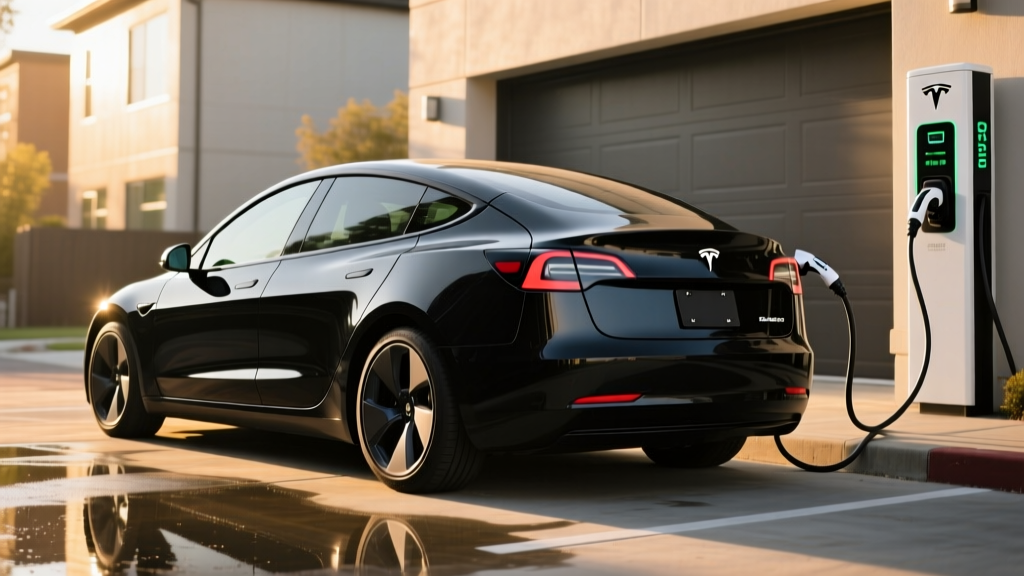
Home Level 2 charging: With the Tesla Wall Connector on a 60A circuit, the Model 3 RWD accepts up to 11.5 kW (48A), adding roughly 44 miles per hour of charging. A depleted-to-full charge takes about 8–9 hours overnight. Installation costs for a Wall Connector setup typically range from $800–$2,000 depending on panel proximity and local permitting. The Wall Connector itself retails around $475.
The 2026 Model 3 ships with the NACS (North American Charging Standard) connector natively, granting direct access to Tesla's Supercharger network — over 25,000 stalls in North America as of early 2026 — without an adapter. For Electrify America, EVgo, and other CCS-based networks, Tesla includes a CCS adapter in the glovebox.
Performance, Ride, and Daily Drivability
The single rear motor produces 271 horsepower and launches the Model 3 RWD from 0–60 mph in 5.8 seconds. That's brisk enough for confident highway merging and passing, though it's a deliberate step below the Long Range AWD's 4.2-second sprint. The RWD's lighter front end gives it slightly sharper turn-in than the dual-motor variants, and the Highland suspension retuning (softer damping, improved isolation) makes it the most comfortable Model 3 variant for daily commuting.
Regen and one-pedal driving: Tesla removed the adjustable regen setting in late 2023, so the Model 3 RWD operates with a single, moderate regen profile. It's strong enough for most stop-and-go situations but doesn't quite achieve full one-pedal driving at low speeds — you'll still use the brake pedal for complete stops. Most owners adapt within a week.
Ride quality: The 2026 Model 3 continues with the acoustic glass, redesigned suspension bushings, and additional sound deadening introduced with the Highland refresh. Road noise is noticeably lower than pre-2024 models, and the base 18-inch Photon wheels (with all-season tires) deliver the best ride comfort and range. The optional 19-inch Nova wheels look sharper but cost roughly 5–8% of range and transmit more road texture.
Interior, Tech, and Cargo
The minimalist cabin centers on a 15.4-inch touchscreen that handles everything from climate to media to vehicle settings. The 2026 Model 3 retains the rear 8-inch touchscreen for back-seat passengers (climate, media, and gaming), ventilated front seats, ambient lighting, and a power-folding rear seatback.
Driver assistance — Autopilot and FSD (Supervised):
FSD (Supervised) remains an $8,000 add-on or $99/month subscription as of early 2026. For most buyers, the included Autopilot is sufficient for highway cruising. FSD is worth trialing via subscription before committing to the purchase.
Cargo and passenger space:
- Total cargo: 23 cu ft (19.8 cu ft rear trunk + 3.1 cu ft frunk)
- Rear legroom: 35.2 inches — adequate for adults on shorter trips, tight for tall passengers on long hauls
- Front headroom: 40.3 inches; rear headroom: 37.8 inches
The trunk opening is wide but the sedan's sloping roofline limits vertical space for tall items. The 60/40 split-folding rear seat extends utility for longer cargo. The frunk is small — useful for a charging cable bag or groceries, not luggage.
Pricing, Trims, and Federal Tax Credit Eligibility
| Item | Amount |
|---|---|
| 2026 Model 3 RWD Base MSRP | $38,990 |
| Destination Fee | $1,390 |
| Total Before Incentives | $40,380 |
| Federal §30D Tax Credit (if eligible) | Up to $7,500 |
| Estimated Net Price (with full credit) | ~$32,880 |
Does the 2026 Model 3 RWD qualify for the $7,500 federal EV tax credit? As of early 2026, the Model 3 RWD is listed on fueleconomy.gov as eligible for the full $7,500 under IRS §30D, thanks to its LFP battery meeting critical-mineral and battery-component sourcing thresholds, and its MSRP falling under the $55,000 sedan cap.
But eligibility depends on YOU, not just the car. Per IRS guidelines, you must meet all of the following:
- Income caps: Modified adjusted gross income (MAGI) ≤ $150,000 (single), $225,000 (head of household), or $300,000 (married filing jointly)
- MSRP cap: Vehicle MSRP ≤ $55,000 for sedans (the Model 3 RWD qualifies at $38,990)
- Point-of-sale transfer: As of 2024+, you can transfer the credit to the dealer at purchase, reducing your out-of-pocket cost immediately rather than waiting to claim it on your tax return
- Battery sourcing: The vehicle must meet escalating critical-mineral and battery-component requirements (Tesla's LFP supply chain currently qualifies)
- Tax liability: If not using point-of-sale transfer, you must have sufficient federal tax liability to absorb the credit (it is non-refundable)
Important: Tax credit rules can change with legislation and Treasury guidance. Always verify current eligibility on IRS.gov and consult a tax professional before making a purchase decision based on the credit.
Ownership Costs and Warranty
Tesla covers the Model 3 RWD's battery and drive unit for 8 years or 120,000 miles (whichever comes first), with a guaranteed minimum 70% capacity retention during that period. The basic vehicle warranty is 4 years / 50,000 miles.
LFP batteries have demonstrated excellent long-term degradation characteristics. Industry data from sources like Recurrent Auto show LFP packs retaining 90%+ capacity at 100,000 miles under normal use patterns. The LFP chemistry also tolerates regular 100% charging without the accelerated degradation concerns associated with NMC packs — a practical advantage for daily drivers who want maximum range available every morning.
Estimated 5-year cost of ownership advantages:
- No oil changes, no transmission fluid, no spark plugs
- Brake pad life often exceeds 80,000+ miles thanks to regenerative braking
- Home charging cost: ~$0.04–$0.06/mile (national average) vs. ~$0.12–$0.15/mile for a 30 MPG gas sedan
- Insurance caveat: Tesla insurance premiums tend to run 15–30% higher than comparable sedans due to repair costs and parts pricing. Get a quote before purchasing.
Pros and Cons
Pros
- Best-in-class efficiency at 25 kWh/100 mi
- 363-mile EPA range from a modest 60 kWh pack
- Supercharger network access (NACS native)
- LFP battery: charge to 100% daily, excellent longevity
- $38,990 starting price qualifies for full $7,500 §30D credit
- Quiet, refined ride post-Highland refresh
- OTA software updates add features over time
Cons
- 170 kW peak DC charge rate is slower than some rivals (Ioniq 6: 350 kW)
- Rear seat legroom is tight for tall adults
- No physical buttons — all controls via touchscreen
- FSD (Supervised) is expensive and still Level 2
- LFP range drops more than NMC in extreme cold
- Insurance costs above segment average
- Turn-signal stalks removed; buttons on steering wheel instead
How It Compares: Model 3 RWD vs. Key Rivals
| Spec | 2026 Tesla Model 3 RWD | 2026 Hyundai Ioniq 6 SE Std Range | 2026 BMW i4 eDrive35 |
|---|---|---|---|
| Base MSRP | $38,990 | ~$38,650 | ~$52,200 |
| EPA Range | 363 mi | ~270 mi | ~301 mi |
| Battery | 60 kWh LFP | 58 kWh NMC | 70 kWh NMC |
| Peak DC Charge | 170 kW | 350 kW | 205 kW |
| 10–80% Time | ~25 min | ~18 min | ~31 min |
| Efficiency | 132 MPGe | ~140 MPGe | ~109 MPGe |
| §30D Credit | Up to $7,500 | Up to $7,500 | Likely $0 (MSRP + sourcing) |
Choose the Ioniq 6 if: You prioritize ultra-fast DC charging (350 kW) for frequent road trips and prefer a more conventional interior layout with physical buttons.
Choose the BMW i4 if: You value premium build quality, a traditional luxury driving experience, and don't mind paying $13K+ more without tax-credit help.
Frequently Asked Questions
What is the real-world range of the 2026 Tesla Model 3 RWD?
Expect 300–340 miles in mixed driving at moderate temperatures. Sustained highway speeds above 75 mph reduce range to roughly 270–290 miles. In freezing weather (below 32°F), plan for 250–280 miles. Preconditioning the battery before departure helps recover 10–15% of cold-weather loss.
How fast does the Model 3 RWD charge at home and on the road?
At home on a Level 2 Wall Connector (11.5 kW), you'll add about 44 miles per hour, filling the pack overnight. On DC fast chargers, the peak rate is 170 kW, achieving a 10–80% charge in approximately 25 minutes with battery preconditioning.
Does the 2026 Model 3 RWD qualify for the $7,500 federal tax credit?
Yes — as of early 2026, the Model 3 RWD is listed as eligible for the full $7,500 under IRS §30D. However, buyer eligibility depends on income caps ($150K single / $300K joint), and the credit can be transferred to the dealer at point of sale. Verify on IRS.gov before purchasing.
Is the LFP battery a concern for longevity?
No — LFP (lithium iron phosphate) is actually an advantage for daily drivers. It tolerates regular 100% charging, has a longer cycle life than NMC, and demonstrates minimal degradation over 100,000+ miles in fleet data. The trade-off is slightly lower energy density (hence the 60 kWh pack for 363 miles) and more cold-weather sensitivity.
Is the Model 3 RWD worth buying over the Long Range?
For most buyers, yes. The RWD saves roughly $8,000–$10,000 vs. the Long Range AWD, sacrifices 1 second in the 0–60 sprint, and gives up ~40 miles of EPA range. If you don't need all-wheel drive or sub-5-second acceleration, the RWD is the stronger value — especially with the full tax credit.
Can I use non-Tesla chargers with the 2026 Model 3?
Yes. The 2026 Model 3 ships with the NACS connector natively and includes a CCS adapter for Electrify America, EVgo, and other CCS-based networks. Tesla's Supercharger network remains the most reliable option for road trips, with NACS now adopted by Ford, GM, Rivian, and others — though increased traffic at some stalls is a growing consideration in 2026.
What are the biggest drawbacks of the Model 3 RWD?
The 170 kW peak charge rate lags behind rivals like the Ioniq 6 (350 kW), adding time on road-trip charging stops. The all-touchscreen interface frustrates some drivers. Rear-seat space is tight for tall adults. And LFP's cold-weather range loss is more pronounced than NMC competitors. Insurance costs also run above the segment average.
Sources: fueleconomy.gov (EPA range and efficiency data), IRS.gov (§30D clean vehicle credit rules), Tesla.com official specifications. Pricing and tax credit eligibility current as of early 2026; verify before purchase.