The Entry Point: What You Get at the Bottom of Tesla's Lineup
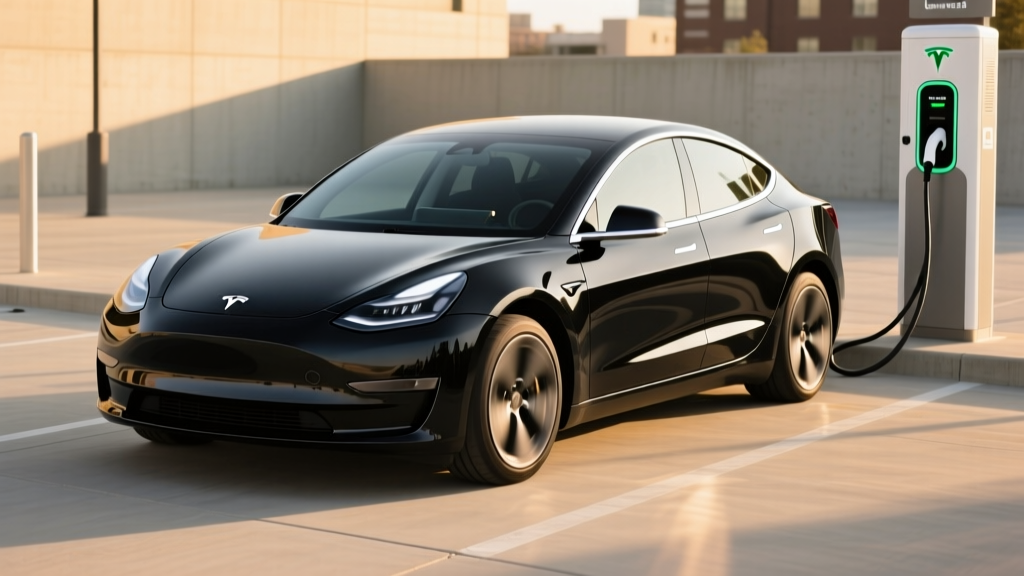
When buyers search for the bottom of Tesla's current vehicle range, they land squarely on the 2026 Tesla Model 3 Rear-Wheel Drive (RWD). Priced from $38,990 before incentives, it remains the most affordable new Tesla you can buy — and one of the most efficient electric sedans on the market. But "affordable Tesla" doesn't mean compromised: the Model 3 RWD carries the same minimalist interior architecture, Supercharger network access, and over-the-air update pipeline as its pricier siblings.
This review dissects the base Model 3 with the precision EV buyers demand — real-world range versus EPA sticker, actual charging curves (not just peak kW), total cost after the federal §30D tax credit, and how it stacks against the Hyundai Ioniq 6, BMW i4 eDrive35, and Chevrolet Equinox EV. If you're cross-shopping the entry-level EV sedan segment, this is the data you need.
Range, Efficiency, and the Real-World Reality Check
The 2026 Model 3 RWD carries an EPA-estimated range of 272 miles from its 60 kWh (usable) lithium iron phosphate (LFP) battery pack. Efficiency is rated at 132 MPGe combined, translating to roughly 25 kWh per 100 miles — among the best in its class.
EPA sticker: 272 miles
Real-world highway (70 mph, 75°F): ~240–255 miles
Real-world winter (30°F, mixed driving): ~200–225 miles
City/regen-heavy driving: ~270–285 miles (can exceed EPA)
LFP chemistry handles repeated 100% charging better than NMC, so Tesla recommends periodic full charges for battery calibration — an advantage for daily commuters who want every available mile.
The LFP pack is heavier than an equivalent NMC pack, contributing to the RWD's 3,862-pound curb weight, but it offers superior thermal stability and longer cycle life. Degradation data from high-mileage Model 3 fleets suggests LFP packs retain roughly 90% capacity at 100,000 miles — a strong longevity signal for used buyers and lease-return shoppers alike.
Charging Speed: DC Fast, Level 2, and the Supercharger Advantage
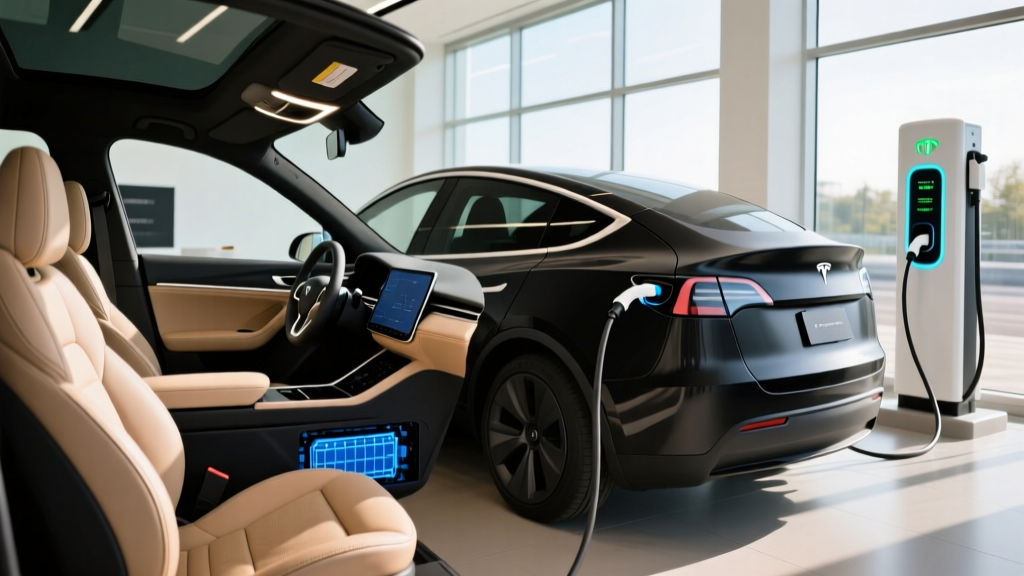
Charging is where the Model 3's native NACS connector and Supercharger network access create a tangible ownership advantage. Here's the full charging profile:
| Charging Level | Power / Rate | Speed (mi/hr added) | Notes |
|---|---|---|---|
| Level 1 (120V) | ~1.4 kW | ~5 mi/hr | Emergency/trickle only |
| Level 2 (240V, 48A) | 11.5 kW | ~44 mi/hr | Full charge in ~5.5 hours |
| DC Fast (peak) | 170 kW | — | Peak rate, not sustained |
| DC Fast 10–80% | ~18–22 min | — | Curve tapers sharply above 60% |
The 170 kW peak DC fast-charge rate is modest compared to the Hyundai Ioniq 6's 240 kW capability, but real-world charging sessions tell a more nuanced story. The Model 3's charge curve holds above 100 kW through roughly 55% State of Charge (SoC) before tapering. On a V3 Supercharger (250 kW capable), a 10–80% session completes in approximately 20 minutes when the battery is preconditioned via the car's navigation routing.
Without preconditioning — for instance, arriving at a charger without the car expecting it — that same session can stretch to 28–32 minutes in cool weather. Always route through the Tesla navigation to a Supercharger; the car will warm the battery en route, which is critical for achieving advertised charge speeds.
Performance and Driving Dynamics
The single rear-mounted motor produces 271 horsepower and 317 lb-ft of torque. Tesla claims a 0–60 mph time of 5.8 seconds — brisk for a base-trim sedan and quicker than most gas-powered competitors in this price bracket.
| Specification | 2026 Model 3 RWD |
|---|---|
| Drivetrain | Rear-Wheel Drive (single motor) |
| Horsepower | 271 hp |
| Torque | 317 lb-ft |
| 0–60 mph | 5.8 seconds |
| Top Speed | 125 mph |
| Curb Weight | 3,862 lbs |
| Battery (usable) | 60 kWh, LFP |
| EPA Range | 272 miles |
| MPGe (combined) | 132 MPGe |
| Cargo (trunk + frunk) | 23 cu ft trunk + 3.1 cu ft frunk |
| Rear Legroom | 35.3 inches |
Ride quality improved substantially with the Highland refresh: revised dampers, acoustic glass, and improved isolation make the 2026 Model 3 noticeably quieter at highway speeds than pre-2024 models. The steering remains quick but artificially weighted — a common critique among enthusiasts. Regenerative braking is strong but no longer offers a one-pedal-driving mode toggle; lift-off regen is always active and predictable.
Interior, Tech, and Driver Assistance
The cabin is defined by its 15.4-inch central touchscreen, which handles everything from climate control to the glovebox release. There are no physical stalks — turn signals live on the steering wheel rim, and gear selection is via the touchscreen (with a backup console button row). This takes adaptation but becomes second nature within a week of driving.
Tesla's Autopilot comes standard and includes Traffic-Aware Cruise Control and Autosteer (lane centering). This is an SAE Level 2 driver-assistance system: you must keep hands on the wheel and eyes on the road at all times. Full Self-Driving (Supervised) remains a $8,000 add-on or $99/month subscription and, despite its name, is also Level 2 — not autonomous driving.
Neither Autopilot nor FSD (Supervised) makes the Model 3 self-driving. Both require continuous driver supervision. FSD adds stop-sign/light recognition, city street autosteer, and automatic lane changes, but you remain legally and practically responsible for the vehicle at all times. Only SAE Level 4 services like Waymo operate without a human driver in defined areas.
Standout tech features include Sentry Mode (360° parking surveillance), Dog Mode (climate maintenance for pets), the Tesla app's remote preconditioning and location tracking, and a built-in dashcam that records from all external cameras. The 17-speaker premium audio system in the base trim punches well above its price class in clarity.
Pricing, Trims, and the Federal Tax Credit Picture
The 2026 Model 3 lineup starts with the RWD at $38,990 (including destination). Here's the full lineup:
| Trim | MSRP | Est. Price After §30D Credit* |
|---|---|---|
| Model 3 RWD | $38,990 | ~$31,490 |
| Model 3 Long Range AWD | $45,490 | ~$37,990 |
| Model 3 Performance | $52,990 | ~$45,490 |
*Federal tax credit estimates assume full §30D eligibility. Actual credit depends on multiple factors — see checklist below.
The Model 3 qualifies for up to $7,500 under the IRS §30D Clean Vehicle Credit, and as of 2026, this credit can be transferred at the point of sale — effectively reducing your purchase price at the dealer (or Tesla's order page) rather than waiting for a tax refund. However, eligibility is not automatic. Per IRS guidelines, you must meet all of the following:
- Income caps: Modified AGI ≤ $150,000 (single), ≤ $225,000 (head of household), ≤ $300,000 (joint)
- MSRP cap: Vehicle MSRP must not exceed $55,000 (sedans) — all Model 3 trims clear this
- Battery sourcing: Critical minerals and battery components must meet phased-in domestic/free-trade-partner thresholds (Tesla has largely met these for US-built Model 3, but confirm at order time)
- Vehicle assembly: Must be assembled in North America (Model 3 is built in Fremont, CA and Austin, TX)
Always verify current eligibility on the IRS clean vehicle credit page and consult a tax professional, as sourcing requirements tighten annually.
Warranty Coverage
Tesla's warranty structure is straightforward:
- Basic Vehicle: 4 years / 50,000 miles
- Battery & Drive Unit: 8 years / 100,000 miles (whichever comes first), with a minimum 70% capacity retention guarantee
The 70% retention threshold is the trigger for a warranty claim. Real-world LFP degradation data from fleet operators suggests most Model 3 RWD packs will remain well above this threshold at the 100,000-mile mark, but the 8-year time limit matters for low-mileage owners — the clock starts at delivery regardless of odometer reading.
Model 3 RWD vs. Key Competitors
| Spec | Tesla Model 3 RWD | Hyundai Ioniq 6 SE | BMW i4 eDrive35 |
|---|---|---|---|
| Base MSRP | $38,990 | $37,850 | $52,200 |
| EPA Range | 272 mi | 305 mi | 256 mi |
| Battery | 60 kWh (LFP) | 77.4 kWh (NMC) | 70.3 kWh (NMC) |
| DC Fast Peak | 170 kW | 240 kW | 180 kW |
| 10–80% Time | ~20 min | ~18 min | ~31 min |
| 0–60 mph | 5.8 sec | 6.1 sec | 5.8 sec |
| MPGe (combined) | 132 | 140 | 99 |
| §30D Credit Eligible | Yes (up to $7,500) | No (Korea-built) | No (Germany-built) |
The Ioniq 6 offers more range and faster DC charging but loses the §30D credit due to its South Korean assembly — a $7,500 disadvantage that pushes its effective price above the Model 3. The BMW i4 is a premium alternative with superior build quality but costs significantly more and also misses the federal credit. For buyers who prioritize the lowest effective price and charging-network convenience, the Model 3 RWD holds a structural advantage.
- You want the lowest after-credit price in the segment
- Supercharger network access matters for road trips
- You charge at home nightly and rarely exceed 200 miles/day
- You value OTA updates and Tesla's app ecosystem
- You need 300+ miles of EPA range (Ioniq 6, Model 3 Long Range)
- Fast DC charging is critical for your commute pattern
- You prefer physical buttons and a traditional instrument cluster
- Rear-seat space is a priority (Equinox EV is roomier)
The Biggest Pros and Cons
- Best-in-class efficiency (132 MPGe, 25 kWh/100 mi)
- Full $7,500 §30D credit eligibility drops effective price to ~$31,500
- Supercharger network remains the most reliable DC charging infrastructure in the US
- LFP battery handles 100% daily charging without accelerated degradation concerns
- Strong resale value relative to EV segment average
- Excellent standard audio system and comprehensive app integration
- 272-mile EPA range is the lowest in the Model 3 lineup and trails rivals
- 170 kW peak DC charge rate is below segment leaders
- Stalkless steering wheel and touchscreen-only controls require adaptation
- Rear seat is tighter than midsize EV competitors (35.3" legroom)
- Paint quality and panel gaps still draw owner complaints
- FSD subscription model adds cost without delivering true autonomy
Who the Model 3 RWD Suits Best
This car is ideal for daily commuters and urban/suburban drivers who charge at home and rarely need more than 200 miles of range in a single day. The LFP battery rewards daily top-ups to 100%, making it a natural fit for Level 2 home charging routines. Road trippers benefit from Supercharger access, though the 272-mile range means more frequent stops than a Long Range AWD would require.
It is not the right pick for families needing maximum rear-seat space, drivers in extreme cold climates who need range buffer (expect 200 miles or less in sustained sub-freezing temperatures), or anyone who prioritizes the fastest possible DC charging for high-mileage daily routes.
Frequently Asked Questions
What is the real-world range of the 2026 Tesla Model 3 RWD?
Expect 240–255 miles on the highway at 70 mph in mild weather, 270+ miles in city driving with regenerative braking, and 200–225 miles in cold weather (below freezing). The 272-mile EPA figure is achievable in mixed conditions at moderate temperatures.
How fast does the Model 3 RWD charge at home and on the road?
On a 48-amp Level 2 home charger (240V), it adds about 44 miles per hour and fully charges in roughly 5.5 hours. On a DC fast charger, it peaks at 170 kW and reaches 10–80% in approximately 18–22 minutes with battery preconditioning.
How much does the Model 3 RWD cost after tax credits?
The base MSRP is $38,990. With the full $7,500 federal §30D credit (available as a point-of-sale reduction in 2026), the effective price drops to approximately $31,490 — assuming you meet income, sourcing, and MSRP requirements.
Does the 2026 Model 3 RWD qualify for the federal EV tax credit?
Yes, it currently qualifies for up to $7,500 under IRS §30D, provided the buyer's modified AGI is within limits ($150K single / $300K joint), and battery-sourcing requirements are met at the time of purchase. Verify at order time, as sourcing rules tighten annually.
Is the Model 3 RWD worth buying over competitors?
If you value the lowest after-incentive price, Supercharger access, and best-in-class efficiency, yes. If you need 300+ miles of range or the fastest DC charging, the Hyundai Ioniq 6 or Model 3 Long Range AWD are stronger fits — though the Ioniq 6 doesn't qualify for the federal credit.
What's the battery warranty on the Model 3 RWD?
Tesla covers the battery and drive unit for 8 years or 100,000 miles, guaranteeing at least 70% capacity retention over that period. The LFP chemistry in the RWD model historically shows strong longevity, with fleet data suggesting ~90% retention at 100,000 miles.