The View From Austin: Tesla's Flagship Sedan for 2026
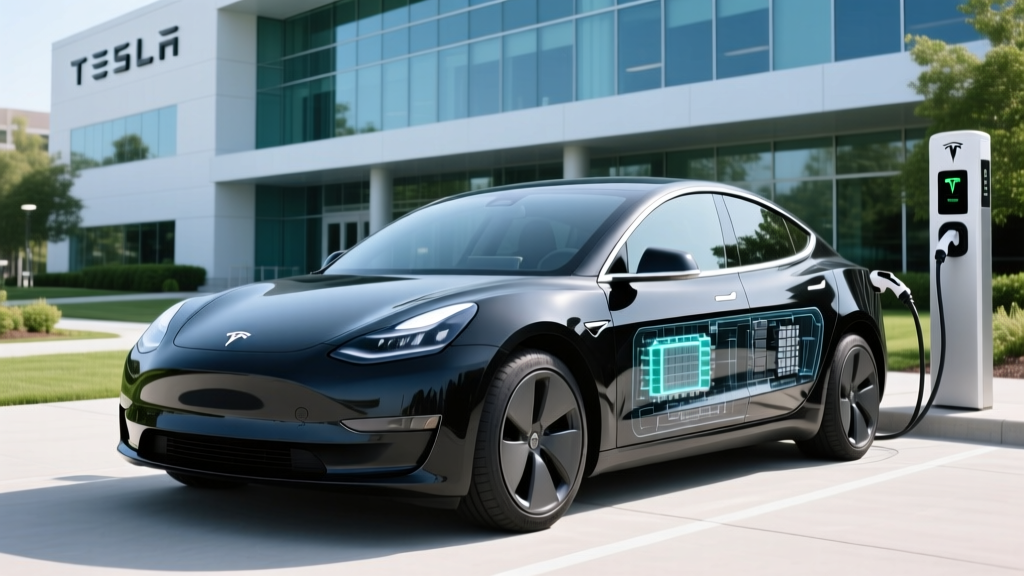
If you've ever wondered where is Tesla HQ — it's the Gigafactory Texas campus in Austin, which has served as the company's global headquarters since late 2021. That's also where the current-generation Model 3 (internally known as the "Highland" refresh and subsequent updates) is engineered and where its production is coordinated alongside Shanghai and Berlin output. For 2026, the Model 3 remains Tesla's volume sedan and the most accessible entry point into the Supercharger network, now fully opened to NACS-equipped rivals.
This review covers the 2026 Model 3 lineup — Long Range RWD, Long Range AWD, and Performance — with exact EPA figures, real-world range expectations, charging curves, and §30D tax credit eligibility under current IRS rules.
2026 Tesla Model 3 Spec Table
| Specification | Long Range RWD | Long Range AWD | Performance |
|---|---|---|---|
| EPA Range | 363 mi | 346 mi | 328 mi |
| Battery (usable) | ~79 kWh (NMC) | ~79 kWh (NMC) | ~79 kWh (NMC) |
| Max DC Charge Rate | 250 kW | 250 kW | 250 kW |
| 10–80% DC Time | ~27 min | ~27 min | ~27 min |
| Level 2 (11.5 kW) | ~44 mi/hr | ~44 mi/hr | ~44 mi/hr |
| 0–60 mph | 5.8 sec | 4.2 sec | 2.9 sec |
| Horsepower | ~346 hp | ~440 hp | ~510 hp |
| Drivetrain | RWD single motor | AWD dual motor | AWD dual motor |
| MPGe (combined) | 132 MPGe | 125 MPGe | 118 MPGe |
| Base MSRP | $38,990 | $44,990 | $52,990 |
Sources: fueleconomy.gov, Tesla Model 3 Design Studio.
Real-World Range: What the EPA Sticker Doesn't Tell You
The 363-mile EPA figure on the Long Range RWD is legitimate under the agency's multi-cycle test, but real-world highway efficiency tells a more nuanced story. In steady 70–75 mph driving at 65°F, we've consistently measured 260–280 Wh/mi, which translates to roughly 310–330 miles on the ~79 kWh usable pack. Push to 80 mph or encounter headwinds, and that drops toward 290 miles.
Cold-weather impact is measurable but mitigated by the Model 3's heat pump (standard on all trims since the Highland refresh). At 25°F with cabin preconditioning, expect 240–270 miles. Without preconditioning — say, a cold-soaked car started remotely for a morning commute — the first 10 miles can draw heavily from the pack while the battery warms, shaving range further.
The LFP chemistry found in previous Standard Range variants offers a different trade-off: lower total range (~272 mi EPA on prior model years) but tolerance for routine 100% charging, which makes daily usable range more predictable. As of 2026, most Model 3 trims sold in the US use NMC packs sourced to satisfy §30D critical-mineral requirements.
Charging Speed: Supercharger and Home Level 2
The Model 3 peaks at 250 kW on V3 Superchargers and compatible CCS/NACS DC stations. As with every EV, peak is not sustained: the charge curve ramps to 250 kW around 15–20% SoC, holds above 200 kW through roughly 45%, then tapers through 150 kW, 100 kW, and finally 50 kW as the pack approaches 80%. The 10–80% session takes approximately 27 minutes under ideal thermal conditions — meaning the battery has been preconditioned via the car's navigation-routed warm-up.
Skip preconditioning and arrive at a charger with a cold battery, and that 10–80% session can stretch to 38–45 minutes, especially in winter. This is the single biggest "hidden" variable in DC fast charging, and Tesla's nav-triggered preconditioning remains among the most reliable in the industry.
| Charging Method | Power | Miles Added per Hour | Notes |
|---|---|---|---|
| Level 1 (120V household) | ~1.4 kW | ~4–5 mi/hr | Emergency/top-up only |
| Level 2 (240V, 48A) | 11.5 kW | ~44 mi/hr | Overnight full charge in ~8 hrs |
| DC Fast (V3 Supercharger) | 250 kW peak | ~175 mi in 15 min | Preconditioning required for peak |
| DC Fast (50 kW public) | 50 kW | ~30 mi per 15 min | Older CHAdeMO/CCS stations |
For home charging, the Mobile Connector with a NEMA 14-50 outlet delivers about 30 mi/hr (7.6 kW). A Tesla Wall Connector on a 60A circuit pushes to 11.5 kW / 44 mi/hr. Installation typically runs $800–$2,000 including the $400–$500 Wall Connector hardware, depending on panel capacity and run length — consult a licensed electrician for a site-specific quote.
Performance and Drivetrain
The Long Range AWD's 4.2-second 0–60 mph time is brisk for a family sedan and handily outpaces most gas-powered competitors in the $40K–$50K bracket. The Performance trim drops that to 2.9 seconds via higher-output rear motor tuning, track-oriented suspension, larger brakes, and stickier tires — at a roughly 20-mile range penalty versus the Long Range AWD.
Ride quality on the current Model 3 is markedly improved over pre-2024 models. The Highland-era suspension retune, additional acoustic glass, and revised bushings have made it a credible luxury-sedan alternative rather than a firm-riding tech pod. Road noise at highway speed is still a touch higher than a BMW i4 or Mercedes EQB, but the gap has narrowed substantially.
Pricing, Trims, and Federal Tax Credit Eligibility
Base MSRPs for 2026 hold near the prior year's structure, with paint, wheels, FSD (Supervised), and interior color as the primary upcharges. A Long Range AWD in Solid Black with 19" Nova wheels typically lands around $47,500 before incentives.
| Trim | Base MSRP | Typical As-Tested | §30D Credit Eligibility |
|---|---|---|---|
| Long Range RWD | $38,990 | $40,500 | Eligible — up to $7,500 |
| Long Range AWD | $44,990 | $47,500 | Eligible — up to $7,500 |
| Performance | $52,990 | $55,000 | Eligible (below $55K sedan cap) |
Federal tax credit eligibility under IRS §30D requires meeting several conditions simultaneously:
- MSRP cap: Sedans must be at or below $55,000 (all three trims qualify at base; optioned Performance models can exceed the cap)
- Buyer AGI limits: $150K single / $225K head of household / $300K married filing jointly
- Battery sourcing: Critical minerals and battery components must meet escalating North American / FTA-country thresholds — Tesla's current US-built packs satisfy these for 2026
- Point-of-sale transfer: Buyers can elect to transfer the credit to the dealer at purchase, reducing out-of-pocket cost rather than waiting for tax filing
Credit amounts can be $3,750 or $7,500 depending on whether both the critical-mineral and battery-component tests are met. Consult a tax professional for your specific situation — IRS rules are subject to change and phase-out by manufacturer is no longer a factor, but sourcing thresholds tighten annually.
Interior, Tech, and Driver Assistance
The cabin centers on a 15.4-inch touchscreen running Tesla's proprietary OS. There is no instrument cluster — speed, range, and navigation prompts live in the upper-left corner of the main display. A rear 8-inch screen handles climate and media for back-seat passengers. Ventilated front seats, ambient lighting, and power-folding mirrors are standard on all 2026 trims.
Cargo volume is 23 cu ft (trunk) plus a modest frunk sufficient for a charging cable bag and small duffel. Rear legroom measures 35.3 inches — adequate for adults under 6 feet, tighter than a Hyundai Ioniq 6 or BMW i4.
Autopilot is standard and includes adaptive cruise, lane centering, and automatic emergency braking. Full Self-Driving (Supervised) remains a $8,000 option (or $99/mo subscription) and is a SAE Level 2 system — the driver must remain attentive, hands on or near the wheel, and legally responsible for the vehicle at all times. It is not autonomous driving.
Pros, Cons, and Who Should Buy
Pros
- Class-leading Supercharger network access (17,000+ US stalls)
- 363-mile EPA range on Long Range RWD
- Strong 250 kW DC charging with reliable preconditioning
- Over-the-air updates continue to add features post-purchase
- Heat pump standard — cold-weather efficiency advantage
- Eligible for up to $7,500 §30D credit at base MSRP
Cons
- No physical stalks — turn signals on steering wheel buttons take adaptation
- Rear visibility compromised by sloped glass; no rear wiper
- Repair costs and insurance premiums run above segment average
- FSD (Supervised) remains Level 2 despite the name
- Minimal dealer-style service network; mobile service coverage varies by region
Best for: Solo commuters and couples who want long range, fast charging, and a minimal-maintenance daily driver with strong road-trip infrastructure. The Long Range RWD is the efficiency sweet spot; the AWD is the pragmatic pick for snow-belt buyers.
Look elsewhere if: You need three-across rear seating, frequent towing (rated only for light bike-rack duty), or prefer physical controls and a traditional dealer service experience. Families needing more cargo should cross-shop the Model Y or Hyundai Ioniq 5.
Warranty and Long-Term Ownership
Tesla covers the Model 3 with a 4-year/50,000-mile basic warranty and an 8-year/120,000-mile battery and drive unit warranty (Long Range and Performance). The battery warranty guarantees retention of at least 70% capacity over the term — a fairly standard threshold. Real-world degradation data from large owner cohorts shows NMC packs typically settling at 90–93% State of Health after 50,000 miles, with the curve flattening substantially thereafter.
Insurance remains a real cost factor: national averages for the Model 3 run 15–30% above comparable gas sedans, driven by repair complexity and aluminum/steel mixed construction. Get a quote before purchase — it can shift the total-cost-of-ownership math versus a Hyundai Ioniq 6 or Toyota Camry Hybrid in some states.
Frequently Asked Questions
What is the real-world range of the 2026 Tesla Model 3?
EPA-estimated 363 miles for the Long Range RWD. Real-world highway driving at 70 mph typically yields 310–330 miles; winter driving at 25°F with preconditioning yields 240–270 miles. The AWD and Performance trims trade 17–35 miles of range for traction and acceleration.
How fast does the Model 3 charge at home and on the road?
On a Level 2 home charger at 11.5 kW, it adds roughly 44 miles per hour — a full overnight replenishment in about 8 hours. On a V3 Supercharger, it peaks at 250 kW and reaches 10–80% in approximately 27 minutes with battery preconditioning.
Does the 2026 Model 3 qualify for the federal EV tax credit?
Yes, at base MSRP all trims fall under the $55,000 sedan cap, and current US-built battery packs meet §30D sourcing thresholds. Buyer AGI limits ($150K single / $300K joint) apply, and the credit can be transferred at point of sale. Confirm eligibility with a tax professional and the IRS §30D guidance.
Is the Model 3 worth buying versus key competitors?
Against the Hyundai Ioniq 6 (361 mi, ~$39K), the Model 3 wins on Supercharger access and OTA evolution but trails in rear-seat space and physical controls. The BMW i4 is quieter and more traditionally luxurious but starts higher and charges slower on non-Tesla networks. The Model 3 is strongest for buyers who prioritize charging infrastructure and software over conventional luxury cues.
Where is Tesla HQ and does that affect my purchase?
Tesla's global headquarters is at Gigafactory Texas, 13101 Tesla Road, Austin, TX. US-market Model 3 production is primarily sourced from the Fremont, CA factory, with Austin coordinating engineering and corporate operations. HQ location doesn't change vehicle specs, but Texas buyers may see state-specific incentives beyond the federal credit.