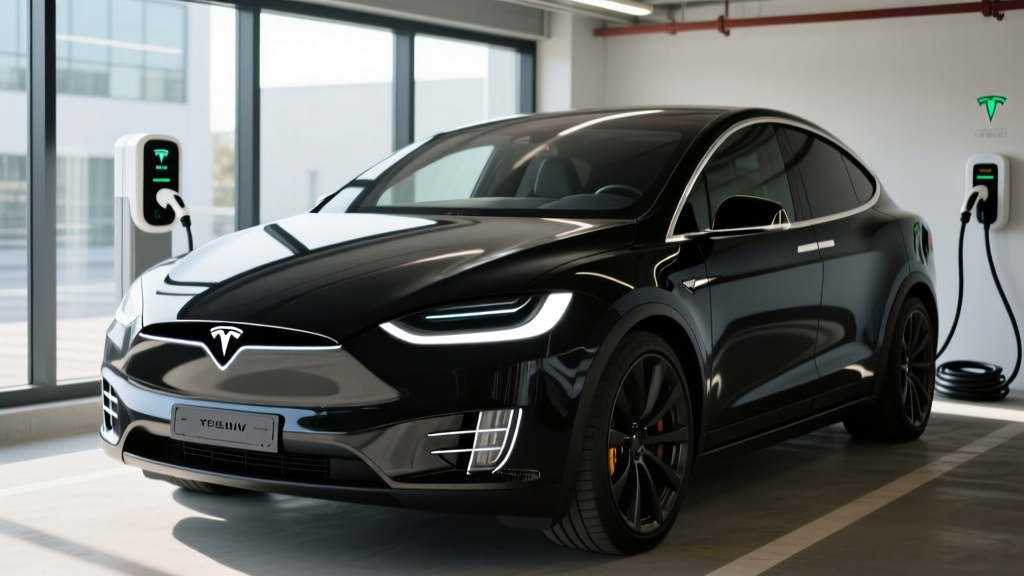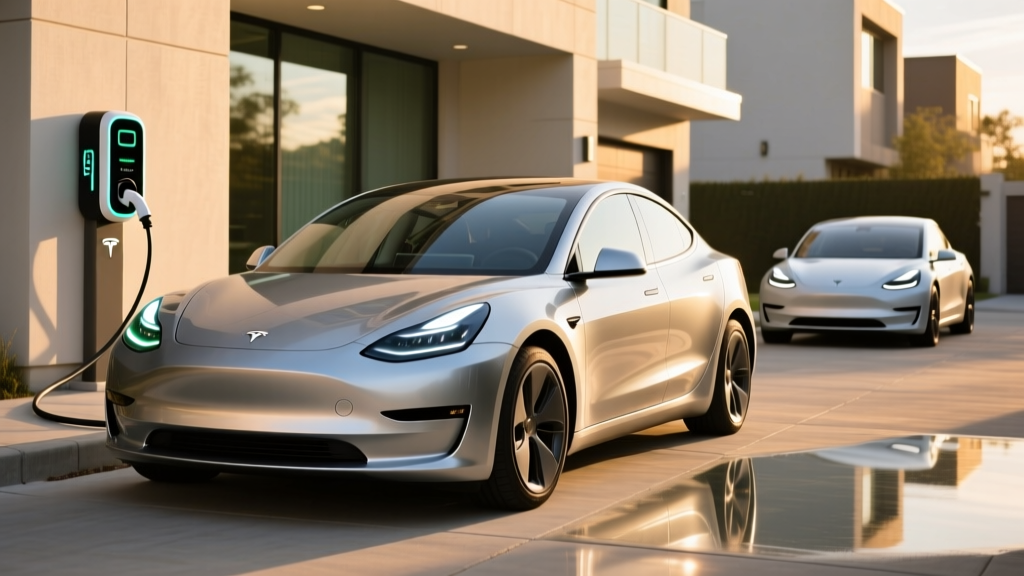
The Tesla Model 3 entered its current "Highland" generation for 2024, and for the 2026 model year, Tesla has largely held the course — refining software, adjusting pricing, and continuing to offer one of the most efficient electric sedans on the market. If you're researching the 2026 Model 3, you're likely weighing its efficiency and Supercharger access against a growing field of rivals like the Hyundai Ioniq 6, BMW i4, and refreshed Polestar 2. This review breaks down every number that matters: EPA range, real-world highway and cold-weather expectations, DC fast-charging curves, Level 2 home charging, federal tax credit eligibility under IRS §30D, and total ownership cost.
2026 Model 3 Trim Lineup and Pricing
Tesla's 2026 Model 3 lineup continues with three primary configurations. Pricing reflects Tesla's direct-to-consumer model, which means no dealer markups but also no negotiation. All prices below include the destination fee.
| Trim | Drivetrain | Base MSRP | EPA Range | Federal Credit Eligible |
|---|---|---|---|---|
| Model 3 RWD (Standard Range) | Rear-Wheel Drive | ~$38,990 | ~272 mi | Yes (check sourcing) |
| Model 3 Long Range AWD | Dual-Motor AWD | ~$45,240 | ~341 mi | Yes (check sourcing) |
| Model 3 Performance | Dual-Motor AWD | ~$52,990 | ~315 mi | Yes (check sourcing) |
All trims fall well below the IRS §30D MSRP cap of $55,000 for sedans. However, eligibility also depends on your modified adjusted gross income (AGI) and the battery's critical-mineral and component sourcing — both of which shift periodically. More on this below.
Battery, Range, and Real-World Efficiency
The 2026 Model 3 RWD uses a lithium iron phosphate (LFP) battery pack with approximately 60 kWh of usable capacity. LFP chemistry trades some energy density for longevity — Tesla recommends charging LFP packs to 100% regularly to maintain cell balancing. The Long Range AWD and Performance trims use nickel-manganese-cobalt (NMC) chemistry with roughly 75-79 kWh usable, where Tesla recommends an 80% daily charge limit for long-term health.
EPA estimate: 341 miles. In real-world highway driving at 70-75 mph in moderate temperatures (60-80°F), expect approximately 280-310 miles. In cold weather (below 30°F), range can drop to 230-270 miles due to cabin heating demand and reduced battery efficiency, even with the Model 3's heat pump. City driving with regenerative braking can meet or slightly exceed the EPA figure.
Efficiency is where the Model 3 continues to shine. The Long Range AWD achieves an EPA-rated 132 MPGe combined (approximately 25 kWh/100 mi), making it one of the most energy-efficient all-wheel-drive EVs in its class. The RWD trim pushes even higher at roughly 142 MPGe combined (~24 kWh/100 mi). For context, the Hyundai Ioniq 6 SE AWD rates at about 111 MPGe combined.
| Spec | RWD (Standard Range) | Long Range AWD | Performance |
|---|---|---|---|
| Usable Battery (kWh) | ~60 kWh (LFP) | ~75 kWh (NMC) | ~75 kWh (NMC) |
| EPA Range | ~272 mi | ~341 mi | ~315 mi |
| MPGe Combined | ~142 MPGe | ~132 MPGe | ~119 MPGe |
| kWh/100 mi | ~24 | ~25 | ~28 |
| Heat Pump | Standard | Standard | Standard |
Data sourced from fueleconomy.gov. Always verify current-year figures as Tesla occasionally adjusts battery capacity and software mid-year.
Charging Speed: DC Fast Charging and Home Level 2
Charging speed remains a top concern for EV buyers, and the Model 3's Supercharger network access is a significant practical advantage. Here's what the 2026 Model 3 delivers across charging levels:
| Charging Level | Power / Rate | Speed (Miles per Hour) | Notes |
|---|---|---|---|
| Level 1 (120V household) | ~1.4 kW | ~3-5 mi/hr | Emergency/top-up only |
| Level 2 (240V home, 48A) | ~11.5 kW | ~44 mi/hr | Full charge overnight (~8-9 hrs) |
| DC Fast Charge (peak) | Up to 170 kW (RWD) / 250 kW (LR/Perf) | ~170-200 mi in 15 min | 10-80% in ~25-30 min |
Charging curve reality check: The Long Range and Performance models peak at 250 kW on V3 Superchargers, but that peak is sustained only briefly — typically between 10-30% State of Charge (SoC). By 50% SoC, the rate tapers to roughly 150 kW, and above 80% it drops sharply to protect the battery. A 10-80% session takes approximately 25-30 minutes under ideal conditions (battery preconditioned via in-car navigation to a Supercharger). Without preconditioning — for example, arriving at a charger without routing through the car's nav — expect 10-80% to stretch to 35-40 minutes, particularly in cold weather.
The RWD trim's LFP battery caps DC charging at approximately 170 kW, making 10-80% sessions slightly longer at around 30-35 minutes. However, LFP batteries tolerate frequent 100% charging, so many RWD owners simply charge to full at home and rely less on DC fast charging.
For home charging, a Wall Connector or equivalent Level 2 station on a 60-amp circuit (48 amps continuous) delivers roughly 44 miles of range per hour. Most owners charging from 20-80% overnight will wake to a full daily charge in 6-7 hours. Installation costs for a Level 2 home setup typically range from $500 to $2,000 depending on panel capacity and run length — consult a licensed electrician for your specific situation.
Performance and Driving Dynamics
The 2026 Model 3 Performance is the enthusiast pick, with dual motors producing approximately 510 horsepower and a 0-60 mph time of 2.9 seconds (with rollout subtracted). That places it firmly in sports-car territory at a fraction of the price. The Long Range AWD delivers around 346 hp and a 4.2-second 0-60, while the RWD trim offers 271 hp and a 5.8-second sprint — still brisk for daily driving.
The Highland refresh brought meaningful improvements to ride quality: revised suspension tuning, acoustic glass, and improved damping reduce road noise noticeably compared to pre-2024 Model 3s. The steering remains quick but offers limited feel — a trade-off most commuters won't mind but driving enthusiasts may notice.
Regenerative braking in the 2026 Model 3 is single-mode (no adjustable regen levels), which simplifies the experience but removes the customization some drivers prefer. One-pedal driving is effective in most scenarios, though you'll still use the friction brakes for final stops.
Interior, Cargo, and Technology
The Model 3's minimalist interior centers on a 15.4-inch touchscreen that handles nearly all vehicle functions — climate, mirrors, glovebox, and speedometer. The 2024+ Highland update added ventilated front seats, ambient lighting, rear-seat ventilation controls, and a rear 8-inch touchscreen for passengers. Build quality has improved with tighter panel gaps and more soft-touch materials, though it still doesn't match the BMW i4's cabin refinement.
| Measurement | Value |
|---|---|
| Front Headroom | 40.3 in |
| Front Legroom | 42.7 in |
| Rear Headroom | 37.8 in |
| Rear Legroom | 35.2 in |
| Cargo Volume (trunk + frunk) | 23.1 cu ft (trunk) + 3.1 cu ft (frunk) |
The trunk's liftback design offers practical access, and the 23.1 cu ft cargo area rivals compact hatchbacks. The frunk adds 3.1 cu ft for charging cables or a small bag. However, taller passengers (6'2"+) will find rear headroom tight due to the sloping roofline — a common complaint versus the Hyundai Ioniq 5 or Kia EV6.
Driver Assistance — Autopilot and FSD (Supervised): Every 2026 Model 3 includes basic Autopilot (adaptive cruise control + lane centering). Full Self-Driving (Supervised) remains an optional add-on (currently ~$8,000 or ~$99/month) and provides automated lane changes, traffic light/stop sign recognition, and city street navigation. Critically, FSD is SAE Level 2 — you must keep your hands on the wheel and eyes on the road at all times. It is not autonomous driving.
Autopilot and FSD (Supervised) are SAE Level 2 driver-assist systems. They do NOT make the vehicle self-driving. The driver is legally responsible for all vehicle operation and must remain fully attentive. FSD performance varies significantly by road type, weather, and construction zones. Review NHTSA guidance on automated driving before purchasing.
Federal Tax Credit and Ownership Economics
Under current IRS §30D rules, the 2026 Model 3 may qualify for up to $7,500 in federal tax credits, which can be transferred to the dealer at point of sale as an upfront price reduction. However, eligibility is not guaranteed and depends on three factors:
- Buyer income cap: Modified AGI must not exceed $150,000 (single), $225,000 (head of household), or $300,000 (joint filers).
- Vehicle MSRP cap: Sedans must be under $55,000 — all Model 3 trims qualify.
- Battery sourcing requirements: A percentage of critical minerals and battery components must be sourced from the US or free-trade-agreement countries. These thresholds increase annually and can change mid-year.
Tesla's battery sourcing has historically met partial-credit thresholds, often qualifying for $3,750 rather than the full $7,500. Check the official fueleconomy.gov tax credit page and IRS §30D guidance for the latest eligibility status before purchasing.
| Item | Amount |
|---|---|
| Base MSRP (incl. destination) | ~$45,240 |
| Federal Tax Credit (§30D) | -$3,750 to -$7,500 (varies) |
| Estimated Net Price | ~$37,740 – $41,490 |
| Est. Annual Charging Cost (12,000 mi) | ~$450-$650 (home) / ~$900-$1,200 (public DC) |
| Est. Annual Gas Equivalent (25 MPG, $3.50/gal) | ~$1,680 |
The 5-year fuel savings versus a comparable gas sedan can range from $5,000 to $8,000 depending on electricity rates and driving habits. Insurance premiums for the Model 3 tend to run 15-25% higher than equivalent gas sedans — get quotes before committing.
Warranty and Battery Longevity
Tesla covers the 2026 Model 3 with the following warranty structure:
- Basic Vehicle: 4 years / 50,000 miles
- Battery & Drive Unit: 8 years / 100,000 miles (RWD) or 8 years / 120,000 miles (Long Range & Performance)
- Battery capacity retention: Tesla warrants a minimum of 70% capacity retention during the warranty period
Real-world data from Tesla's fleet suggests most Model 3 packs retain 85-90% capacity after 100,000 miles. LFP packs in the RWD trim may show even slower degradation due to the chemistry's inherent cycle-life advantage. Battery replacement out of warranty remains expensive — roughly $12,000-$16,000 — but full replacements are rare within the first 150,000 miles based on current fleet data.
Pros and Cons
- Class-leading efficiency (24-25 kWh/100 mi)
- Extensive Supercharger network access
- Strong real-world range (280-310 mi highway, LR AWD)
- Excellent performance per dollar (Performance trim)
- Continuous OTA software updates
- LFP option for buyers wanting 100% daily charging
- Improved ride quality post-Highland refresh
- Rear headroom tight for tall passengers
- Minimalist interior isn't for everyone
- No adjustable regen braking levels
- FSD remains expensive and Level 2 only
- Insurance costs above segment average
- Tax credit amount uncertain (sourcing-dependent)
- No physical buttons or stalks (turn signals on wheel)
Who Should Buy the 2026 Model 3?
- Choose the Model 3 RWD if: You commute under 50 miles daily, want the lowest entry price, and prefer LFP battery longevity with 100% daily charging.
- Choose the Model 3 Long Range AWD if: You take regular road trips, live in a cold climate where AWD matters, and want maximum range without the Performance premium.
- Choose the Model 3 Performance if: Driving engagement is a priority, you want sub-3-second 0-60 capability, and you accept a ~26-mile range trade-off for it.
- Look elsewhere if: You need spacious rear seating for tall adults (consider Ioniq 5 or EV6), prefer traditional button controls, or want a luxury-brand badge (BMW i4, Mercedes EQB).
Frequently Asked Questions
What is the real-world range of the 2026 Tesla Model 3?
The Long Range AWD achieves an EPA-rated 341 miles. In real-world highway driving at 70-75 mph, expect 280-310 miles in moderate temperatures and 230-270 miles in sub-30°F cold weather. The RWD trim's EPA range is approximately 272 miles, with real-world highway figures around 220-245 miles.
How fast does the 2026 Model 3 charge?
On a V3 Supercharger (250 kW peak), the Long Range and Performance models add up to 175 miles in 15 minutes, with a 10-80% session taking 25-30 minutes when preconditioned. The RWD peaks at ~170 kW. At home on a 48-amp Level 2 charger, expect ~44 miles of range per hour.
Does the 2026 Model 3 qualify for the federal EV tax credit?
All Model 3 trims fall under the $55,000 MSRP sedan cap. However, the credit amount ($3,750 or $7,500) depends on battery-sourcing requirements that change periodically, and your income must fall below IRS thresholds ($150K single / $300K joint). Check fueleconomy.gov and IRS.gov before purchasing.
Is the 2026 Model 3 worth buying over competitors?
The Model 3 remains the efficiency and charging-network leader in its class. The Hyundai Ioniq 6 offers a comparable range but less DC charging infrastructure. The BMW i4 provides a more premium interior but at a higher price and lower efficiency. If Supercharger access and efficiency matter most, the Model 3 is hard to beat.
How long will the Model 3 battery last?
Tesla warranties the battery for 8 years / 100,000-120,000 miles (depending on trim) with a minimum 70% capacity retention guarantee. Fleet data suggests most packs retain 85-90% capacity at 100,000 miles. Full replacements are uncommon before 150,000 miles.