Quick Verdict: Is a 2026 Tesla Model 3 Lease Worth It?
The 2026 Tesla Model 3 remains the benchmark compact electric sedan for efficiency, charging infrastructure access, and software integration. For buyers considering a 2026 Tesla Model 3 lease, the value proposition hinges on three factors: which trim you select, whether you can charge at home, and how current federal incentive rules apply to leased vehicles. The base Rear-Wheel Drive model starts at an MSRP of $38,990 with an EPA-estimated 272 miles of range, while the Long Range AWD pushes to 363 miles for $47,740. The Performance variant drops range to 315 miles but delivers a 3.1-second 0-60 time at $54,990.
Leasing a Model 3 in 2026 carries a distinct advantage: under IRS guidance, leased EVs can qualify for the $7,500 commercial clean vehicle credit (§45W) that the leasing company may pass through as a lease cash incentive — bypassing the MSRP caps, income limits, and battery-sourcing requirements that constrain the buyer-side §30D credit. This makes leasing one of the most reliable paths to capturing the full federal incentive, though the lessor ultimately controls how that credit is applied to your deal.
Range, Battery, and Real-World Efficiency
| Trim | Battery (Usable kWh) | Chemistry | EPA Range | MPGe (Combined) | kWh/100 mi |
|---|---|---|---|---|---|
| RWD | ~60 kWh | LFP (CATL) | 272 mi | 132 MPGe | 25 |
| Long Range AWD | ~82 kWh | NMC | 363 mi | 134 MPGe | 25 |
| Performance AWD | ~82 kWh | NMC | 315 mi | 116 MPGe | 29 |
The RWD model uses a lithium iron phosphate (LFP) battery supplied primarily by CATL. LFP chemistry trades energy density for longevity — Tesla recommends charging LFP packs to 100% regularly, which helps with battery calibration and reduces range anxiety on daily commutes. The Long Range and Performance trims use nickel-manganese-cobalt (NMC) cells, which pack more energy per kilogram and sustain higher charge rates, but Tesla recommends an 80% daily charge limit to preserve long-term health.
Charging Speed: DC Fast, Level 2, and Level 1
| Charge Method | Peak Rate | RWD (LFP) | Long Range / Performance (NMC) |
|---|---|---|---|
| DC Fast Charge (V4 Supercharger) | Up to 250 kW | ~170 kW peak | ~250 kW peak |
| 10–80% DC Time | — | ~28 min | ~25 min |
| Level 2 (240V / 48A Wall Connector) | 11.5 kW | ~30 mi/hr | ~44 mi/hr |
| Level 1 (120V / 12A) | ~1.4 kW | ~3–4 mi/hr | ~3–4 mi/hr |
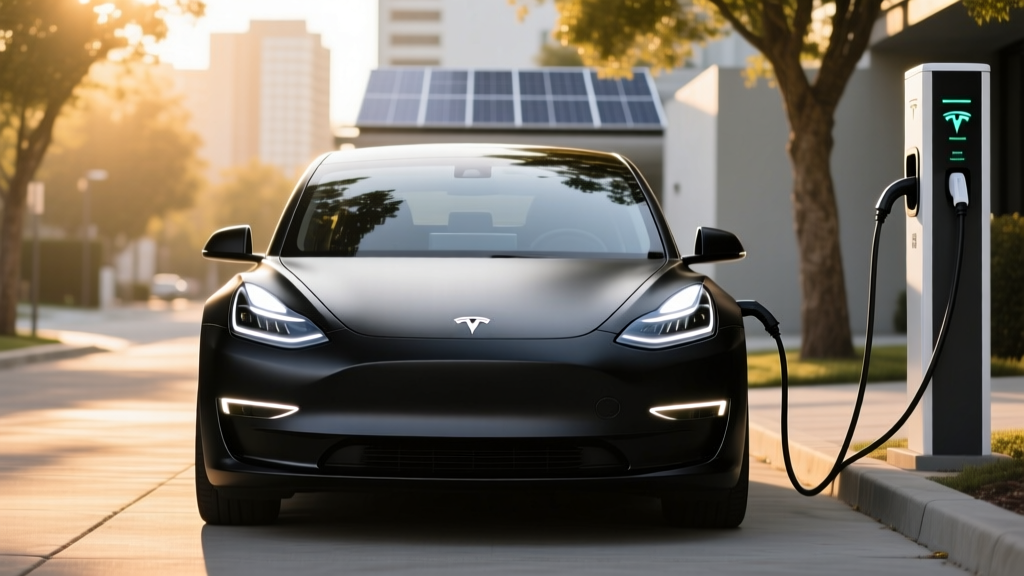
Tesla's Supercharger network — now exceeding 20,000 stalls in North America — remains the most reliable DC fast-charging ecosystem. The 2026 Model 3 uses the NACS (North American Charging Standard) connector natively, and with the broader industry adopting NACS through 2025–2026, interoperability at non-Tesla NACS stations is expanding. The Long Range and Performance trims peak at approximately 250 kW on V3/V4 Superchargers, but sustained rates taper significantly above 60% state of charge — the last 20% (from 80–100%) can add another 20+ minutes, so plan road-trip stops around the 10–80% window for efficiency.
For home charging, the Tesla Wall Connector at 48 amps delivers 11.5 kW, fully replenishing the Long Range overnight in roughly 7–8 hours. The RWD, with its smaller pack, reaches full in about 5–6 hours. If your home electrical panel supports only a 30-amp circuit, you'll be limited to roughly 7.2 kW (about 25 mi/hr for Long Range), which is still adequate for most daily driving patterns. According to fueleconomy.gov, the Model 3 Long Range achieves 25 kWh per 100 miles combined, making it one of the most efficient EVs in its class.
Performance, Drivetrain, and Driving Dynamics
| Spec | RWD | Long Range AWD | Performance AWD |
|---|---|---|---|
| Drivetrain | Rear-Wheel Drive | Dual-Motor AWD | Dual-Motor AWD |
| Horsepower | 271 hp | 384 hp | 510 hp |
| 0–60 mph | 5.8 sec | 4.2 sec | 3.1 sec |
| Top Speed | 125 mph | 125 mph | 163 mph |
| Curb Weight | ~3,862 lbs | ~4,034 lbs | ~4,065 lbs |
The refreshed Model 3 (internally called "Highland") carries into 2026 with improved suspension tuning, acoustic glass, and a quieter cabin compared to pre-2024 models. The RWD delivers more than adequate acceleration for commuting and highway merging. The Long Range AWD adds dual-motor traction that performs well in rain and light snow, and the Performance variant includes adaptive dampers, a track mode, and larger brakes for spirited driving.
Pricing, Lease Considerations, and Tax Credit Eligibility
| Trim | Base MSRP | As-Tested (Typical) | §30D Buyer Credit | Lease (§45W) Path |
|---|---|---|---|---|
| RWD | $38,990 | $40,490 | Up to $7,500* | Up to $7,500 lease cash** |
| Long Range AWD | $47,740 | $49,240 | Up to $7,500* | Up to $7,500 lease cash** |
| Performance AWD | $54,990 | $56,490 | Up to $7,500* | Up to $7,500 lease cash** |
*§30D buyer credit subject to MSRP cap ($55,000 for sedans), buyer income limits ($150K single / $300K joint), and critical-mineral/battery-component sourcing requirements per IRS.gov. Battery-sourcing rules tighten annually — verify current-year eligibility before signing.
**When you lease, the lessor (finance company) technically claims the §45W commercial credit. Most major lessors pass this through as "lease cash" applied to your capitalized cost, effectively reducing monthly payments. Tesla Financial Services has historically passed the credit through, but confirm this explicitly in your lease agreement.
The Lease vs. Buy Calculation for 2026
A 2026 Tesla Model 3 lease through Tesla Financial typically runs 36 months with 10,000 or 12,000 miles per year. Based on early 2026 deal structures, the RWD with $7,500 lease cash applied can land in the $350–$420/month range depending on your credit tier and down payment. The Long Range AWD tends to lease between $475–$560/month under similar terms. Compare this to a purchase at 6.5% APR over 72 months where the RWD (after $7,500 credit) runs roughly $470/month — leasing often yields a lower monthly obligation, though you build no equity and face a disposition fee at turn-in.
One critical lease consideration: mileage. If you drive more than 12,000 miles annually, excess mileage penalties (typically $0.20–$0.25/mile) can erode the lease's cost advantage. For high-mileage commuters, purchasing with the §30D credit (if you qualify) or negotiating a higher-mileage lease (15K/year) is the smarter financial path.
Interior, Cargo, and Technology
The 2026 Model 3 continues with Tesla's minimalist interior — a single 15.4-inch center touchscreen handles all infotainment, climate, and vehicle controls. There is no traditional instrument cluster; speed and navigation appear on the left edge of the main display. A rear 8-inch touchscreen for back-seat passengers controls climate and media.
| Measurement | Specification |
|---|---|
| Front Legroom | 42.0 in |
| Rear Legroom | 35.3 in |
| Cargo (Trunk) | 21.0 cu ft |
| Frunk (Front Trunk) | 3.1 cu ft |
| Total Cargo | 24.1 cu ft |
| Seating | 5 passengers |
The Highland refresh brought meaningful improvements: ventilated front seats, ambient lighting, power-folding mirrors, and significantly reduced road and wind noise. The rear seat remains snug for tall adults on long trips — legroom is adequate but not generous compared to the Hyundai Ioniq 6 (38.4 in rear) or BMW i4 (34.7 in but with a more traditional seating position). Cargo volume is competitive, and the rear seats fold 60/40 for longer items.
Tech highlights include over-the-air updates, a built-in trip planner with battery preconditioning for Supercharger stops, Tesla's app-based phone-as-key, Sentry Mode dashcam recording, and available FSD (Supervised) for $8,000 or $99/month. Note that FSD adds convenience on highway commutes but does not replace driver attention — NHTSA continues to monitor all Level 2 systems for safety compliance.
Warranty, Ownership Costs, and Long-Term Outlook
| Component | Coverage |
|---|---|
| Basic Vehicle | 4 years / 50,000 miles |
| Battery & Drive Unit | 8 years / 100,000 miles (RWD) |
| Battery & Drive Unit | 8 years / 120,000 miles (LR / Perf) |
| Battery Capacity Retention | Minimum 70% over warranty period |
Tesla's battery warranty guarantees at least 70% capacity retention over the warranty term. Real-world degradation data from fleet monitoring suggests most Model 3 NMC packs retain 90%+ capacity at 50,000 miles and 85%+ at 100,000 miles. LFP packs in the RWD model show even slower degradation in many cases, though they are less tolerant of extreme cold charging without preconditioning.
Insurance costs for the Model 3 remain above the segment average. Expect annual premiums of $2,200–$3,400 depending on your state, driving record, and coverage level — Tesla's own insurance product is available in many states and can be competitive for drivers with clean records. For leased vehicles, gap insurance is typically included, protecting you if the car is totaled early in the lease term.
Pros, Cons, and Who Should Lease the 2026 Model 3
Pros
- Class-leading efficiency (25 kWh/100 mi)
- Supercharger network access (20,000+ stalls)
- NACS connector — future-proofed for expanding network
- LFP battery on RWD allows 100% daily charging
- Lease path reliably captures $7,500 federal incentive
- Strong OTA update cadence and software ecosystem
- Improved cabin quietness and ride quality (Highland)
Cons
- Rear seat legroom is tight for taller adults
- No physical buttons — all controls via touchscreen
- Insurance premiums above segment average
- FSD is expensive and still Level 2 (not autonomous)
- LFP RWD charges slower on DC (~170 kW peak vs 250 kW)
- Turn-signal stalks removed — buttons on steering wheel
- Build quality improved but still inconsistent on some units
Best Use Cases
Ideal for: Daily commuters with home charging access, tech-forward buyers who value software integration, solo drivers or couples without frequent rear-seat passengers, and lessees who want predictable monthly costs with the federal incentive baked in. The Long Range AWD is the sweet spot for road-trip capability and all-weather confidence.
Look elsewhere if: You regularly carry adult rear-seat passengers (consider the Model Y or Hyundai Ioniq 5), you need more than 24 cu ft of cargo space, you lack reliable home or workplace charging, or you prefer traditional physical controls and instrument clusters.
How the Model 3 Stacks Up Against Key Competitors
The compact EV sedan segment has grown considerably. The Hyundai Ioniq 6 offers comparable range (361 mi SE Long Range) with a more conventional interior and faster 800V charging architecture (10–80% in ~18 min at 350 kW), but relies on the CCS connector and lacks Supercharger access without adapters. The BMW i4 eDrive40 starts higher (~$52,200) but delivers superior build quality and driving dynamics. The Polestar 2 offers a premium Scandinavian interior but trails on range and charging speed. For lessees specifically, the Model 3's combination of efficiency, Supercharger access, and reliable federal incentive pass-through gives it a strong total-cost advantage.
Frequently Asked Questions
What is the real-world range of the 2026 Tesla Model 3?
Expect 240–255 highway miles from the RWD (EPA 272), 310–330 from the Long Range AWD (EPA 363), and 270–290 from the Performance (EPA 315). Cold weather (below 35°F) reduces these figures by 15–30% depending on heating use and preconditioning habits.
How fast does the 2026 Model 3 charge at home and on the road?
On a Level 2 home charger (48A/11.5 kW), the Long Range adds about 44 miles per hour and fully charges in ~7–8 hours. On a V3/V4 Supercharger, the Long Range peaks at 250 kW and reaches 10–80% in approximately 25 minutes. The RWD peaks lower at ~170 kW with a 10–80% time of ~28 minutes.
Does the 2026 Tesla Model 3 qualify for the federal EV tax credit?
For outright buyers, the §30D credit of up to $7,500 is available if you meet income limits ($150K single / $300K joint AGI), the sedan MSRP cap ($55,000), and current-year battery-sourcing requirements — which tighten annually. For lessees, the §45W commercial credit is claimed by the lessor and typically passed through as lease cash, bypassing buyer-side restrictions. Always verify current rules at IRS.gov before signing.
Is leasing a 2026 Model 3 better than buying?
Leasing often yields a lower monthly payment and more reliably captures the $7,500 federal incentive regardless of your income or the vehicle's battery sourcing. However, you build no equity, face mileage restrictions (typically 10K–12K/year), and pay a disposition fee at turn-in. If you drive over 15,000 miles annually or plan to keep the car 5+ years, purchasing with the §30D credit (if eligible) is usually more economical long-term.
How does the Model 3 compare to the Model Y for a lease?
The Model Y offers more cargo space (30.2 cu ft behind the rear seats), a higher seating position, and optional third-row seating, but costs $5,000–$7,000 more and has slightly lower range. If you need the utility, the Model Y justifies the premium. For commuting and efficiency, the Model 3 remains the more cost-effective lease.
What happens to the battery after the lease ends?
You return the vehicle to the lessor. Tesla's battery warranty (8 years / 100,000–120,000 miles) exceeds a typical 36-month lease, so battery degradation is the next owner's concern. If you want to keep the car at lease-end, Tesla Financial typically offers a purchase option at the residual value stated in your original contract — compare that figure to market prices at that time.