Leasing a Tesla Model 3 in 2026 can be one of the most cost-effective paths into a premium electric sedan — but only if you understand how federal incentives, lease structures, and real-world efficiency intersect. Tesla's refreshed Model 3 (the "Highland" and subsequent updates) continues to set the bar for EV efficiency, Supercharger network access, and over-the-air improvements. Yet the math behind Tesla lease incentives requires careful parsing: the §30D federal tax credit behaves differently on leases than purchases, state rebates vary, and Tesla's own promotional lease rates shift monthly.
This profile breaks down the 2026 Tesla Model 3 across every metric that matters to lessees — range, charging, pricing, incentives, and ownership realities — so you can decide whether a lease or purchase makes more financial sense for your situation.
2026 Tesla Model 3 Lineup and Pricing Overview
The 2026 Model 3 carries forward with three primary trims following the discontinuation of the base Standard Range RWD in late 2024. Tesla streamlined the lineup around Long Range and Performance variants, with a new Long Range RWD option filling the entry point.
| Trim | Drivetrain | MSRP | EPA Range | 0-60 mph | HP |
|---|---|---|---|---|---|
| Long Range RWD | Rear-Wheel Drive | $42,490 | 363 mi | 5.8 sec | ~315 |
| Long Range AWD | Dual-Motor AWD | $47,490 | 341 mi | 4.2 sec | ~384 |
| Performance AWD | Dual-Motor AWD | $54,990 | 315 mi | 2.9 sec | ~510 |
All prices include the $1,390 destination fee. The Long Range RWD at $42,490 sits below the IRS §30D MSRP cap of $55,000 for sedans, making it eligible for the full federal credit if all other criteria are met. The Performance trim also clears the cap, though its higher price narrows the post-incentive advantage.
Real-World Range vs. EPA Estimates
Real-World Highway (70 mph, moderate temps): Expect ~280–320 miles
Cold Weather (below 32°F, highway): Expect ~220–260 miles — a 20-30% reduction
City / Stop-and-Go with Regen: Often matches or slightly exceeds EPA
The Model 3 Long Range RWD's 363-mile EPA rating remains among the highest of any production EV sedan. Tesla's efficiency advantage comes from a combination of low drag coefficient (~0.219 Cd), heat pump standard on all trims, and aggressive regenerative braking calibration.
However, EPA testing cycles favor mixed driving at moderate temperatures. On sustained highway trips at 70-75 mph, expect to consume roughly 28-30 kWh per 100 miles in a Long Range AWD, which translates to approximately 280-300 real-world miles on the 79 kWh usable battery. Cold weather compounds this: lithium-ion cells have higher internal resistance at low temperatures, and cabin heating draws substantial energy even with the heat pump. Preconditioning the battery while plugged in — a feature accessible through the Tesla app — mitigates some of this loss by warming the pack before departure.
The Model 3 Long Range uses an NMC (nickel manganese cobalt) battery pack with approximately 79 kWh usable capacity (roughly 82 kWh gross). NMC chemistry offers higher energy density than LFP, which is why the Long Range achieves its class-leading EPA figures, though it comes with different charging-habit recommendations (Tesla suggests daily charging to 80% for NMC, versus 100% for LFP packs found in some global markets).
Charging Speed: DC Fast, Level 2, and Level 1
Charging infrastructure access is a core Tesla advantage. The Model 3 uses the NACS connector natively, granting access to the full Tesla Supercharger network — over 6,000 stations and 65,000+ connectors in North America — without an adapter.
| Charging Level | Power / Rate | Miles Added per Hour | Notes |
|---|---|---|---|
| Level 1 (120V household) | ~1.4 kW | ~5 mi/hr | Emergency/trickle only |
| Level 2 (240V, 48A) | 11.5 kW | ~44 mi/hr | Tesla Wall Connector; full overnight charge in ~7-8 hrs |
| Level 2 (240V, 32A mobile) | 7.7 kW | ~30 mi/hr | Mobile Connector with NEMA 14-50 adapter |
| DC Fast (V3 Supercharger) | Peak 250 kW | Up to 175 mi in 15 min | 10-80% in ~25 min; taper above 80% |
| DC Fast (V4 Supercharger) | Peak 250-350 kW | Varies by station | Model 3 Highland architecture may not sustain V4 peak rates |
The Model 3's charge curve peaks around 250 kW at a low state of charge (typically 5-15%) and tapers progressively. You'll see roughly 170-200 kW sustained from 10-50%, then a drop to 100-120 kW through 50-70%, and further tapering above 80%. This means a 10-80% session takes approximately 25 minutes at a V3 Supercharger, but charging from 80-100% can add another 20-25 minutes. For road trips, the practical strategy is to charge in the 10-70% sweet spot and hop between stations.
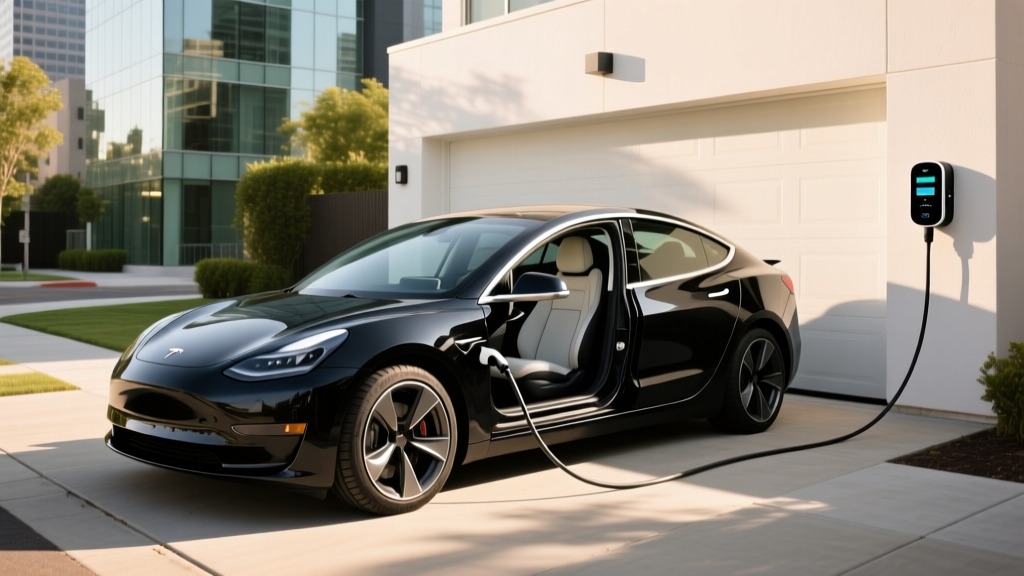
At home, a Level 2 Tesla Wall Connector on a 60A circuit (48A continuous) replenishes roughly 44 miles of range per hour. A typical overnight session of 8 hours adds ~350 miles — more than enough for any daily commute. Installation costs for a 240V/60A circuit typically range from $800-$2,500 depending on panel proximity and local permit requirements, with the Wall Connector itself priced at $475.
Understanding Tesla Lease Incentives in 2026
The mechanics of EV lease incentives differ fundamentally from purchase incentives, and this is where many buyers encounter confusion. Here's how it works for the 2026 Model 3:
The §30D Federal Tax Credit on Leases
Under IRS §30D, the $7,500 federal tax credit for qualifying new EVs is technically claimed by the lessor (the financing entity), not the lessee. However, most EV manufacturers — Tesla included — pass this value through to the consumer as a lease cash incentive (sometimes called a "capitalized cost reduction" or "lease bonus"). This effectively lowers the monthly payment by amortizing the $7,500 across the lease term.
Critical eligibility requirements still apply to the vehicle itself:
- MSRP cap: Vehicle must be under $55,000 for sedans — all 2026 Model 3 trims qualify
- Battery sourcing: Critical minerals and battery components must meet phased-in domestic/FSA-country sourcing thresholds (2026 requirements are stricter than prior years)
- Final assembly: Must occur in North America (Model 3 is assembled at Gigafactory Texas and Fremont, CA)
- Buyer income limits (for purchase credit): AGI ≤ $150,000 single / $300,000 joint — note: income caps do not apply to the lease passthrough
This last point is significant: leasing can unlock the incentive for buyers who exceed the §30D income caps on a purchase. Because the credit flows to the lessor, lessee income limits do not apply, though the vehicle itself must still meet sourcing and assembly requirements. Per IRS guidance on clean vehicle credits, the lessor claims the credit under §45W (commercial clean vehicle) rather than §30D.
Tesla's Own Lease Promotions
Tesla periodically offers promotional lease money factors (the lease equivalent of an interest rate) or subsidized lease rates, particularly at quarter-end and year-end. As of early 2026, typical Model 3 Long Range AWD lease terms look like this:
| Term | Annual Miles | Money Factor | Est. Monthly Payment (LR AWD) | Due at Signing |
|---|---|---|---|---|
| 36 months | 10,000 | ~0.00208 (5.0% APR equiv.) | ~$499-$549 | ~$4,500 (incl. first mo., fees, down) |
| 36 months | 15,000 | ~0.00208 | ~$569-$619 | ~$4,500 |
| 24 months | 10,000 | ~0.00188 (4.5% APR equiv.) | ~$589-$639 | ~$4,500 |
These are illustrative estimates; actual payments depend on your credit tier, state taxes, and any active Tesla promotions. The $7,500 lease incentive is typically factored into these payments as a cap cost reduction. Always request the official lease quote from Tesla's configurator, which itemizes the incentive, money factor, residual value, and fees.
Efficiency, Performance, and Daily Driving
The Model 3 Long Range RWD achieves an EPA-rated 132 MPGe combined (approximately 25 kWh/100 mi), making it one of the most efficient EVs in its class. The AWD variant drops to roughly 125 MPGe combined (~27 kWh/100 mi). For context, charging at the national average electricity rate of $0.16/kWh means fueling costs approximately $4.00-$4.30 per 100 miles — roughly a quarter of what a comparable 30 MPG gas sedan costs at $3.50/gallon.
Performance remains a Tesla hallmark. Even the "entry" Long Range RWD dispatches 0-60 mph in 5.8 seconds with approximately 315 horsepower from a single rear permanent-magnet motor. The dual-motor AWD variant adds a front induction motor for combined output near 384 hp, while the Performance trim's upgraded rear motor and track-tuned suspension deliver 510 hp and a 2.9-second sprint.
The Model 3's cabin is minimalist by design: a 15.4-inch central touchscreen handles all infotainment, climate, and vehicle controls. A rear 8-inch touchscreen was added for the Highland refresh. Standard features include heated front and rear seats, ventilated front seats, a premium 17-speaker audio system, and Tesla's full suite of Autopilot driver-assistance features (adaptive cruise, lane centering, auto emergency braking).
Interior space is adequate for four adults, though the sloping roofline limits rear headroom for taller passengers. Cargo capacity totals 23 cubic feet (trunk + front trunk/frunk), which is competitive with compact luxury sedans but less than crossover alternatives like the Model Y (76 cu ft with seats folded).
Warranty Coverage and Battery Longevity
Tesla provides the following warranty coverage for the 2026 Model 3:
- Basic Vehicle: 4 years / 50,000 miles
- Battery & Drive Unit: 8 years / 120,000 miles (Long Range); 8 years / 100,000 miles (Performance)
- Battery retention guarantee: Minimum 70% capacity over the warranty period
For lessees on a 36-month/30,000-mile lease, the battery warranty is largely academic — degradation over three years typically amounts to 3-6% based on aggregated fleet data from sources like fueleconomy.gov and Tesla's own impact reports. The 70% threshold at 120,000 miles suggests an average annual degradation rate of approximately 2.5%, which aligns with real-world NMC pack behavior when charged primarily to 80% and kept within moderate temperature ranges.
If you plan to purchase at lease-end (residual values typically range from 52-58% of MSRP depending on term and mileage), the remaining 5-year/70,000-mile battery warranty provides meaningful coverage.
How the Model 3 Compares to Key Competitors
The Model 3's lease proposition should be evaluated against its most direct rivals:
| Spec | 2026 Tesla Model 3 LR AWD | 2026 Hyundai Ioniq 6 SEL AWD | 2026 BMW i4 xDrive40 |
|---|---|---|---|
| Base MSRP | $47,490 | $46,500 | $57,900 |
| EPA Range | 341 mi | 316 mi | 282 mi |
| Battery (usable kWh) | 79 kWh NMC | 77.4 kWh NMC | 81 kWh NMC |
| Peak DC Charge | 250 kW | 235 kW | 205 kW |
| 10-80% DC Time | ~25 min | ~18 min | ~31 min |
| 0-60 mph | 4.2 sec | 5.1 sec | 4.7 sec |
| §30D Credit Eligible | Yes (if sourcing met) | No (Korea assembly) | No (Germany assembly) |
| Est. Lease (36mo/10k) | ~$549/mo | ~$529/mo | ~$699/mo |
The Ioniq 6 undercuts on monthly cost and offers faster 10-80% charging, but its Korean assembly disqualifies it from the §30D credit on purchases (though lease passthrough may still apply under §45W). The BMW i4 commands a premium and falls below the MSRP cap but also assembles outside North America. The Model 3's combination of Supercharger access, range, and domestic assembly keeps it competitive for lessees who value charging convenience and maximum range.
Consider the Ioniq 6 if: Faster DC charging and a lower base lease payment matter more than the Supercharger network (CCS adapters are available but add friction).
Look at the BMW i4 if: Build quality, brand prestige, and a more traditional luxury interior outweigh range and incentive concerns.
Pros, Cons, and Who Should Lease the Model 3
- Class-leading EPA range (363 mi LR RWD)
- Native NACS / Supercharger network access
- $7,500 lease incentive passthrough likely available
- Best-in-class efficiency (132 MPGe combined)
- OTA updates continuously add features
- Strong safety ratings (IIHS Top Safety Pick+)
- Minimalist interior lacks physical controls
- Turn signals on steering wheel (controversial stalk removal)
- Rear headroom tight for 6'+ passengers
- No Apple CarPlay / Android Auto
- FSD subscription adds $99/mo or $8,000 purchase
- Insurance premiums above segment average
Best for: Daily commuters covering 30-80 miles round trip who have access to home Level 2 charging, tech-forward buyers who prefer screen-based interfaces, and anyone who road-trips frequently and values the Supercharger network's reliability.
Less ideal for: Families needing maximum cargo space (consider the Model Y), drivers who prefer physical buttons and traditional luxury materials, or those without reliable home charging who would depend heavily on public infrastructure.
Frequently Asked Questions
Does the 2026 Tesla Model 3 qualify for the $7,500 federal EV tax credit?
All Model 3 trims are under the $55,000 sedan MSRP cap and are assembled in the US. Eligibility depends on meeting 2026 battery-sourcing and critical-mineral requirements, which Tesla has largely satisfied through its supply chain partnerships. On a lease, the incentive typically passes through to reduce your monthly payment regardless of your personal income level. Always verify current eligibility on IRS.gov before signing.
What is the real-world range of the Tesla Model 3?
The EPA rates the Long Range RWD at 363 miles and the Long Range AWD at 341 miles. In real-world highway driving at 70 mph and moderate temperatures, expect roughly 280-320 miles. In cold weather (below freezing), range can drop to 220-260 miles. City driving with regenerative braking often matches or slightly exceeds the EPA estimate.
How fast does the Model 3 charge at home and on the road?
At home on a 240V Level 2 charger (48A), the Model 3 adds about 44 miles of range per hour, fully charging overnight in 7-8 hours. On a Tesla V3 Supercharger (250 kW peak), a 10-80% session takes approximately 25 minutes. Charging above 80% slows significantly due to the battery management system protecting cell health.
Is leasing a Tesla better than buying in 2026?
Leasing offers advantages: the $7,500 incentive passes through regardless of your income (bypassing the §30D AGI caps), monthly payments are lower, and you avoid battery-degradation risk. Buying makes sense if you plan to keep the car 6+ years, drive fewer than 15,000 miles annually, and qualify for the purchase credit. Run both scenarios using Tesla's configurator before deciding.
What happens at the end of a Tesla Model 3 lease?
Tesla leases through partner financial institutions typically offer a purchase option at the predetermined residual value (usually 52-58% of MSRP). You can also return the vehicle with no further obligation beyond excess mileage charges ($0.20-$0.25/mile over your allowance) and wear-and-tear fees. Unlike some manufacturers, Tesla has historically allowed third-party purchase options as well.