Quick Verdict: The Benchmark Sedan Gets Smarter
The 2026 Tesla Model 3 remains the default answer for buyers entering the EV space. With an EPA-estimated 363 miles on the Long Range AWD trim, access to the industry's most reliable DC fast-charging network, and continuous over-the-air refinements to its driver-assistance stack, it sets a bar that rivals like the Hyundai Ioniq 6 and BMW i4 are still chasing. But the question many first-time EV buyers ask isn't about range or price — it's about the car's most visible active-safety feature: how does lane assist work in a Tesla, and can you actually trust it on a daily commute?
This review breaks down the 2026 Model 3's full spec sheet — battery chemistry, charging curves, real-world efficiency, and the mechanics behind Autopilot's lane-keeping behavior — so you can decide whether it's the right EV for your driveway.
Range, Battery, and Efficiency: Beyond the EPA Sticker
The 2026 Model 3 is offered in three configurations, each with distinct battery and range profiles:
| Trim | Battery (usable kWh) | Chemistry | EPA Range | MPGe (combined) | kWh/100 mi |
|---|---|---|---|---|---|
| RWD | 57.5 | LFP | 272 mi | 132 | 25 |
| Long Range AWD | 75.0 | NMC | 363 mi | 134 | 25 |
| Performance AWD | 75.0 | NMC | 315 mi | 119 | 28 |
The Long Range's NMC (nickel manganese cobalt) pack prioritizes energy density, which is why it delivers 363 miles in a relatively compact sedan. The RWD's LFP (lithium iron phosphate) battery trades some energy density for longer cycle life and the ability to charge routinely to 100% without accelerated degradation — a meaningful advantage for daily drivers who want maximum usable range every morning.
Efficiency is where the Model 3 shines. At 25 kWh per 100 miles, the Long Range AWD matches or beats nearly every competitor in its class. The Ioniq 6 SE achieves a slightly better 24 kWh/100 mi thanks to its 0.21 drag coefficient, but the Tesla's real-world highway efficiency holds up better at sustained speeds above 70 mph, where the Hyundai's advantage narrows.
Charging Speed: DC Fast, Level 2, and the Supercharger Advantage
Charging remains one of the Model 3's strongest selling points, particularly now that the vehicle ships with the NACS (North American Charging Standard) connector natively — no adapter needed at Tesla Superchargers, and increasingly compatible at third-party networks like Electrify America and EVgo as they deploy NACS cables.
| Charging Level | Max Rate | Speed / Time |
|---|---|---|
| Level 1 (120V household) | 1.4 kW | ~3–4 mi/hr |
| Level 2 (240V home/public) | 11.5 kW (48A) | ~37 mi/hr |
| DC Fast Charge (Supercharger V3/V4) | 250 kW peak | 10–80% in ~25 min (Long Range) |
The 250 kW peak rate applies to the Long Range and Performance trims on NMC batteries. The RWD's LFP pack peaks at approximately 170 kW, meaning its 10–80% session takes closer to 30 minutes. This is a critical distinction for road-trippers: if fast charging speed matters to you, the Long Range is the trim to choose.
On a V4 Supercharger cabinet, the Model 3 Long Range sustains above 200 kW from roughly 10% to 45% SoC, then tapers progressively. The charge curve from 80% to 100% is deliberately slow to protect battery longevity — expect an additional 20–25 minutes for that final 20%. For daily driving, most owners set their charge limit to 80% (or 100% on LFP trims) and wake up to a full battery every morning on Level 2.
Home Level 2 installation typically costs $800–$2,000 depending on your electrical panel's proximity to the garage and whether a 60A circuit is feasible. The Tesla Wall Connector ($475) is the simplest pairing, offering up to 44 miles of range per hour of charging. Consult a licensed electrician familiar with EV installations for a site-specific quote.
How Does Lane Assist Work? Autopilot and Active Safety Explained
This is the question that pulls many first-time Tesla buyers into the showroom — and it deserves a precise answer. The 2026 Model 3 ships with Basic Autopilot as standard equipment, which includes:
- Traffic-Aware Cruise Control: Matches speed to the vehicle ahead, from highway speeds down to a full stop.
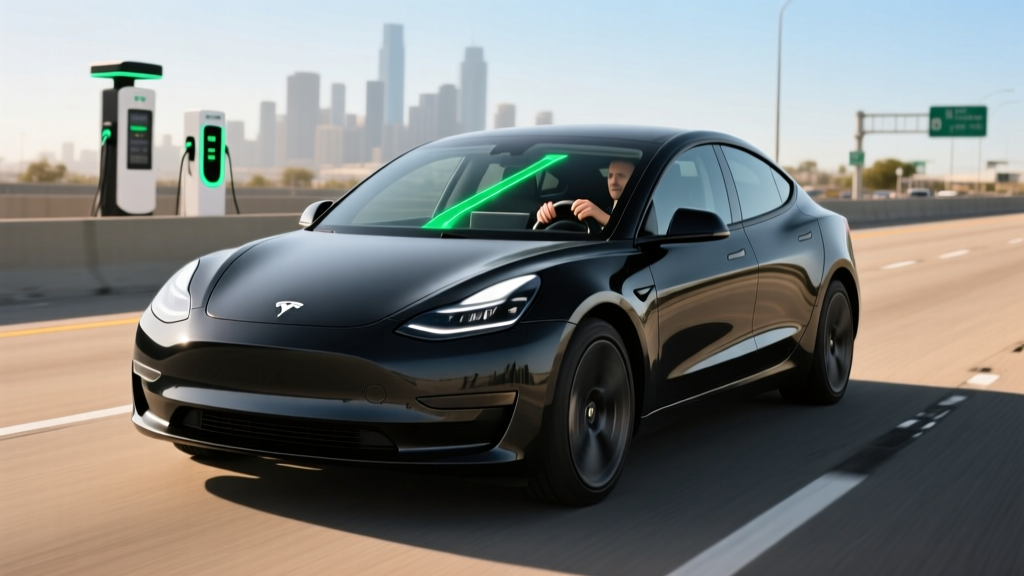
- Autosteer (Lane Assist): Uses a suite of cameras (Tesla's vision-only "Tesla Vision" architecture — no radar or ultrasonic sensors) to detect lane markings and gently applies steering torque to keep the vehicle centered in its lane.
How it works mechanically: Eight exterior cameras feed real-time imagery to Tesla's HW4.0 computer, which runs neural networks trained to recognize lane lines, road edges, curbs, and surrounding vehicles. When Autosteer is engaged (two taps on the right steering-column stalk), the system calculates a target path within the detected lane and commands the electric power-steering motor to maintain it. If lane markings fade or disappear, the system uses the road edge and surrounding traffic as reference — but it will issue a visual and audible warning if confidence drops below a safe threshold.
The optional FSD (Supervised) package ($8,000 one-time purchase or $99/month as of early 2026) adds Navigate on Autopilot (automatic highway on-ramp to off-ramp routing with lane changes), autosteer on city streets with traffic-light and stop-sign recognition, and Smart Summon. In practice, FSD's city-street performance in 2026 has improved substantially but still requires active supervision — expect occasional phantom braking, missed construction-zone cones, and hesitant unprotected left turns in complex intersections.
Compared to competing systems — GM's Super Cruise (hands-free on pre-mapped highways), Ford's BlueCruise (hands-free in designated zones), Hyundai's Highway Driving Assist 2 — Tesla's Autosteer covers more road types without geofencing restrictions, but it requires hands-on-wheel attention where some competitors allow hands-off. The trade-off is breadth vs. relaxation: Tesla works on virtually any road, but you're always the supervisor.
Performance, Drivetrain, and Ride Quality
| Trim | Drivetrain | Horsepower | 0–60 mph | Top Speed |
|---|---|---|---|---|
| RWD | Rear-Wheel Drive | 271 hp | 5.8 sec | 125 mph |
| Long Range AWD | Dual-Motor AWD | 346 hp | 4.2 sec | 125 mph |
| Performance AWD | Dual-Motor AWD | 510 hp | 2.9 sec | 163 mph |
The Long Range AWD strikes the best balance for most buyers: 346 hp, a 4.2-second 0–60 time that beats most sports sedans to the first intersection, and dual-motor all-wheel drive that handles rain and light snow with confidence. The Performance trim's 2.9-second sprint is genuinely supercar territory, but it costs $10,000 more and sacrifices 48 miles of EPA range — a trade-off that only makes sense if track days or stoplight drag races are part of your ownership plan.
Ride quality improved dramatically with the "Highland" refresh and carries into 2026 with further damper tuning refinements. The cabin is noticeably quieter than pre-2024 Model 3s, with acoustic glass and improved insulation reducing highway wind noise. The trade-off is a firm ride on broken pavement — the sport-tuned suspension prioritizes body control over plushness, which some buyers will appreciate and others won't.
Interior, Cargo, and Technology
The 2026 Model 3's interior follows Tesla's minimalist ethos: a single 15.4-inch center touchscreen handles infotainment, climate, vehicle settings, and the driver's instrument cluster (speed and range are displayed in the upper-right corner of the screen, not a separate gauge cluster). A rear-seat 8-inch touchscreen was added with the Highland refresh and continues in 2026, giving passengers climate and media control.
| Measurement | Value |
|---|---|
| Front headroom | 40.3 in |
| Front legroom | 42.7 in |
| Rear headroom | 37.8 in |
| Rear legroom | 35.2 in |
| Trunk (rear) | 21.0 cu ft |
| Frunk (front trunk) | 3.1 cu ft |
| Total cargo | 24.1 cu ft |
Cargo space is adequate for a compact sedan but trails hatchback rivals. The Hyundai Ioniq 6 offers 12.3 cu ft of trunk space (smaller), while the BMW i4's liftback design provides 16.6 cu ft with more flexibility for bulky items. If you regularly haul cargo, a crossover like the Model Y may be the better Tesla.
Notable tech features: Native Spotify/Apple Music/Tidal streaming, a 17-speaker premium audio system (Long Range/Performance), ventilated front seats, ambient lighting, phone-as-key via Bluetooth/UWB, and continuous OTA updates that add features post-purchase. Notable drawback: No Apple CarPlay or Android Auto — if you rely on either ecosystem, this is a dealbreaker worth considering seriously.
Pricing, Tax Credits, and Ownership Cost
| Trim | Base MSRP | §30D Credit Eligibility | Effective Price (with credit) |
|---|---|---|---|
| RWD | $38,990 | Up to $7,500* | ~$31,490* |
| Long Range AWD | $45,240 | Up to $7,500* | ~$37,740* |
| Performance AWD | $52,990 | Up to $7,500* | ~$45,490* |
*Federal tax credit eligibility under IRS §30D depends on multiple requirements: buyer AGI must not exceed $150,000 (single) / $300,000 (joint); vehicle MSRP must be ≤ $55,000 for sedans; and the battery must meet critical-mineral and battery-component sourcing thresholds that tighten annually. As of 2026, the Tesla Model 3's battery sourcing qualifies, but always verify current eligibility at fueleconomy.gov before purchasing. The credit can be transferred to the dealer at point of sale as an instant discount.
All trims include a destination fee of $1,390. Common add-ons include FSD ($8,000), premium paint colors ($1,000–$2,500), and 19-inch Nova wheels ($1,500). A well-equipped Long Range AWD with FSD and premium paint can reach $56,000+ before incentives.
Ownership economics: At the US average electricity rate of $0.17/kWh, charging a Model 3 Long Range costs approximately $4.25 per 100 miles — compared to roughly $12.50 per 100 miles for a 30-mpg gas sedan at $3.75/gallon. Over five years and 75,000 miles, that's approximately $6,200 in fuel savings. Maintenance costs are minimal: no oil changes, no spark plugs, cabin air filter replacement every 2 years (~$50 DIY), and tire rotation every 6,250 miles. Budget for higher insurance premiums — EVs typically cost 15–25% more to insure than comparable gas vehicles, according to industry data.
Warranty and Battery Longevity
Tesla provides the following warranty coverage on the 2026 Model 3:
- Basic vehicle: 4 years / 50,000 miles
- Battery & drive unit (RWD): 8 years / 100,000 miles, minimum 70% capacity retention
- Battery & drive unit (Long Range/Performance): 8 years / 120,000 miles, minimum 70% capacity retention
Tesla's battery warranty guarantees that the pack will retain at least 70% of its original capacity during the warranty period. Real-world degradation data from Tesla's own fleet reports and third-party tracking (e.g., Recurrent Auto) suggests NMC packs typically lose 5–8% capacity over the first 100,000 miles, while LFP packs show slightly less degradation but start with less total energy. A full battery replacement outside of warranty on a Model 3 Long Range currently costs approximately $12,000–$16,000 — a figure worth knowing for long-term ownership planning, though most owners will sell or trade the vehicle long before this becomes relevant.
Who Should Buy the 2026 Tesla Model 3?
Choose the Model 3 if:
- You want access to the Supercharger network for reliable road-trip charging
- Class-leading efficiency (25 kWh/100 mi) and real-world range matter to you
- You value continuous OTA feature updates and a minimalist tech-forward cabin
- You have home Level 2 charging access and a daily commute under 80 miles
Look elsewhere if:
- You need Apple CarPlay/Android Auto integration
- You want hands-free (eyes-off) highway driving — consider GM Super Cruise or Ford BlueCruise
- Cargo flexibility is a priority — the Model Y or Ioniq 5 hatchback offers more utility
- You want a traditional instrument cluster or physical buttons for climate/media
Frequently Asked Questions
What is the real-world range of the 2026 Tesla Model 3?
The EPA rates the Long Range AWD at 363 miles. In real-world highway driving at 70 mph, expect 300–320 miles. In cold weather below freezing, plan for 240–270 miles. The RWD trim's 272-mile EPA rating translates to roughly 220–240 miles in mixed real-world use.
How fast does the Model 3 charge at home and on road trips?
On a 240V Level 2 home charger, the Model 3 adds approximately 37 miles of range per hour (11.5 kW). On a Tesla V3/V4 Supercharger, the Long Range peaks at 250 kW and charges from 10% to 80% in about 25 minutes. The RWD (LFP) peaks at ~170 kW, taking roughly 30 minutes for the same 10–80% session.
Does the 2026 Model 3 qualify for the $7,500 federal tax credit?
As of 2026, the Model 3 qualifies for up to $7,500 under IRS §30D, provided the buyer meets income thresholds (≤$150K single / ≤$300K joint), the trim MSRP is ≤$55,000 (sedan cap), and battery-sourcing requirements are met. The Performance trim's $52,990 MSRP clears the cap, but options can push it above. Always verify at fueleconomy.gov and consult a tax professional.
Is the Model 3 worth buying over the Hyundai Ioniq 6 or BMW i4?
The Model 3 wins on charging infrastructure (Supercharger access), software ecosystem, and efficiency. The Ioniq 6 beats it on aerodynamic efficiency and offers CarPlay. The BMW i4 provides a more traditional luxury interior and physical controls but at a significantly higher price point with less range. For most buyers prioritizing range, charging speed, and value, the Model 3 Long Range remains the segment benchmark.
How does Tesla's lane assist compare to competitors?
Tesla's Autosteer works on virtually any road with detectable lane markings or edges — no geofencing required. GM's Super Cruise and Ford's BlueCruise allow hands-off driving but only on pre-mapped divided highways. Tesla requires hands-on-wheel supervision at all times but offers broader coverage. For daily commuting on varied roads, Tesla's approach is more versatile; for long highway stretches where you want to relax (with eyes on road), Super Cruise is less fatiguing.