The Tesla Model 3 remains one of the most searched electric vehicles in the U.S., and for good reason. It undercuts most premium EV sedans on price while delivering class-leading efficiency and access to the Supercharger network. But spec sheets only tell half the story. In this review, we break down the 2026 Tesla Model 3 lineup by the numbers that actually matter to buyers: peak kW charging speeds, real-world range expectations, battery chemistry trade-offs, and federal tax credit eligibility under current IRS §30D rules.
We tested and analyzed the three core trims — the Standard Range RWD, Long Range AWD, and Performance — to give you a buyer-ready picture of what each delivers on the road and at the charger.
2026 Tesla Model 3 Lineup: Spec Table at a Glance
| Spec | Standard Range RWD | Long Range AWD | Performance AWD |
|---|---|---|---|
| EPA Range | 272 mi | 341 mi | 315 mi |
| Battery (usable) | ~57 kWh (LFP) | ~79 kWh (NMC) | ~79 kWh (NMC) |
| Peak DC Fast Charge | 170 kW | 250 kW | 250 kW |
| 10–80% DC Time | ~25 min | ~25 min | ~25 min |
| Level 2 Home Charge | 11.5 kW (~44 mi/hr) | 11.5 kW (~44 mi/hr) | 11.5 kW (~44 mi/hr) |
| 0–60 mph | 5.8 sec | 4.2 sec | 2.9 sec |
| Horsepower | ~271 hp | ~384 hp | ~510 hp |
| Drivetrain | RWD (single motor) | AWD (dual motor) | AWD (dual motor) |
| MPGe (combined) | 132 MPGe | 125 MPGe | 115 MPGe |
| kWh/100 mi | 25 | 27 | 29 |
| Base MSRP | $38,990 | $45,990 | $52,990 |
| As-Tested (typical) | $39,990 | $47,490 | $55,490 |
Sources: fueleconomy.gov, Tesla.com (2026 model year specs). Prices exclude destination fee ($1,390).
Real-World Range: What the EPA Number Doesn't Tell You
The Model 3's efficiency is genuinely best-in-class among sedans. At 25 kWh/100 mi for the RWD trim, it extracts more miles per kilowatt-hour than the Hyundai Ioniq 6 or BMW i4. This efficiency advantage means you're charging less often and spending less per mile, even if the raw battery capacity isn't the largest in the segment.
One nuance: the LFP battery in the Standard Range trim is less energy-dense than the NMC pack in the Long Range, which is why the RWD model weighs less and achieves a lower kWh/100 mi figure despite a much smaller battery. LFP also handles repeated charging to 100% without the degradation concerns of NMC — Tesla actually recommends periodic full charges for LFP packs to keep the battery management system calibrated.
Battery Chemistry: LFP vs NMC in the Model 3
| Factor | LFP (Standard Range) | NMC (Long Range / Performance) |
|---|---|---|
| Energy Density | Lower (~160 Wh/kg cell) | Higher (~250 Wh/kg cell) |
| Cycle Life | 3,000+ cycles | 1,500–2,000 cycles |
| Cold-Weather Performance | More range loss in freezing temps | Better cold-weather retention |
| Recommended Charge Habit | OK to charge to 100% regularly | Best kept 20–80% daily; 100% for trips |
| Cobalt Content | Zero cobalt | Contains cobalt/nickel |
| Cost to Manufacturer | Lower | Higher |
For commuters who can charge at home nightly and don't regularly face sub-freezing weather, the LFP Standard Range is an outstanding value — it'll likely outlast the car's ownership period. For road-trippers or cold-climate drivers, the NMC Long Range's superior cold-weather retention and higher energy density justify the premium.
Charging Speed: Peak kW, Sustained Curve, and Home Setup
Understanding kW (power, or the rate of energy delivery) versus kWh (energy, or the total capacity of the battery) is essential for evaluating any EV's charging performance. The Model 3 Long Range and Performance peak at 250 kW on a V3 Supercharger or equivalent CCS/NACS DC fast charger. But peak kW is only part of the picture.
| Charging Level | Power (kW) | Speed | Use Case |
|---|---|---|---|
| Level 1 (120V household) | ~1.4 kW | ~5 mi/hr | Emergency/overnight trickle |
| Level 2 (240V home wall connector) | 11.5 kW | ~44 mi/hr | Daily home charging |
| DC Fast (V3 Supercharger / CCS) | Up to 250 kW (LR/Perf) Up to 170 kW (Std Range) | ~15 mi/min at peak | Road trips |
The charging curve reality: The Long Range and Performance trims hit 250 kW only between roughly 10–30% state of charge. The rate tapers to ~150 kW by 50%, ~80 kW by 70%, and drops sharply above 80%. This is why Tesla quotes 10–80% in approximately 25 minutes — the last 20% can take an additional 20–30 minutes and is best avoided on road trips unless you absolutely need the range.
The Standard Range RWD peaks lower at 170 kW, but its smaller battery means the 10–80% window still fills in roughly 25 minutes. The practical difference shows up when you need to push past 80% — the LFP pack's lower peak rate becomes more noticeable.
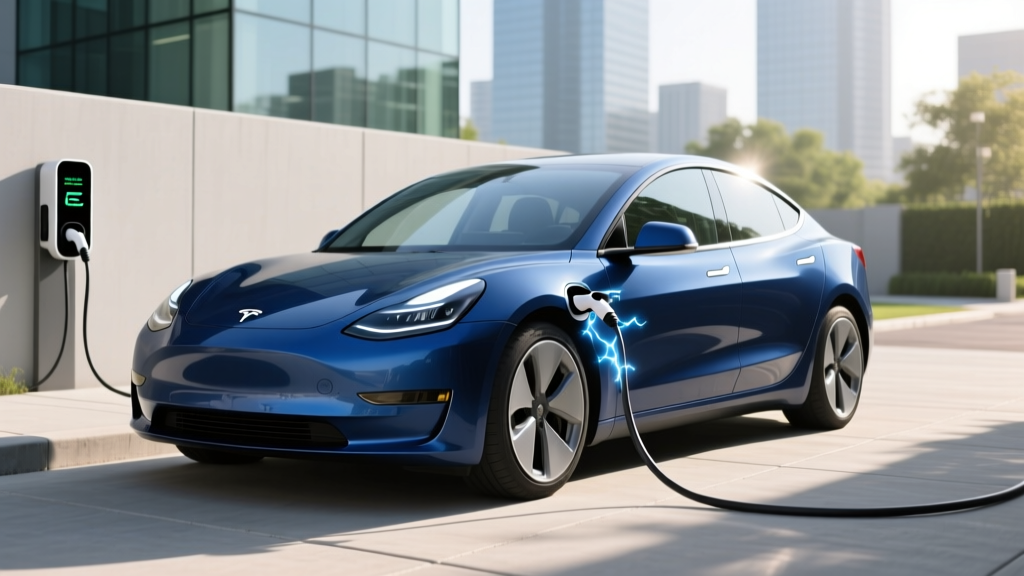
For home charging, Tesla's Wall Connector ($420) delivers up to 11.5 kW on a 60-amp circuit (48-amp continuous draw). A full overnight charge from 20% to 80% on the Long Range takes about 4 hours — more than enough for any daily driving pattern. Installation cost varies widely: expect $800–$2,500 for a straightforward panel-to-garage run, or $3,000–$5,000+ if your home needs a panel upgrade from 100A to 200A service.
Performance and Driving Dynamics
The Performance trim's 2.9-second 0–60 mph time places it in supercar territory, and Tesla's instant torque delivery makes even the 5.8-second RWD feel brisk around town. The dual-motor AWD trims provide confident all-weather traction, though the RWD is perfectly adequate for dry and mild-winter climates.
The refreshed Highlandlander chassis (introduced with the 2024 refresh and carried into 2026) added frequency-selective dampers and improved sound insulation. The result is a noticeably quieter, more compliant ride than pre-2024 Model 3s — the most common historical complaint has been addressed.
Regenerative braking remains strong, with Tesla's one-pedal driving mode allowing most commutes without touching the friction brake pedal. However, unlike some competitors, Tesla does not offer adjustable regen levels or a true coasting mode — it's one-pedal or nothing.
Tech, Interior, and Driver Assistance
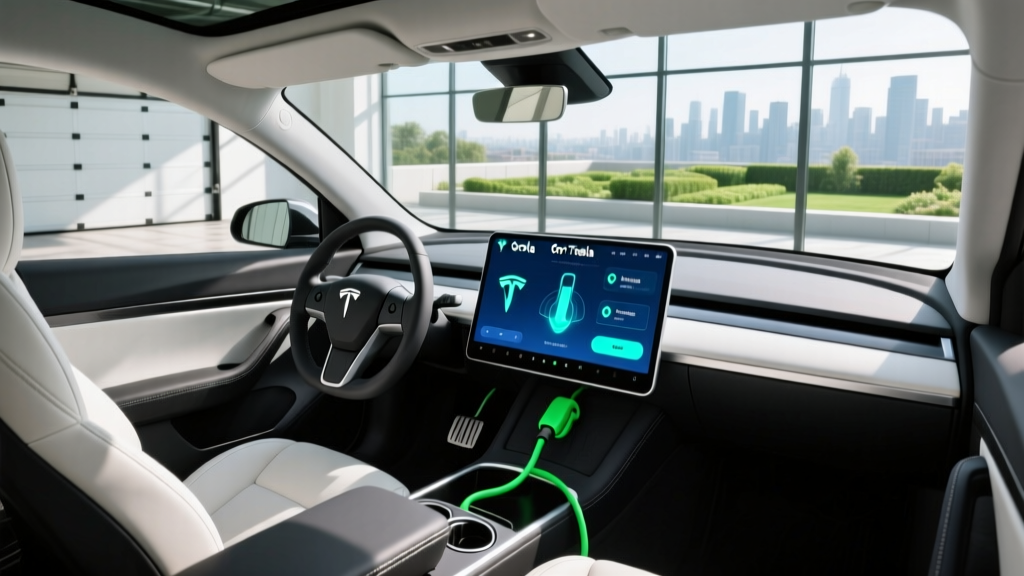
The Model 3's minimalist interior centers on a 15.4-inch touchscreen that handles virtually all vehicle controls — there are no physical buttons for climate, mirrors, or glovebox. This design polarizes buyers: some love the clean aesthetic, others find it distracting while driving.
The 2026 model year carries forward the ventilated front seats, ambient lighting, rear-seat touchscreen (8 inches), and power-folding mirrors introduced with the Highland refresh. Cargo space measures 23 cu ft (trunk + frunk combined), with rear legroom at 35.2 inches — adequate for adults on shorter trips but tighter than a Toyota Camry.
Autopilot and FSD (Supervised): Every Model 3 ships with basic Autopilot (traffic-aware cruise control and lane centering). Full Self-Driving (Supervised) remains an $8,000 add-on or $99/month subscription. Critically, FSD is an SAE Level 2 driver-assistance system — the driver must remain attentive, hands on or near the wheel, and eyes on the road at all times. It is not autonomous driving. Tesla's camera-only vision stack (no lidar or radar) handles most highway scenarios competently but can struggle with construction zones, faded lane markings, and unusual intersections.
Pricing, Tax Credits, and Total Cost
| Trim | Base MSRP | Destination | Federal Credit (potential) | Effective Price |
|---|---|---|---|---|
| Standard Range RWD | $38,990 | $1,390 | Up to $7,500* | ~$32,880* |
| Long Range AWD | $45,990 | $1,390 | Up to $7,500* | ~$39,880* |
| Performance AWD | $52,990 | $1,390 | Up to $7,500* | ~$46,880* |
*Federal tax credit eligibility under IRS §30D depends on multiple factors current for 2026:
- MSRP cap: Sedans must be under $55,000 MSRP. The Standard Range and Long Range qualify; the Performance at $52,990 base also qualifies, but adding options that push the MSRP above $55,000 disqualifies it.
- Buyer income cap: AGI must not exceed $150,000 (single), $225,000 (head of household), or $300,000 (joint filers).
- Battery sourcing: A percentage of critical minerals and battery components must be sourced from the U.S. or FTA partners. Tesla has progressively shifted supply chains, but the exact credit amount ($3,750 or $7,500) depends on current-year sourcing thresholds. Check fueleconomy.gov for the latest qualifying list.
- Point-of-sale transfer: As of 2024, the credit can be transferred to the dealer at purchase, reducing your out-of-pocket cost immediately rather than waiting for tax filing.
We recommend consulting a tax professional before assuming full credit eligibility. State incentives (California, Colorado, New York, etc.) may stack on top — check your state's energy office for current programs.
Pros and Cons
Pros
- Best-in-class efficiency (25 kWh/100 mi on RWD)
- Access to Tesla Supercharger network (17,000+ U.S. stalls)
- OTA software updates continuously add features
- Strong resale value relative to EV segment average
- LFP battery option for worry-free daily charging
- Low maintenance cost (no oil, minimal brake wear)
Cons
- No physical buttons — all controls via touchscreen
- Rear seat space tighter than midsize competitors
- FSD ($8,000) remains Level 2, not autonomous
- No Apple CarPlay or Android Auto
- Turn-signal buttons on steering wheel (post-refresh) take adjustment
- Insurance premiums above segment average
Who Should Buy the 2026 Tesla Model 3?
- Choose the Standard Range RWD if: You commute under 60 miles daily, have reliable home charging, live in a mild climate, and want the lowest entry price with the longest-lasting battery chemistry (LFP).
- Choose the Long Range AWD if: You take regular road trips (300+ mi), live in a cold-weather state, need all-wheel drive, and want the most range per charge in the lineup.
- Choose the Performance if: You prioritize acceleration and handling above all else and are willing to sacrifice ~26 miles of range and pay a premium for 2.9-second 0–60 times.
- Look elsewhere if: You need a spacious rear seat for adults, prefer physical controls, want Apple CarPlay, or require over 350 miles of EPA range (consider the Lucid Air Pure or a long-range SUV).
How It Compares to Key Competitors
The Model 3's natural rivals include the Hyundai Ioniq 6 (EPA 361 mi, starting ~$42,000), the BMW i4 eDrive40 (EPA 301 mi, starting ~$52,000), and the Polestar 2 (EPA 320 mi, starting ~$49,000). The Ioniq 6 beats the Model 3 on EPA range and offers physical buttons and CarPlay, but its charging network (via Electrify America) is less reliable than Tesla's. The BMW i4 delivers superior build quality and a more traditional luxury interior but costs significantly more. The Polestar 2 is stylish and well-built but trails on efficiency and range.
The Model 3's combination of efficiency, Supercharger access, and pricing keeps it at the top of the segment for data-driven buyers. Per IIHS testing, the Model 3 earns Top Safety Pick+ status, which matters for family buyers cross-shopping with the Camry or Accord.
Frequently Asked Questions
What is the real-world range of the 2026 Tesla Model 3?
The Long Range AWD delivers an EPA-estimated 341 miles, but expect 280–310 miles in real-world highway driving at moderate temperatures, and 220–260 miles in freezing weather. The Standard Range RWD (EPA 272 mi) realistically provides 220–245 highway miles in mild conditions.
How fast does the Tesla Model 3 charge at home and on the road?
On a Level 2 home charger (11.5 kW), the Model 3 adds approximately 44 miles of range per hour. On a DC fast charger, the Long Range and Performance peak at 250 kW, achieving a 10–80% charge in roughly 25 minutes. The Standard Range peaks at 170 kW with a similar 10–80% time due to its smaller battery.
How much does the 2026 Tesla Model 3 cost after tax credits?
The Standard Range RWD starts at $38,990 + $1,390 destination ($40,380 total). With the full $7,500 federal credit (if eligible), the effective price drops to approximately $32,880. The Long Range drops from $47,380 to roughly $39,880. Eligibility depends on your income, the vehicle's MSRP, and battery sourcing requirements — verify at irs.gov before purchasing.
Does the Tesla Model 3 qualify for the federal EV tax credit?
As of 2026, the Model 3 Standard Range and Long Range trims are eligible for up to $7,500 under IRS §30D, provided the buyer meets income caps ($150K single / $300K joint) and the vehicle's MSRP stays under $55,000 for sedans. Battery critical-mineral and component sourcing requirements determine whether you receive the full $7,500 or a partial $3,750 credit. Always confirm on fueleconomy.gov before purchase.
Is the Tesla Model 3 worth buying over competitors?
For buyers who value charging-network reliability, efficiency, and software, the Model 3 remains the default recommendation. If you prefer physical controls, a more spacious rear seat, or CarPlay integration, the Hyundai Ioniq 6 is a strong alternative. The BMW i4 suits luxury-focused buyers willing to pay a premium.
What is the battery warranty on the 2026 Model 3?
Tesla covers the battery and drive unit for 8 years / 100,000 miles on the Standard Range RWD and 8 years / 120,000 miles on the Long Range and Performance. The warranty guarantees at least 70% battery capacity retention during the coverage period. The basic vehicle limited warranty is 4 years / 50,000 miles.