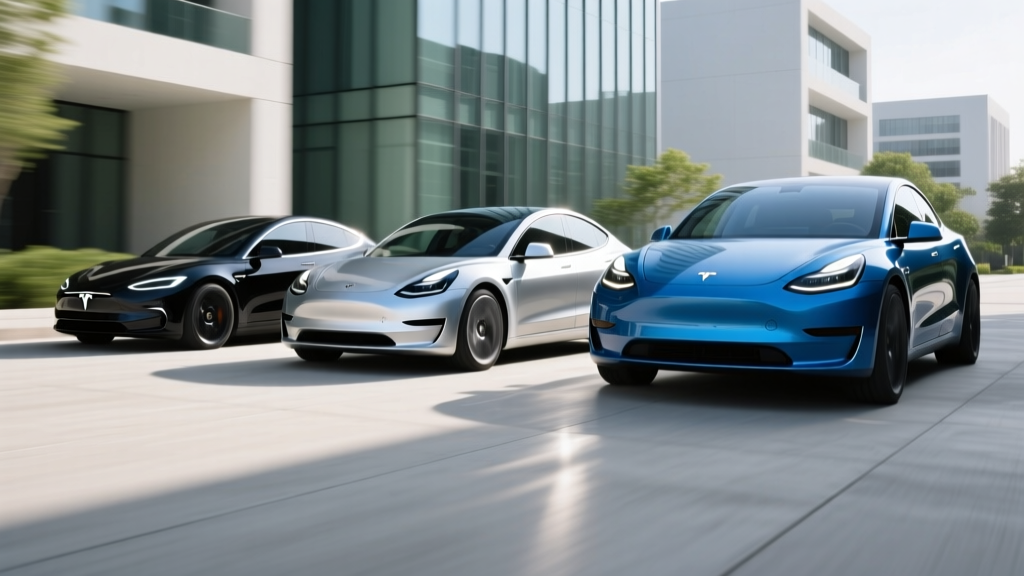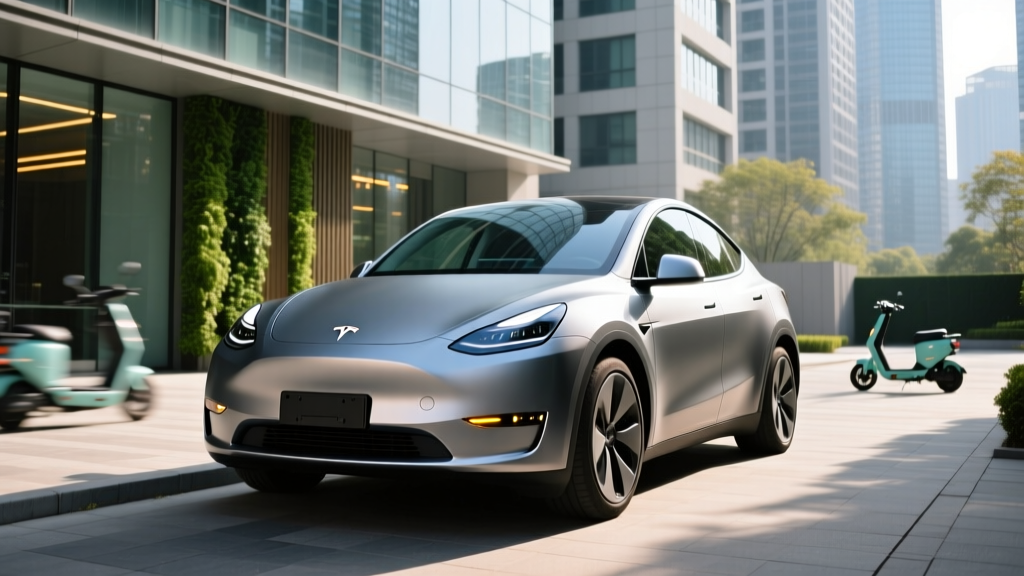
The Tesla Model 3 Highland refresh redefined what Tesla's entry-level sedan could be, and the 2026 Model 3 carries that momentum forward with refinements to materials, acoustic damping, and the software stack that governs nearly every cabin interaction. For buyers searching specifically for a 2026 Model 3 interior breakdown, the story is one of deliberate minimalism — a 15.4-inch center touchscreen replaces nearly all physical controls, ventilated front seats are now standard across trims, and ambient lighting wraps the entire cabin perimeter. But the interior is only half the equation. This review pairs the cabin experience with the hard numbers that matter: EPA range, DC fast-charging curves, real-world efficiency, and federal tax credit eligibility under current IRS §30D rules.
2026 Model 3 Interior: What Changed and What It Feels Like
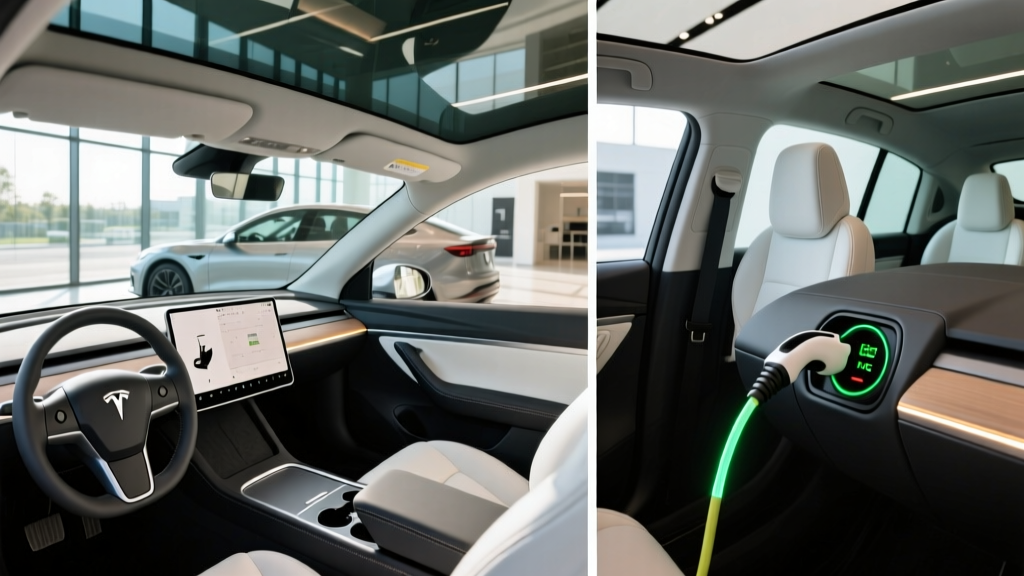
Step inside the 2026 Model 3 and the first thing you notice is the silence. Tesla added acoustic glass to the rear windows and additional sound-deadening material in the door panels and floor, cutting highway wind noise measurably compared to pre-Highland models. The cabin materials have moved upmarket: soft-touch surfaces now cover the dashboard top and door uppers, replacing the hard plastics that drew criticism in earlier generations.
The centerpiece remains the 15.4-inch landscape touchscreen running Tesla's latest software. Climate controls, mirror adjustments, glovebox release, and even windshield wiper speed are all managed through this display. Tesla has added a small 8-inch rear touchscreen for passengers — a welcome addition for climate and media control from the back seat, though it lacks app browsing.
Key interior dimensions remain unchanged from the Highland platform:
- Front headroom: 40.3 inches
- Front legroom: 42.7 inches
- Rear headroom: 37.8 inches
- Rear legroom: 35.2 inches
- Cargo volume (trunk + frunk): 23.0 cu ft total (trunk: 21.0 cu ft, frunk: 2.0 cu ft)
The rear seat accommodates two adults comfortably on longer trips, though the sloping roofline cuts into headroom for anyone over six feet. The frunk is small — enough for a charging cable bag and a few groceries — but the trunk opening is wide and practical. Ventilated front seats, heated rear seats, and a heated steering wheel are standard on all 2026 trims, a significant value add over the pre-2024 Model 3 where many of these features required an upgrade.
Range, Battery, and Real-World Efficiency
The 2026 Model 3 is offered in three configurations, each with a distinct battery and range profile. Tesla does not publish official battery chemistry or usable capacity for every trim, but teardown data and supply-chain reporting confirm that the base RWD Long Range uses a CATL-sourced LFP (lithium iron phosphate) pack, while the Long Range AWD and Performance trims use NMC (nickel manganese cobalt) chemistry from Panasonic or LG Energy Solution.
| Trim | EPA Range | Battery (usable, est.) | Chemistry | MPGe (combined) | kWh/100 mi |
|---|---|---|---|---|---|
| Model 3 RWD | 272 mi | ~57.5 kWh | LFP | 132 MPGe | 25 |
| Model 3 Long Range AWD | 363 mi | ~79 kWh | NMC | 134 MPGe | 25 |
| Model 3 Performance | 315 mi | ~79 kWh | NMC | 116 MPGe | 29 |
The EPA 363-mile figure on the Long Range AWD is achievable in mixed city/suburban driving at moderate speeds (45-65 mph) in temperate weather. On sustained highway trips at 75-80 mph, expect 290-320 miles before needing to stop. In freezing temperatures (below 32°F), range drops 20-30% — plan for 250-280 miles of usable range on a Long Range AWD in winter highway conditions. The RWD trim's smaller LFP pack means proportionally larger cold-weather losses in absolute miles; budget roughly 200 miles of real-world winter highway range on the base model.
LFP chemistry in the RWD trim brings a notable ownership advantage: Tesla recommends charging LFP packs to 100% regularly to maintain accurate state-of-charge calibration, whereas NMC packs benefit from daily limits of 80-90% to maximize longevity. This means RWD owners effectively get more daily usable range relative to their pack size, even though the EPA number is lower.
Charging Speed: DC Fast Charge and Home Level 2
Charging speed remains one of the Model 3's strongest competitive advantages, particularly when paired with Tesla's Supercharger network — now increasingly open to non-Tesla EVs via the NACS standard but still offering the most reliable plug-and-charge experience for Tesla owners.
| Charging Method | Max Rate | Speed (approx.) | Notes |
|---|---|---|---|
| Level 1 (120V household) | ~1.4 kW | ~3-5 mi/hr | Emergency/top-up only |
| Level 2 (240V home, 48A) | 11.5 kW | ~37-44 mi/hr | Full charge overnight (~8-9 hrs for LR) |
| DC Fast Charge (Supercharger V4) | 250 kW (peak) | 10-80% in ~25 min (LR) | Curve tapers sharply above 80% |
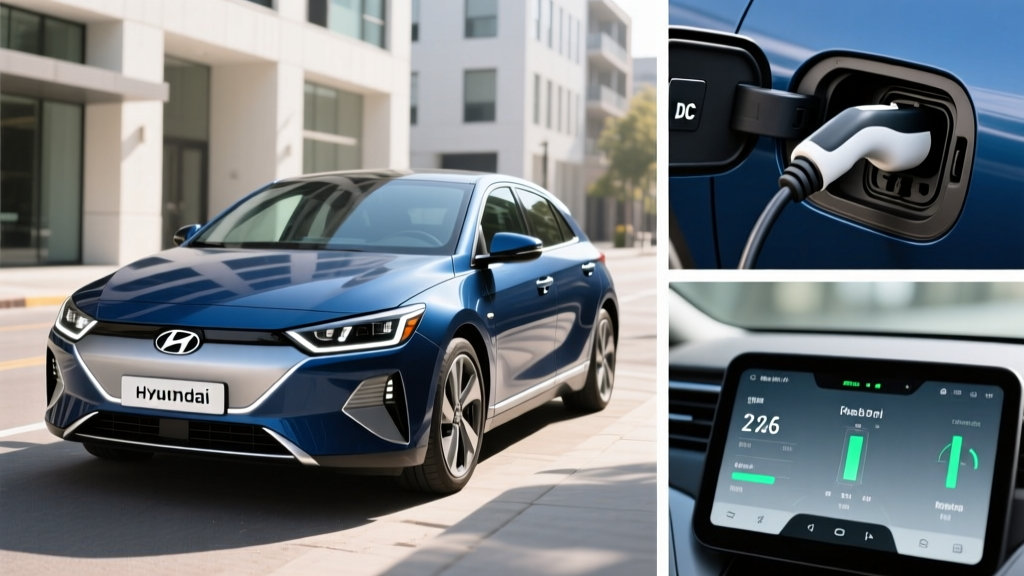
The DC fast-charging experience deserves nuance. The Long Range AWD peaks at roughly 250 kW at low states of charge (below 30%), but the charging curve tapers progressively: by 60% SoC you're seeing ~150 kW, and above 80% the rate drops below 50 kW as the battery management system protects cell health. The 10-80% time of approximately 25 minutes is competitive but not class-leading — the Hyundai Ioniq 6, with its 800V architecture, achieves 10-80% in roughly 18 minutes at a 350 kW charger.
For home charging, the Model 3's onboard charger accepts up to 11.5 kW (48 amps) on a 240V circuit. A full Level 2 home installation with a Tesla Wall Connector on a 60-amp dedicated circuit will replenish the Long Range battery in roughly 8-9 hours — easily covering daily driving needs with overnight charging. Expect installation costs of $500-$1,800 depending on panel proximity and whether a service upgrade is needed.
Performance and Drivetrain
The 2026 Model 3 lineup spans efficient commuting to genuine sports-sedan acceleration:
- Model 3 RWD: 271 hp, single rear motor, 0-60 mph in 5.8 seconds. Adequate for merging and passing; the instant torque delivery makes it feel quicker than the number suggests in city driving.
- Model 3 Long Range AWD: 346 hp, dual motor all-wheel drive, 0-60 mph in 4.2 seconds. The sweet spot of the lineup — rapid acceleration, all-weather capability, and maximum range.
- Model 3 Performance: 510 hp, dual motor AWD with track-tuned suspension, 0-60 mph in 2.9 seconds. Genuinely quick by any standard, with adaptive dampers and a dedicated track mode.
All trims feature regenerative braking with Tesla's one-pedal driving behavior, though unlike some competitors, Tesla does not offer adjustable regen levels or a true one-pedal stop-to-hold mode without brake application. The driving experience is engaging, with a low center of gravity and responsive steering, though the Performance trim's stiffer suspension can feel firm on rough pavement during daily commuting.
Pricing, Trims, and Federal Tax Credit Eligibility
The 2026 Model 3 starts at $38,990 for the RWD trim (including destination), positioning it as one of the more accessible premium electric sedans. Here's the full pricing breakdown:
| Trim | Base MSRP | §30D Credit (est.) | Effective Price (est.) |
|---|---|---|---|
| RWD | $38,990 | Up to $7,500* | ~$31,490* |
| Long Range AWD | $45,740 | Up to $7,500* | ~$38,240* |
| Performance | $52,990 | Up to $7,500* | ~$45,490* |
*Federal tax credit eligibility under IRS §30D is not guaranteed for every buyer or every vehicle configuration. Current rules require:
- MSRP cap: Sedans must have an MSRP at or below $55,000. The RWD and Long Range AWD qualify; the Performance trim at $52,990 also qualifies, but adding premium paint, wheels, or FSD can push the total above the cap.
- Buyer income cap: Modified adjusted gross income must not exceed $150,000 (single), $225,000 (head of household), or $300,000 (joint filing).
- Battery sourcing requirements: A percentage of critical minerals and battery components must be sourced from the US or free-trade-agreement countries. Tesla's supply chain has shifted significantly toward compliance, but specific eligibility can change based on production batch. Always verify on fueleconomy.gov before purchasing.
- Point-of-sale transfer: As of 2024, qualifying buyers can transfer the credit to the dealer at purchase, reducing the upfront cost rather than waiting for a tax refund. Tesla participates in this program.
Tech, Driver Assistance, and the Autopilot Question
The 2026 Model 3 comes standard with Tesla's Basic Autopilot, which includes adaptive cruise control and lane-centering on highways. This is an SAE Level 2 driver-assistance system — meaning the driver must remain fully engaged, hands on the wheel (or providing torque input), and eyes on the road at all times.
Tesla's Autopilot and optional Full Self-Driving (Supervised) are Level 2 systems. The vehicle can steer, accelerate, and brake under certain conditions, but the human driver is responsible for all driving decisions and must supervise continuously. This is not autonomous driving. Only Level 4 services like Waymo operate without a human driver in defined areas.
The optional FSD (Supervised) package, currently priced at $8,000 or $99/month, adds features like automatic lane changes, traffic-light and stop-sign recognition, and enhanced navigation-based routing. Despite the name, FSD does not make the car self-driving, and the "Supervised" designation Tesla added in 2024 underscores that driver attention is mandatory. Whether FSD is worth the cost depends heavily on your commute — it reduces fatigue on long highway stretches but does not eliminate the need for active driving.
The infotainment system remains one of the strongest in the industry for responsiveness and features, including Netflix/YouTube streaming while parked, a strong Bluetooth audio stack, and over-the-air updates that regularly add functionality. However, the lack of Apple CarPlay and Android Auto remains a dealbreaker for some buyers who prefer phone-mirrored navigation and media.
Warranty, Ownership Costs, and Longevity
Tesla's warranty coverage for the 2026 Model 3 breaks down as follows:
- Basic vehicle warranty: 4 years / 50,000 miles
- Battery & drive unit (RWD): 8 years / 100,000 miles
- Battery & drive unit (Long Range & Performance): 8 years / 120,000 miles
- Battery degradation threshold: Tesla warrants that the battery will retain at least 70% of its original capacity during the warranty period.
Real-world degradation data from fleet aggregators like Recurrent Auto suggests that Tesla's NMC packs typically lose 5-8% capacity over the first 100,000 miles, with LFP packs showing even slower degradation curves. Battery replacement outside of warranty remains expensive — estimated at $12,000-$16,000 for a Long Range pack — but the vast majority of Model 3 batteries will outlast the vehicle's practical lifespan.
Insurance costs for the Model 3 tend to run 15-25% higher than comparable gas sedans, reflecting Tesla's higher repair costs and parts pricing. Average annual premiums range from $1,800-$2,800 depending on state, driving record, and coverage level. Tesla Insurance is available in many states and can be competitive, though customer-service experiences vary.
- Class-leading Supercharger network access with seamless plug-and-charge
- Quiet, materially upgraded cabin over pre-Highland generations
- Excellent efficiency (25 kWh/100 mi on Long Range) keeps charging costs low
- Strong standard features: ventilated seats, heated rear seats, ambient lighting
- Over-the-air updates continuously improve the vehicle post-purchase
- 363-mile EPA range on Long Range eliminates range anxiety for most drivers
- No Apple CarPlay or Android Auto — a significant omission at this price
- Touchscreen-only controls for mirrors, wipers, and climate can frustrate new owners
- Rear headroom is tight for tall passengers due to sloping roofline
- FSD costs $8,000 extra and is still Level 2, not autonomous
- Insurance premiums run higher than segment average
- DC fast-charging curve tapers aggressively above 80% SoC
Who the 2026 Model 3 Is For — and Who Should Look Elsewhere
- You want a daily-commuter sedan with low running costs and access to the most reliable DC fast-charging network in the US
- You value over-the-air software updates and a minimal, tech-forward interior
- Your household can install a Level 2 home charger, making daily charging effortless
- You want all-wheel-drive capability with 363 miles of range (Long Range AWD)
- Apple CarPlay/Android Auto is non-negotiable for your navigation and media workflow
- You prefer physical buttons and traditional control layouts over touchscreen-only operation
- You need faster 800V DC charging architecture for frequent long-distance travel
- Back-seat headroom for tall passengers is a priority
2026 Tesla Model 3 FAQ
What is the real-world range of the 2026 Tesla Model 3?
The EPA rates the Long Range AWD at 363 miles, but real-world highway driving at 75-80 mph typically yields 290-320 miles. In cold weather below freezing, expect 250-280 miles on the Long Range. The RWD model's real-world highway range is closer to 220-240 miles in temperate conditions and 180-200 miles in winter.
How fast does the 2026 Model 3 charge at home and on the road?
On a home Level 2 charger (240V, 48A), the Model 3 charges at up to 11.5 kW, adding roughly 37-44 miles of range per hour — enough for a full overnight charge. On a Tesla V4 Supercharger, the Long Range peaks at 250 kW and charges from 10-80% in approximately 25 minutes, though the rate tapers significantly above 80%.
Does the 2026 Tesla Model 3 qualify for the $7,500 federal tax credit?
It can, but eligibility depends on multiple factors under IRS §30D: the buyer's income must fall below IRS caps ($150K single / $300K joint), the vehicle MSRP must not exceed $55,000 for sedans, and battery-sourcing requirements must be met. Verify current eligibility on fueleconomy.gov before purchasing, as sourcing rules can shift by production batch.
Is the 2026 Model 3 worth buying over the Hyundai Ioniq 6 or BMW i4?
The Model 3 Long Range wins on range (363 mi vs. Ioniq 6's ~361 mi), Supercharger network access, and software integration. The Ioniq 6 charges faster via its 800V architecture (10-80% in ~18 min at a 350 kW charger) and offers CarPlay. The BMW i4 provides a more traditional luxury interior and physical controls but at a higher starting price and lower range. For most buyers prioritizing range, charging infrastructure, and value, the Model 3 Long Range AWD remains the strongest all-around choice in this segment.
Does the 2026 Model 3 have Apple CarPlay?
No. Tesla does not support Apple CarPlay or Android Auto in any configuration. The built-in infotainment handles navigation, media, and phone integration natively. For many owners this is fine, but if CarPlay is essential to your workflow, this is a key limitation to consider.
What is the battery warranty on the 2026 Model 3?
The RWD trim carries an 8-year/100,000-mile battery and drive-unit warranty. The Long Range AWD and Performance trims are covered for 8 years/120,000 miles. Tesla warrants that the battery will retain at least 70% of its original capacity throughout the warranty period.