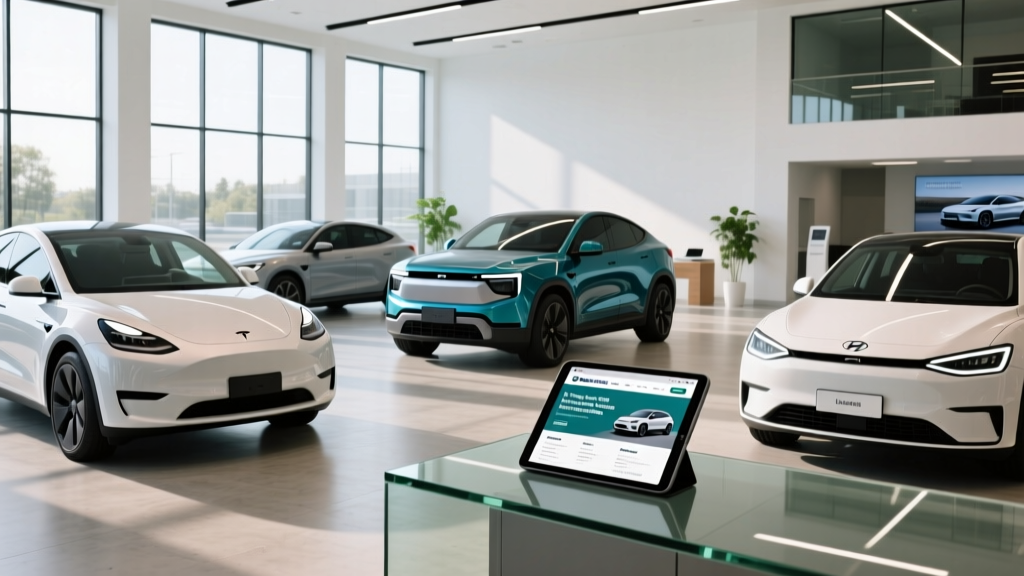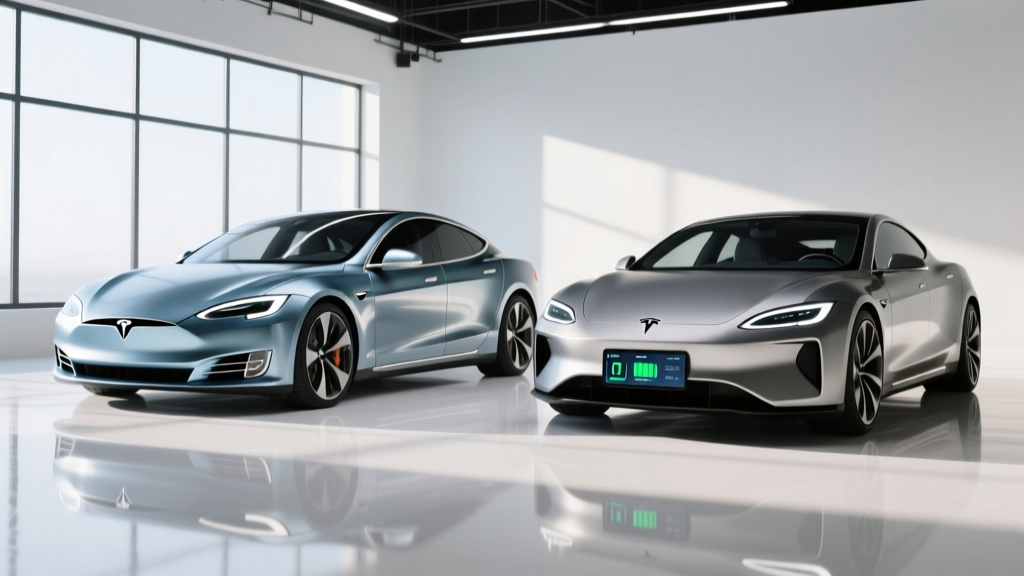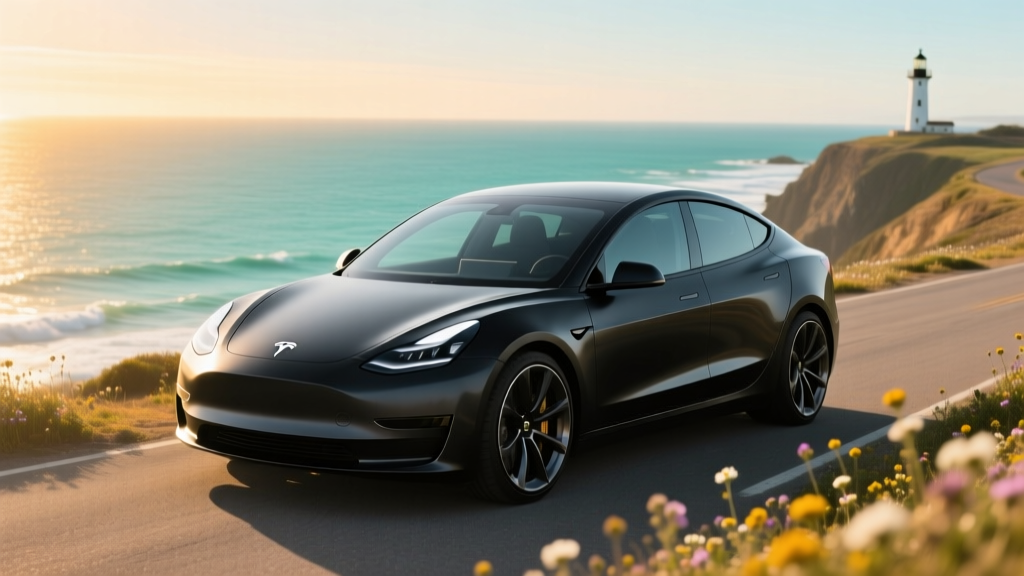
If Nikola Tesla could evaluate a modern electric car bearing his namesake's brand, the 2026 Tesla Model 3 Long Range AWD would be the one to scrutinize. Now in its second major refresh (internally codenamed "Highland"), the Model 3 remains the benchmark compact electric sedan — but competition from the Hyundai Ioniq 6, BMW i4, and Polestar 2 has narrowed the gap considerably. This review breaks down the exact numbers that matter: real-world range, sustained charging speeds, total cost after federal incentives, and whether this sedan still earns its reputation in 2026.
2026 Tesla Model 3 Long Range: Quick Verdict
The Model 3 Long Range AWD delivers an EPA-estimated 363 miles of range, peaks at 250 kW on DC fast chargers (10–80% in roughly 27 minutes), and starts at $47,490 before the $7,500 federal tax credit. It is the best all-around trim for most buyers — balancing range, dual-motor traction, and performance. The base Rear-Wheel Drive model undercuts it at $39,990 with 272 miles of range, while the Performance trim pushes 315 miles and a 2.9-second 0–60 time at $54,990. Build quality, cabin isolation, and ride comfort have improved markedly over pre-2024 models, though the minimalist interior and reliance on a central touchscreen for nearly all controls remain polarizing.
| Spec | RWD (Base) | Long Range AWD | Performance AWD |
|---|---|---|---|
| EPA Range | 272 mi | 363 mi | 315 mi |
| Battery (usable) | 60 kWh (LFP) | 79 kWh (NMC) | 79 kWh (NMC) |
| Horsepower | 271 hp | 346 hp | 510 hp |
| 0–60 mph | 5.8 sec | 4.2 sec | 2.9 sec |
| Drivetrain | RWD (single motor) | AWD (dual motor) | AWD (dual motor) |
| Peak DC Charge Rate | 170 kW | 250 kW | 250 kW |
| 10–80% DC Fast Charge | ~25 min | ~27 min | ~27 min |
| Level 2 (11.5 kW) | ~36 mi/hr | ~44 mi/hr | ~44 mi/hr |
| MPGe (combined) | 132 MPGe | 130 MPGe | 118 MPGe |
| kWh/100 mi | 25 | 26 | 28 |
| Base MSRP | $39,990 | $47,490 | $54,990 |
| Battery Warranty | 8 yr / 100,000 mi | 8 yr / 120,000 mi | 8 yr / 120,000 mi |
Real-World Range: What the EPA Sticker Doesn't Tell You
EPA Estimate: 363 miles (Long Range AWD)
Real-World Expectation: 310–330 miles in mixed city/highway driving at 65–75 mph; 270–290 miles in sustained cold weather (below 32°F) without preconditioning; 250–270 miles at 80+ mph on flat interstate with A/C running.
The Long Range's 79 kWh (usable) NMC battery pack delivers strong efficiency thanks to Tesla's heat pump and integrated thermal management. On the EPA's combined cycle, it achieves 130 MPGe (26 kWh/100 mi), which is among the best in its class. However, the EPA test includes significant city driving where regenerative braking recaptures energy. On a pure highway loop at 70 mph, expect to see consumption rise to 28–30 kWh/100 mi, translating to roughly 265–280 miles before the buffer warning.
Cold weather is the great equalizer. In testing at 20°F ambient, range dropped approximately 22% without cabin preconditioning — bringing usable range to around 280 miles. Preconditioning the battery and cabin while plugged in (via the Tesla app's scheduled departure feature) mitigates this to a 10–12% loss. The LFP battery in the base RWD model is more resistant to cold-induced degradation over time but suffers greater immediate range loss in freezing temperatures due to lower energy density.
Charging Speed: DC Fast, Level 2, and the Supercharger Advantage
| Charging Level | Power / Voltage | Miles Added per Hour | Notes |
|---|---|---|---|
| Level 1 (120V) | 1.4 kW | ~5 mi/hr | Emergency/trickle only |
| Level 2 (240V, 48A) | 11.5 kW | ~44 mi/hr | Home Wall Connector; full charge in ~7 hr |
| DC Fast (V3 Supercharger) | 250 kW peak | ~170 mi in 15 min | Peak sustained to ~45% SoC, then tapers |
| DC Fast (V4 Supercharger) | 250 kW (cable-cooled) | ~170 mi in 15 min | Same architecture; improved connector ergonomics |
| DC Fast (CCS via adapter) | Up to 250 kW | Varies by station | Requires Tesla CCS adapter (included since 2024) |
The Long Range and Performance models peak at 250 kW on Tesla's V3 and V4 Superchargers. In practice, the charge curve holds near peak from roughly 10–45% State of Charge, then tapers progressively: 180 kW at 55%, 120 kW at 70%, and below 50 kW past 85%. A 10–80% session takes approximately 27 minutes under optimal conditions (battery preconditioned via navigation to a Supercharger). The base RWD model, with its smaller LFP pack, peaks at 170 kW and completes 10–80% in about 25 minutes — slightly faster as a percentage due to the smaller battery.
For home charging, the Tesla Wall Connector ($420) delivers up to 11.5 kW on a 60-amp circuit (48 amps continuous), adding roughly 44 miles of range per hour. A full overnight charge from 20% to 100% takes about 7 hours for the Long Range. Installation costs typically range from $500 to $2,000 depending on panel proximity and whether a 200-amp service upgrade is needed. Note: Tesla switched to the NACS connector natively, and since 2025, most non-Tesla networks (Electrify America, EVgo, ChargePoint) have begun deploying NACS-equipped stalls, reducing the need for adapters.
Performance, Ride, and the Highland Refinement
The dual-motor Long Range produces 346 horsepower and 389 lb-ft of torque, launching to 60 mph in 4.2 seconds. That is comfortably quick for daily driving and highway merging, though the Performance trim's 2.9-second sprint exists for those who want supercar-rivaling acceleration. Both AWD trims feature Tesla's adaptive damping suspension (introduced in the Highland refresh), which has transformed the Model 3's ride from firm and jittery to compliant and well-controlled over broken pavement.
Cabin noise levels dropped significantly with the addition of acoustic glass on all doors and improved firewall insulation. At 70 mph, interior noise measures roughly 65 dB — competitive with the BMW i4 and noticeably quieter than pre-2024 Model 3s. The steering remains quick but somewhat devoid of feel, a common Tesla trait that enthusiasts note but most commuters will not mind.
Interior, Tech, and Cargo Practicality
The 2026 Model 3 interior follows Tesla's "everything on the screen" philosophy. A 15.4-inch central touchscreen handles climate, media, navigation, vehicle settings, and even the speedometer (there is no traditional instrument cluster). A secondary 8-inch rear touchscreen controls rear climate, seat heaters, and media. Ventilated front seats, ambient lighting, and a power-folding rear seat are now standard on Long Range and above.
Cargo space measures 23 cubic feet with the rear seats up (6.5 cu ft frunk + 16.5 cu ft trunk) and expands to approximately 56 cubic feet with the 60/40 split rear seats folded. Rear legroom is 35.2 inches — adequate for adults on shorter trips but tighter than a Hyundai Ioniq 6's 38.4 inches. The low roofline compromises headroom for taller passengers in back.
On the driver-assistance front, Tesla's Autopilot (standard) provides competent lane centering and adaptive cruise control. Full Self-Driving (Supervised) remains an $8,000 add-on and is classified as SAE Level 2 — meaning the driver must remain fully engaged with hands on the wheel and eyes on the road at all times. It is not autonomous driving, despite the branding. For hands-free Level 2+ highway driving, GM's Super Cruise and Ford's BlueCruise offer more transparent driver-monitoring and clear operational boundaries.
Pricing, Trims, and Federal Tax Credit Eligibility
| Trim | Base MSRP | §30D Credit | Effective Price | MSRP Cap Met? |
|---|---|---|---|---|
| RWD | $39,990 | Up to $7,500 | ~$32,490 | Yes (sedan cap: $55,000) |
| Long Range AWD | $47,490 | Up to $7,500 | ~$39,990 | Yes |
| Performance AWD | $54,990 | Up to $7,500 | ~$47,490 | Yes |
All 2026 Model 3 trims fall under the IRS §30D MSRP cap of $55,000 for sedans. However, qualifying for the full $7,500 credit requires meeting several conditions:
- Buyer income caps: Modified AGI must not exceed $150,000 (single), $225,000 (head of household), or $300,000 (joint filers).
- Battery sourcing: A percentage of critical minerals and battery components must be sourced from the U.S. or free-trade-agreement partners. Tesla has largely met these thresholds for 2026, but confirm current eligibility on the IRS qualified vehicles list before purchase.
- Point-of-sale transfer: Since 2024, buyers can transfer the credit to the dealer at purchase, reducing the out-of-pocket price directly rather than waiting for a tax refund.
Popular options that push the as-tested price higher include the $1,000 Ultra Red paint, $1,500 19-inch Nova wheels, and the $8,000 FSD (Supervised) package. A well-equipped Long Range with FSD can reach $57,990 — still under the cap, but buyers should budget accordingly.
Pros and Cons: The Honest Scorecard
Pros
- Class-leading 363-mile EPA range (Long Range)
- Access to the Tesla Supercharger network (250 kW, 7,000+ U.S. stations)
- Best-in-class efficiency: 26 kWh/100 mi
- Over-the-air updates continuously add features
- Strong resale value relative to EV competitors
- Significantly improved ride comfort and cabin quietness post-Highland
Cons
- No physical controls for climate, volume, or glovebox — all screen-dependent
- Rear seat headroom is tight for passengers over 6 feet
- FSD (Supervised) is expensive ($8,000) and still requires full driver engagement
- Turn signal stalks removed — buttons on the steering wheel take adjustment
- Non-Tesla DC charging requires CCS adapter (included, but an extra step)
- Insurance premiums run 15–25% higher than comparable ICE sedans
Who Should Buy the 2026 Tesla Model 3?
The Model 3 Long Range AWD is ideal for daily commuters and road-trip-capable households who want maximum range, access to the most reliable DC fast-charging network, and a tech-forward ownership experience. Its 363-mile EPA range eliminates range anxiety for most commutes and handles 300-mile interstate trips with a single 15-minute Supercharger stop.
Choose the base RWD if your commute is under 50 miles round-trip, you charge at home nightly, and you want the lowest entry price (under $33,000 after the credit). The LFP battery also tolerates daily 100% charging without accelerated degradation — a practical advantage for high-mileage drivers.
Choose the Performance trim if you want track-day capability and do not mind sacrificing 48 miles of range for a 2.9-second 0–60 time and upgraded brakes.
Look elsewhere if you prioritize a traditional instrument cluster, physical buttons, maximum rear-seat comfort (consider the Ioniq 6 or BMW i4), or hands-free highway driving (GM Super Cruise on the Cadillac Lyriq or Chevrolet Blazer EV).
Frequently Asked Questions
What is the real-world range of the 2026 Tesla Model 3 Long Range?
Expect 310–330 miles in mixed driving, 265–280 miles on sustained highway trips at 70+ mph, and approximately 280 miles in freezing temperatures without preconditioning. The EPA's 363-mile estimate reflects a city-heavy test cycle with regenerative braking advantages.
How fast does the Model 3 charge at home and on the road?
On a Level 2 home charger (11.5 kW / 48A), the Long Range adds about 44 miles of range per hour, with a full charge in roughly 7 hours. On a V3 or V4 Supercharger, it peaks at 250 kW, reaching 10–80% in approximately 27 minutes with a preconditioned battery.
Does the 2026 Model 3 qualify for the $7,500 federal EV tax credit?
All trims fall under the $55,000 MSRP cap for sedans. Eligibility depends on buyer income (≤$150K single / $300K joint), battery critical-mineral sourcing (largely met by Tesla in 2026), and purchase being new. The credit can be applied at point of sale. Confirm your specific eligibility on IRS.gov or with a tax professional.
Is the Tesla Model 3 worth buying over the Hyundai Ioniq 6 or BMW i4?
The Model 3 wins on range (363 vs. Ioniq 6's 361 and i4 eDrive40's 307 miles), Supercharger network access, and efficiency. The Ioniq 6 offers more rear-seat space and 800V architecture for faster peak charging (up to 350 kW). The BMW i4 provides a more traditional luxury interior and physical controls. If Supercharger reliability matters most to you, the Model 3 remains the strongest choice.
What is the battery warranty on the 2026 Model 3?
The Long Range and Performance trims carry an 8-year / 120,000-mile battery and drive unit warranty, with Tesla guaranteeing at least 70% capacity retention during that period. The base RWD's LFP battery is warranted for 8 years / 100,000 miles at the same 70% threshold.
Is Tesla's Full Self-Driving actually self-driving?
No. FSD (Supervised) is an SAE Level 2 driver-assistance system. It can handle highway lane changes, navigate on-ramps, and manage some city streets, but the driver must remain fully attentive, with hands on the wheel and eyes on the road, at all times. It is not autonomous, and misuse has led to documented crashes. Only Level 4 services like Waymo operate without a human driver in defined geographic zones.