Quick Verdict: The Benchmark Sedan Gets Smarter Eyes
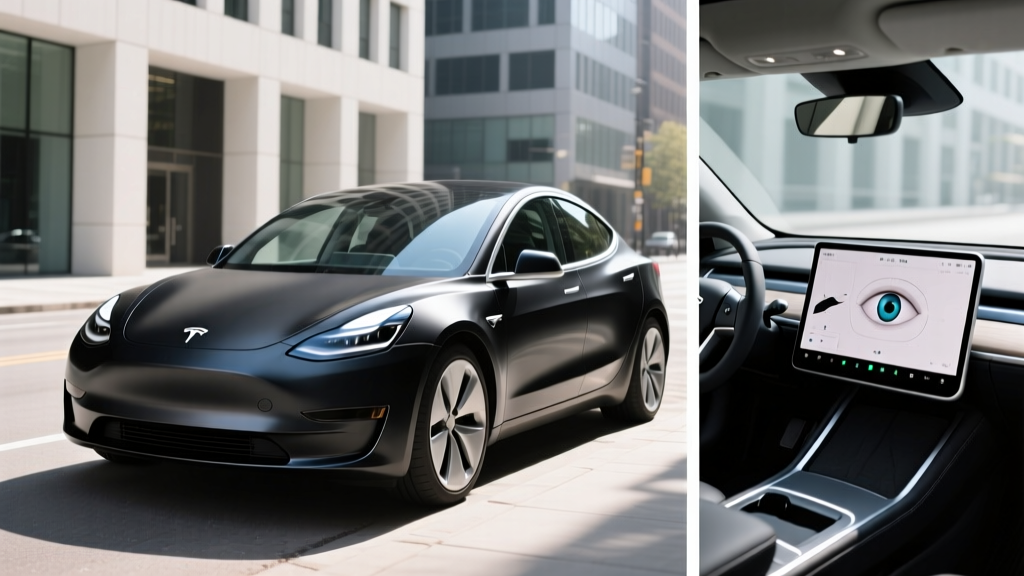
The 2026 Tesla Model 3 remains the default compact electric sedan against which every rival is measured. With the latest over-the-air software refresh, Tesla has overhauled its driver monitoring system — leaning harder on the inward-facing cabin camera to enforce attentiveness during Autopilot and FSD (Supervised) use, while reducing reliance on steering-wheel torque sensors. The result is a more consistent — and frankly, stricter — engagement protocol that brings Tesla closer in line with the SAE Level 2 supervision standards used by Ford's BlueCruise and GM's Super Cruise.
Beyond the software, the 2026 Model 3 carries forward the refreshed "Highland" architecture introduced for the 2024 model year: improved NVH, a rear touchscreen, ambient lighting, and ventilated front seats. The powertrain lineup stays focused — a Long Range AWD variant topping the EPA range charts at 363 miles, and a more accessible Rear-Wheel-Drive trim that undercuts most competitors on price while still delivering over 340 miles of range.
This review breaks down the real-world range, charging behavior, the specifics of the Tesla driver monitoring system update, and whether the Model 3 still earns its segment-leading reputation in 2026.
Range, Battery, and Real-World Efficiency
The 2026 Model 3 is offered with two primary battery and drivetrain configurations. The Long Range AWD uses an estimated 79 kWh usable NMC (nickel-manganese-cobalt) pack, while the Rear-Wheel-Drive variant uses a ~60 kWh usable LFP (lithium iron phosphate) battery. Tesla does not publish official usable kWh figures; these are derived from independent teardown and telemetry data.
| Trim | Battery (Usable kWh) | Chemistry | EPA Range | MPGe (City/Hwy/Combined) | kWh/100 mi |
|---|---|---|---|---|---|
| Long Range AWD | ~79 kWh | NMC | 363 mi | 136 / 123 / 130 | 26 |
| Rear-Wheel-Drive | ~60 kWh | LFP | 341 mi | 138 / 121 / 130 | 26 |
| Performance AWD | ~79 kWh | NMC | 315 mi | 117 / 107 / 113 | 30 |
The EPA 363-mile figure on the Long Range AWD is achievable in moderate city/suburban driving at 50–65 mph in fair weather. On sustained highway trips at 75 mph, expect ~280–310 miles before needing to stop. In freezing temperatures (below 30°F), range can drop 20–30%, yielding roughly 250–290 highway miles. The LFP RWD trim holds up well in daily use but loses a similar percentage in extreme cold. Always precondition the battery when navigating to a Supercharger — it makes a meaningful difference in charge speed.
Efficiency is where the Model 3 continues to shine. At 26 kWh per 100 miles (combined), it remains one of the most energy-efficient EVs on the market, rivaling the Hyundai Ioniq 6 and outperforming the BMW i4 and Polestar 2 in real-world consumption. This efficiency directly translates to lower charging costs and more miles per minute at a DC fast charger.
According to fueleconomy.gov, the 2026 Model 3 Long Range AWD achieves its 130 MPGe combined rating, placing it in the top tier of all electric vehicles currently rated by the EPA.
Charging Speed: DC Fast, Level 2, and the Charge Curve Reality
Tesla's Supercharger network remains the gold standard for public charging reliability, and the 2026 Model 3 takes full advantage of it.
| Charging Level | Max Power (kW) | Time / Rate | Connector |
|---|---|---|---|
| DC Fast Charge (Peak) | 250 kW | 10–80% in ~25 min (Long Range) | NACS (native) |
| DC Fast Charge (RWD) | 170 kW | 10–80% in ~28 min | NACS (native) |
| Level 2 Home (240V, 48A) | 11.5 kW | ~37 miles of range per hour | NACS / J1772 w/ adapter |
| Level 1 (120V) | ~1.4 kW | ~4–5 miles per hour | Standard outlet |
Understanding the charge curve: The 250 kW peak on the Long Range model is not sustained. Like all EVs, the Model 3 charges fastest between roughly 10% and 40% state of charge, then progressively tapers. By 60% SoC, the rate drops to approximately 120–140 kW, and above 80%, it falls below 50 kW as the battery management system protects cell longevity. This is why Tesla (and most automakers) quote 10–80% times — charging beyond 80% at a DC fast charger is rarely worth the wait on a road trip.
The RWD trim's LFP battery charges at a lower peak (170 kW) but has an important advantage: Tesla recommends charging LFP batteries to 100% regularly for optimal cell balancing and range estimation accuracy. NMC owners should generally set daily charge limits to 80% and reserve 100% for road trips.
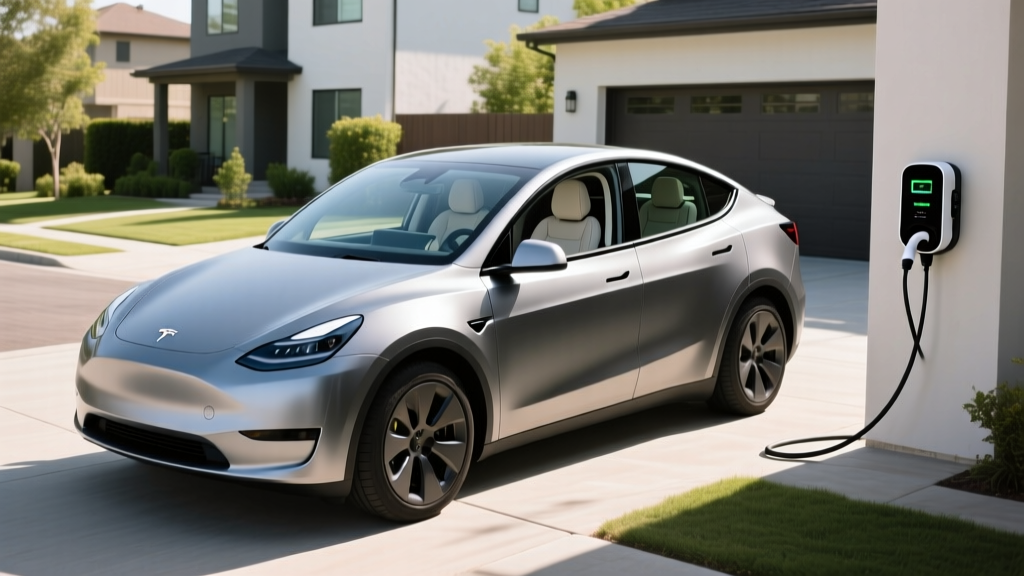
For home charging, a Tesla Wall Connector on a 60-amp circuit delivers up to 11.5 kW (48 amps continuous), adding roughly 37 miles of range per hour. An overnight charge from 20% to 80% takes about 4–5 hours — more than sufficient for daily driving needs. Installation costs for a Level 2 home charger typically range from $800 to $2,000 depending on panel proximity and local electrical codes. We recommend consulting a licensed electrician for a site-specific quote.
The 2026 Tesla Driver Monitoring System Update Explained
The headline software change for 2026 is the Tesla driver monitoring system update, which fundamentally alters how the car verifies driver engagement during Autopilot and Full Self-Driving (Supervised) operation.
Tesla Autopilot and FSD (Supervised) are SAE Level 2 driver-assistance systems. The driver must remain attentive, keep hands available, and be prepared to take over at any moment. These systems do not make the vehicle self-driving. Only Level 4 services like Waymo operate without a human driver in defined geofenced areas.
What Changed in the Update
Prior to this update, Tesla's primary engagement metric was steering-wheel torque — the driver needed to apply periodic rotational force to the wheel to confirm attentiveness. The cabin camera was a secondary check. With the 2026 software release, Tesla has inverted this hierarchy:
- Primary: The inward-facing cabin camera now uses expanded eye-gaze tracking and head-pose estimation to continuously assess whether the driver is looking at the road ahead.
- Secondary: Steering-wheel torque is still monitored but with longer grace periods, reducing the "nag" frequency that frustrated many owners on straight highway stretches.
- Escalation protocol: If the system detects prolonged inattention (eyes off road for >5 seconds during Autopilot, or >3 seconds during FSD), it issues a visual chime, then an audible alert, then begins slowing the vehicle and activating hazard lights if the driver does not re-engage.
- Penalty system: Repeated inattention warnings within a single drive can result in a temporary Autopilot/FSD suspension for the remainder of the trip — consistent with Tesla's existing "strike" system but now triggered more reliably by the camera.
How It Compares to Competitors
Ford's BlueCruise and GM's Super Cruise have used infrared driver-facing cameras since their inception, and both are generally regarded as having less intrusive monitoring experiences because their systems are geofenced to pre-mapped divided highways. Tesla's system operates on virtually any road, which means the monitoring algorithm has to handle more edge cases — city streets, construction zones, winding rural roads — making the calibration more complex.
In our experience, the 2026 update is a clear improvement. The torque-based nag was often triggered by light, steady-state highway driving where the driver was fully attentive but not applying rotational force. The camera-based approach is more contextually aware, though it can be overly sensitive when wearing polarized sunglasses or in low-light conditions. Tesla has acknowledged these edge cases and continues to refine via OTA patches.
The Tesla driver monitoring system update does not enable hands-free driving on arbitrary roads. FSD (Supervised) still requires hands on or near the wheel and full driver attention. The system can miss obstacles, misinterpret lane markings in construction zones, and make unexpected routing decisions. You are the driver — the car is assisting. According to NHTSA, all Level 2 systems require continuous human supervision.
Performance, Drivetrain, and Cargo
| Spec | Long Range AWD | Rear-Wheel-Drive | Performance AWD |
|---|---|---|---|
| Horsepower | 384 hp | 271 hp | 510 hp |
| 0–60 mph | 4.2 sec | 5.8 sec | 2.9 sec |
| Drivetrain | Dual-Motor AWD | Single-Motor RWD | Dual-Motor AWD |
| Top Speed | 125 mph | 125 mph | 163 mph |
| Cargo (trunk + frunk) | 23.1 cu ft | 23.1 cu ft | 23.1 cu ft |
| Rear Legroom | 35.3 in | 35.3 in | 35.3 in |
| Curb Weight | ~4,034 lbs | ~3,862 lbs | ~4,065 lbs |
The Model 3's 23.1 cubic feet of combined cargo space (trunk plus front trunk/frunk) is competitive with the BMW i4 and slightly behind the Hyundai Ioniq 6's 24.4 cu ft. Rear legroom at 35.3 inches is adequate for adults on shorter trips but tighter than a midsize sedan like the Model S or Hyundai Ioniq 5. The cabin is minimalist by design — the 15.4-inch center touchscreen handles nearly all vehicle controls, climate, and media, with a rear 8-inch screen for passengers added in the Highland refresh.
Ride quality has improved markedly since the pre-2024 models. The updated suspension tuning, acoustic glass, and additional sound deadening make the 2026 Model 3 noticeably quieter at highway speeds — a common complaint of earlier versions that Tesla has addressed effectively.
Pricing, Trims, and Federal Tax Credit Eligibility
| Trim | Base MSRP | Est. After §30D Credit | Eligible for $7,500? |
|---|---|---|---|
| Rear-Wheel-Drive | $38,990 | ~$31,490* | Yes — if buyer meets income/sourcing rules |
| Long Range AWD | $45,240 | ~$37,740* | Yes — if buyer meets income/sourcing rules |
| Performance AWD | $52,990 | ~$45,490* | Yes — if buyer meets income/sourcing rules |
*Estimated after potential $7,500 federal tax credit applied at point of sale. Actual eligibility depends on buyer income, battery sourcing, and MSRP caps. Consult a tax professional.
All 2026 Model 3 trims fall under the IRS §30D MSRP cap of $55,000 for sedans. However, the $7,500 credit is not automatic. Buyers must meet the following requirements:
- Income caps: Modified adjusted gross income (MAGI) must not exceed $150,000 (single), $225,000 (head of household), or $300,000 (joint filers).
- Battery sourcing: The vehicle must meet critical mineral and battery component requirements that phase in progressively. As of 2026, a significant percentage of battery components must be manufactured or assembled in North America, and critical minerals must be sourced from the U.S. or free-trade-agreement partners.
- Point-of-sale transfer: Eligible buyers can transfer the credit to the dealer at purchase, reducing the upfront cost rather than waiting for a tax refund.
- VIN verification: Tesla provides credit eligibility details at checkout on their website; verify the specific VIN's sourcing compliance before finalizing.
The RWD trim at $38,990 — potentially $31,490 after the credit — represents one of the most affordable ways into a 340+ mile EV in the U.S. market. The Long Range AWD at $45,240 is the sweet spot for buyers who need all-weather capability and maximum range.
Warranty, Ownership Costs, and Longevity
| Component | Coverage |
|---|---|
| Basic Vehicle | 4 years / 50,000 miles |
| Battery & Drive Unit (Long Range/Performance) | 8 years / 120,000 miles (70% minimum capacity retention) |
| Battery & Drive Unit (RWD — LFP) | 8 years / 100,000 miles (70% minimum capacity retention) |
Tesla's battery warranty guarantees that the pack will retain at least 70% of its original capacity during the warranty period. In practice, Tesla fleet data and independent analyses suggest NMC Model 3 packs degrade approximately 10–12% over the first 100,000 miles, while LFP packs show even slower degradation curves — often losing only 5–8% over the same distance. LFP's slower degradation and tolerance for 100% daily charging make it a compelling choice for high-mileage commuters, even though it sacrifices some energy density and cold-weather performance.
Insurance costs remain a consideration: the Model 3 typically carries premiums 15–25% higher than comparable gas sedans, though Tesla's own insurance product (available in most states) can be competitive for clean-record drivers. Maintenance costs are low — no oil changes, minimal brake wear thanks to regenerative braking, and cabin air filter replacements every 2–3 years.
Pros, Cons, and Who Should Buy
Pros
- Class-leading efficiency (26 kWh/100 mi)
- Supercharger network access (most reliable DC network)
- Up to 363 mi EPA range (Long Range)
- OTA updates continuously add features
- Improved cabin quietness and ride quality
- Strong resale value relative to EV segment
- LFP option offers excellent battery longevity
Cons
- Rear seat space is tight for tall adults
- No physical buttons — all controls via touchscreen
- FSD (Supervised) is expensive ($8,000 or $99/mo) and still Level 2
- Turn-signal buttons on steering wheel (no stalk) take adjustment
- Insurance costs above segment average
- Driver monitoring camera can be overly sensitive with sunglasses
Who This EV Suits Best
- Daily commuters who want minimal charging cost and access to the most reliable public charging network for occasional road trips.
- Tech-forward buyers who value OTA updates, a minimalist interior, and industry-leading infotainment.
- High-mileage drivers considering the LFP RWD variant for its exceptional battery longevity and low cost per mile.
- Not ideal for: Families needing spacious rear seats (consider the Model Y or Ioniq 5), or buyers who prefer physical controls and traditional luxury appointments (look at the BMW i4 or Genesis Electrified G80).
Frequently Asked Questions
What is the real-world range of the 2026 Tesla Model 3?
The EPA rates the Long Range AWD at 363 miles and the RWD at 341 miles. In real-world highway driving at 75 mph, expect approximately 280–310 miles (Long Range) and 260–290 miles (RWD). In cold weather below 30°F, subtract 20–30% from those figures. City driving with regenerative braking can match or slightly exceed EPA estimates.
How fast does the Model 3 charge at home and on the road?
On a DC fast charger (Supercharger), the Long Range peaks at 250 kW and charges from 10–80% in about 25 minutes. At home on a Level 2 Wall Connector (11.5 kW), it adds roughly 37 miles of range per hour, fully replenishing overnight. The RWD variant peaks at 170 kW DC and charges at the same Level 2 rate.
Does the 2026 Model 3 qualify for the $7,500 federal EV tax credit?
All trims fall under the $55,000 MSRP sedan cap. However, the full $7,500 credit depends on buyer income limits (up to $150K single / $300K joint), battery component and critical mineral sourcing requirements, and the buyer's tax liability. The credit can be transferred at point of sale. Verify eligibility on irs.gov and with a tax professional before purchasing.
What does the Tesla driver monitoring system update actually do?
The 2026 update shifts the primary driver engagement check from steering-wheel torque to the cabin camera, using eye-gaze and head-pose tracking to verify attentiveness. This reduces false "nags" during steady-state driving while improving detection of genuine inattention. It does not change the SAE Level 2 classification — the driver must remain fully engaged at all times.
Is the 2026 Model 3 worth buying over the Hyundai Ioniq 6 or BMW i4?
If Supercharger network access, OTA feature updates, and efficiency are your priorities, the Model 3 remains the benchmark. The Ioniq 6 offers comparable range (361 mi EPA), faster 800V charging (10–80% in ~18 min), and more rear space, but relies on the Electrify America/CCS ecosystem. The BMW i4 offers a more traditional luxury interior and physical controls but sacrifices range (up to 307 mi) and costs significantly more. Choose the Model 3 if charging infrastructure and software sophistication matter most; choose the Ioniq 6 if you want faster charging and more space; choose the i4 for luxury feel and brand cachet.