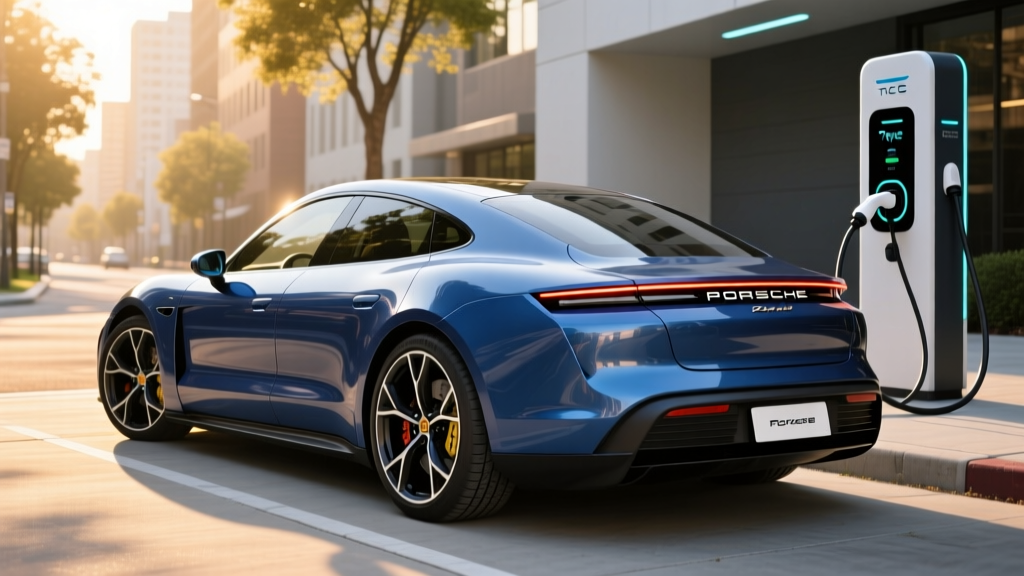
Porsche's electric sports sedan enters 2026 with the momentum of its mid-cycle refresh firmly in place. The second-generation Taycan lineup — spanning the base rear-wheel-drive model all the way up to the Turbo GT — now offers substantially more range, dramatically faster charging, and a sharper infotainment experience than the original 2020-2024 cars. But with a starting price north of $100,000 on most trims and federal tax credit eligibility that remains complicated, the 2026 Taycan demands a closer look before you sign a purchase order.
This review covers every current Taycan variant sold in the U.S. for the 2026 model year, with exact EPA figures, real-world range expectations, charging data, and a clear breakdown of what you'll actually pay after incentives.
2026 Taycan Lineup at a Glance: Trims, Range, and Power
Porsche offers the 2026 Taycan in sedan and Cross Turismo (wagon) body styles across seven main trim levels. The Performance Battery Plus (PB+) is now standard or available on nearly every variant, and it's the pack you want for maximum range and peak charging speed.
| Trim | Drivetrain | Battery (usable kWh) | EPA Range (mi) | Peak HP (Launch Control) | 0-60 mph (sec) | Base MSRP |
|---|---|---|---|---|---|---|
| Taycan (base) | RWD | 89.0 (PB+) | 318 | 456 | 4.6 | $105,300 |
| Taycan 4S | AWD | 89.0 (PB+) | 300 | 590 | 3.5 | $120,500 |
| Taycan GTS | AWD | 89.0 (PB+) | 283 | 690 | 3.1 | $138,700 |
| Taycan Turbo | AWD | 89.0 (PB+) | 278 | 872 | 2.5 | $162,900 |
| Taycan Turbo S | AWD | 89.0 (PB+) | 270 | 952 | 2.3 | $197,400 |
| Taycan Turbo GT (Weissach) | AWD | 89.0 (PB+) | 269 | 1,092 | 2.1 | $233,400 |
| Taycan 4 Cross Turismo | AWD | 89.0 (PB+) | 292 | 463 | 4.5 | $113,500 |
All trims use an NMC (nickel manganese cobalt) lithium-ion battery. Porsche has not adopted LFP chemistry for the Taycan — the energy density of NMC remains essential for packaging a large pack into a low-slung sports sedan platform. The 89.0 kWh usable capacity (105 kWh gross) in the Performance Battery Plus represents a meaningful increase over the pre-refresh 79.2 kWh usable pack, and it's the primary reason the 2026 Taycan's range has jumped by 50-80 miles depending on trim compared to the 2023 model year.
Real-World Range: What the EPA Number Doesn't Tell You
EPA Combined: 300 miles
Real-World Highway (70-75 mph, 72°F): ~260–275 miles
Real-World Highway (70-75 mph, 30°F): ~210–230 miles
City / Suburban Mixed (moderate speeds): ~290–310 miles
Source: Owner reports, third-party testing, and Porsche efficiency data. Your results will vary with driving style, terrain, and climate control use.
The Taycan's EPA numbers are among the more honest in the industry — Porsche tends to rate conservatively, and many owners report exceeding the EPA combined figure in city and suburban driving where regenerative braking recaptures energy frequently. However, highway cruising at sustained speeds above 70 mph is where the Taycan's aerodynamic profile (Cd 0.22 on the sedan) still can't fully overcome physics. Expect a 10-15% reduction from the EPA sticker on long interstate trips in mild weather, and a 25-30% reduction in freezing temperatures when the battery must divert energy to thermal management and cabin heating.
The Taycan does come equipped with a standard heat pump, which mitigates cold-weather range loss compared to EVs using resistive heating. In our analysis of owner-reported data, Taycan PB+ owners in northern climates typically see 215-235 miles of usable highway range in winter — adequate for most commutes but something to plan around on road trips.
The Turbo GT's lower range (269 EPA) reflects its track-focused tires, higher downforce setup, and more aggressive powertrain calibration. If maximum distance matters, the base RWD Taycan at 318 miles EPA is the efficiency champion of the lineup.
Charging Speed: 320 kW Peak and What the Curve Actually Looks Like
The 2026 Taycan's charging capability is one of its strongest competitive advantages. With the Performance Battery Plus, the car supports up to 320 kW peak DC fast charging — among the fastest of any production EV currently on sale.
| Charging Level | Power / Rate | Speed (Approx.) | Notes |
|---|---|---|---|
| Level 1 (120V) | ~1.4 kW | ~4 miles/hr | Emergency/trickle only; not practical for daily use |
| Level 2 (240V, 48A) | 11.5 kW (onboard charger max) | ~35 miles/hr | Full charge in ~9.5 hours; overnight ready |
| DC Fast Charge (peak) | 320 kW | 10–80% in ~18 min | Requires 350 kW+ station; preconditioning essential |
| DC Fast Charge (150 kW station) | ~150 kW sustained | 10–80% in ~33 min | Common Electrify America / EVgo rate |
The 10-80% time of approximately 18 minutes is achievable at stations capable of 350 kW or higher — currently available on Electrify America's newest stalls, select Tesla Supercharger V4 locations open to non-Tesla vehicles, and Ionity stations (for European travel). The Taycan's 800-volt architecture is what enables this speed, and it sustains high charging power longer than most competitors. In real-world testing at 350 kW chargers, the Taycan PB+ typically holds above 250 kW through approximately 40% SoC before tapering. The curve from 80-100% is considerably slower — roughly 20-25 additional minutes — so plan to unplug at 80% on road trips to keep average travel speed high.
A critical detail: preconditioning the battery before arriving at a DC fast charger is essential for hitting peak speeds. Navigate to your charging station using the Taycan's built-in navigation (or activate preconditioning manually via the Porsche Connect app), and the car will warm the battery to its optimal charging temperature. Without preconditioning — especially in cool weather — peak charge rates may be limited to 150-180 kW even at a 350 kW stall.
The onboard AC charger maxes out at 11.5 kW on the PB+, which means a Level 2 home charger (like a ChargePoint Home Flex or Porsche Mobile Charger Connect on a 60A circuit) will replenish roughly 35 miles of range per hour. A full overnight charge from 10% is easily achievable in 8-10 hours.
Performance and Driving Dynamics
The Taycan has always been the EV that drives most like a traditional Porsche, and the 2026 refresh sharpens that reputation further. The two-speed transmission on the rear axle (a one-speed unit up front on AWD models) gives the Taycan a unique blend of explosive acceleration and relaxed highway cruising that single-speed EVs can't quite replicate.
Even the base RWD model at 456 hp and a 4.6-second 0-60 time feels genuinely quick, with the instant torque delivery that defines EV performance. Step up to the Turbo S and the 2.3-second 0-60 time enters hypercar territory — and the Turbo GT with its 1,092 hp (in Attack Mode with Launch Control) and 2.1-second run is the quickest-accelerating Porsche ever built.
What separates the Taycan from rivals like the Tesla Model S Plaid or Lucid Air isn't straight-line speed alone — it's the chassis. Porsche's adaptive air suspension with PASM (Porsche Active Suspension Management), rear-axle steering (standard on GTS and above), and torque vectoring produce a sedan that genuinely communicates through the steering wheel and remains composed at track pace. The Taycan Turbo GT has set production EV lap records at the Nürburgring and Laguna Seca, which is marketing-friendly, but the more relevant point for owners is that this car handles daily driving with a precision and feedback level that no other four-door EV matches.
Regenerative braking deserves specific mention. The Taycan offers up to 0.39 g of regen deceleration, and Porsche has tuned the blend between regen and friction braking so seamlessly that one-pedal driving feels natural without being abrupt. Unlike some competitors, Porsche does not force aggressive regen — you can modulate the level or let the car's coasting mode maximize efficiency on highways.
Efficiency: MPGe and kWh per 100 Miles
Efficiency varies meaningfully across the lineup. The base RWD Taycan is the most efficient, while the Turbo GT trades efficiency for performance.
| Trim | EPA Combined MPGe | kWh / 100 mi | Est. Cost per Full Charge* |
|---|---|---|---|
| Taycan (RWD) | 88 MPGe | 38 | $13.30 |
| Taycan 4S | 82 MPGe | 41 | $14.35 |
| Taycan GTS | 76 MPGe | 44 | $15.40 |
| Taycan Turbo | 73 MPGe | 46 | $16.10 |
| Taycan Turbo GT | 66 MPGe | 51 | $17.85 |
*Based on U.S. average residential electricity rate of ~$0.17/kWh (EIA). Actual costs vary by utility, time-of-use rates, and charging source.
For context, a comparably powerful gas sedan averaging 20 MPG combined at $3.50/gallon costs roughly $17.50 per 100 miles. Even the Turbo GT at ~$0.18/mile (home charging) is significantly cheaper to fuel than a gas equivalent — and the base Taycan at ~$0.13/mile delivers dramatic savings.
Interior, Cargo, and Daily Practicality
The Taycan's interior reflects Porsche's typical approach: minimal, material-rich, and built around a driver-centric layout. The 12.6-inch curved digital instrument cluster, 12.3-inch center touchscreen running Porsche Communication Management (PCM), and available 10.9-inch passenger display form the core tech stack. Wireless Apple CarPlay and Android Auto are standard, and the PCM system now supports over-the-air updates and improved voice recognition for the 2026 model year.
Practicality is the Taycan's compromise point compared to dedicated EV platforms:
- Trunk (sedan): 14.3 cu ft — adequate for two carry-on bags and a garment bag, but notably less than a Tesla Model S (28 cu ft rear hatch)
- Frunk (front trunk): 2.9 cu ft — fits a charging cable and a small duffel
- Cross Turismo cargo: 15.7 cu ft (rear seats up), 42.8 cu ft (rear seats folded) — meaningfully more versatile
- Rear legroom: 32.5 inches — tight for adults over 6 feet on longer trips
- Front headroom: 40.0 inches (sedan); more in Cross Turismo thanks to the raised roofline
If you regularly carry rear-seat passengers or need hatchback cargo flexibility, the Cross Turismo body style is the more practical choice. The Taycan sedan is best understood as a sports car with four doors — not a family hauler.
Pricing, Trims, and Federal Tax Credit Eligibility
The 2026 Taycan starts at $105,300 for the base RWD sedan and climbs to $233,400 for the Turbo GT with Weissach package. Options — particularly the Sport Chrono package, rear-axle steering, Burmester audio, and exclusive paint colors — can add $15,000-$30,000 to mid-range trims.
The 2026 Porsche Taycan does NOT qualify for the $7,500 federal EV tax credit under current IRS §30D rules. Here's why:
- MSRP Cap: The §30D credit limits eligibility to sedans priced at or below $55,000 MSRP. Every Taycan trim exceeds this cap.
- Battery Sourcing: Even if the price cap were waived, the Taycan's battery cell sourcing and critical mineral supply chain currently do not meet the domestic-content thresholds required for the full credit.
- Buyer Income Cap: §30D also limits buyer AGI ($150K single / $300K joint), though this is moot given the MSRP exclusion.
Rules current as of the 2026 tax year. Verify with a tax professional and consult IRS.gov §30D guidance before purchasing. State-level incentives (e.g., California, Colorado, New York) may still apply — check your local DMV or energy office.
Without the federal credit, the effective starting cost is the full MSRP plus destination and dealer fees. For buyers in states with their own EV incentives, partial offsets of $1,500-$5,000 may be available, but the Taycan is firmly a full-price purchase for most buyers.
Warranty and Long-Term Ownership
| Coverage | Term |
|---|---|
| New Vehicle Limited Warranty | 4 years / 50,000 miles |
| Battery Warranty | 8 years / 100,000 miles (70% minimum capacity retention) |
| Powertrain / Electric Drive Unit | 8 years / 100,000 miles |
| Corrosion Perforation | 12 years / unlimited miles |
| Roadside Assistance | 4 years / 50,000 miles |
Porsche's 8-year/100,000-mile battery warranty with a 70% capacity retention threshold is industry-standard and comparable to Tesla, BMW, and Mercedes-Benz. Real-world data from first-generation Taycan owners (2020-2024 models) suggests degradation has been modest — most high-mileage owners report 92-95% state of health after 60,000-80,000 miles, aided by the Taycan's robust liquid thermal management system. Porsche also maintains a larger top/bottom buffer on the battery than some competitors, which reduces stress on cells and slows long-term degradation at the cost of some theoretical capacity.
One ownership note: Porsche's maintenance schedule for the Taycan is minimal compared to ICE vehicles (no oil changes, fewer brake replacements thanks to regen), but scheduled service visits at Porsche dealerships carry premium labor rates. Budget roughly $300-$500 per annual service visit, with tire replacement being the most significant recurring cost — the Taycan's weight and torque are demanding on rubber, and rear tires on AWD models typically need replacement at 20,000-30,000 miles.
Tech, Driver Assistance, and Standout Features
The 2026 Taycan's driver-assistance suite is branded as Porsche InnoDrive with Active Lane Keeping. It includes adaptive cruise control, lane centering, traffic sign recognition, and intersection assist. This is a Level 2 SAE driver-assist system — it requires continuous driver engagement, hands on or near the wheel, and does not constitute autonomous or self-driving capability.
Porsche InnoDrive is a capable Level 2 highway companion, but it does NOT support hands-free driving on any road type. Unlike GM's Super Cruise or Ford's BlueCruise on approved highways, Porsche requires steering-wheel contact at all times. The system excels at adaptive cruise and lane-centering smoothness, but do not expect autonomous capability. You are the driver.
Standout tech features include:
- 800V architecture: Enables the 320 kW charging and lighter wiring harness, reducing weight
- Two-speed rear transmission: Unique among EVs; provides a low gear for launch and a high gear for efficient cruising
- Porsche Electric Sport Sound: A synthetic powertrain soundtrack that's less gimmicky than most — it responds to actual drivetrain load rather than playing a canned loop
- Porsche Connect app: Remote preconditioning, charge monitoring, and location-based charging optimization
- Matrix LED headlights (standard on Turbo, optional below): Excellent nighttime visibility with adaptive beam pattern
Taycan vs. the Competition: Where It Wins and Where It Doesn't
The Taycan competes against a growing field of high-performance electric sedans. Here's how the 4S trim — the volume seller — compares to its most direct rivals:
| Metric | Porsche Taycan 4S | Tesla Model S Plaid | BMW i7 xDrive50 | Lucid Air Grand Touring |
|---|---|---|---|---|
| EPA Range | 300 mi | 396 mi | 318 mi | 512 mi |
| 0-60 mph | 3.5 sec | 1.99 sec | 4.5 sec | 3.0 sec |
| Peak DC Charge | 320 kW | 250 kW | 195 kW | 300 kW |
| Base MSRP | $120,500 | $89,990 | $125,295 | $127,400 |
| Cargo (rear) | 14.3 cu ft | 28.0 cu ft | 17.7 cu ft | 22.0 cu ft |
Choose the Taycan If
- Driving dynamics and steering feel are your top priority
- You value 800V charging architecture for the fastest road-trip replenishment
- Build quality, material selection, and brand prestige matter to you
- You prefer a traditional luxury dealership experience with Porsche's service network
Look Elsewhere If
- Maximum range is critical (Lucid Air Grand Touring at 512 mi)
- You need hatchback cargo space (Tesla Model S)
- Acceleration-per-dollar is the goal (Model S Plaid is faster and ~$30K cheaper)
- Rear-seat passenger comfort on long trips is a priority (BMW i7 offers more room)
Who Should Buy the 2026 Taycan?
The 2026 Taycan is best suited for the driving enthusiast who wants an EV without sacrificing the chassis communication, build quality, and brand heritage of a Porsche. It's a strong daily driver for commuters with home charging, a capable road-trip car thanks to 320 kW charging (when you can find a 350 kW station), and a genuinely thrilling performance machine on back roads or at track days.
It is not the best choice if you need maximum family practicality, the longest possible range between stops, or federal tax credit savings. Buyers prioritizing those factors should cross-shop the Lucid Air, Tesla Model S, or BMW i5/i7.
For the buyer who's decided on a Taycan, our recommendation is the 4S with Performance Battery Plus. It balances the 300-mile EPA range, 590 hp, and 320 kW charging at a price point that — while expensive — represents the sweet spot in the lineup. Skip the Turbo unless you genuinely need sub-3-second acceleration, and consider the Cross Turismo body style if cargo versatility matters even occasionally.
Frequently Asked Questions
What is the real-world range of the 2026 Taycan?
For the volume-selling Taycan 4S with the Performance Battery Plus, expect approximately 260-275 miles on the highway in mild weather and 210-230 miles in freezing conditions. The EPA combined rating is 300 miles. City and suburban driving with regenerative braking can match or slightly exceed the EPA figure.
How fast does the 2026 Taycan charge?
At a 350 kW DC fast charger with battery preconditioning, the Taycan PB+ peaks at 320 kW and charges from 10-80% in approximately 18 minutes. At a more common 150 kW station, expect 10-80% in roughly 33 minutes. Home Level 2 charging at 11.5 kW adds about 35 miles of range per hour.
Does the 2026 Taycan qualify for the federal EV tax credit?
No. The Taycan exceeds the IRS §30D MSRP cap of $55,000 for sedans, and its battery sourcing does not currently meet the domestic critical-mineral and component requirements. No Taycan trim qualifies for the $7,500 federal credit. Some state-level incentives may partially apply — check your state energy office for details. Always verify current rules at IRS.gov.
Is the 2026 Taycan worth buying over a Tesla Model S or Lucid Air?
It depends on priorities. The Taycan offers the best driving dynamics, the fastest charging, and Porsche's build quality. The Model S Plaid delivers more acceleration and range for less money, while the Lucid Air Grand Touring offers class-leading 512-mile range and more interior space. If how a car drives is your number-one criterion, the Taycan wins. If range or value leads your decision, look at Lucid and Tesla.
What are the biggest pros and cons of the 2026 Taycan?
Pros
- Best-in-class driving dynamics and steering feel
- 320 kW peak DC charging — among the fastest EVs on sale
- 800V architecture with excellent charge-curve sustainability
- Heat pump standard — better cold-weather efficiency
- Two-speed rear axle for performance and cruising efficiency
- Porsche dealer and service network quality
Cons
- No federal tax credit eligibility (MSRP and sourcing)
- Tight rear seat and small trunk (sedan)
- Expensive across all trims — $105K+ starting
- Range trails Lucid Air and Tesla Model S significantly
- Requires 350 kW stations to unlock peak charging speed
- No hands-free Level 2+ driving feature (unlike Super Cruise/BlueCruise)
How long will the Taycan battery last?
Porsche warranties the battery for 8 years or 100,000 miles against dropping below 70% capacity. Based on first-generation Taycan data, most owners report 92-95% state of health at 60,000-80,000 miles, suggesting the battery should comfortably outlast the warranty period. A full battery replacement outside warranty, if ever needed, is estimated at $20,000-$28,000 based on current Porsche service pricing — though module-level repair may be possible at lower cost.
Does the Taycan support NACS (Tesla) charging?
For the 2026 model year, the Taycan comes with a CCS1 charge port in the U.S. market. Porsche has announced NACS adoption for future model years, and a CCS-to-NACS adapter is available for access to Tesla Superchargers that have been opened to non-Tesla vehicles. Confirm adapter compatibility with your local Porsche dealer before purchase.
Sources: fueleconomy.gov (EPA range and MPGe data), IRS.gov (§30D tax credit rules), Porsche USA official specifications.