What Is the 2026 Subaru Uncharted EV?
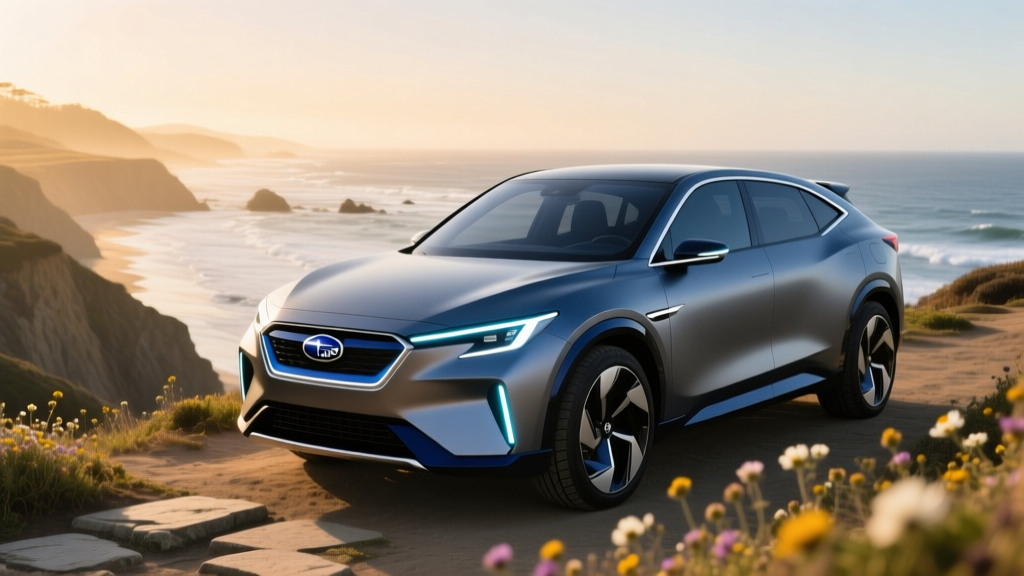
The 2026 Subaru Uncharted is a compact all-electric crossover expected to arrive in late 2025 as a 2026 model-year vehicle. Based on Subaru's confirmed production roadmap, the Uncharted EV slots below the Solterra in size and price, targeting buyers who want an affordable, AWD-capable electric daily driver with an EPA-estimated range near 250–270 miles, DC fast charging up to roughly 150 kW, and a starting MSRP estimated between $35,000–$38,000 before incentives. As of this writing, the vehicle is announced but not yet available for purchase; specs below are based on Subaru's preliminary disclosures and industry analysis. Final EPA certification figures and official pricing will be confirmed closer to launch.
Preliminary Specs: What We Know So Far
Subaru has not released a full spec sheet, but based on the company's e-Subaru Global Platform evolution and supplier disclosures, here is the best-available data for the 2026 Uncharted EV:
| Attribute | Estimated / Preliminary |
|---|---|
| Drivetrain | Dual-motor symmetrical AWD (standard) |
| Battery Chemistry | NMC (nickel manganese cobalt) lithium-ion |
| Battery Capacity (usable) | ~65–72 kWh |
| EPA Range (est.) | 250–270 miles |
| Peak DC Fast Charge Rate | ~150 kW |
| 10–80% DC Fast Charge Time | ~28–32 minutes |
| Level 2 (240V) Charge Rate | ~7.2–11 kW (onboard charger) |
| 0–60 mph | ~6.5–7.5 seconds |
| Horsepower (combined) | ~280–320 hp |
| Starting MSRP (est.) | $35,000–$38,000 |
| Battery Warranty | 8 years / 100,000 miles (expected, per federal minimum) |
Important note on kW vs. kWh: Kilowatts (kW) measure power — how fast the car can charge or how much force the motors produce. Kilowatt-hours (kWh) measure energy capacity — how much electricity the battery holds. A 72 kWh battery charged at 150 kW doesn't fill in under 30 minutes because charging speed tapers significantly above 80% state of charge to protect battery health. This is why we cite 10–80% times rather than "full charge" figures.
Real-World Range: What to Actually Expect
EPA Sticker: ~250–270 miles (estimated, pending certification)
Real-World Highway (70–80 mph): ~210–230 miles
Cold Weather (below 30°F): ~175–200 miles
Combined Daily Driving Buffer: Plan for ~200 miles of usable range in mixed conditions
The original Subaru Solterra launched with disappointing fast-charge speeds and range that fell short in real-world highway testing. Subaru has acknowledged these shortcomings, and the Uncharted EV is expected to use an updated battery thermal management system with a heat pump — critical for preserving range in cold climates where Subaru owners are concentrated (Pacific Northwest, Northeast, Mountain West).
Expect roughly 15–20% range loss at sustained highway speeds above 70 mph compared to the EPA combined figure. In sub-freezing temperatures, EV batteries experience increased internal resistance and cabin heating demands, which can reduce range by 25–35% if the vehicle lacks a heat pump. Subaru's inclusion of one should limit cold-weather losses to the lower end of that spectrum, but owners in Minnesota or Vermont should plan charging stops around a 175-mile practical range in deep winter.
Charging: Home and Public Network Reality
Subaru's North American EVs are expected to adopt the NACS (North American Charging Standard) connector by 2026, aligning with the broader industry shift. This is a major practical advantage: NACS compatibility means access to Tesla's Supercharger network — the most reliable and extensive DC fast-charging infrastructure in the U.S. — without an adapter.
| Charging Level | Power (kW) | Miles Added Per Hour | Best Use Case |
|---|---|---|---|
| Level 1 (120V household outlet) | ~1.2–1.4 kW | ~3–5 miles | Overnight top-up, emergencies |
| Level 2 (240V home/public) | ~7.2–11 kW | ~22–35 miles | Daily home charging, workplace |
| DC Fast Charge (public) | Up to ~150 kW peak | ~150–180 miles in 15 min | Road trips, quick top-ups |
Home charging cost: If you install a Level 2 home charger (hardwired 48A/240V circuit), expect to pay $500–$800 for the charger unit and $800–$2,500 for professional electrical installation, depending on whether your panel needs an upgrade. Charging at home at the U.S. average electricity rate of ~$0.16/kWh, fully replenishing a 70 kWh battery costs roughly $11.20 — equating to about $0.04–$0.05 per mile.
Public DC fast charging cost: Networks like Electrify America and EVgo typically charge $0.30–$0.48/kWh, making a 10–80% session cost approximately $12–$22. This is more expensive than home charging but still generally cheaper than gasoline on a per-mile basis.
EV vs. Gas vs. Hybrid: Cost Comparison for the Uncharted Buyer
The Uncharted EV's most likely cross-shopping competitors include the Subaru Crosstrek (gas), the Toyota RAV4 Prime (PHEV), and the Hyundai Kona Electric. Here's how the numbers compare over a typical ownership horizon:
| Metric | 2026 Uncharted EV (est.) | 2025 Crosstrek (gas) | 2025 RAV4 Prime (PHEV) |
|---|---|---|---|
| Starting MSRP | $35,000–$38,000 | $26,000–$28,000 | $44,000–$46,000 |
| Federal Tax Credit (§30D) | Up to $7,500* | None | Up to $7,500* |
| Effective Price After Credit | ~$27,500–$30,500 | $26,000–$28,000 | ~$36,500–$38,500 |
| Fuel/Energy Cost Per Mile | $0.04–$0.05 (home) | $0.14–$0.16 (gas) | $0.06–$0.10 (mixed) |
| Annual Fuel Cost (12,000 mi) | $480–$600 | $1,680–$1,920 | $720–$1,200 |
| 5-Year Fuel/Energy Cost | $2,400–$3,000 | $8,400–$9,600 | $3,600–$6,000 |
| Estimated Maintenance (5 yr) | $1,500–$2,000 | $3,000–$4,000 | $2,500–$3,500 |
*Federal §30D tax credit eligibility depends on buyer income limits (AGI ≤ $150K single / $300K joint), vehicle MSRP caps ($80K for SUVs), battery critical-mineral and component sourcing requirements, and can be applied at point of sale. Rules are subject to change — consult IRS.gov or a tax professional for your specific situation.
The bottom line: If you qualify for the full $7,500 credit and charge primarily at home, the Uncharted EV's effective purchase price drops into Crosstrek territory while cutting your fuel costs by roughly $1,200–$1,400 per year. Over five years, total savings versus the gas Crosstrek could reach $7,000–$9,000 in fuel and maintenance alone — enough to offset any price premium even before the credit.
Federal Tax Credit: Will the Uncharted EV Qualify?
This is the single most important financial question for buyers. Under current IRS §30D rules, a new clean vehicle must meet all of the following to qualify for up to $7,500:
- MSRP Cap: Vehicle MSRP must be ≤ $80,000 for SUVs/crossovers (the Uncharted EV will easily clear this)
- Buyer Income Cap: Modified AGI ≤ $150,000 (single) or $300,000 (married filing jointly)
- Battery Sourcing: A percentage of critical minerals and battery components must be sourced from the U.S. or free-trade-agreement countries — percentages increase annually
- Final Assembly: Vehicle must undergo final assembly in North America
- Point-of-Sale Transfer: Buyers can transfer the credit to the dealer at purchase, reducing the purchase price directly rather than waiting for a tax refund
The Uncharted EV's North American assembly location (likely Subaru's plant in Lafayette, Indiana) and supply chain will determine sourcing-rule compliance. Subaru has been actively localizing battery supply chains. We will update this article once official IRS eligibility is confirmed closer to launch. You can verify any vehicle's eligibility at fueleconomy.gov.
Common Misconceptions About the Uncharted EV
| Myth | Fact |
|---|---|
| "Subaru EVs can't fast-charge." | The original Solterra launched with ~100 kW peak charging. The Uncharted EV is expected to use an updated platform targeting ~150 kW peak — not class-leading, but adequate for most road trips with 10–80% in ~30 minutes. |
| "AWD EVs sacrifice too much range." | Dual-motor AWD adds roughly 5–10% energy consumption versus single-motor RWD/FWD. For Subaru's target buyer in snowy climates, the traction advantage far outweighs a 15–25 mile range reduction. |
| "The battery will need replacing in 5 years." | Modern NMC lithium-ion EV batteries typically retain 85–90% of original capacity after 100,000 miles. The federal minimum warranty mandates 8 years/100,000 miles with no more than 30–40% degradation. Full battery replacements are rare and typically cost $8,000–$15,000 if needed out of warranty. |
| "I can't charge at home in an apartment." | If you lack home charging access, public Level 2 chargers at workplaces, grocery stores, and municipal lots can cover daily needs. However, relying solely on DC fast charging costs 3–5× more per mile than home charging and may accelerate long-term battery degradation if done exclusively. |
| "EV insurance is always more expensive." | EV insurance premiums are typically 10–20% higher than equivalent gas cars due to higher repair costs and parts pricing. However, some insurers now offer EV-specific discounts. Always get quotes before purchasing. |
Decision Framework: Is the 2026 Uncharted EV Right for You?
Choose the 2026 Subaru Uncharted EV if:
- You have access to Level 2 home or workplace charging
- Your daily commute is under 80 miles round-trip
- You live in a region with cold winters and need AWD
- You qualify for the federal tax credit (income and sourcing rules)
- You take road trips 2–4 times per year and can plan DC fast-charging stops
- You want lower operating costs than a gas crossover
Consider the Subaru Crosstrek (gas) or a PHEV instead if:
- You live in an apartment with no charging access and no workplace charging
- You regularly drive 300+ miles between stops in rural areas with sparse charging infrastructure
- Your household income exceeds the §30D credit limits and the price premium is prohibitive
- You tow frequently (EV towing range drops 40–50%)
- You need a vehicle immediately — the Uncharted EV is not yet on sale
Frequently Asked Questions
When will the 2026 Subaru Uncharted EV be available to buy?
Subaru has indicated a late-2025 on-sale date for the 2026 model year. Reservation and pre-order timelines will be announced by Subaru closer to production. We will update this page when official dates are confirmed.
Will the Uncharted EV use the Tesla NACS connector or CCS?
Based on Subaru's commitment to adopt NACS for North American EVs by the 2025–2026 timeframe, the Uncharted EV is expected to ship with a native NACS charge port. This provides direct access to Tesla Superchargers and the growing NACS public-charging ecosystem without requiring an adapter.
How does the Uncharted EV compare to the Solterra?
The Uncharted is smaller, lighter, and less expensive than the Solterra. Think of it as the electric equivalent of the Crosstrek versus the Outback. Expect less interior volume and cargo space but better efficiency, quicker charging relative to battery size, and a lower starting price. The Solterra targets mid-size SUV buyers; the Uncharted targets compact crossover shoppers.
What will a home Level 2 charger installation cost?
For a typical installation with an existing 200-amp electrical panel and a run of 30–50 feet from panel to garage: $1,300–$3,300 total (charger unit plus licensed electrician labor and permit). If your home has a 100-amp panel, a service upgrade to 200 amps can add $1,500–$3,000. Always get a quote from a licensed electrician before purchasing a charger. Check energy.gov for available local utility rebates that can offset installation costs.
Is the Uncharted EV eligible for the $7,500 federal tax credit?
Preliminary indications suggest it could qualify, given expected North American assembly and Subaru's supply-chain localization efforts. However, final eligibility depends on battery sourcing percentages that are confirmed by the IRS at the time of sale. The credit can be transferred to the dealer at point of sale, reducing your purchase price directly. Verify eligibility at the time of purchase via the IRS or your dealer.
What is the expected insurance cost?
Based on current EV insurance trends for compact crossovers, expect annual premiums in the range of $1,600–$2,200 depending on your state, driving record, and coverage level. This is roughly 10–20% higher than an equivalent gas-powered Crosstrek. Get quotes from at least three insurers — some, like State Farm and Progressive, now offer EV-specific rate structures.