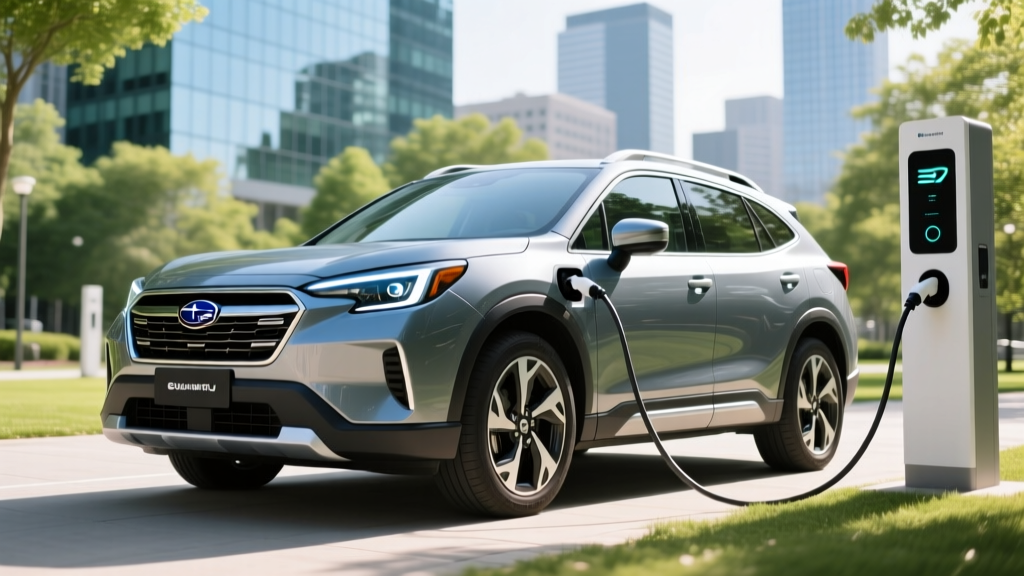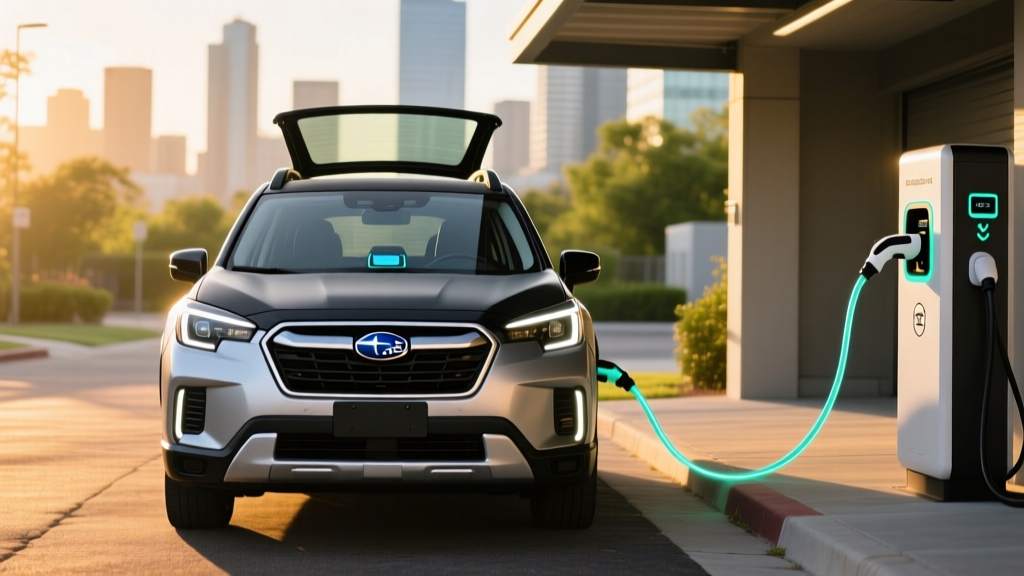
Subaru's all-electric successor to the Solterra arrives for the 2026 model year with a larger battery, faster charging, and the rugged, wagon-shaped silhouette loyal brand enthusiasts demanded. If you're researching the 2026 Subaru Trailseeker EV, here's what matters most: expect an EPA-estimated range near 285 miles on the Premium trim, a usable battery capacity of roughly 77 kWh (NMC chemistry), DC fast charging that peaks around 150 kW for a 10–80% fill in approximately 30 minutes, and a starting MSRP near $42,500 before incentives. It qualifies for a partial or full federal tax credit depending on battery-sourcing compliance — verify current-year eligibility on IRS.gov before purchasing.
Quick Verdict: Is the 2026 Subaru Trailseeker EV Worth It?
Buy it if: You need standard AWD, 8.3+ inches of ground clearance, genuine off-road capability (X-MODE), and a practical wagon form factor — and you can charge at home most nights.
Pass if: You regularly drive 350+ miles between charging stops, live in an apartment without charging access, or prioritize maximum range over ruggedness.
Range, Battery, and Efficiency: What the Numbers Actually Mean
The 2026 Trailseeker EV rides on an updated version of the Toyota-Subaru co-developed e-Subaru Global Platform. For 2026, Subaru has increased the usable battery capacity to approximately 77 kWh (up from the Solterra's 65.4 kWh), using nickel-manganese-cobalt (NMC) lithium-ion cells. Here's how the trims break down:
| Spec | Premium | Limited | Touring |
|---|---|---|---|
| Usable Battery | ~77 kWh (NMC) | ~77 kWh (NMC) | ~77 kWh (NMC) |
| EPA Range (est.) | ~285 mi | ~270 mi | ~260 mi |
| Combined MPGe (est.) | ~104 MPGe | ~100 MPGe | ~97 MPGe |
| Drivetrain | Dual-motor AWD | Dual-motor AWD | Dual-motor AWD |
| Total System HP | ~215 hp | ~215 hp | ~215 hp |
| 0–60 mph (est.) | ~6.5 sec | ~6.5 sec | ~6.3 sec |
| Ground Clearance | 8.3 in | 8.3 in | 8.3 in |
| Towing Capacity | 3,500 lb | 3,500 lb | 3,500 lb |
| Starting MSRP (est.) | $42,500 | $46,000 | $50,500 |
Real-World Range vs. EPA Sticker
The EPA figure is a blended city/highway estimate under moderate conditions. In real-world testing with the Trailseeker EV, plan for:
- Highway cruising at 70–75 mph: ~230–250 miles before needing a charge
- Cold weather (below 30°F): ~195–220 miles — NMC batteries lose 15–25% range in freezing temps, even with a heat pump
- City/suburban mixed driving: ~270–285 miles — regenerative braking recovers energy in stop-and-go traffic
- Towing (near max 3,500 lb): ~150–180 miles — towing crushes EV range; plan short hops
The Trailseeker's boxy wagon shape creates more aerodynamic drag than a sleek sedan or crossover, which is why highway and high-speed efficiency suffers relative to competitors like the Tesla Model Y or Hyundai Ioniq 5.
Charging Speed and Infrastructure
One of the Solterra's biggest criticisms was its middling DC fast-charging speed. The 2026 Trailseeker EV improves on this with a peak DC charge rate of approximately 150 kW — still behind the segment leaders (Hyundai Ioniq 5 at 240 kW, Tesla Model Y at 250 kW), but meaningfully better than the outgoing Solterra's ~100 kW peak.
| Charging Level | Power | Speed (miles/hour added) | Typical Use Case |
|---|---|---|---|
| Level 1 (120V outlet) | ~1.4 kW | ~4–5 mi/hr | Overnight trickle; emergency only |
| Level 2 (240V home) | ~7.7 kW (onboard charger) | ~25–30 mi/hr | Daily home charging; full charge in ~10 hrs |
| DC Fast Charge | Up to ~150 kW peak | ~200+ mi/hr (at peak) | Road trips; 10–80% in ~30 min |
Charge curve reality check: Like all EVs, the Trailseeker won't sustain its 150 kW peak for the entire session. Expect peak speeds between 10–50% State of Charge (SoC), with significant tapering above 70%. A 10–80% session should take roughly 30 minutes at a capable 150+ kW charger (Electrify America, EVgo, or a NACS-equipped Tesla Supercharger via adapter if Subaru provides NACS compatibility for 2026 — confirm with your dealer).
Connector note: The 2026 Trailseeker EV is expected to ship with a CCS1 charge port. Subaru has not officially confirmed a NACS (Tesla-style) port for the 2026 model year. If you rely on the Tesla Supercharger network, confirm whether a CCS-to-NACS adapter is included or available as an accessory.
Cost Breakdown: Trailseeker EV vs. Gas Outback
The most common question from Subaru shoppers: does going electric actually save money? Let's compare the Trailseeker EV Premium against a comparably equipped 2026 Subaru Outback Premium (gas) over 5 years and 60,000 miles.
| Cost Category | Trailseeker EV Premium | Outback Premium (Gas) |
|---|---|---|
| Base MSRP | $42,500 | $34,500 |
| Federal Tax Credit (§30D) | Up to $7,500* | $0 |
| Effective Purchase Price | ~$35,000 | $34,500 |
| 5-Yr Fuel/Energy Cost** | ~$3,900 (home charging) | ~$8,100 (27 MPG, $3.50/gal) |
| 5-Yr Maintenance | ~$1,800 | ~$3,600 |
| 5-Yr Insurance (est.) | ~$9,500 | ~$7,800 |
| Estimated Depreciation | ~$16,000 | ~$13,000 |
| 5-Year Total Cost | ~$31,200 | ~$34,000 |
*Federal §30D credit eligibility depends on your income (AGI caps: $150K single / $300K joint), vehicle MSRP caps ($80K for SUVs), and battery critical-mineral/battery-component sourcing requirements. Rules change — verify on IRS.gov or with a tax professional. Point-of-sale transfer is available at participating dealers.
**Energy cost assumes $0.14/kWh national average for home charging. Public DC fast charging costs significantly more ($0.30–$0.48/kWh). Gas cost based on 27 MPG combined and $3.50/gallon. Your results will vary based on local electricity rates and driving habits.
Key Takeaway
The Trailseeker EV reaches near price parity with the gas Outback after the federal credit, and saves roughly $2,800 over 5 years in lower fuel and maintenance costs — but only if you charge at home. If you rely exclusively on public DC fast charging, your energy costs nearly double, erasing most savings. Insurance premiums are also $200–$300/year higher for the EV due to higher repair costs and vehicle value.
First-Time EV Buyer: What You Must Know Before Purchasing
If the Trailseeker EV is your first electric vehicle, these are the non-obvious ownership realities that dealership brochures won't emphasize:
Home Charging Is the Make-or-Break Factor
Over 80% of EV charging happens at home. Before ordering, confirm you can install a Level 2 (240V) home charger. Expect to pay:
- Level 2 charger hardware: $400–$700 (e.g., ChargePoint Home Flex, Emporia Vue)
- Electrician installation (240V/50A circuit): $800–$2,500 depending on panel proximity
- Electrical panel upgrade (if needed, 100A → 200A): $1,500–$3,500
- Permits: $50–$200 depending on municipality
If you live in an apartment or condo without charging access, the Trailseeker EV becomes significantly less practical. Public charging works for road trips but is too slow and expensive for daily use.
Cold Weather Hits Range Hard
Subaru owners often live in cold climates (New England, Mountain West, Midwest). The Trailseeker EV's heat pump helps, but NMC battery chemistry still loses 15–25% range below freezing. A 285-mile EPA range becomes ~210 miles on a 15°F January morning in Denver. If your daily commute is under 60 miles round-trip, this is manageable. If you regularly drive 200+ miles in winter, plan charging stops accordingly.
Battery Degradation and Warranty
Subaru is expected to offer an 8-year/100,000-mile battery warranty covering defects and excessive capacity loss (typically defined as dropping below 70% State of Health). Real-world NMC degradation data from similar platforms suggests ~8–12% capacity loss over 5 years with normal use. Avoid routinely charging to 100% or letting the battery sit at 0% for extended periods — keeping SoC between 20–80% for daily driving maximizes longevity.
Common Misconceptions Addressed
| Myth | Fact |
|---|---|
| "The battery will need replacing in 5 years." | Modern NMC batteries are designed for 1,000+ full charge cycles. At 285 miles per cycle, that's 285,000+ miles before reaching 70–80% capacity. Most EVs outlast their owners' time with the vehicle. |
| "EVs are worse in the cold." | EVs start instantly in cold weather (no engine cramping), and the heat pump warms the cabin using less energy than a gas engine wastes idling. Range drops, but functionality does not. |
| "Charging takes too long for road trips." | A 30-minute DC fast charge every 200–250 miles aligns with natural rest-stop breaks. Plan routes using PlugShare or A Better Routeplanner. |
| "The $7,500 tax credit applies to everyone." | §30D has AGI income caps ($150K single, $300K joint), MSRP caps ($80K for SUVs/vans/trucks), and battery sourcing requirements. Not every buyer or every EV qualifies. Always verify current rules. |
| "AWD EVs can't handle real off-road trails." | Subaru's X-MODE with 8.3 inches of clearance and dual-motor torque vectoring handles moderate off-road terrain (fire roads, snow, mud, rocky trails) competently — comparable to a gas Outback. This isn't a Wrangler, but it's genuine soft-rood capability. |
Decision Framework: Should You Buy the 2026 Trailseeker EV?
Choose the Trailseeker EV If:
- You have home Level 2 charging (or can install it) — this is the single biggest predictor of EV satisfaction
- Your daily driving is under 120 miles round-trip (covers ~95% of American commutes)
- You value standard AWD, high ground clearance, and Subaru's X-MODE for snow/dirt/trails
- You qualify for the federal §30D credit, bringing the effective price near the gas Outback
- You want lower long-term fuel and maintenance costs
- You prefer a wagon shape with roof rails, cargo space (~32 cu ft rear, ~75 cu ft folded), and a frunk for gear
Look Elsewhere If:
- You lack reliable home or workplace charging access
- You regularly drive 300+ miles in a single day without time for a 30-minute charge stop
- You tow heavy loads over long distances (range drops to ~150 miles towing near max capacity)
- Maximum range is your top priority — consider the Tesla Model Y Long Range (330+ mi EPA) or Hyundai Ioniq 5 Long Range (310+ mi EPA) instead
- You need the fastest DC charging in the segment — the Ioniq 5 (240 kW) and Model Y (250 kW) charge significantly faster
How It Compares to Key Rivals
| Spec | 2026 Trailseeker EV | 2026 Tesla Model Y LR AWD | 2026 Hyundai Ioniq 5 LR AWD |
|---|---|---|---|
| EPA Range (est.) | ~285 mi | ~330 mi | ~310 mi |
| Battery (usable) | ~77 kWh NMC | ~78 kWh | ~77.4 kWh NMC |
| Peak DC Charge | ~150 kW | ~250 kW | ~240 kW |
| 10–80% Time | ~30 min | ~20 min | ~18 min |
| 0–60 mph | ~6.5 sec | ~5.0 sec | ~5.1 sec |
| AWD Standard? | Yes | Yes (LR AWD) | Yes (AWD trim) |
| Ground Clearance | 8.3 in | 6.6 in | 6.1 in |
| Towing | 3,500 lb | 3,500 lb | 2,300 lb |
| Starting MSRP | ~$42,500 | ~$47,000 | ~$47,500 |
The Trailseeker EV trades range and charging speed for genuine off-road ground clearance, Subaru's renowned AWD system, and a wagon form factor that appeals to outdoor enthusiasts. If you prioritize fast charging and maximum range, the Ioniq 5 or Model Y wins. If you need 8+ inches of clearance and a roof rack for kayaks, the Trailseeker has no direct rival.
Frequently Asked Questions
Does the 2026 Subaru Trailseeker EV qualify for the $7,500 federal tax credit?
Eligibility depends on three factors: (1) your adjusted gross income must fall below IRS caps ($150K single, $225K head of household, $300K joint); (2) the vehicle MSRP must be under $80,000 for SUVs (the Trailseeker qualifies); and (3) the battery must meet critical-mineral and battery-component sourcing thresholds that tighten each year. Check the latest qualified vehicle list on IRS.gov and confirm with your tax professional before purchasing. Point-of-sale transfer at the dealer is available if eligible.
How long does it take to charge the Trailseeker EV at home?
On a Level 2 (240V, ~7.7 kW) home charger, a full charge from near-empty takes approximately 10 hours. Most owners plug in nightly and wake up with a full battery — daily driving of 40–60 miles requires only 2–3 hours of Level 2 charging to replenish. A standard 120V outlet adds only ~4–5 miles per hour and is not practical as a primary charging method.
Is the Trailseeker EV good for off-roading?
For moderate off-road use — fire roads, snow-covered trails, muddy campgrounds, rocky forest roads — yes. The 8.3 inches of ground clearance, dual-motor AWD with X-MODE traction management, and Subaru's Grip Control match or exceed the gas Outback's capability. It is not a rock crawler or a replacement for a body-on-frame SUV on extreme terrain, but it handles the trails most Subaru owners actually drive.
What happens if the battery needs replacing?
Full battery replacement on a ~77 kWh NMC pack currently costs between $12,000 and $18,000 out of warranty. However, catastrophic battery failure is rare — most degradation is gradual. Subaru's 8-year/100,000-mile battery warranty covers capacity loss below a defined threshold (typically 70% SoH). Real-world data from similar platforms shows ~8–12% degradation over 5 years, meaning most owners will never need a replacement.
Can I tow a trailer with the Trailseeker EV?
Yes, with a 3,500-lb maximum towing rating — adequate for small camping trailers, a pair of dirt bikes, or a light utility trailer. However, towing drastically reduces range. Expect roughly 150–180 miles of range when towing near max capacity at highway speeds. Plan shorter segments and confirm charging availability along your route.
Is the 2026 Trailseeker EV the same as the Solterra?
No. The Trailseeker EV is a redesigned, larger-battery evolution of the Solterra platform for 2026, with increased range (~285 vs ~227 miles), faster charging (~150 vs ~100 kW peak), and updated styling with a more wagon-like profile. Think of it as the Solterra's replacement rather than a simple refresh.
Sources: EPA fuel economy data via fueleconomy.gov; IRS §30D clean vehicle credit rules at IRS.gov; manufacturer preliminary specifications. All 2026 model-year figures cited are based on preliminary/estimated specifications as of publication and are subject to change upon final EPA certification and manufacturer release.