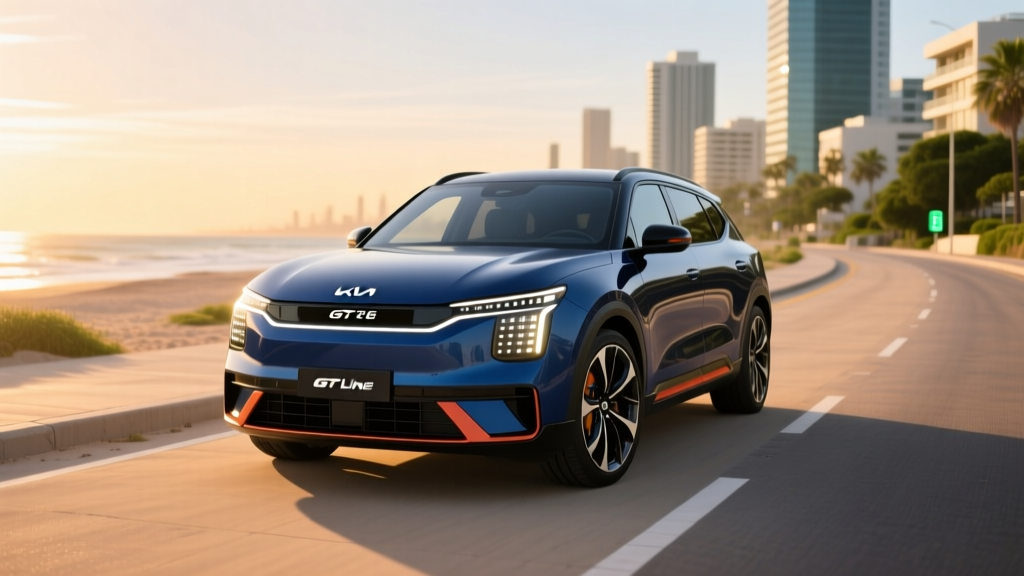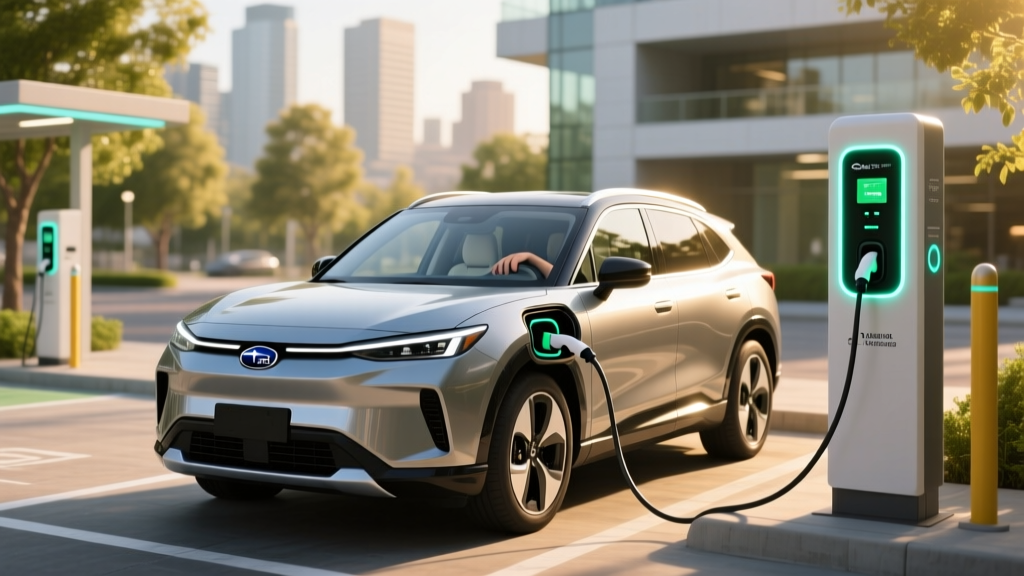
The Subaru Solterra enters its fourth model year in 2026 as the only all-electric vehicle wearing the Pleiades badge, and it remains a compelling option for buyers who need standard all-wheel drive, genuine ground clearance, and the rugged ethos Subaru has built over decades. Co-developed with Toyota on the e-TNGA platform (it's the mechanical twin of the Toyota bZ4X), the 2026 Solterra refines the formula with incremental software and packaging updates while keeping the core hardware that defines it: a 72.8 kWh battery, dual-motor AWD, and 8.3 inches of ground clearance.
But the Solterra lives in an increasingly crowded compact electric crossover segment. The Hyundai Ioniq 5, Kia EV6, Ford Mustang Mach-E, and Volkswagen ID.4 all compete on range, charging speed, or price. This review gives you every number you need — EPA range, real-world expectations, charging curves, tax credit eligibility, and ownership costs — to decide whether the Solterra earns a spot in your driveway.
Quick Verdict: Who the 2026 Solterra Is For
The 2026 Subaru Solterra is best suited for outdoor-oriented buyers and cold-climate commuters who prioritize standard AWD, 8.3 inches of ground clearance, and Subaru's EyeSight safety suite over maximum range or fastest charging. If your routine includes ski trips, forest service roads, or icy morning commutes, the Solterra fills a niche no competitor matches exactly. If you want 300+ miles of range or 10-80% charging under 20 minutes, look to the Ioniq 5 or EV6 instead.
2026 Subaru Solterra Specifications
| Specification | Value |
|---|---|
| EPA Range (Limited trim, 18" wheels) | 222 miles |
| EPA Range (Touring trim, 20" wheels) | 207 miles |
| Battery (usable capacity) | 72.8 kWh, lithium-ion (NMC chemistry) |
| Drivetrain | Dual-motor AWD (X-MODE) |
| Horsepower | 215 hp combined |
| Torque | 248 lb-ft |
| 0–60 mph | 6.5 seconds |
| Max DC Fast-Charge Rate | 150 kW (peak) |
| 10–80% DC Fast Charge | ~35 minutes |
| Level 2 Home Charging (240V, 32A) | ~7.7 kW / ~23 miles per hour |
| Efficiency (MPGe combined) | 104 MPGe (Limited) / 97 MPGe (Touring) |
| kWh per 100 miles | 32 kWh/100 mi (Limited) |
| Ground Clearance | 8.3 inches |
| Cargo Volume (behind rear seats) | 23.8 cu ft |
| Cargo Volume (rear seats folded) | 56.9 cu ft |
| Rear Legroom | 35.7 inches |
| Towing Capacity | Not rated |
| Battery/Powertrain Warranty | 8 years / 100,000 miles |
| Base MSRP (Premium trim) | $38,495 |
Range and Efficiency: EPA vs. the Real World
The 2026 Solterra's EPA-rated range depends on trim and wheel size. The Premium and Limited trims, equipped with 18-inch wheels, achieve an EPA-estimated 222 miles. The range-topping Touring trim, on heavier and wider 20-inch wheels, drops to 207 miles per the EPA's fueleconomy.gov data.
EPA Sticker: 222 miles (Limited) / 207 miles (Touring)
Highway driving (70–75 mph, moderate temps): Expect ~180–200 miles
Cold weather (below 32°F, highway): Expect ~145–170 miles (20–30% reduction)
City/regenerative driving (mild temps): Up to ~230+ miles possible
The Solterra lacks a heat pump (it uses resistive cabin heating), which amplifies cold-weather range loss compared to competitors like the Ioniq 5 or ID.4 that use heat pump systems. Plan conservatively in winter.
At 32 kWh per 100 miles on the Limited trim, the Solterra's efficiency is middling for the segment. The Hyundai Ioniq 5 RWD achieves 29 kWh/100 mi, and the VW ID.4 Pro S sits at 30 kWh/100 mi. The Solterra's dual-motor AWD, higher ride height, and boxy styling all contribute to higher energy consumption — a trade-off for the capability it delivers off-pavement.
Charging: DC Fast Charging and Home Setup
The Solterra charges at a peak DC fast-charging rate of 150 kW on compatible CCS connectors. In practice, the charging curve is gradual: Subaru's battery management system prioritizes battery longevity over peak speed, meaning the Solterra holds lower charge rates for longer portions of the session compared to Hyundai/Kia's E-GMP platform vehicles.
| Charging Level | Power | Speed (approx.) | Notes |
|---|---|---|---|
| Level 1 (120V household) | ~1.4 kW | ~4 miles per hour | Emergency/trickle only |
| Level 2 (240V, 32A home charger) | ~7.7 kW | ~23 miles per hour | Full charge overnight (~9 hours) |
| DC Fast Charge (CCS) | 150 kW peak | 10–80% in ~35 min | Curve tapers significantly above 80% |
Home charging reality: A full Level 2 home setup (240V, 32-amp dedicated circuit) will replenish the Solterra from empty to full in roughly 9 hours — fine for overnight charging. Most owners will plug in nightly and rarely see a full depletion. If your daily commute is under 60 miles, a Level 2 home charger easily keeps the battery topped up.
DC fast charging caveat: The ~35-minute 10–80% time is slower than segment leaders. The Ioniq 5 (with its 800V architecture) achieves 10–80% in roughly 18 minutes at a 350 kW charger. On road trips, this difference compounds — expect longer rest stops in the Solterra. The charge curve tapers sharply past 80%, so charging to 100% on DC is not time-efficient; reserve that for home Level 2 sessions.
Performance and Driving Dynamics
Every 2026 Solterra comes with dual electric motors producing a combined 215 horsepower and 248 lb-ft of torque, delivering power to all four wheels through Subaru's X-MODE AWD system. The 0–60 mph sprint takes 6.5 seconds — respectable but not thrilling by EV standards (the Mustang Mach-E Premium AWD hits 60 in ~5.0 seconds).
Where the Solterra distinguishes itself is off-pavement and in adverse conditions. X-MODE provides selectable terrain modes (Snow/Dirt and Deep Snow/Mud) and hill descent control. With 8.3 inches of ground clearance, it clears obstacles that would strand lower-riding crossovers. This is the EV for the ski resort parking lot, the gravel fire road to the trailhead, and the unplowed cul-de-sac.
Ride quality is firm but controlled, and the low center of gravity (battery pack under the floor) keeps body roll in check. Steering is light and not particularly communicative — this is a comfort-oriented setup, not a sporty one. Regenerative braking offers adjustable levels via paddle shifters, but one-pedal driving is not as aggressive as in some competitors; you'll still use the brake pedal regularly.
Interior, Cargo, and Technology
The Solterra's cabin is functional and durable-feeling, with materials that match its price point. The 12.3-inch touchscreen (on Limited and Touring) runs Subaru's latest infotainment software with wireless Apple CarPlay and Android Auto. The digital instrument cluster is positioned high on the dash, similar to a head-up display approach, though some drivers find the placement unusual compared to a traditional gauge cluster.
Cargo space: 23.8 cubic feet behind the rear seats and 56.9 cubic feet with the 60/40 split rear seats folded. That's competitive with the Toyota bZ4X but less than the VW ID.4 (30.3 cu ft / 64.2 cu ft) and the Ioniq 5 (27.2 cu ft / 59.3 cu ft). There is no front trunk (frunk); the space under the hood houses drivetrain components.
Rear seat comfort: Legroom measures 35.7 inches, adequate for adults on shorter trips. The rear seatback angle is fairly upright, which some passengers find less comfortable on longer journeys. Three-across seating is tight for adults but works for children in car seats.
Driver assistance: Subaru's EyeSight suite is standard across all trims and includes adaptive cruise control, lane-keeping assist, pre-collision braking, and lane departure warning. This is a SAE Level 2 driver-assistance system — the driver must remain fully engaged and hands on the wheel at all times. It is not a self-driving system. EyeSight is well-regarded for safety and reliability, and the Solterra has earned strong marks from IIHS testing.
Pricing, Trims, and Federal Tax Credit
The 2026 Subaru Solterra is offered in three trims, all with dual-motor AWD:
| Trim | MSRP | Key Features |
|---|---|---|
| Premium | $38,495 | 18" wheels, 8" touchscreen, heated seats, X-MODE, EyeSight |
| Limited | $41,995 | 12.3" touchscreen, power liftgate, 360° camera, heated steering wheel |
| Touring | $45,495 | 20" wheels, panoramic roof, ventilated seats, premium audio, parking assist |
All prices include destination. An as-tested Touring trim with optional packages can approach $48,000.
Federal Tax Credit Eligibility (§30D)
The Solterra's federal tax credit status depends on several factors under current IRS §30D rules. The SUV MSRP cap for the new clean vehicle credit is $80,000 — the Solterra clears this easily. However, buyer income caps apply ($150,000 single / $300,000 joint modified AGI), and the vehicle must meet critical minerals and battery component sourcing requirements that have tightened significantly since 2023.
- MSRP cap: Must be under $80,000 (SUV classification) — Solterra qualifies ✓
- Buyer income cap: MAGI ≤ $150K single / $225K head of household / $300K joint — verify your tax situation
- Critical minerals requirement: Percentage threshold increases annually; confirm current-year sourcing compliance with your dealer
- Battery components requirement: Must not contain components from a "foreign entity of concern" — verify with dealer
- Point-of-sale transfer: Eligible buyers can transfer the credit to the dealer for an immediate price reduction at purchase
Critical note: Tax credit eligibility changes frequently based on battery sourcing rules. The Solterra's battery is manufactured in Japan (Primearth EV Energy, a Toyota-Panasonic joint venture). Confirm current-year credit eligibility with your dealer and consult a tax professional before relying on the credit in your purchase decision. Credit amounts range from $0 to $7,500 depending on how many sourcing thresholds the vehicle meets in the current tax year.
Pros and Cons
- Standard dual-motor AWD on every trim — no RWD base model
- 8.3 inches of ground clearance; genuine off-road capability via X-MODE
- Excellent safety suite (EyeSight) standard across all trims
- Strong build quality and durable interior materials
- Competitive base price for an AWD electric SUV
- 8-year/100,000-mile battery and powertrain warranty
- EPA range of 207–222 miles trails most segment competitors
- DC fast charging is slow (~35 min 10–80%) vs. rivals under 20 min
- No heat pump — cold-weather range loss is significant
- No front trunk (frunk) for additional storage
- Rear seatback angle is upright; long-trip comfort is average
- Efficiency (32 kWh/100 mi) is below segment average
How the Solterra Stacks Up Against Competitors
| Spec | 2026 Subaru Solterra (Limited) | 2026 Hyundai Ioniq 5 (SEL AWD) | 2026 VW ID.4 (Pro S AWD) | 2026 Ford Mustang Mach-E (Premium AWD) |
|---|---|---|---|---|
| EPA Range | 222 mi | 290 mi | 275 mi | 290 mi |
| Battery | 72.8 kWh (NMC) | 77.4 kWh (NMC) | 82 kWh (NMC) | 91 kWh (NMC) |
| 0–60 mph | 6.5 sec | 5.2 sec | 6.7 sec | 5.0 sec |
| DC Fast Charge 10–80% | ~35 min (150 kW) | ~18 min (350 kW capable) | ~30 min (175 kW) | ~32 min (150 kW) |
| Ground Clearance | 8.3 in | 6.1 in | 6.0 in | 5.7 in |
| AWD | Standard | Optional | Optional | Optional |
| Cargo (rear up/down) | 23.8 / 56.9 cu ft | 27.2 / 59.3 cu ft | 30.3 / 64.2 cu ft | 29.7 / 59.7 cu ft |
| Base MSRP (AWD) | $38,495 | ~$48,000 | ~$46,000 | ~$45,000 |
The Solterra's advantage is clear in the ground clearance and standard-AWD columns. Its disadvantages in range and charging speed are equally clear. If your priority is road-trip efficiency and fast charging, the Ioniq 5 AWD is the stronger choice. If you need cargo volume, the ID.4 wins. If you drive on unpaved roads, face steep snowy driveways, or regularly venture to trailheads where clearance matters, the Solterra has no direct rival.
Ownership Costs and Long-Term Value
Subaru provides an 8-year/100,000-mile warranty on the battery pack and electric powertrain components, with a capacity retention guarantee of 70% over that period. The limited vehicle warranty covers 3 years/36,000 miles. These terms are competitive with the segment.
Insurance costs for the Solterra tend to run slightly higher than the segment average, reflecting Subaru's safety-focused demographic and repair costs for EV-specific components. Expect annual premiums in the $1,600–$2,200 range depending on your profile and location.
Home electricity costs to "fuel" the Solterra average roughly $0.04–$0.06 per mile (at $0.14/kWh national average), compared to $0.12–$0.16 per mile for a 25 MPG gas crossover at $3.50/gallon. Over 15,000 annual miles, that's a fuel savings of roughly $1,200–$1,500 per year.
Frequently Asked Questions
What is the real-world range of the 2026 Subaru Solterra?
The EPA rates the Solterra Limited at 222 miles and the Touring at 207 miles. In real-world highway driving at 70–75 mph in moderate temperatures, expect 180–200 miles. In cold weather below freezing, range drops to approximately 145–170 miles due to the lack of a heat pump and the energy demands of cabin heating. City driving with regenerative braking can approach or slightly exceed the EPA figure.
How fast does the Solterra charge at home and on the road?
At home on a 240V Level 2 charger (32 amps), the Solterra adds approximately 23 miles of range per hour, fully charging overnight in about 9 hours. On DC fast chargers, it peaks at 150 kW and reaches 10–80% in roughly 35 minutes. This is slower than competitors like the Ioniq 5 (~18 minutes) due to a more conservative charge curve that prioritizes battery longevity.
Does the 2026 Solterra qualify for the federal EV tax credit?
It may, depending on current-year IRS battery sourcing rules, your income, and the vehicle's compliance with critical minerals and component requirements. The Solterra's MSRP is well under the $80,000 SUV cap. However, its Japanese-manufactured battery may not meet all sourcing thresholds in every tax year. Confirm eligibility with your dealer and a tax professional before purchasing. Rules change annually — always verify against the latest IRS guidance on §30D credits.
Is the Subaru Solterra worth buying over the Hyundai Ioniq 5 or VW ID.4?
Choose the Solterra if you need standard AWD, 8.3 inches of ground clearance, and genuine light off-road capability — no competitor matches this combination. Choose the Ioniq 5 if range (290 mi AWD), charging speed (~18 min), and interior space are higher priorities. Choose the ID.4 if maximum cargo volume and a smoother ride matter most. The Solterra serves a specific buyer profile exceptionally well but is not the best all-around EV in the segment.
Does the Solterra have a frunk (front trunk)?
No. The area under the hood is occupied by electric drivetrain components. All cargo storage is in the rear cargo area (23.8 cu ft behind rear seats, 56.9 cu ft with seats folded).
Can the Solterra tow?
Subaru does not rate the 2026 Solterra for towing. If towing capacity is a requirement, consider the Ford Mustang Mach-E (up to 2,300 lbs with the trailer tow package) or the Rivian R1S for heavier loads.
How does the Solterra perform in snow and ice?
This is the Solterra's strongest use case. The dual-motor AWD system with X-MODE, combined with 8.3 inches of ground clearance and standard winter-driving safety features, makes it one of the most capable electric vehicles in snow. Pair it with dedicated winter tires and it excels in conditions that challenge lower, lighter EVs.
The Bottom Line
The 2026 Subaru Solterra is not the longest-range, fastest-charging, or most spacious electric crossover you can buy. It is, however, the most capable one when the pavement ends or the snow starts falling. At a starting price of $38,495 with standard AWD on every trim, it offers a value proposition that resonates with Subaru's loyal buyer base: practical, durable, all-weather transportation with the lowest running costs an EV can provide. If that profile matches your needs, the Solterra earns a confident recommendation. If you prioritize road-trip range and fast DC charging above all else, the Ioniq 5 and EV6 are stronger choices.