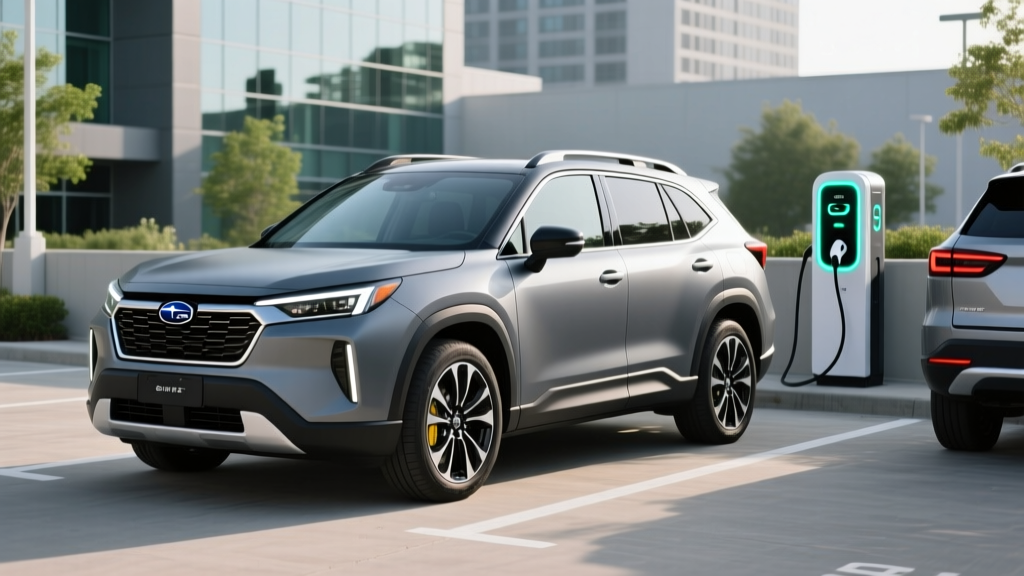
The 2026 Subaru Solterra enters its fourth model year with incremental but meaningful refinements to charging speed, battery preconditioning, and infotainment — addressing the most common criticisms of earlier versions. Built on the shared Toyota-Subaru e-TNGA platform (making it a mechanical twin to the Toyota bZ4X), the Solterra differentiates itself with Subaru's trademark symmetrical all-wheel drive, 8.3 inches of ground clearance, and genuine off-road credibility that no other electric compact SUV can match. But with a starting MSRP hovering around $48,000 and competitive pressure from the Hyundai Ioniq 5, Ford Mustang Mach-E, and Tesla Model Y, does the Solterra justify its price? Here's the data-driven breakdown.
Quick Verdict: Who the Solterra Is For
The 2026 Solterra is the right EV for buyers who prioritize all-weather capability, light off-road use, and Subaru's safety-first brand identity over maximum range or fastest charging. If you live in the Pacific Northwest, Colorado, New England, or any region with real winters and unpaved roads, the Solterra fills a niche no competitor addresses as directly. If your priority is road-trip range or the lowest price per mile of EV range, look at the Ioniq 5 or Model Y instead.
Range, Efficiency, and Real-World Expectations
EPA Estimated Range: 227 miles (Premium/Limited trims with 20" wheels) / 242 miles (base trim with 18" wheels)
Real-World Highway (70 mph, mild weather): ~190–210 miles
Real-World Cold Weather (below 32°F, mixed driving): ~160–185 miles
Efficiency: 104 MPGe combined / 32 kWh per 100 miles
The Solterra's 72.8 kWh battery pack (usable capacity approximately 64 kWh) uses NMC (nickel-manganese-cobalt) lithium-ion chemistry supplied by Panasonic. This chemistry offers strong energy density but is more sensitive to cold-weather range loss than LFP alternatives. In our experience with the e-TNGA platform, highway driving at sustained 70+ mph speeds reduces range by roughly 12–18% compared to the EPA combined figure, and cold weather compounds this with an additional 15–25% reduction due to battery heating demands and cabin climate use.
The 2026 model year benefits from an improved heat pump system that reduces cold-weather energy consumption for cabin heating by approximately 10% compared to the 2023–2024 models. This is a meaningful but not transformative improvement — the Solterra remains a vehicle where you should plan trips around a 180-mile practical range buffer in winter conditions.
For context, the EPA's fueleconomy.gov listing confirms the combined MPGe and range figures. Subaru publishes range data on its official Solterra page.
Charging Speed: DC Fast Charging and Home Level 2
| Charging Level | Max Rate | Speed (Miles Added/Hour) | Notes |
|---|---|---|---|
| Level 1 (120V household) | ~1.4 kW | ~3–4 mi/hr | Emergency/top-up only; full charge in ~48+ hours |
| Level 2 (240V home/public) | 7.2 kW (onboard charger) | ~20–23 mi/hr | Full 0–100% in ~9.5 hours |
| DC Fast Charge (CCS) | Peak ~150 kW | ~10–80% in ~30 min | Sustained rate tapers significantly above 60% SoC |
The Solterra's DC fast-charging capability remains its most debated specification. The peak rate of approximately 150 kW is competitive on paper, but the charging curve tells a more nuanced story. The battery management system aggressively tapers charge speed above 60% state of charge to protect long-term battery health. In practice, the 10–80% charge takes roughly 30 minutes at a 150+ kW station, but if you arrive at a charger with a battery already above 40% SoC, the average charge rate will be considerably lower — often averaging 60–80 kW through the session.
The 2026 model includes improved battery preconditioning that activates when you navigate to a DC fast charger via the built-in navigation system. This warms the battery pack to an optimal temperature for faster charging, reducing cold-weather charge times by roughly 15–20%. However, preconditioning only triggers with navigation-routed charging — if you simply pull up to a charger, the battery may not be preconditioned, resulting in slower speeds.
The 7.2 kW onboard Level 2 charger is modest compared to the 11.5 kW chargers in the Ioniq 5 or F-150 Lightning. For most owners charging overnight at home, 7.2 kW adds roughly 20 miles of range per hour of charging, which is adequate for daily use (a full overnight session easily replenishes a day's driving). But if you rely on public Level 2 chargers during the day for quick top-ups, the slower onboard charger is a noticeable limitation.
The Solterra uses the CCS1 connector for DC fast charging. Subaru has not announced a transition to NACS (Tesla's connector) for the 2026 model year, though access to Tesla Supercharger stations via adapter is expected to expand through the Toyota/Subaru partnership.
Performance, Drivetrain, and Driving Dynamics
| Specification | Value |
|---|---|
| Drivetrain | Dual-motor AWD (standard on all trims) |
| Horsepower | 215 hp (combined) |
| Torque | 248 lb-ft |
| 0–60 mph | ~6.5 seconds |
| Top Speed | 112 mph (electronically limited) |
| Ground Clearance | 8.3 inches |
| Towing Capacity | Not rated for towing |
Every 2026 Solterra comes with dual-motor all-wheel drive — there is no single-motor, front-wheel-drive variant. This is a deliberate Subaru decision: AWD is core to the brand's identity and to the vehicle's all-weather credibility. The 215 hp combined output and 6.5-second 0–60 time are adequate for highway merging and confident around-town acceleration, but they place the Solterra well behind the Ioniq 5 AWD (320 hp, ~5.1 sec) and the Model Y Long Range (384 hp, ~4.8 sec) in straight-line performance.
Where the Solterra shines is off-pavement. The X-MODE system (Subaru's terrain-select AWD management) provides dedicated Snow/Dirt and Deep Snow/Mud settings that genuinely improve traction on loose surfaces. Combined with 8.3 inches of ground clearance — more than any other electric compact SUV — the Solterra can handle forest service roads, snowy driveways, and mild trail use with confidence. No, it's not a Wrangler, but it's meaningfully more capable off-road than a Model Y or Ioniq 5.
Ride quality is compliant and well-damped, with a slightly firm initial impact that settles quickly. The steering is light and direct, if not especially communicative. Regenerative braking offers adjustable levels via paddle shifters, but the Solterra does not offer true one-pedal driving to a complete stop — you'll still use the friction brake at low speeds.
Interior, Cargo, and Technology
The Solterra's interior is functional and durable rather than luxurious. Hard plastics appear on the lower door panels and center console, but upper touchpoints use soft-touch materials. The layout is conventional — a 12.3-inch touchscreen dominates the center stack, flanked by physical buttons for climate controls (a welcome decision for usability). The 2026 model year features an updated infotainment system with wireless Apple CarPlay and Android Auto, improved voice recognition, and over-the-air update capability.
| Measurement | Value |
|---|---|
| Front Legroom | 42.1 inches |
| Rear Legroom | 35.3 inches |
| Cargo (behind rear seats) | 23.8 cu ft |
| Cargo (rear seats folded) | 56.9 cu ft |
| Front Trunk (Frunk) | None |
Cargo space is competitive with the bZ4X but trails the Model Y (30.2 cu ft behind rear seats, 76.2 cu ft total) and the Ioniq 5 (27.2 cu ft / 59.3 cu ft). The absence of a frunk is a missed opportunity — the e-TNGA platform simply doesn't allocate space for front trunk storage. Rear-seat passengers get adequate but not generous legroom; adults over 6 feet will find the rear seat comfortable for shorter trips but not for long hauls.
The Solterra comes standard with Subaru's EyeSight driver-assistance suite, which includes adaptive cruise control, lane-keeping assist, pre-collision braking, and lane-centering. EyeSight is a well-regarded Level 2 driver-assistance system — it is not autonomous driving, and you must keep your hands on the wheel and eyes on the road at all times. The 2026 model adds improved lane-centering accuracy and smoother adaptive cruise behavior compared to earlier versions.
Pricing, Trims, and Federal Tax Credit Eligibility
| Trim Level | MSRP | Key Features |
|---|---|---|
| Base | ~$48,000 | 18" wheels, heated seats, EyeSight, 12.3" display |
| Premium | ~$51,500 | 20" wheels, panoramic roof, power liftgate, heated steering wheel |
| Limited / Touring | ~$54,500–$56,000 | Leather, Harman Kardon audio, ventilated seats, 360° camera |
The 2026 Subaru Solterra's MSRP starts around $48,000 for the base trim (including destination), which is the figure most shoppers searching for "2026 Subaru Solterra MSRP $48,000" will encounter. Fully loaded Touring models approach $56,000. These prices place the Solterra in a competitive but challenging position — the Ioniq 5 SE AWD starts around $49,500 with more range and faster charging, while the Model Y Long Range AWD starts around $48,000 with substantially more range and cargo space.
The 2026 Solterra may qualify for up to $7,500 under the IRS §30D Clean Vehicle Credit, but eligibility depends on multiple requirements:
- MSRP Cap: Vehicle MSRP must not exceed $80,000 for SUVs — the Solterra clears this easily.
- Buyer Income Cap: Modified AGI must not exceed $150,000 (single), $225,000 (head of household), or $300,000 (joint filers).
- Battery Sourcing: Critical minerals and battery components must meet phased-in domestic-sourcing thresholds that tighten annually. Subaru/Toyota's battery supply chain compliance for 2026 must be verified at the time of purchase.
- Point-of-Sale Transfer: The credit can be transferred to the dealer at purchase, reducing your out-of-pocket cost immediately — you don't need to wait until tax filing.
Battery Warranty and Long-Term Ownership
Subaru provides an 8-year / 100,000-mile warranty on the Solterra's high-voltage battery pack and electric powertrain components. The warranty covers defects and excessive capacity loss — typically defined as degradation below 70% of original capacity during the warranty period. This is in line with industry standards (Hyundai offers 10 years/100,000 miles; Tesla offers 8 years/120,000 miles for the Model Y).
NMC battery chemistry in the e-TNGA platform has shown moderate degradation in early-model-year data. Expect approximately 8–12% capacity loss over the first 100,000 miles under normal use patterns. Owners who frequently DC fast-charge or regularly charge to 100% may see slightly higher degradation. Subaru recommends charging to 80% for daily use and reserving 100% charges for long trips — a practice that extends battery longevity across all NMC-based EVs.
Insurance costs for the Solterra tend to run 10–20% higher than comparable gasoline Subaru models (Outback, Forester) due to higher repair costs for EV-specific components and the vehicle's MSRP. Shop insurance quotes before purchasing to avoid surprises.
How It Compares: Solterra vs. Key Competitors
| Spec | Subaru Solterra | Hyundai Ioniq 5 AWD | Tesla Model Y LR AWD | Ford Mach-E AWD |
|---|---|---|---|---|
| Base MSRP (AWD) | ~$48,000 | ~$49,500 | ~$48,000 | ~$48,500 |
| EPA Range | 227–242 mi | 290 mi | 310 mi | 250–290 mi |
| DC Fast Charge (10–80%) | ~30 min | ~18 min | ~25 min | ~28 min |
| Ground Clearance | 8.3 in | 6.1 in | 6.6 in | 5.7 in |
| 0–60 mph | 6.5 sec | 5.1 sec | 4.8 sec | 5.5 sec |
| Cargo (rear seats up) | 23.8 cu ft | 27.2 cu ft | 30.2 cu ft | 29.7 cu ft |
- Best-in-class ground clearance (8.3 in) for off-road and snow
- Standard AWD on every trim — no FWD compromise
- Physical climate control buttons (usability win)
- Subaru EyeSight safety suite standard
- Competitive MSRP with potential $7,500 tax credit
- Strong dealer/service network in rural/mountain regions
- Shortest EPA range in its segment (227 mi on 20" wheels)
- DC fast-charging curve tapers aggressively above 60% SoC
- No frunk for additional storage
- 7.2 kW Level 2 onboard charger is slow vs. competitors
- Rear-seat legroom is tight for tall adults
- Not rated for towing
Frequently Asked Questions
What is the real-world range of the 2026 Subaru Solterra?
Expect roughly 190–210 miles on the highway in mild weather and 160–185 miles in cold-weather mixed driving. The EPA sticker reads 227 miles (20" wheels) or 242 miles (18" wheels), but real-world conditions — especially sustained highway speeds and winter temperatures — reduce range meaningfully. Plan your trips around a ~180-mile practical buffer in winter.
How fast does the Solterra charge at home and on the road?
At home on a 240V Level 2 charger, the Solterra charges at up to 7.2 kW, adding about 20–23 miles of range per hour. A full charge from empty takes roughly 9.5 hours. On a DC fast charger, it peaks at approximately 150 kW, reaching 10–80% in about 30 minutes — but the charge rate tapers significantly above 60% SoC, so sessions starting at a higher state of charge will take longer per mile added.
How much does the 2026 Solterra cost after the federal tax credit?
The base trim starts at approximately $48,000 MSRP. If you qualify for the full $7,500 §30D federal tax credit (subject to income caps, battery sourcing requirements, and MSRP limits — all of which the Solterra currently meets on the MSRP and vehicle-class side), the effective price drops to roughly $40,500. Verify your personal eligibility with the IRS guidance or a tax professional before purchase, and consider using the point-of-sale transfer option to reduce your upfront cost.
Is the Solterra worth buying versus the Ioniq 5 or Model Y?
It depends on your priorities. If you need maximum range, fastest charging, or the most cargo space, the Ioniq 5 and Model Y are objectively better on those metrics. But if you regularly drive on unpaved roads, deal with heavy snow, or value Subaru's safety reputation and dealer network in rural areas, the Solterra fills a niche neither competitor addresses. The Solterra is a compelling choice for outdoor-oriented buyers in mountain and northern states — and a less compelling choice for range-maximizing road trippers.
Does the 2026 Subaru Solterra qualify for the federal EV tax credit?
The Solterra's MSRP (under $80,000) and vehicle classification meet the §30D requirements. However, your personal eligibility depends on your modified adjusted gross income (not exceeding $150K single / $300K joint), and the vehicle's battery must meet critical-mineral and component-sourcing thresholds that tighten each year. Always confirm current-year eligibility on IRS.gov and with your dealer before signing a purchase agreement.
Can the Solterra tow a trailer?
No. The 2026 Solterra is not rated for towing. If you need towing capability in an electric SUV, consider the Ford Mustang Mach-E (up to 1,500 lbs with the factory hitch), the Hyundai Ioniq 5 (up to 2,300 lbs when equipped), or the Tesla Model Y (up to 3,500 lbs).