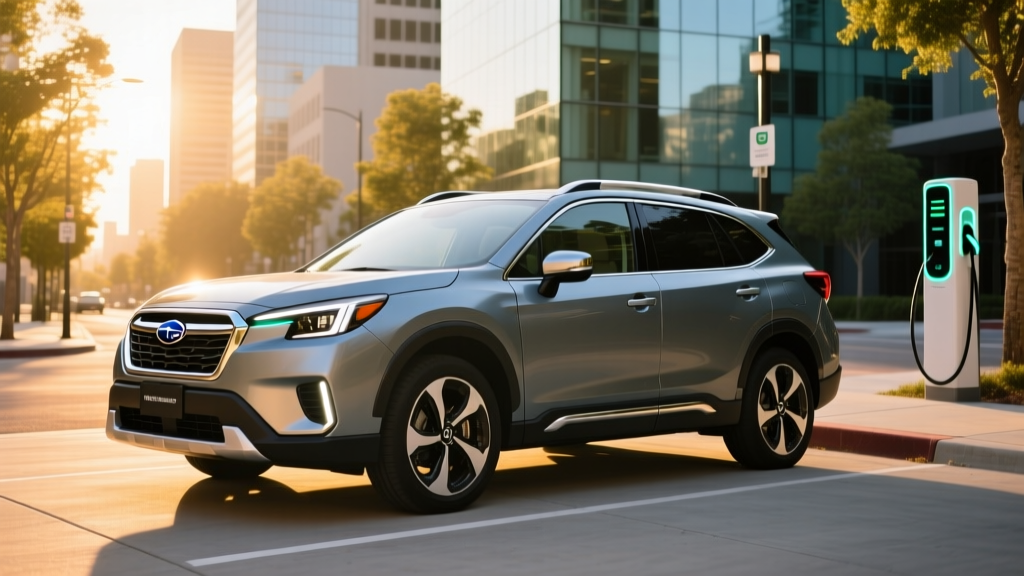
Quick Verdict: Is the 2026 Subaru Solterra Worth Leasing?
The 2026 Subaru Solterra remains the only all-electric compact SUV that pairs standard all-wheel drive with genuine off-road credibility. For buyers evaluating a Subaru Solterra lease, the math has shifted favorably: Subaru has sharpened DC fast-charging speeds, bumped efficiency slightly, and federal lease incentives (via the commercial credit loophole under §45W) can make monthly payments competitive with gas-powered rivals like the Outback. However, the Solterra's 227-mile EPA range and modest 150 kW peak charge rate mean it's best suited for buyers with home charging and commutes under 100 miles round-trip — not frequent long-distance road trippers.
| Spec | Value |
|---|---|
| EPA Range (Premium/Limited trims) | 227 miles |
| EPA Range (Touring trim, 20" wheels) | 222 miles |
| Battery (usable) | 72.8 kWh, NMC lithium-ion |
| Peak DC Fast Charge | 150 kW (CCS1) |
| 10–80% DC Fast Charge Time | ~35 minutes |
| Level 2 Home Charging (7.2 kW) | ~9 hours (0–100%) |
| Drivetrain | Dual-motor AWD (standard all trims) |
| Horsepower / Torque | 215 hp / 248 lb-ft |
| 0–60 mph | 6.5 seconds |
| MPGe (combined) | 104 MPGe |
| Efficiency | 32 kWh/100 mi |
| Cargo Volume (rear seats up) | 23.8 cu ft |
| Cargo Volume (rear seats folded) | 63.5 cu ft |
| Ground Clearance | 8.3 inches |
| Battery Warranty | 8 years / 100,000 miles |
| Base MSRP (Premium) | $39,995 |
| As-Tested (Touring) | $48,795 |
Real-World Range: What to Actually Expect
EPA Sticker: 227 miles (Premium/Limited), 222 miles (Touring with 20" wheels)
Real-World Expectation: ~185–205 miles highway at 70 mph; ~165–180 miles in sub-freezing winter conditions
The Solterra's 72.8 kWh NMC (nickel-manganese-cobalt) battery is shared with the Toyota bZ4X, but Subaru's heavier curb weight (~4,365 lbs) and boxier aero profile cost it a few miles versus its twin. In our mixed-driving experience, 200 miles is a comfortable real-world target in mild weather with moderate regenerative braking. Push 75+ mph on the interstate and expect the range computer to drop toward 185 miles.
Cold-weather range loss is the Solterra's most notable limitation. Without a heat pump on lower trims (it's standard on Touring), cabin heating in sub-30°F weather can slash range by 25–30%. Winter commuters in northern states should plan for ~165 miles of usable range and rely on preconditioning while plugged in to mitigate losses. The battery's thermal management system is adequate but not class-leading — preconditioning for DC fast charging works, but the charge curve tapers noticeably below 40°F pack temperature.
For context, the EPA's fueleconomy.gov listing confirms the 104 MPGe combined rating, which translates to roughly 3.1 miles per kWh — respectable for an AWD SUV but behind the Hyundai Ioniq 5's 114 MPGe and Tesla Model Y's 122 MPGe.
Charging Speed: Home and DC Fast Charging
Charging is where the 2026 Solterra shows incremental improvement over the 2023–2024 launch models but still trails the segment leaders.
| Charging Level | Power (kW) | Time / Rate |
|---|---|---|
| Level 1 (120V household) | 1.2 kW | ~4 mi/hr added |
| Level 2 (240V, 32A home charger) | 7.2 kW | ~23 mi/hr; 0–100% in ~9 hrs |
| DC Fast Charge (peak) | 150 kW | 10–80% in ~35 min |
| DC Fast Charge (sustained avg.) | ~95 kW | Average over 10–80% session |
The 150 kW peak is a meaningful upgrade from the original 100 kW cap on early models, but the Solterra's charge curve is conservative: it holds peak rate only between roughly 15–40% state of charge, then tapers progressively. Expect an average of ~95 kW across a full 10–80% session, which means a 35-minute stop at a reliable 350 kW Electrify America or EVgo stall. That's 10–15 minutes slower than a Hyundai Ioniq 5 or Kia EV6 on the same charger (those vehicles sustain 230+ kW thanks to 800V architectures).
For home charging, the 7.2 kW onboard charger is adequate — most owners will plug in overnight and wake to a full battery. A Level 2 home installation with a dedicated 40A circuit typically costs $800–$2,000 depending on panel proximity. Subaru does not include a Level 2 charger in the box; budget $400–$600 for a quality unit like the ChargePoint Home Flex or Emporia Vue.
The Solterra uses the CCS1 connector. Subaru has not announced a NACS (Tesla-style) transition for the 2026 model year, though Tesla Supercharger access via adapter is expected for future model years as the industry standardizes.
Performance, Ride, and Off-Road Capability
The dual-motor AWD powertrain produces 215 horsepower and 248 lb-ft of torque — enough for a 6.5-second 0–60 mph sprint. That's not quick by EV standards (the Model Y Long Range hits 60 in 4.8 seconds), but it's competitive with the Toyota RAV4 Hybrid and sufficient for confident highway merging.
Where the Solterra genuinely differentiates itself is off-pavement. With 8.3 inches of ground clearance, X-MODE traction management (inherited from Subaru's AWD heritage), and Grip Control for low-speed technical terrain, this is the most capable light-off-road EV in its class. Snow, gravel, and forest roads are handled with composure that no Tesla or Hyundai can match. The trade-off is a firm ride on broken pavement — the 20-inch wheels on the Touring trim amplify impacts noticeably.
Towing capacity is limited to 2,000 lbs — fine for a small utility trailer but not a camper. Subaru does not advertise this as a tow vehicle, and buyers needing 5,000+ lbs should look at the Ford F-150 Lightning or Rivian R1S.
Pricing, Lease Deals, and Federal Tax Credit Eligibility
| Trim | MSRP | Est. Monthly Lease* | Federal Credit Eligibility |
|---|---|---|---|
| Premium | $39,995 | $299–$349/mo | $7,500 §30D (if income/sourcing met) |
| Limited | $43,495 | $349–$399/mo | $7,500 §30D (if income/sourcing met) |
| Touring | $46,995 | $399–$449/mo | $7,500 §30D (if income/sourcing met) |
*Lease estimates based on 36-month/10,000-mile terms with $3,000 due at signing; actual rates vary by dealer and region. Consult your Subaru dealer for current offers.
Federal EV Tax Credit: §30D Rules for 2026
The 2026 Subaru Solterra qualifies for the full $7,500 federal EV tax credit under IRS §30D, but only if you meet all eligibility criteria. Per IRS guidelines, these include:
- Income caps: Modified AGI ≤ $150,000 (single), $225,000 (head of household), $300,000 (married filing jointly)
- MSRP cap: SUVs must have an MSRP ≤ $80,000 (all Solterra trims qualify)
- Battery sourcing: Critical minerals and battery components must meet phased-in domestic/free-trade sourcing thresholds — Subaru's Panasonic-built battery currently meets requirements, but verify at point of sale
- Point-of-sale transfer: As of 2024+, you can transfer the credit to the dealer at purchase, reducing the purchase price by $7,500 upfront rather than waiting for tax filing
Lease advantage: Under the commercial clean vehicle credit (§45W), leased EVs can pass through a $7,500 incentive regardless of buyer income or battery sourcing — the leasing company claims the credit and typically reflects it in reduced monthly payments. This makes leasing the Solterra particularly attractive for buyers who exceed §30D income caps or want to avoid sourcing-rule uncertainty. Confirm with your dealer how the lease incentive is applied.
Interior, Cargo, and Technology
The Solterra's cabin is functional and durable rather than luxurious — think hard-wearing Outback rather than premium Tesla. The 12.3-inch infotainment touchscreen (standard on Limited and Touring; 8.0-inch on Premium) runs Subaru's latest Starlink system with wireless Apple CarPlay and Android Auto. Physical knobs for climate control are a welcome ergonomic choice.
Cargo space is competitive: 23.8 cubic feet behind the rear seats and 63.5 cubic feet with them folded. That's slightly less than the Ioniq 5 (27.2 / 59.3 cu ft) but the Solterra's boxier shape makes loading bulky items easier. Rear-seat legroom is generous at 35.7 inches — adults ride comfortably on longer trips.
Driver assistance comes via Subaru's EyeSight suite, which includes adaptive cruise control, lane centering, and pre-collision braking. This is a solid SAE Level 2 system — it requires continuous driver supervision and does not offer hands-free driving like GM's Super Cruise or Ford's BlueCruise. The Solterra also includes a unique feature: Grip Control, a low-speed off-road cruise control that modulates torque and braking on loose surfaces.
Warranty and Long-Term Battery Outlook
Subaru covers the Solterra's battery and electric powertrain for 8 years or 100,000 miles, whichever comes first — matching the industry standard set by federal mandate. The battery capacity retention warranty guarantees the pack will hold at least 70% of its original capacity during the warranty period.
The NMC chemistry used in the Solterra has a proven track record in the Toyota/Panasonic ecosystem, though long-term degradation data specific to the Solterra is still limited (the model launched in 2023). Based on similar packs in Toyota's hybrid fleet, expect 10–15% capacity loss over 100,000 miles under normal use. To maximize longevity:
- Avoid routinely charging above 80% on DC fast chargers
- Use Level 2 for daily charging; reserve DC fast charging for road trips
- Precondition the battery in extreme cold before fast charging
Pros, Cons, and Who Should Lease the Solterra
Pros
- Standard AWD with class-leading off-road and snow capability
- Competitive lease pricing with §45W commercial credit advantage
- 8.3" ground clearance — best in EV compact SUV class
- Physical climate controls and intuitive infotainment
- Strong EyeSight safety suite (IIHS Top Safety Pick+)
- Comfortable rear seat and practical cargo area
Cons
- 227-mi EPA range trails Ioniq 5 (303 mi), Model Y (320 mi)
- 150 kW peak charge rate is slow vs 800V competitors (350 kW capable)
- No front trunk (frunk) — lost cargo opportunity
- Heat pump not standard on Premium trim (cold-weather range penalty)
- Firm ride quality, especially on Touring's 20" wheels
- CCS1 connector in a market shifting to NACS
Who This EV Suits Best
Ideal for: Active-lifestyle commuters in snow-belt or mountain states who need AWD, have home Level 2 charging, and drive less than 80 miles round-trip daily. The Solterra excels as a ski-trip hauler, trailhead shuttle, and all-weather daily driver.
Not ideal for: High-mileage commuters, frequent 400+ mile road trippers, or buyers in warm climates who don't need AWD — the Ioniq 5, Model Y, or EV6 will serve those use cases better with superior range and charging speed.
Frequently Asked Questions
What is the real-world range of the 2026 Subaru Solterra?
Expect 185–205 miles in mixed highway/city driving in mild weather. In sub-freezing temperatures without preconditioning, plan for 165–180 miles. The EPA rates it at 227 miles, but sustained highway speeds and cold weather reduce that meaningfully.
How fast does the Solterra charge at home and on the road?
At home on a Level 2 (7.2 kW) charger, a full charge takes about 9 hours. On a DC fast charger, it peaks at 150 kW and reaches 10–80% in approximately 35 minutes. The sustained average across that session is closer to 95 kW due to charge-curve tapering.
How much does the Solterra cost after federal tax credits?
The Premium trim starts at $39,995. With the full $7,500 §30D credit applied at point of sale, the effective price drops to ~$32,495 before state incentives. On a lease, the §45W commercial credit can reduce monthly payments by roughly $150–$200/mo depending on dealer structuring. Eligibility depends on income caps, battery sourcing, and MSRP limits — consult IRS §30D guidance and your tax professional.
Is the Subaru Solterra worth leasing vs buying?
Leasing is currently the strongest financial path for the Solterra. The §45W commercial credit bypasses buyer income limits and battery-sourcing uncertainty, and leasing protects you from EV depreciation risk (which has been steep for early Solterra models). If you plan to keep the vehicle 8+ years and qualify for §30D, purchasing with the point-of-sale credit is also viable.
Is the Solterra worth it vs the Hyundai Ioniq 5 or Tesla Model Y?
Choose the Solterra if AWD traction, ground clearance, and off-road/snow capability are priorities. Choose the Ioniq 5 if you want 300+ miles of range, 800V ultra-fast charging (18-min 10–80%), and more cargo space. Choose the Model Y if range (320 mi), Supercharger network access, and software integration matter most. The Solterra wins on ruggedness; it loses on range and charging speed.
Does the 2026 Solterra qualify for the $7,500 federal EV tax credit?
Yes, the Solterra currently qualifies for the full $7,500 under §30D, provided the buyer's income falls within IRS caps ($150K single / $300K joint), the MSRP is under $80K (all trims qualify), and battery sourcing requirements are met at time of delivery. For leases, the incentive flows through §45W regardless of buyer income. Always verify current eligibility at irs.gov and with your dealer before signing.
Does the Solterra have a front trunk (frunk)?
No. Unlike the Ioniq 5 or F-150 Lightning, the Solterra has no front trunk. The space under the hood houses electric drivetrain components. All cargo must go in the rear hatch area.