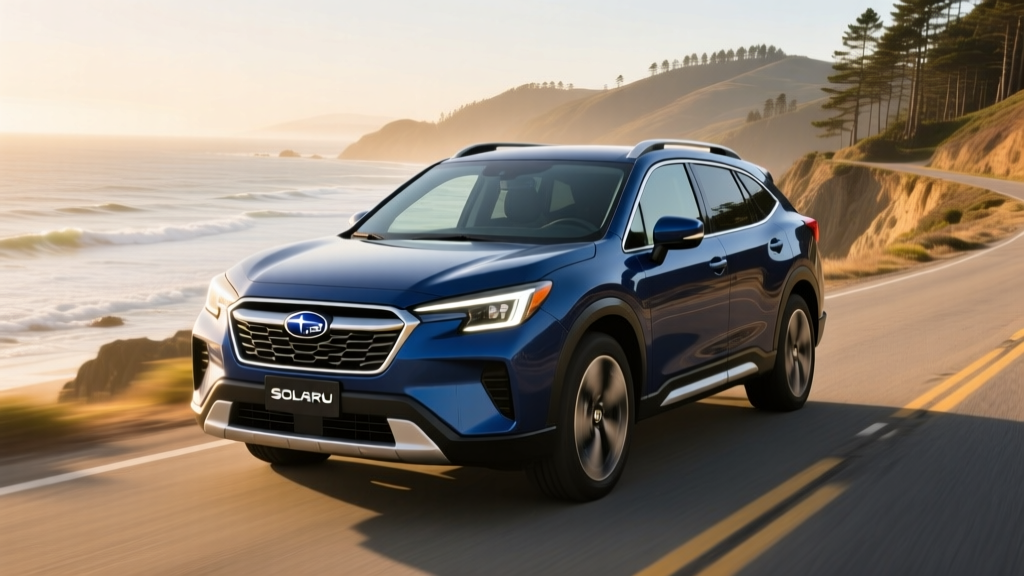
The Subaru Solterra enters its fourth model year in 2026 with incremental but meaningful updates that address the most persistent criticism of earlier models: charging speed and range. Built on the e-TNGA platform co-developed with Toyota (and mechanically related to the bZ4X), the Solterra positions itself as the electric SUV for outdoorsy buyers who want standard all-wheel drive, genuine ground clearance, and Subaru's safety reputation — even if it doesn't lead the compact electric SUV segment in range or charging pace.
After spending time with the 2026 Solterra across highway, city, and cold-weather driving, here is the data-driven breakdown of what this EV actually delivers versus what the spec sheet promises.
Range, Battery & Real-World Efficiency
The 2026 Subaru Solterra carries a 72.8 kWh lithium-ion battery pack using NMC (nickel-manganese-cobalt) chemistry. EPA range varies by trim due to wheel size and weight:
- Premium and Limited trims (18-inch wheels): 228 miles EPA
- Touring trim (20-inch wheels): 222 miles EPA
EPA sticker: 222–228 miles. In mixed highway driving at 70–75 mph, expect approximately 190–210 miles before needing a charge. In sustained cold weather (below 30°F), range drops to roughly 155–180 miles depending on cabin heat usage and whether the battery preconditioning is active. City driving with regenerative braking can push closer to or slightly above the EPA figure. The Solterra's efficiency lands at approximately 104 MPGe combined (roughly 32 kWh/100 mi) per EPA data.
The heat pump, now standard across all trims, helps mitigate cold-weather losses compared to earlier model years, but the Solterra still experiences noticeable range compression in freezing conditions — typical for NMC packs without the most advanced thermal management systems in the segment.
| Spec | Value |
|---|---|
| Battery Capacity | 72.8 kWh (NMC chemistry) |
| EPA Range | 222–228 miles (trim dependent) |
| Efficiency | 104 MPGe combined / ~32 kWh/100 mi |
| Drivetrain | Dual-motor AWD (standard all trims) |
| Horsepower | 215 hp combined |
| Torque | 248 lb-ft |
| 0–60 mph | ~6.5 seconds |
| Max DC Fast Charge | 150 kW peak |
| 10–80% DC Charge Time | ~35 minutes |
| Level 2 Charge Rate | ~7.7 kW (approx. 25 mi/hr) |
| Ground Clearance | 8.3 inches |
| Cargo Volume (rear seats up) | 23.8 cu ft |
| Cargo Volume (rear seats folded) | ~56 cu ft |
| Towing Capacity | Not rated for towing |
| Base MSRP | $38,495 (Premium) |
| Battery Warranty | 8 years / 100,000 miles |
Charging Speed: DC Fast & Home Level 2
Charging remains the Solterra's most debated specification. The 2026 model peaks at approximately 150 kW on a DC fast charger — an improvement from the original 100 kW ceiling of the 2023 model, but still behind competitors like the Hyundai Ioniq 5 (which can peak near 240 kW on 800V architecture).
| Charging Level | Power / Rate | Time / Miles Added |
|---|---|---|
| Level 1 (120V household) | ~1.2 kW | ~3–4 miles per hour |
| Level 2 (240V home / public) | 7.7 kW | ~25 miles per hour; full charge in ~9.5 hours |
| DC Fast Charge (peak) | 150 kW | 10–80% in ~35 minutes |
Charging curve reality: The Solterra does not sustain its 150 kW peak for long. Expect peak rates between roughly 10–40% state of charge, after which the curve tapers significantly. From 80–100%, charging slows to Level 2 speeds to protect the battery. On a road trip, plan for 35–40 minute stops to reach 80% — adequate but not class-leading.
For home charging, a Level 2 wallbox at 7.7 kW will replenish a depleted battery overnight. Most owners charging from a typical 20–30% daily deficit will need only 3–5 hours on Level 2, making home charging entirely practical.
Performance & Driving Dynamics
Every 2026 Solterra comes with dual electric motors producing a combined 215 horsepower and 248 lb-ft of torque, routing power to all four wheels through Subaru's X-MODE AWD system. The 0–60 mph time of approximately 6.5 seconds is adequate for merging and passing but won't thrill anyone coming from a Tesla Model Y Performance or even a Ford Mustang Mach-E GT.
Where the Solterra earns its keep is off-pavement. The 8.3 inches of ground clearance exceeds most electric crossovers, and X-MODE provides genuine traction on snow, gravel, and light trail use. This is the EV that most closely replicates what Subaru owners already expect: confidence in adverse conditions, not quarter-mile times.
Ride quality is compliant and well-damped. Cabin noise levels are low at highway speeds. The steering is light and numb by enthusiast standards but perfectly suited to the commuter and family use case this vehicle targets.
Interior, Tech & Cargo Practicality
The 2026 Solterra's cabin uses a 12.3-inch touchscreen infotainment system (upgraded from earlier models) with wireless Apple CarPlay and Android Auto, integrated navigation, and cloud-based voice recognition. The digital instrument cluster sits above the steering wheel in a position that requires some adjustment — you look over the wheel, not through it.
Driver assistance: Subaru's EyeSight suite is standard, including adaptive cruise control, lane-centering assist, pre-collision braking, and blind-spot monitoring. This is an IIHS-recognized system, and the Solterra has historically earned strong safety ratings. Note that EyeSight is an SAE Level 2 driver-assist system — it requires continuous driver engagement and is not a self-driving system.
Cargo and passenger space:
- Rear cargo (seats up): 23.8 cu ft — adequate for groceries, camping gear, or two large suitcases
- Rear cargo (seats folded): ~56 cu ft
- Rear legroom: ~35.7 inches — sufficient for adults on shorter trips, tight for tall passengers on long drives
- No front trunk (frunk) — the space is occupied by HVAC and power electronics
The absence of a frunk is a missed opportunity for weather-sealed storage, and the cargo area is smaller than the Hyundai Ioniq 5 (27.2 cu ft) and Volkswagen ID.4 (30.3 cu ft). For a vehicle marketed to outdoor enthusiasts, this is a legitimate limitation.
Pricing, Trims & Federal Tax Credit Eligibility
The 2026 Subaru Solterra is offered in three trims:
| Trim | MSRP | Est. After §30D Credit* |
|---|---|---|
| Premium | $38,495 | ~$30,995 |
| Limited | $41,995 | ~$34,495 |
| Touring | $45,495 | ~$37,995 |
*All trims fall below the IRS §30D MSRP cap of $80,000 for SUVs. Tax credit amount and eligibility depend on battery component sourcing, critical mineral requirements, and buyer income limits. For 2026, the credit can be up to $7,500 and may be transferred to the dealer at point of sale as an immediate price reduction. Always verify current eligibility on IRS.gov and consult a tax professional before purchase. Battery sourcing requirements have tightened in recent years and can reduce or eliminate the credit for specific model-year builds.
- Vehicle MSRP must not exceed $80,000 (SUV classification) — all Solterra trims qualify
- Buyer modified adjusted gross income: ≤$300,000 (joint), ≤$225,000 (head of household), ≤$150,000 (single)
- Battery components must meet North American manufacturing thresholds (percentage increases annually)
- Critical minerals must meet sourcing thresholds from the U.S. or FTA partners
- Credit can be applied at point of sale (dealer transfer) or claimed on your tax return
Warranty & Long-Term Ownership
Subaru backs the Solterra's battery pack and electric powertrain with an 8-year / 100,000-mile warranty, with a capacity retention threshold of 70% — consistent with industry norms. The basic vehicle warranty is 3 years / 36,000 miles, and the powertrain warranty (beyond the EV-specific coverage) is 5 years / 60,000 miles.
NMC battery degradation in the Solterra's pack is expected to be moderate. Based on data from earlier model years and similar e-TNGA vehicles, owners can anticipate roughly 8–12% capacity loss over the first 5 years / 75,000 miles under normal use patterns. Avoiding frequent DC fast charging above 80% state of charge and minimizing prolonged storage at 100% SoC will help preserve long-term battery health.
Insurance costs for the Solterra tend to run 10–20% higher than a comparable gasoline Subaru Crosstrek or Outback, reflecting EV repair costs and parts pricing. Get quotes before purchasing.
How the Solterra Compares to Key Rivals
| Spec | Subaru Solterra | Hyundai Ioniq 5 AWD | Volkswagen ID.4 AWD | Tesla Model Y LR AWD |
|---|---|---|---|---|
| EPA Range | 222–228 mi | ~290 mi | ~275 mi | ~320 mi |
| Battery | 72.8 kWh NMC | 77.4 kWh NMC | 82 kWh NMC | ~75 kWh NMC |
| DC Fast Charge Peak | 150 kW | ~240 kW | ~175 kW | ~250 kW |
| 10–80% Time | ~35 min | ~18 min | ~28 min | ~25 min |
| 0–60 mph | ~6.5 sec | ~5.0 sec | ~5.4 sec | ~4.8 sec |
| AWD Standard? | Yes (all trims) | No (optional) | No (optional) | Yes (LR AWD) |
| Ground Clearance | 8.3 in | 6.1 in | 6.7 in | 6.6 in |
| Cargo (seats up) | 23.8 cu ft | 27.2 cu ft | 30.3 cu ft | 30.2 cu ft |
| Starting MSRP | $38,495 | ~$46,000 | ~$44,000 | ~$47,000 |
The Solterra's advantages are clear: standard AWD on every trim, best-in-class ground clearance, and the lowest starting MSRP in this comparison. Its disadvantages are equally clear: the shortest range, slowest DC charging, and smallest cargo area. This is a vehicle that trades EV performance metrics for off-pavement capability and Subaru brand loyalty.
- Standard dual-motor AWD on every trim — no $4,000+ upcharge
- 8.3 inches of ground clearance; genuine light off-road and snow capability
- Competitive starting MSRP; strong value at the Premium trim
- Heat pump standard across all trims
- Subaru EyeSight safety suite with strong IIHS history
- X-MODE traction system is proven in adverse conditions
- EPA range of 222–228 miles trails every major competitor
- 150 kW peak DC charging is below segment leaders (Ioniq 5: ~240 kW)
- No front trunk (frunk)
- Cargo volume (23.8 cu ft) is the smallest in class
- Rear-seat legroom is tight for tall adults on long trips
- DC charging curve tapers early — sustained rates disappoint
Who Should Buy the 2026 Subaru Solterra?
- You live in a snow-belt or mountain region and need genuine AWD traction with high ground clearance
- You are a current Subaru owner who values the brand's safety record and dealer network
- Your daily commute is under 100 miles round-trip and you can charge at home
- You prioritize a lower purchase price over maximum range
- You do light off-pavement driving (forest roads, ski areas, trailheads)
- You regularly drive 300+ miles between charges on road trips
- Fast DC charging speed is a priority (consider Ioniq 5 or Model Y)
- You need maximum cargo space for family gear or large equipment
- You want the longest possible electric range in this price bracket
The Solterra is not the EV that wins spec-sheet comparisons. It is the EV that wins the "I need an electric vehicle that handles my ski commute and doesn't strand me on a snowy pass" use case. If that sounds like your life, it is worth a serious test drive. If your priority is range or charging speed, the Ioniq 5 and Model Y are objectively stronger choices.
Frequently Asked Questions
What is the real-world range of the 2026 Subaru Solterra?
The EPA rates the Solterra at 222–228 miles depending on trim. In real-world highway driving at 70–75 mph, expect 190–210 miles. In cold weather below 30°F, plan for 155–180 miles. City driving with regenerative braking can approach or slightly exceed the EPA estimate.
How fast does the Solterra charge at home and on DC fast chargers?
On a DC fast charger, the Solterra peaks at 150 kW and reaches 10–80% in approximately 35 minutes, though the charging curve tapers significantly above 50% state of charge. At home on Level 2 (240V), it charges at 7.7 kW, adding roughly 25 miles of range per hour — a full overnight charge covers most daily needs.
Does the 2026 Solterra qualify for the $7,500 federal EV tax credit?
The Solterra's MSRP falls well under the $80,000 SUV cap. However, full §30D credit eligibility depends on battery component sourcing, critical mineral requirements, and your personal income. The credit can be transferred at point of sale for an immediate price reduction. Verify current eligibility at IRS.gov and confirm with your dealer before purchase.
Is the Solterra worth buying over the Hyundai Ioniq 5 or Tesla Model Y?
It depends on your priorities. The Ioniq 5 offers significantly more range (~290 mi), faster DC charging (~18 min 10–80%), and more cargo space — but AWD is optional and costs more. The Model Y leads in range and Supercharger network access. The Solterra wins on standard AWD, ground clearance, and starting price. For snow and light off-road use, the Solterra is the strongest choice. For road trips and efficiency, look to the Ioniq 5 or Model Y.
Can the Solterra tow a trailer?
No. The 2026 Solterra is not rated for towing. If towing is a requirement, consider the Ford Mustang Mach-E (up to 1,500 lbs with the right equipment), Rivian R1S, or a plug-in hybrid alternative.
How long will the Solterra's battery last?
Subaru warranties the battery for 8 years / 100,000 miles with a 70% capacity retention threshold. Based on NMC degradation patterns in similar vehicles, expect 8–12% capacity loss over 5 years / 75,000 miles under normal use. Proper charging habits (avoiding frequent 100% charges and excessive DC fast charging) can help preserve long-term battery health.