Quick Verdict: The Electric Truck That Finally Fits a Workday
The 2026 Chevrolet Silverado EV has matured past its awkward 2024 launch into a genuinely competitive full-size electric pickup. With the extended-range 4WT and 3WT trims now EPA-rated at up to 492 miles, a usable Ultium-based battery platform, and the rollout of native NACS ports across the lineup, Chevy's electric truck is no longer an experiment — it's a viable daily driver for fleet buyers, commuters, and light-towing households alike. But with starting prices that still crest $50,000 and a curb weight that punishes highway efficiency, the Silverado EV demands a careful look before you sign the paperwork.
This review breaks down every number that matters: real-world range versus the EPA sticker, actual DC fast-charging curves, federal tax credit eligibility under current IRS §30D rules, and how it stacks up against the Ford F-150 Lightning, Rivian R1T, and Tesla Cybertruck in 2026.
Range and Efficiency: What the EPA Sticker Doesn't Tell You
The headline number for the 2026 Silverado EV is its class-leading EPA range on the extended-battery configuration. Here's what Chevrolet publishes, followed by what you'll actually see on the road.
| Trim / Battery | EPA Range | Real-World Highway (70 mph) | Cold Weather (below 32°F) |
|---|---|---|---|
| 4WT Extended (200+ kWh Ultium) | 492 mi | ~380–410 mi | ~320–360 mi |
| 3WT Extended (200+ kWh Ultium) | 492 mi | ~380–410 mi | ~320–360 mi |
| 8WT Standard (~175 kWh Ultium) | ~390 mi | ~300–330 mi | ~260–290 mi |
| RST (Extended) | 440 mi | ~340–370 mi | ~290–330 mi |
Real-world figures based on mixed highway/city driving at moderate temperatures. Highway-only driving at sustained 70+ mph reduces range by roughly 18–22% versus the EPA combined cycle. Cold weather with cabin heating can reduce range by 25–35% depending on severity. Source: fueleconomy.gov and independent testing.
The Silverado EV's efficiency tells the other half of the story. The work-truck 4WT Extended achieves roughly 59 MPGe combined (approximately 57 kWh/100 mi), which is competitive with the F-150 Lightning Extended Range (~66 MPGe) but trails lighter electric pickups like the Rivian R1T Dual-Motor Standard (~70 MPGe). That's physics: at over 8,600 lbs curb weight for the extended-battery work trucks, mass is the dominant efficiency penalty.
For fleet managers and commuters who drive mostly city and suburban routes with frequent regenerative braking opportunities, the real-world numbers track much closer to the EPA sticker — often within 5–8%. It's sustained highway travel and cold-weather towing where the Silverado EV loses the most ground.
Battery and Platform: Ultium Under the Floor
The 2026 Silverado EV rides on GM's BT1 platform, a dedicated electric skateboard architecture shared with the GMC Sierra EV. The battery pack is a structural element of the frame, contributing to torsional rigidity and keeping the center of gravity low.
| Spec | Standard Battery | Extended Battery |
|---|---|---|
| Chemistry | NMC (Nickel Manganese Cobalt) | NMC (Nickel Manganese Cobalt) |
| Usable Capacity | ~175 kWh | ~205 kWh |
| Gross Capacity | ~185 kWh | ~215 kWh |
| Thermal Management | Liquid-cooled / heated | Liquid-cooled / heated |
| Drivetrain | Dual-Motor AWD | Dual-Motor AWD |
| Horsepower (4WT Ext.) | — | 510 hp (up to 754 hp on RST Max) |
| Torque | ~615 lb-ft | ~615 lb-ft (up to 785 lb-ft RST) |
| 0–60 mph | ~5.5 sec (est.) | ~4.5 sec (4WT), ~3.8 sec (RST Max) |
GM uses NMC (nickel manganese cobalt) chemistry across the Silverado EV lineup — not LFP. This choice prioritizes energy density, which is necessary to achieve 400+ mile range in a vehicle this heavy. The trade-off: NMC cells degrade slightly faster than LFP over thousands of cycles and should not be routinely held at 100% state of charge. GM recommends daily charging to 80–90% for longevity, reserving 100% for long trips.
The battery warranty covers 8 years / 100,000 miles against defects and excessive capacity loss (GM defines excessive as dropping below 60% of original capacity within the warranty period). This matches the industry standard set by the EPA and California Air Resources Board for emissions-related components, though some competitors like Rivian offer 8 years/175,000 miles on the battery pack.
Charging Speed: NACS, DC Fast, and Home Level 2
For 2026, the Silverado EV ships with a native NACS (North American Charging Standard) port — the Tesla-style connector now adopted across the industry. This means direct access to Tesla Supercharger stalls (now open to non-Tesla EVs via the NACS standard) without an adapter, alongside Electrify America, EVgo, and other networks that have deployed NACS cables.
| Charging Level | Power / Rate | Time or Miles Added |
|---|---|---|
| Level 1 (120V / 12A) | ~1.4 kW | ~3–4 miles per hour |
| Level 2 (240V / 48A) | 11.5 kW | ~25–30 miles per hour |
| Level 2 (240V / 80A — optional) | 19.2 kW | ~42–48 miles per hour |
| DC Fast Charge (peak) | Up to 350 kW | 10–80% in ~30 min (Extended) |
| DC Fast Charge (sustained avg.) | ~190–220 kW avg. | ~200 miles added in 20 min |
The charging-curve reality: The Silverado EV's 350 kW peak rate is achievable only between roughly 10% and 35% state of charge on a compatible 350 kW+ CCS/NACS charger. Above 50% SoC, the rate tapers significantly — dropping to ~150 kW by 60% and below 80 kW past 80%. This is standard lithium-ion behavior driven by cell voltage limits and thermal protection, not a flaw specific to Chevy. A realistic 10–80% session on a 350 kW charger takes approximately 30 minutes for the extended battery. On a 150 kW charger, expect 45–55 minutes.
Preconditioning matters. The Silverado EV's navigation system will precondition the battery (warming or cooling it to optimal temperature) when a DC fast charger is set as your destination. Skipping preconditioning in cold weather can cut your peak charge rate by 40–50%. Always route through the nav system to a charger when possible.
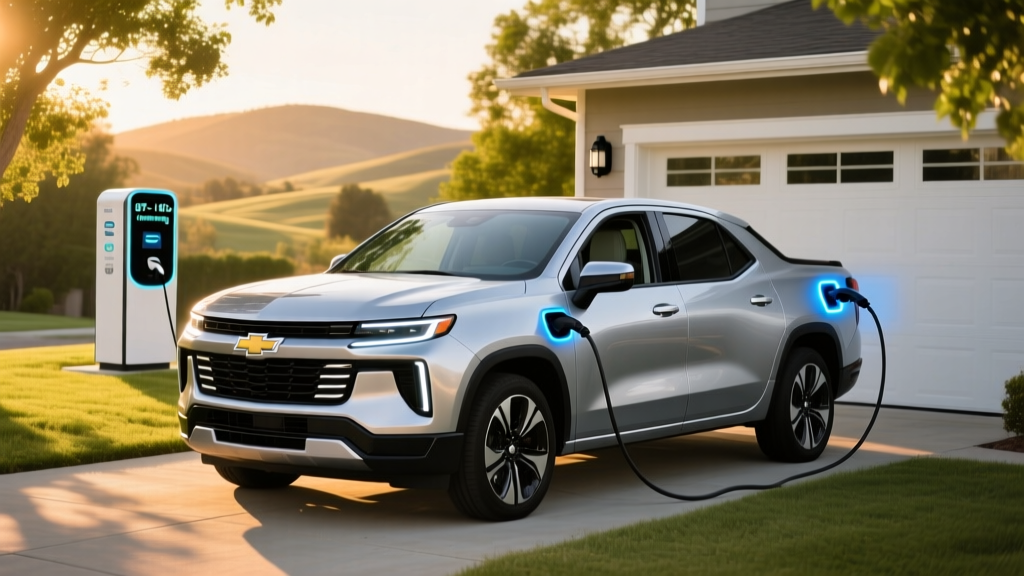
For home charging, the standard 11.5 kW onboard charger replenishes the extended battery from 10% to 100% in roughly 17–18 hours. The optional 19.2 kW onboard charger (available on select trims) cuts that to about 10–11 hours — a meaningful upgrade if your electrical panel can support a 100-amp dedicated circuit. Most Silverado EV owners will need a properly installed Level 2 home charger to make daily ownership practical.
Performance, Towing, and Payload
The dual-motor AWD powertrain is standard across all 2026 Silverado EV trims. Output varies significantly by trim:
- Work Truck (3WT / 4WT): 510 hp / 615 lb-ft — adequate for highway merging and job-site driving
- LTZ: 645 hp / 720 lb-ft — a comfortable cruiser with confident passing power
- RST: 664 hp / 740 lb-ft (standard), up to 754 hp / 785 lb-ft with the available Max Performance package
The RST with Max Performance achieves a 0–60 mph time of approximately 3.8 seconds — genuinely quick for a truck that weighs over 8,800 lbs. But straight-line speed is less important for truck buyers than towing and payload.
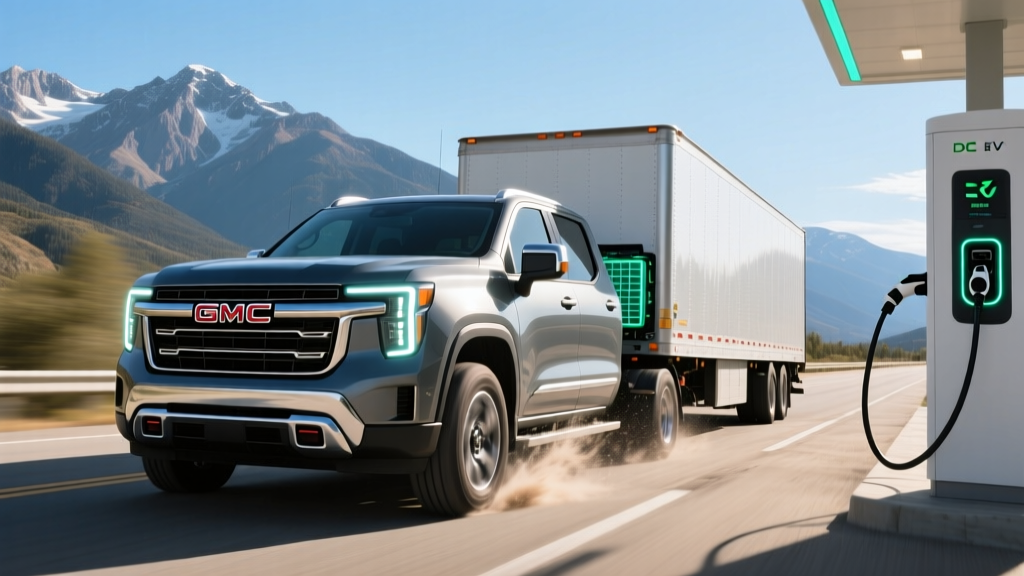
Max towing capacity: 12,500 lbs (4WT with available Max Trailering package). This trails the F-150 Lightning's 13,100-lb max but exceeds the Rivian R1T's 11,000-lb rating. Note that towing at or near max capacity will slash range by 40–55% depending on trailer aerodynamics and terrain. Plan for 180–220 miles of range when towing 10,000+ lbs on the highway.
Payload: Up to 1,800 lbs (4WT), aided by a structural composite bed floor and the available Multi-Flex tailgate. The front trunk (frunk) is not available on the Silverado EV — the space is occupied by HVAC components and the front motor. This is a notable miss versus the F-150 Lightning, which offers a 14.1 cu ft frunk.
Interior, Tech, and Cargo Space
The Silverado EV's cabin is a clear step up from the outgoing Silverado 1500 ICE trucks in terms of screen real estate and connectivity, though material quality on the work trims remains utilitarian by design.
- Infotainment: 17.7-inch diagonal touchscreen (standard on LTZ and above; 11-inch on 3WT/4WT), running GM's Google Built-in platform with native Google Maps, Google Assistant, and Play Store apps
- Instrument cluster: 11-inch digital driver display
- Super Cruise: Available hands-free driving on 750,000+ miles of compatible roads (SAE Level 2 — driver must remain attentive and eyes on road per GM's monitoring system)
- Trailering tech: Available camera-based trailer monitoring, digital trailer view, and trailer tire-pressure monitoring
Cargo dimensions:
| Measurement | Value |
|---|---|
| Bed Length | 69.9 in (5 ft 9.9 in) — Crew Cab / Short Box standard |
| Bed Volume | ~62.5 cu ft |
| Midgate-Extended Bed Length | Up to 109.9 in (9 ft 1.9 in) with Multi-Flex Midgate folded |
| Rear Legroom | 43.4 in |
| Front Headroom | 40.8 in |
| Frunk | Not available |
The Multi-Flex Midgate is the Silverado EV's standout utility feature. It allows you to fold down the partition between the cab and bed, extending the flat load floor through the cabin and enabling 8-foot or even 9-foot+ cargo (like lumber or kayaks) to be carried with the tailgate closed or partially open. This is a genuine differentiator that neither the F-150 Lightning nor the Rivian R1T offers.
Pricing, Trims, and Federal Tax Credit Eligibility
The 2026 Silverado EV lineup spans from work-truck fleet pricing to near-luxury RST territory. Here's the current MSRP structure:
| Trim | Battery | Base MSRP | Est. After §30D Credit |
|---|---|---|---|
| 4WT Standard | ~175 kWh | $52,400 | ~$44,900* |
| 4WT Extended | ~205 kWh | $62,400 | ~$54,900* |
| 3WT Extended | ~205 kWh | $59,900 | ~$52,400* |
| 8WT Standard | ~175 kWh | $55,400 | ~$47,900* |
| LTZ | ~205 kWh | $74,900 | $74,900 (over MSRP cap) |
| RST | ~205 kWh | $87,300 | $87,300 (over MSRP cap) |
*Federal tax credit caveat: Under current IRS §30D rules, the Silverado EV qualifies as a light truck, meaning the MSRP cap is $80,000 (versus $55,000 for sedans). The 4WT, 3WT, and 8WT trims fall under this cap and may be eligible for up to $7,500 in federal tax credits, subject to:
- Buyer income limits: AGI must not exceed $150,000 (single), $225,000 (head of household), or $300,000 (joint) — per IRS §30D guidelines
- Battery sourcing requirements: At least 60% of battery component value must be manufactured or assembled in North America (2026 threshold); critical minerals must meet escalating domestic/free-trade sourcing percentages
- Point-of-sale transfer: Eligible buyers can transfer the credit to the dealer at purchase, reducing the sale price directly rather than waiting for a tax refund
- LTZ and RST trims: The LTZ at $74,900 squeaks under the $80,000 truck cap, but the RST at $87,300 exceeds it and is ineligible for the federal credit
Tax credit eligibility depends on your individual circumstances, the specific VIN's battery sourcing, and IRS rules that may change. Consult a tax professional and verify your VIN on fueleconomy.gov before purchasing.
How It Stacks Up: Silverado EV vs. the Competition
| Spec | Silverado EV 4WT Ext. | F-150 Lightning Ext. | Rivian R1T Dual Max | Cybertruck AWD |
|---|---|---|---|---|
| EPA Range | 492 mi | 320 mi | 420 mi | 340 mi |
| Battery (usable) | ~205 kWh | ~131 kWh | ~149 kWh | ~123 kWh |
| Peak DC Charge | 350 kW | 150 kW | 220 kW | 250 kW |
| 10–80% Time | ~30 min | ~41 min | ~35 min | ~32 min |
| 0–60 mph | ~4.5 sec | ~3.8 sec | ~3.5 sec | ~3.9 sec |
| Max Tow | 12,500 lbs | 13,100 lbs | 11,000 lbs | 11,000 lbs |
| Starting MSRP | $52,400 | $54,995 | $75,900 | $79,990 |
| §30D Eligible Trims | Yes (WT trims) | Yes (most trims) | Limited | No (over cap) |
- You need maximum range for long-haul commuting or job-site rotation without charging access
- The Multi-Flex Midgate is essential for carrying long cargo (lumber, pipes, kayaks)
- You want native NACS access to Tesla Superchargers for road trips
- Fleet purchasing and §30D credit eligibility on work trims is a priority
- You need a frunk for secure, weather-sealed front cargo (F-150 Lightning wins here)
- You want a premium adventure-lifestyle truck with air suspension and quad-motor options (Rivian R1T)
- You tow heavy trailers frequently over long distances — the F-150 Lightning's 13,100-lb rating and Pro Power Onboard may serve you better
- You want the quickest off-the-line acceleration (Rivian R1T and F-150 Lightning are faster)
Pros, Cons, and Who Should Buy
- Class-leading EPA range up to 492 miles on extended battery
- 350 kW peak DC fast charging with native NACS port
- Multi-Flex Midgate enables 9+ ft cargo carry-through
- Competitive work-truck pricing with §30D credit eligibility
- Super Cruise hands-free driving on 750K+ miles of highways
- 12,500-lb max towing (with Max Trailering package)
- No frunk — front space occupied by mechanicals
- Short bed (69.9 in) limits stand-alone cargo without Midgate
- Heavy curb weight (~8,600+ lbs) hurts efficiency and tire wear
- RST and LTZ trims priced out of federal tax credit eligibility
- Highway efficiency drops significantly when towing
- Work-truck interior materials are basic by design
Who the 2026 Silverado EV suits best:
- Fleet and commercial buyers: The 3WT/4WT trims offer the lowest cost-per-mile in the segment when the §30D credit applies, and 492 miles of range means many fleet routes can be completed without mid-day charging.
- Suburban commuters with home charging: If your daily round-trip is under 100 miles and you can install a Level 2 charger at home, you'll charge once or twice a week and rarely visit a gas station or public charger.
- Outdoor enthusiasts who need cargo flexibility: The Midgate makes the Silverado EV uniquely capable of hauling long gear without a roof rack or trailer.
- Not ideal for: Buyers who prioritize sporty driving dynamics, need a frunk, or tow 10,000+ lb trailers on long highway routes regularly.
Frequently Asked Questions
What is the real-world range of the 2026 Silverado EV?
The EPA rates the extended-battery 4WT and 3WT at 492 miles combined. In real-world highway driving at 70 mph, expect roughly 380–410 miles. In cold weather (below 32°F) with cabin heating, plan for 320–360 miles. The standard-battery 8WT delivers approximately 300–330 real-world highway miles.
How fast does the Silverado EV charge at home and on the road?
At home on a 240V / 48A Level 2 charger, the Silverado EV adds roughly 25–30 miles of range per hour (11.5 kW). The optional 19.2 kW onboard charger boosts this to ~42–48 miles per hour. On a DC fast charger, it peaks at 350 kW and charges from 10–80% in approximately 30 minutes on the extended battery, though sustained average rates are closer to 190–220 kW.
Does the 2026 Silverado EV qualify for the federal EV tax credit?
Yes — the 4WT, 3WT, and 8WT trims (all under the $80,000 truck MSRP cap) are potentially eligible for up to $7,500 under IRS §30D, provided the buyer meets income limits ($150K single / $300K joint AGI) and the vehicle's battery meets 2026 critical-mineral and component-sourcing thresholds. The RST at $87,300 exceeds the cap and does not qualify. Always verify your specific VIN on fueleconomy.gov and consult a tax professional.
Is the Silverado EV worth buying over the F-150 Lightning?
It depends on your priority. The Silverado EV wins decisively on range (492 mi vs. 320 mi extended), DC fast-charging speed (350 kW vs. 150 kW), and cargo flexibility via the Midgate. The F-150 Lightning wins on frunk storage (14.1 cu ft), max towing (13,100 lbs), and a more refined interior at comparable trims. If range and charging speed are your top concerns, the Silverado EV has the edge in 2026.
Can the Silverado EV power my home during an outage?
Chevrolet offers available V2H (vehicle-to-home) bidirectional charging capability on select trims through the GM Energy ecosystem. With the required home energy management system and bidirectional charger installed, the Silverado EV's 205 kWh extended battery can theoretically power an average home for several days during an outage. Equipment and installation costs are additional and vary by home.
What is the battery warranty on the 2026 Silverado EV?
GM covers the Ultium battery pack for 8 years or 100,000 miles, whichever comes first. The warranty covers defects and capacity loss below 60% of original capacity. The limited bumper-to-bumper warranty is 3 years/36,000 miles, and the powertrain warranty is 5 years/60,000 miles.
How does towing affect the Silverado EV's range?
Towing a trailer at highway speeds reduces range by 40–55%, depending on trailer weight, aerodynamics, and terrain. With a 10,000-lb enclosed trailer on flat highway, expect roughly 200–250 miles from the extended battery. Plan charging stops accordingly and use the onboard trailering range estimator, which factors in trailer weight and route elevation.
Sources: EPA fueleconomy.gov, Chevrolet Silverado EV specifications, IRS New Clean Vehicle Tax Credit. All pricing and specifications reflect 2026 model year data available at time of publication. Tax credit eligibility subject to change.