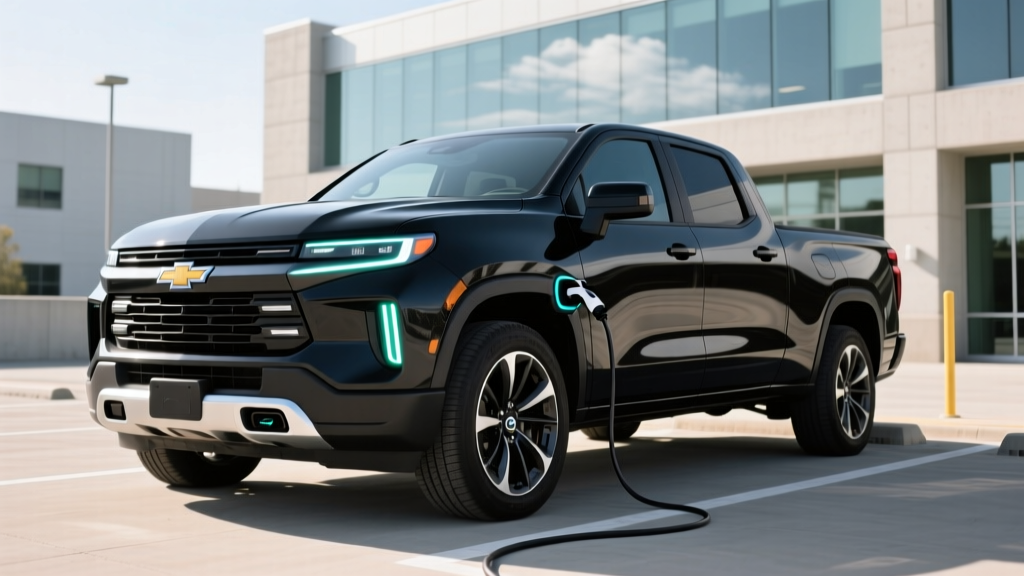
Searches for the 2015 Silverado bolt pattern still pull thousands of queries a year — mostly from truck owners swapping wheels or fitting aftermarket rims on the older C/K-platform pickups (6-lug, 139.7 mm / 5.5-inch circle). But if you've landed here wondering how that translates to the electric era, the short answer is: the 2026 Chevrolet Silverado EV uses an entirely different architecture. Built on GM's Ultium BT1 skateboard platform, the current Silverado EV carries a 6-lug, 139.7 mm (5.5-inch) bolt pattern on most trims — dimensionally familiar to Silverado loyalists, but engineered around a 9,200-pound GVWR, 24-module Ultium pack, and EV-specific load paths. Below is the full review buyers actually need: range, charging curves, pricing after the §30D credit, and whether this electric full-sizer earns its spot in the driveway.
2026 Silverado EV: Spec Table at a Glance
| Spec | WT4 (Work Truck) | LT | RST | Trail Boss |
|---|---|---|---|---|
| EPA Range | ~380 mi | ~400 mi | 440 mi (Max Range) | ~390 mi |
| Battery (usable) | ~200 kWh (NMC) | ~200 kWh (NMC) | ~215 kWh (NMC) | ~200 kWh (NMC) |
| Horsepower | 510 hp | 664 hp | 754 hp | 664 hp |
| 0-60 mph | ~5.5 s | ~4.5 s | ~4.2 s | ~4.5 s |
| Max DC Fast Charge | 350 kW | 350 kW | 350 kW | 350 kW |
| 10-80% DC Time | ~30 min | ~30 min | ~32 min | ~30 min |
| Level 2 Home Rate | 19.2 kW (~70 mi/hr) | 19.2 kW | 19.2 kW | 19.2 kW |
| Towing (max) | 12,500 lb | 12,500 lb | 10,000 lb | 12,000 lb |
| Payload | ~1,800 lb | ~1,600 lb | ~1,300 lb | ~1,500 lb |
| Base MSRP | $39,900 | $69,900 | $87,300 | $74,900 |
Source: Chevrolet.com 2026 Silverado EV configurator and EPA data at fueleconomy.gov. Specs vary by option package; confirm with dealer.
Range, Efficiency, and the Real-World Caveat
EPA Sticker: Up to 440 miles (RST Max Range pack).
Real-World Expectation: Plan on 340–380 mi on mixed highway driving at 70 mph; 260–310 mi when towing a 6,000-lb trailer; and roughly 20–30% range loss in sub-30°F weather due to cabin heating and battery impedance. The 200+ kWh Ultium pack delivers its best efficiency in city/regen-heavy driving, where EPA figures approach 70 MPGe combined on LT trims (about 48 kWh/100 mi).
The headline 440-mile number belongs exclusively to the RST with the available Max Range pack — a massive ~215 kWh NMC (nickel-manganese-cobalt) battery that makes the Silverado EV one of the longest-range production vehicles sold in the U.S. The more attainable WT4 and LT trims use a ~200 kWh pack, still enormous by EV standards but roughly 40–60 miles shorter on a full charge. Efficiency hovers around 48–54 kWh/100 mi depending on trim, wheel size, and aero configuration (the available tonneau and active grille shutters matter more here than on any gas truck).
Charging: 350 kW Peaks, but Watch the Curve
| Level | Power / Voltage | Miles Added per Hour | Notes |
|---|---|---|---|
| Level 1 (120V, 12A) | ~1.4 kW | ~3 mi/hr | Emergency/trickle only |
| Level 2 (240V, 80A) | 19.2 kW | ~70 mi/hr | Requires hardwired ChargePoint/Flo unit; overnight full charge |
| DC Fast (CCS/NACS) | Up to 350 kW @ 800V | ~600+ mi/hr peak | 10-80% in ~30 min; tapers sharply past 80% |
The Silverado EV's 800-volt Ultium architecture is the engineering story here. On a 350 kW cabinet (Electrify America, EVgo, or Tesla Supercharger with the factory NACS adapter on 2025+ builds), the truck pulls peak power in the 10–35% state-of-charge window, then progressively tapers. Expect the final 80–100% to take as long as the first 10–80% — a trait common to all large NMC packs but especially noticeable on a 200+ kWh battery. For daily ownership, 19.2 kW Level 2 at home is the sweet spot: a 10-hour overnight session restores the full pack. Budget $1,200–$2,500 for a hardwired 80A home charger install, including a possible 200A→400A panel upgrade for older homes.
Performance and Drivetrain
Every 2026 Silverado EV runs dual-motor AWD with torque-vectoring rear-axle capability on RST and Trail Boss trims. The RST's 754 hp and 785 lb-ft of torque shove this 8,800-lb truck to 60 mph in roughly 4.2 seconds — absurd for a full-sizer, and a full second quicker than a Raptor R. The WT4 work truck still delivers 510 hp, which is more than enough for job-site merging with a loaded bed. Air suspension is standard on LT and above, offering 2 inches of lift for off-road and 2 inches of drop for highway aero and bed loading. Trail Boss adds Multimatic DSSV dampers, skid plates, and a terrain-select mode calibrated for low-speed rock crawling with one-pedal regen.
Pricing, Trims, and the §30D Federal Tax Credit
| Trim | Base MSRP | As-Tested (typical) | §30D Credit Eligibility (2026) |
|---|---|---|---|
| WT4 | $39,900 | $46,500 | Up to $7,500 — subject to income & sourcing |
| LT | $69,900 | $78,000 | Eligible (under $80k truck MSRP cap) |
| RST | $87,300 | $95,000+ | Ineligible — exceeds $80k truck cap |
| Trail Boss | $74,900 | $82,000 | Borderline — options can push over cap |
The §30D federal EV tax credit remains a moving target in 2026. Key rules from the IRS:
- MSRP cap: $80,000 for trucks, vans, and SUVs (the RST is out; LT and WT4 are in).
- Buyer income cap: $150k single / $300k joint MAGI.
- Battery sourcing: Critical-mineral and battery-component percentages must meet 2026 thresholds (increasing annually; verify on IRS list at point of sale).
- Point-of-sale transfer: Eligible buyers can take the credit as a down-payment reduction at the dealer, not just a tax return line item.
Because battery-sourcing rules tighten every January, always confirm eligibility with the dealer's EV desk and cross-check the fueleconomy.gov credit lookup before signing.
Cargo, Passenger, and the Multi-Flex Tailgate
The Silverado EV's skateboard platform frees up interior volume that the gas truck can't match. The rear seat offers 43.4 inches of legroom (about 1.5 inches more than the ICE crew cab), and the 5-foot-11-inch bed handles standard 4x8 plywood with the Multi-Flex midgate folded down — extending load length to over 10 feet. The front "eTrunk" (frunk) provides 10.7 cubic feet of lockable, drainable storage, doubling as a tailgating cooler. Payload varies from 1,300 lb (RST) to 1,800 lb (WT4), and max towing peaks at 12,500 lb on WT4 and LT with the available Max Tow package — competitive with F-150 Lightning's 10,000 lb but below the Rivian R1T's 11,000 lb when equipped. Note that towing near max drops real-world range to roughly 180–220 miles, so plan charging stops accordingly.
Tech, Driver Assists, and Drawbacks
A 17.7-inch infotainment screen and 11-inch driver cluster run GM's Ultifi software with Google Built-In, wireless CarPlay/Android Auto, and native route planning that factors in battery SoC, elevation, and charger availability. Super Cruise (Level 2 hands-free on 750,000+ miles of mapped roads) is standard on RST and optional on LT — but to be explicit, this is not self-driving; the driver must monitor the road at all times per NHTSA guidance. Vehicle-to-Load (V2L) outputs up to 12 kW from the bed and frunk, enough to run a job site's worth of tools or back up essential home circuits during an outage.
Pros
- Class-leading 440-mile max range (RST)
- 350 kW DC charging with 800V architecture
- 12,500-lb towing and 10.7 cu-ft eTrunk
- 12 kW V2L for job-site and home backup
- Super Cruise hands-free on mapped highways
Cons
- RST over $80k → loses §30D credit
- 200+ kWh pack = long final 20% charge taper
- WT4 base price has climbed since launch
- Towing cuts range by ~45-50%
- 80A home charger requires panel upgrade in many homes
Bolt Pattern, Wheels, and Compatibility Note
For the search-intent match: the 2026 Silverado EV uses a 6-lug, 139.7 mm (5.5-inch) bolt pattern with an M14 x 1.5 thread pitch and approximately 78.1 mm center bore. This matches the modern Silverado 1500 ICE and the 2015 Silverado 1500 bolt pattern dimensionally, but do not assume wheel interchangeability. The EV's curb weight (~8,800 lb), 24-module pack mass distribution, and higher torque output require wheels rated for the truck's specific GVWR and load index (typically 121/118). Always verify load rating, offset, and TPMS compatibility with a qualified tire shop before swapping rims.
Battery Warranty and Long-Term Ownership
GM covers the Ultium pack for 8 years / 100,000 miles with a 70% state-of-health retention threshold — industry standard. Real-world degradation on the larger Ultium packs has been modest in early data (roughly 5–8% loss over the first 60,000 miles), helped by active liquid thermal management and a sizable top/bottom buffer. Out-of-warranty replacement is not cheap: expect $18,000–$28,000 for a full pack R&R at current pricing, though module-level service is available and significantly cheaper.
Who the Silverado EV Suits — and Who Should Look Elsewhere
Choose the Silverado EV if: You need a daily-driver work truck with 400+ mile range, tow under 8,000 lb most days, want V2L for job-site power, and can install a 19.2 kW home charger. The WT4 at $39,900 (potentially ~$32,400 after the §30D credit) is the value play of the decade for commercial fleets.
Look elsewhere if: You regularly tow over 10,000 lb for long distances (Rivian R1T or a diesel HD is still more practical), live in an apartment without charging access, or want a sub-$40k truck without the WT4's fleet-oriented interior. The F-150 Lightning remains slightly cheaper at mid-trims and has a more established public-charging track record today.
Frequently Asked Questions
What is the real-world range of the 2026 Silverado EV?
EPA rates the RST Max Range at 440 miles, but expect 340–380 miles in mixed highway driving, 260–310 miles while towing, and 20–30% loss in freezing weather.
How fast does the Silverado EV charge?
Up to 350 kW on DC fast chargers, achieving 10–80% in about 30 minutes. At home on a 19.2 kW Level 2, it adds roughly 70 miles per hour — a full charge in 10–12 hours.
Does the 2026 Silverado EV qualify for the federal EV tax credit?
The WT4 and LT trims qualify for up to $7,500 under §30D (under the $80k truck MSRP cap), subject to buyer income limits and battery-sourcing rules. The RST exceeds the cap and is ineligible. Always verify on IRS.gov.
Is the Silverado EV worth it vs. the F-150 Lightning or Rivian R1T?
For max range and V2L power, yes — the Silverado EV's 440-mile ceiling and 12 kW output lead the class. For value at mid-trims and a mature charging ecosystem, the Lightning still edges it. The R1T wins on off-road refinement and adventure lifestyle, but costs more and tows less.
What is the bolt pattern on the 2026 Silverado EV?
6-lug, 139.7 mm (5.5-inch) bolt pattern — dimensionally the same as the 2015 Silverado 1500, but wheels must be rated for the EV's higher GVWR and load index. Never swap wheels without confirming load rating.