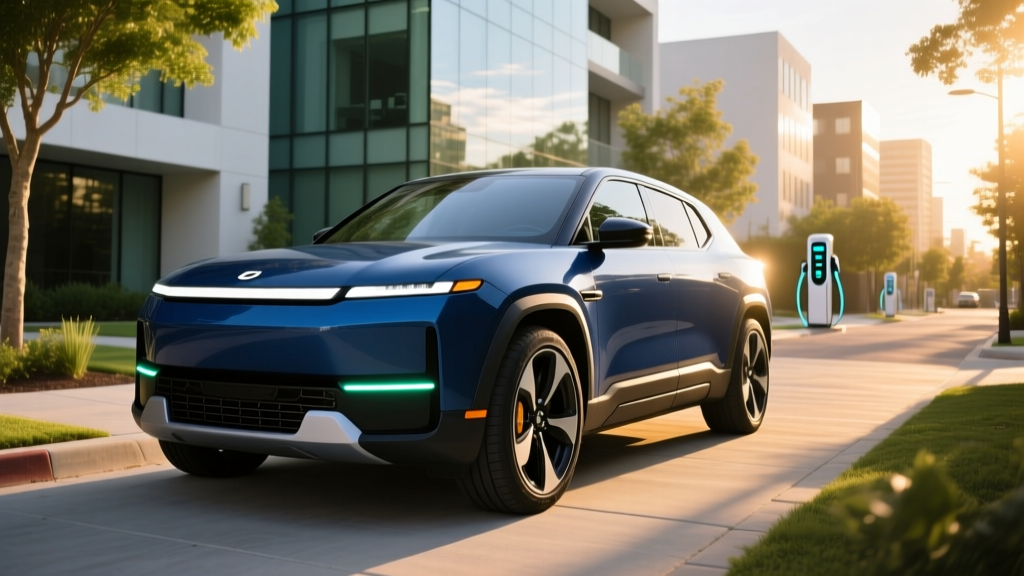
The compact electric SUV segment just got a serious new contender. The 2026 Rivian R2 arrives as the brand's mainstream play—a smaller, more affordable sibling to the R1S that aims to undercut the Tesla Model Y while delivering genuine off-road capability and Rivian's signature adventure-focused design. With a starting price around $45,000 and projected EPA range exceeding 330 miles, the R2 is positioned to capture buyers who want an electric SUV but find the R1S's $75,000+ price tag prohibitive.
But announced specs and showroom reality often diverge. Below, we break down everything confirmed about the 2026 Rivian R2's cost, efficiency, charging performance, and federal tax credit eligibility—plus the real-world ownership factors that spec sheets don't capture.
2026 Rivian R2 Core Specifications
| Attribute | Specification |
|---|---|
| Base MSRP | $45,000 (estimated) |
| As-Tested Price (Dual-Motor Adventure) | $52,500–$55,000 (estimated) |
| EPA Est. Range | 330+ miles (Large Pack, RWD) |
| Battery Capacity | ~85 kWh usable (Large Pack, NMC chemistry) |
| Drivetrain | RWD (base) / Dual-Motor AWD (available) |
| Horsepower | ~350 hp (RWD) / ~500 hp (Dual-Motor) |
| 0-60 mph | ~6.0 sec (RWD) / ~4.5 sec (Dual-Motor) |
| Max DC Fast Charge | ~200 kW peak |
| 10-80% DC Charge Time | ~25 minutes (estimated) |
| Level 2 Home Charge | 11.5 kW / ~30 miles per hour |
| Efficiency | ~115 MPGe / ~29 kWh/100 mi |
| Cargo Volume | ~32 cu ft (rear seats up) / ~65 cu ft (seats folded) |
| Battery/Powertrain Warranty | 8 years / 100,000 miles |
| Production Start | First half 2026 (Normal, Illinois plant) |
Note: The Rivian R2 is in pre-production as of early 2026, with customer deliveries expected mid-year. Specifications above reflect Rivian's announced targets and may shift slightly for final EPA certification. We'll update this review with confirmed figures once production vehicles are tested.
Real-World Range: What to Actually Expect
Real-World Highway (70 mph): ~265–285 miles
Cold Weather (below 32°F): ~230–260 miles
Mixed Commuting (city/suburban): ~290–310 miles
EPA range estimates are calculated under controlled laboratory conditions that favor low-speed, stop-and-go driving where regenerative braking recovers energy. Highway driving at sustained 70-80 mph speeds increases aerodynamic drag significantly—an SUV's boxy profile compounds this penalty. Based on Rivian R1S real-world testing and the R2's similar form factor, expect roughly 15-20% range reduction on interstate trips.
Cold weather introduces additional losses. Battery chemistry becomes less efficient in freezing temperatures, and cabin heating draws substantial power (unlike gas vehicles that use waste heat from the engine). The R2 is expected to feature a heat pump system, which mitigates but doesn't eliminate cold-weather range loss. If you regularly drive in sub-freezing conditions, budget for 25-30% range reduction versus the EPA sticker.
For context: a 330-mile EPA rating translates to comfortable 250-mile road trip segments with a safety buffer, or a full week of 40-mile daily commutes without home charging access. Most R2 buyers with Level 2 home charging will rarely think about range day-to-day.
Charging Performance: DC Fast and Home Level 2
| Charging Method | Power | Charging Speed | Time |
|---|---|---|---|
| Level 1 (120V outlet) | 1.4 kW | ~4 miles per hour | ~85 hours (0-100%) |
| Level 2 (240V home) | 11.5 kW | ~30 miles per hour | ~9 hours (0-100%) |
| DC Fast Charge | 200 kW peak | ~150 miles in 15 min | ~25 min (10-80%) |
The R2's 200 kW peak DC fast-charge capability places it in the mainstream tier—not as fast as Hyundai/Kia's 350 kW E-GMP platform or Tesla's 250 kW V3 Superchargers, but competitive with the Ford Mustang Mach-E and Volkswagen ID.4. Peak charging rates are only sustained between roughly 10-40% state of charge; above 80%, the charge curve tapers significantly to protect battery longevity. This is why manufacturers quote 10-80% times rather than 0-100%.
For road trips, the R2's NACS (Tesla-style) charge port means native access to Tesla's Supercharger network—over 16,000 stalls nationwide as of 2026. This is a decisive advantage over CCS-only vehicles, which rely on Electrify America, EVgo, and other networks with spotty reliability records in rural areas.
At home, the 11.5 kW Level 2 onboard charger adds roughly 30 miles of range per hour of charging. A typical overnight session (8-10 hours) fully replenishes the battery from near-empty. Installation of a 240V Level 2 home charger typically costs $800-$2,000 depending on electrical panel capacity and run length from panel to garage—factor this into your first-year ownership budget.
Pricing, Trims, and Federal Tax Credit Eligibility
| Trim Level | MSRP | Est. After §30D Credit |
|---|---|---|
| R2 Standard (RWD) | $45,000 | $37,500 |
| R2 Adventure (Dual-Motor AWD) | $52,000 | $44,500 |
| R2 Adventure+ (Premium Package) | $55,000 | $47,500 |
The 2026 Rivian R2's $45,000 starting price undercuts the R1S by roughly $30,000 and positions it directly against the Tesla Model Y Long Range ($48,000) and Ford Mustang Mach-E Premium ($45,000). Dual-motor AWD and larger battery packs push pricing into the low-to-mid $50,000 range.
Federal EV Tax Credit (§30D) Eligibility
The R2 is expected to qualify for the full $7,500 federal tax credit under IRS §30D, but eligibility depends on several factors that buyers must verify:
- MSRP Cap: SUVs must be priced below $80,000. All R2 trims clear this threshold comfortably.
- Buyer Income Cap: Modified adjusted gross income must not exceed $150,000 (single), $225,000 (head of household), or $300,000 (married filing jointly).
- Battery Sourcing Requirements: At least 40% of critical minerals must be sourced from the US or free-trade-agreement countries (increasing to 80% by 2027). Battery components must be manufactured or assembled in North America. Rivian has confirmed R2 battery production will occur at its Normal, Illinois facility, but final critical-mineral sourcing details are pending.
- Point-of-Sale Transfer: As of 2024, buyers can transfer the credit to the dealer at purchase, reducing the vehicle's upfront cost rather than waiting for a tax refund. This requires dealer participation and proper IRS registration.
Important: Tax credit rules are complex and subject to change. Consult IRS.gov guidance on clean vehicle credits and consider speaking with a tax professional before relying on credit eligibility for your purchase decision. Rivian will publish final §30D compliance documentation closer to launch.
Performance and Driving Dynamics
The R2's dual-motor AWD configuration delivers roughly 500 horsepower and a 0-60 mph time around 4.5 seconds—quick by any measure, though not the sub-3-second territory of Rivian's quad-motor R1T. The base RWD model trades some acceleration for efficiency and lower cost, hitting 60 mph in approximately 6.0 seconds.
Rivian's hallmark is balancing on-road refinement with genuine off-road capability. The R2 is expected to feature:
- Adjustable air suspension with up to 8.5 inches of ground clearance
- Approach/departure angles optimized for trail use
- Water fording capability (depth TBD, likely 24+ inches)
- Tank turns (brake-locked pivot turns) on dual-motor trims
Towing capacity is projected at 3,500-4,000 pounds—sufficient for a small boat or motorcycle trailer, but well below the R1T's 11,000-pound rating. If you need serious towing capability, the R1T remains the better choice.
Interior, Cargo, and Technology
The R2's interior design emphasizes durability and adventure utility over luxury opulence. Expect:
- Seating: 5-passenger capacity with vegan leather or premium cloth options
- Cargo: ~32 cubic feet behind rear seats, expanding to ~65 cu ft with seats folded. A front trunk (frunk) adds additional secure storage.
- Infotainment: 15.6-inch center touchscreen running Rivian's proprietary OS, with wireless Apple CarPlay and Android Auto
- Driver Assistance: Rivian's Driver+ system (SAE Level 2) with adaptive cruise, lane centering, and automatic emergency braking. Hands-free highway driving capability expected on Adventure trims.
- Unique Features: Built-in air compressor, camp kitchen accessory compatibility, gear tunnel storage options
Rivian's software platform has matured significantly since the R1S launch, with regular over-the-air updates adding features and refining performance. The Driver+ system is competitive with Ford BlueCruise and GM Super Cruise for hands-free highway driving, though it requires driver attention and does not constitute "self-driving" capability.
Pros and Cons
Pros
- Competitive $45,000 starting price undercuts R1S by $30K
- 330+ mile EPA range eliminates daily range anxiety
- NACS charge port grants native Tesla Supercharger access
- Genuine off-road capability rare in compact EV SUVs
- Strong projected resale value based on R1S/R1T depreciation data
Cons
- Pre-production status means final specs and delivery timelines uncertain
- 200 kW peak DC charging lags Hyundai/Kia's 350 kW capability
- No third-row seating option (consider R1S if you need 7 seats)
- Adventure-focused design trades some on-road refinement for utility
- Service center network still expanding outside major metros
Who Should Buy the Rivian R2?
The R2 is ideal for:
- Outdoor enthusiasts who want EV efficiency without sacrificing trail capability or cargo flexibility
- Young families needing a compact SUV with strong safety ratings, ample cargo space, and manageable size for urban parking
- Current R1S owners seeking a smaller, more affordable second EV for daily commuting
- Tesla Model Y shoppers who want an alternative with more distinctive design and off-road chops
Consider alternatives if:
- You need three-row seating (R1S, Kia EV9)
- Fastest possible DC charging is a priority (Hyundai Ioniq 5, Kia EV6)
- You require 5,000+ pound towing capacity (R1T, F-150 Lightning)
Frequently Asked Questions
When will the 2026 Rivian R2 be available for purchase?
Rivian plans to begin R2 production in the first half of 2026 at its Normal, Illinois facility, with customer deliveries expected by mid-2026. Reservations are currently open with a refundable deposit. Final EPA certification and pricing will be confirmed closer to launch.
Does the Rivian R2 qualify for the $7,500 federal tax credit?
The R2 is expected to qualify for the full §30D credit based on its MSRP (under $80,000 cap) and North American battery production. However, final eligibility depends on critical mineral sourcing compliance and buyer income limits. Verify eligibility via IRS.gov and consult a tax professional before purchase.
What is the real-world highway range of the R2?
Expect approximately 265-285 miles at sustained 70 mph highway speeds, down from the 330+ mile EPA estimate. Cold weather (below freezing) further reduces range to roughly 230-260 miles. Most daily driving scenarios will achieve closer to the EPA sticker.
How does R2 charging speed compare to Tesla Model Y?
The R2's 200 kW peak DC charging is slower than the Model Y's 250 kW capability, translating to roughly 5-7 additional minutes for a 10-80% charge. However, the R2's NACS port provides identical Supercharger network access, which matters more for road trip convenience than peak kW.
Is the R2 worth waiting for vs. buying a Model Y now?
If you need an EV immediately, the Model Y is a proven, available option with extensive charging infrastructure. If you can wait 6-12 months and value off-road capability, distinctive design, and potentially lower pricing, the R2 is worth the wait. Early adopters face typical new-model risks (production delays, early-build quality issues).
What is the R2's battery warranty?
Rivian provides an 8-year/100,000-mile battery and powertrain warranty, matching industry standards set by Tesla, Ford, and Hyundai. This covers battery capacity degradation below a specified threshold (typically 70% retention) and powertrain component failures.
Sources: Rivian R2 official page, IRS Clean Vehicle Credits, EPA Fuel Economy (final R2 data pending)