The Rivian R1S has evolved from a promising startup SUV into one of the most capable three-row electric vehicles on the market. For 2026, Rivian continues to refine its flagship SUV with the second-generation drive unit architecture introduced for the 2025 model year, delivering more range, faster charging, and sharper performance. But with a starting price near $80,000 and a competitive luxury EV SUV segment that includes the Tesla Model X, Cadillac Escalade IQ, and upcoming Mercedes EQS SUV refreshes, the R1S has to earn its premium. Here's exactly what you're getting.
Quick Verdict: Who the 2026 R1S Is For
The 2026 Rivian R1S is best suited for families and adventure-oriented buyers who need genuine three-row seating (up to seven passengers), real towing capability (7,700 lbs rated), and off-road competence — without sacrificing daily-driver efficiency or tech-forward convenience. If your use case is primarily urban commuting with occasional road trips and you don't need three rows, a smaller EV like the Hyundai Ioniq 5 or Tesla Model Y will cost significantly less. But if you're cross-shopping large luxury SUVs and want electric propulsion with legitimate off-road chops, the R1S occupies a niche no competitor fully matches.
Range, Battery & Efficiency
Rivian offers the 2026 R1S with three battery configurations. The chemistry and capacity differ by pack:
| Spec | Standard | Large | Max |
|---|---|---|---|
| Usable Capacity | ~95 kWh | ~120 kWh | ~149 kWh |
| Chemistry | LFP (Lithium Iron Phosphate) | NMC (Nickel Manganese Cobalt) | NMC (46mm cylindrical cells) |
| EPA Range (Dual-Motor) | ~270 mi | ~352 mi | ~410 mi |
| Efficiency (Dual-Motor) | ~2.0 kWh/mi (50 MPGe) | ~2.1 kWh/mi (48 MPGe) | ~2.2 kWh/mi (46 MPGe) |
The Standard pack uses LFP chemistry, which trades energy density for longevity — LFP cells tolerate frequent 100% charging with minimal degradation, making it ideal for daily commuting where you charge at home nightly. The Large and Max packs use NMC chemistry, which delivers higher energy density (more range per pound) but benefits from being kept between 20-80% state of charge for daily use, saving 100% charges for road trips. The Max pack's 46mm cylindrical cells are similar in form factor to those used by Tesla, offering improved thermal management and charge acceptance.
For verified efficiency data, the U.S. Department of Energy's fueleconomy.gov remains the authoritative source for EPA test cycle results.
Charging Speed: DC Fast Charging & Home Level 2
| Charging Level | Max Pack | Large Pack | Standard (LFP) |
|---|---|---|---|
| Peak DC Fast Charge | ~220 kW | ~200 kW | ~180 kW |
| 10-80% DC Time | ~30 min | ~28 min | ~25 min |
| Level 2 Home (11.5 kW) | ~16 mi/hr | ~20 mi/hr | ~25 mi/hr |
| Level 2 Full Charge (0-100%) | ~14 hours | ~11 hours | ~9 hours |
| Connector | NACS (native) | NACS (native) | NACS (native) |
The 2026 R1S uses the NACS (North American Charging Standard) connector natively, meaning direct access to Tesla Supercharger stations — the most extensive and reliable DC fast-charging network in North America — without an adapter. This is a significant practical advantage over CCS-equipped vehicles that require adapters for Supercharger access.
Charging curve reality: The peak DC charge rate (e.g., 220 kW on the Max pack) is not sustained across the entire session. The R1S will hold its peak rate roughly between 10-40% state of charge, then taper progressively. From 80-100%, charge speed drops dramatically to protect battery health — expect the final 20% to take as long as the 10-80% session. For road trips, plan to charge from 10-80% and move on rather than waiting for a full charge.
At home, the R1S supports up to 11.5 kW Level 2 charging on a 48-amp circuit (hardwired, 60-amp breaker recommended). This requires a professional electrician and a NEMA 14-50 outlet or hardwired wall connector installation. Expect a full overnight charge to replenish daily driving easily — even the Max pack's 14-hour 0-100% time is practical when you arrive home with 30-40% remaining each evening.
Performance & Drivetrain
| Configuration | Dual-Motor AWD | Performance Dual-Motor | Tri-Motor AWD |
|---|---|---|---|
| Horsepower | 533 hp | 665 hp | 850 hp |
| Torque | 610 lb-ft | 829 lb-ft | 1,103 lb-ft |
| 0-60 mph | ~4.5 sec | ~3.5 sec | ~2.9 sec |
| Top Speed | 120 mph | 130 mph | 130 mph |
| Towing Capacity | 7,700 lbs | 7,700 lbs | 7,700 lbs |
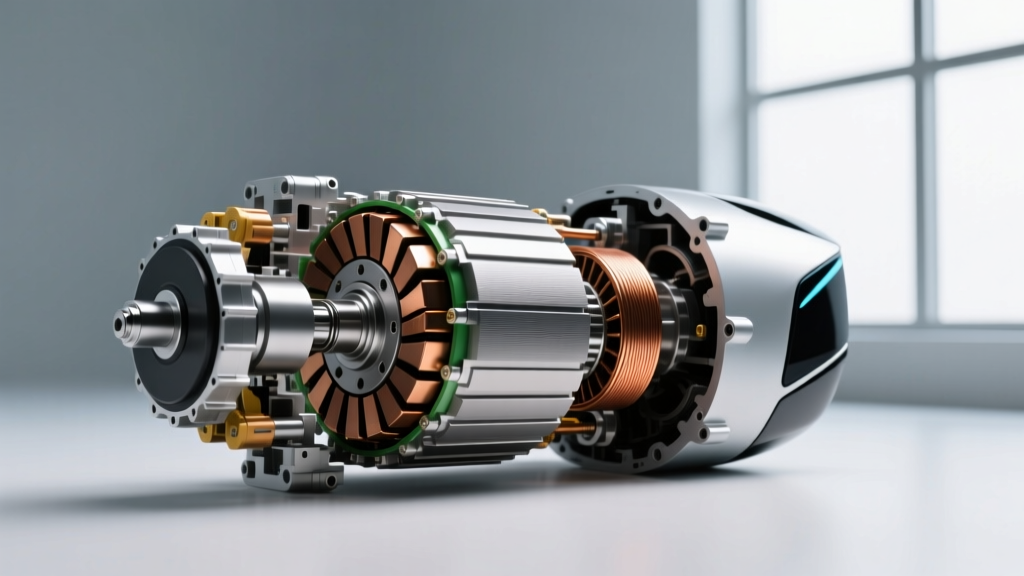
Rivian's second-generation drive units use a dual-motor setup on the front and rear axles, with the Tri-Motor adding an additional rear motor for extraordinary thrust. The dual-motor configuration uses a permanent magnet motor on one axle and an induction motor on the other — the induction motor can fully decouple when not needed, reducing parasitic drag and improving highway efficiency.
For off-road driving, the R1S offers 14.9 inches of ground clearance at max ride height (air suspension standard on most trims), with approach, departure, and breakover angles that rival dedicated off-road SUVs. The air suspension also enables a "kneel" function for easier cargo loading and passenger entry.
Towing note: While the 7,700-lb rating is impressive, towing at or near max capacity will cut range by 40-50%. Plan for 180-220 miles of range when towing a heavy trailer — and verify DC fast-charger availability along your route, as not all stations accommodate vehicles with trailers attached.
Pricing, Trims & Federal Tax Credit
| Trim / Configuration | Base MSRP | Est. §30D Credit | Effective Price |
|---|---|---|---|
| Dual-Motor Standard (Adventure) | $79,900 | $0–$3,750* | $76,150–$79,900 |
| Dual-Motor Large (Adventure) | $85,900 | $0–$3,750* | $82,150–$85,900 |
| Dual-Motor Max (Ascend) | $99,900 | $0–$3,750* | $96,150–$99,900 |
| Tri-Motor Max (Ascend) | $109,900 | $0–$3,750* | $106,150–$109,900 |
*Destination fee (~$1,800) not included. Tax credit amounts are estimates based on current IRS §30D rules and are subject to change. Consult a tax professional.
- MSRP Cap: SUVs must have an MSRP at or below $80,000 to qualify. Most R1S trims exceed this threshold — only the base Dual-Motor Standard at $79,900 potentially qualifies.
- Buyer Income Cap: Modified AGI must not exceed $150,000 (single), $225,000 (head of household), or $300,000 (joint filing).
- Battery Sourcing: The credit is split into two halves ($3,750 each) — one for critical minerals sourcing and one for battery component manufacturing. Rivian's U.S.-built battery packs may qualify for partial credit depending on current mineral/component sourcing rules. Check the latest IRS guidance on clean vehicle credits before purchasing.
- Point-of-Sale Transfer: If eligible, you can transfer the credit to the dealer at purchase, reducing your out-of-pocket cost immediately rather than waiting for tax filing.
Interior, Cargo & Technology
The R1S seats up to seven passengers across three rows. Second-row captain's chairs (six-passenger configuration) are available as an option for improved comfort and easier third-row access.
| Dimension | Measurement |
|---|---|
| Cargo (behind 3rd row) | ~10.6 cu ft |
| Cargo (3rd row folded) | ~46.7 cu ft |
| Cargo (all rows folded) | ~88.2 cu ft |
| Front Legroom | 41.3 in |
| Second-Row Legroom | 38.6 in |
| Third-Row Legroom | 30.4 in |
| Front Trunk (Frunk) | ~11.0 cu ft |
The third row is best suited for children or short trips — at 30.4 inches of legroom, adults will find it tight on longer drives. The 10.6 cu ft behind the third row is enough for a few grocery bags but not luggage for seven. Fold the third row and you gain a very usable 46.7 cu ft, and the combined frunk plus rear cargo area makes the R1S practical for family road trips with five or fewer passengers.
Infotainment & Tech: The R1S runs Rivian's proprietary software on a 15.6-inch center touchscreen and a 12.3-inch digital instrument cluster. The system supports over-the-air updates, native navigation with integrated route planning and charging stops, and a camp mode that maintains climate control for overnight use. Wireless Apple CarPlay and Android Auto are not currently supported — Rivian uses its own app ecosystem, which is robust but means you're locked into their interface.
Driver Assistance: The R1S comes equipped with Rivian's Driver+ system, which includes adaptive cruise control, lane centering, and highway assist. This is a Level 2 SAE driver-assistance system — the driver must remain engaged, hands on or near the wheel, and eyes on the road at all times. It is not autonomous driving. The system performs competently on highways but does not match the hands-free capabilities of GM's Super Cruise or Ford's BlueCruise on mapped divided highways.
Warranty & Long-Term Ownership
| Coverage | Terms |
|---|---|
| Battery Pack | 8 years / 175,000 miles |
| Drive Units (Powertrain) | 8 years / 175,000 miles |
| Vehicle (Bumper-to-Bumper) | 5 years / 60,000 miles |
| Battery Degradation Threshold | Coverage if capacity falls below ~70% within warranty period |
Rivian's 8-year/175,000-mile battery and drive unit warranty is competitive within the segment. The battery warranty covers capacity loss below a defined threshold (typically 70% of original capacity). Real-world data from early Rivian owners suggests NMC packs lose roughly 5-8% capacity over the first 100,000 miles, with degradation slowing significantly after the initial break-in period. LFP packs (Standard) tend to show even less measurable degradation, though long-term data is still limited.
One ownership consideration: Rivian operates its own service network with a mix of service centers and mobile service vans. Coverage is expanding but remains less dense than legacy automaker dealer networks, particularly in rural areas. Check Rivian's service locator for coverage in your area before committing.
Pros, Cons & Decision Framework
✓ Pros
- Class-leading combination of range (410 mi Max), off-road capability, and 7,700-lb towing
- Native NACS connector — direct Tesla Supercharger access
- Genuine three-row seating with usable frunk
- Air suspension standard, excellent ride quality
- Over-the-air updates continuously add features
- Strong build quality and thoughtful design details (gear tunnel option, built-in flashlight)
- 8-yr/175,000-mi battery warranty
✗ Cons
- Starting price near $80K — most trims exceed the §30D MSRP cap
- No wireless Apple CarPlay or Android Auto
- Third-row space is tight for adults
- Driver+ is competent but not hands-free (no Level 2+ on par with Super Cruise)
- Service network still expanding — may be sparse in rural regions
- Towing cuts range by 40-50%
- Insurance premiums tend to run 15-25% higher than comparable ICE SUVs
Choose the 2026 R1S If:
- You need three rows and genuine off-road/towing capability in an EV
- You want native Supercharger access without adapters
- You value OTA updates and a vertically-integrated software experience
- Your budget allows $80K-$110K for a premium SUV
Look Elsewhere If:
- You only need two rows — consider the R1T, Tesla Model Y, or Hyundai Ioniq 5 for far less
- You want hands-free highway driving — GM's Super Cruise vehicles offer more advanced Level 2+ capability
- You need maximum tax credit eligibility — most R1S trims exceed the $80K MSRP cap
- Rural service access is a priority — verify Rivian coverage in your area
Frequently Asked Questions
What is the real-world range of the 2026 Rivian R1S?
The EPA-estimated range tops out at 410 miles for the Dual-Motor Max configuration. In real-world highway driving at 70-75 mph in mild weather, expect roughly 320-350 miles. Cold weather (below 30°F) can reduce that further by 15-25%, to approximately 270-300 miles. The Standard pack delivers roughly 210-230 real-world highway miles.
How fast does the R1S charge at home and on the road?
On a DC fast charger, the Max pack peaks at approximately 220 kW and charges from 10-80% in about 30 minutes. At home on a Level 2 charger (11.5 kW), you'll add roughly 16-25 miles of range per hour depending on pack size, with a full charge taking 9-14 hours. The NACS connector provides native access to Tesla Superchargers.
Does the 2026 R1S qualify for the $7,500 federal EV tax credit?
Likely only partially, and only on the base trim. The IRS §30D credit requires SUVs to have an MSRP at or below $80,000 — only the base Dual-Motor Standard at $79,900 qualifies. Even then, you must meet income caps ($150K single / $300K joint) and the vehicle must satisfy battery sourcing requirements for critical minerals and components. Most buyers will qualify for $0 to $3,750, not the full $7,500. Always verify current rules at IRS.gov and consult a tax professional.
Is the R1S worth buying over the Tesla Model X or Cadillac Escalade IQ?
The R1S offers a unique combination of off-road capability, native NACS charging, and adventure-oriented design that neither the Model X nor Escalade IQ matches. The Model X offers faster Supercharger network familiarity and more established service infrastructure, but less ground clearance and a polarizing design. The Escalade IQ brings luxury and brand cachet but at a higher price point. If off-road use, towing, and a rugged-yet-refined character matter to you, the R1S is the strongest choice in this segment.
How long will the R1S battery last?
Rivian warranties the battery for 8 years or 175,000 miles against capacity loss below approximately 70%. Based on real-world data from early owners, NMC packs typically lose 5-8% capacity in the first 100,000 miles, with degradation slowing thereafter. With proper care (avoiding frequent 100% charges on NMC, limiting DC fast-charging to road trips), the battery should remain functional well beyond 200,000 miles.
Can the R1S tow a camper or boat?
Yes — the R1S is rated to tow up to 7,700 lbs across all drivetrain configurations. However, towing near max capacity reduces range by roughly 40-50%. If you regularly tow heavy loads over long distances, plan charging stops carefully and expect effective range of approximately 180-220 miles with the Max pack under tow.