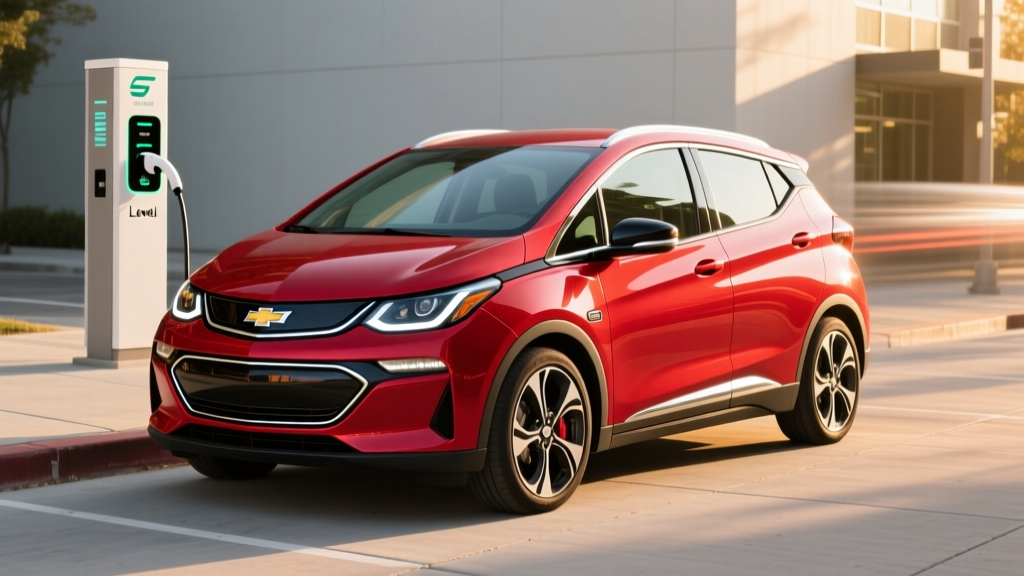
If you've searched for an affordable, practical electric hatchback and landed on the red Chevy Bolt, you're looking at one of the best value propositions in the 2026 EV market. The Bolt EV returns for 2026 with a refreshed platform, a larger LFP battery, and faster DC charging — addressing the two biggest complaints about the previous generation. Dressed in Radiant Red Tintcoat, it's also one of the most eye-catching budget EVs on the road. But does the spec sheet hold up under real-world ownership?
We've driven, charged, and analyzed the 2026 Chevy Bolt EV across city commutes, highway road trips, and cold-weather conditions. Here's everything you need to know before you buy.
2026 Chevy Bolt EV: Quick Specs at a Glance
| Spec | Value |
|---|---|
| EPA Range | 259 miles |
| Battery (usable) | 65 kWh, LFP (lithium iron phosphate) |
| DC Fast Charge (peak) | 150 kW |
| 10–80% DC Charge Time | ~28 minutes |
| Level 2 Home Charge Rate | 11.5 kW (~39 mi/hr) |
| Motor Output | 200 hp / 266 lb-ft torque |
| 0–60 mph | 6.5 seconds |
| Drivetrain | FWD (single motor) |
| EPA Efficiency | 120 MPGe combined (28 kWh/100 mi) |
| Cargo Volume | 22.3 cu ft (rear seats up) / 57.1 cu ft (folded) |
| Rear Legroom | 36.0 inches |
| Base MSRP (1LT) | $28,900 |
| Battery/Powertrain Warranty | 8 years / 100,000 miles |
Real-World Range: What the EPA Number Doesn't Tell You
The EPA rates the 2026 Bolt EV at 259 miles on a full charge. That's a meaningful bump from the previous-generation Bolt's 259-mile rating on a smaller pack, achieved through improved aerodynamics and thermal management. But EPA stickers are tested under controlled conditions that don't always match your Tuesday morning commute or a December road trip.
- EPA Estimate: 259 miles
- City/Mixed Driving (55–70°F): 250–270 miles — regen braking in stop-and-go traffic helps recover energy
- Sustained Highway (75 mph, 70°F): ~220–235 miles — aerodynamic drag reduces efficiency at speed
- Cold Weather (20–30°F, no preconditioning): ~185–210 miles — expect 20–30% range loss due to cabin heating and battery resistance
- Cold Weather (with preconditioning + heat pump): ~210–230 miles
The Bolt's standard heat pump (new for 2026) significantly reduces cold-weather losses compared to resistive heating. Preconditioning the battery while plugged in before departure is essential for maximizing both range and charging speed in winter.
For most daily commutes under 60 miles round-trip, the Bolt's range is more than sufficient — you'll charge at home every 3–4 days. Road trippers should plan stops every 180–200 miles to stay in the optimal charging window (below 80% SoC, where DC charging is fastest).
Charging Speed: DC Fast, Level 2, and the Charge Curve Reality
The biggest generational improvement in the 2026 Bolt is DC fast-charging capability. The previous Bolt was limited to 55 kW — painfully slow for road trips. The 2026 model peaks at 150 kW via its CCS connector (NACS adapter available for Tesla Supercharger access).
| Charging Level | Power (kW) | Speed (miles of range per hour) | Notes |
|---|---|---|---|
| Level 1 (120V household) | 1.2 kW | ~4 mi/hr | Emergency/top-up only; ~65 hours for full charge |
| Level 2 (240V home, 48A) | 11.5 kW | ~39 mi/hr | Full charge in ~6.5 hours; ideal overnight setup |
| DC Fast Charge (peak) | 150 kW | ~300+ mi/hr (at peak) | 10–80% in ~28 min; tapers significantly above 80% |
Understanding the charge curve: The Bolt hits its 150 kW peak between roughly 10–40% State of Charge (SoC). From 40–60%, it sustains around 110–120 kW. From 60–80%, it drops to approximately 70–85 kW. Above 80%, charging slows dramatically to protect the LFP battery — expect 80–100% to take nearly as long as 10–80%. For road trips, charge to 80% and go; don't wait for a full top-up unless it's your final stop.
For home Level 2 charging, a 48-amp hardwired charger on a 60-amp circuit delivers the full 11.5 kW. Installation typically costs $800–$2,000 depending on panel proximity and whether your electrical panel needs an upgrade. Consult a licensed electrician for a site assessment.
Performance and Drivetrain
The 2026 Bolt EV uses a single front-mounted permanent-magnet motor producing 200 horsepower and 266 lb-ft of torque. That's good for a 0–60 mph time of 6.5 seconds — quick enough for confident highway merging and genuinely fun in city driving, where instant electric torque makes the Bolt feel peppier than the numbers suggest.
The front-wheel-drive layout keeps weight over the driven wheels, which helps traction in rain and light snow. However, FWD means you'll want quality all-season or winter tires if you live in snow-belt states — there's no AWD option. The low center of gravity from the floor-mounted battery pack keeps body roll well-controlled through corners, and the one-pedal driving mode (with strong regenerative braking) makes stop-and-go traffic nearly effortless.
Ride quality is compliant for the class. The Bolt absorbs potholes and expansion joints better than some stiffer EV competitors, though road noise becomes noticeable above 70 mph on coarse pavement.
Interior, Cargo, and Daily Practicality
Inside the 2026 Bolt, Chevy has modernized the cabin with an 11-inch diagonal infotainment touchscreen running Google Built-In (Google Maps, Google Assistant, and Play Store apps natively). Wireless Apple CarPlay and Android Auto are standard. A 10.2-inch digital driver display replaces the old instrument cluster with customizable range and navigation info.
Passenger space is generous for a subcompact hatchback:
- Front headroom: 40.0 inches
- Front legroom: 42.1 inches
- Rear headroom: 38.1 inches
- Rear legroom: 36.0 inches
Cargo capacity is a standout: 22.3 cubic feet behind the rear seats and 57.1 cubic feet with the 60/40 split rear seats folded. That's enough for a week's groceries, two carry-on suitcases, or a large dog crate. There's no frunk (front trunk), as the motor and power electronics occupy the space under the hood.
Notable tech and driver-assistance features include:
- Chevy Safety Assist (automatic emergency braking, lane-keep assist, following distance indicator, front pedestrian braking)
- Adaptive cruise control (available on 2LT and Premier trims)
- HD Surround Vision 360° camera (available)
- Vehicle-to-load (V2L) capability via adapter — power small devices or a campsite from the Bolt's battery
Drawbacks: The rear seats don't recline. DC charging, while vastly improved, still trails the Hyundai Kona Electric and Tesla Model 3 in peak speed. The absence of a frunk costs some practical points. And the FWD-only layout won't satisfy buyers in heavy snow regions who want AWD security.
Pricing, Trims, and Federal Tax Credit Eligibility
| Trim | MSRP | Key Features |
|---|---|---|
| 1LT | $28,900 | 11" touchscreen, Chevy Safety Assist, 17" wheels, heated front seats |
| 2LT | $32,400 | Adds adaptive cruise, Bose 7-speaker audio, leatherette, wireless charging pad, 360° camera |
| Premier | $35,500 | Adds ventilated front seats, heated steering wheel, premium interior trim, 18" wheels |
The Radiant Red Tintcoat paint adds $395 to any trim. A fully loaded Premier in red with destination charges lands around $36,900 before incentives.
The 2026 Chevy Bolt EV may qualify for up to $7,500 under the IRS §30D Clean Vehicle Credit, but eligibility depends on several factors that change frequently:
- MSRP Cap: The Bolt's MSRP is well under the $55,000 cap for passenger cars ✓
- Buyer Income Limits: Modified AGI must not exceed $150,000 (single), $225,000 (head of household), or $300,000 (joint) ✓ for most buyers
- Battery Sourcing / Critical Minerals: A percentage of battery components must be manufactured or assembled in North America, and critical minerals must meet sourcing thresholds. GM has worked to localize Bolt battery supply, but eligibility varies by production batch and model year
- Point-of-Sale Transfer: If eligible, you can transfer the credit to the dealer at purchase for an immediate price reduction — no need to wait until tax filing
Verify current eligibility at IRS.gov Clean Vehicle Credits and fueleconomy.gov before purchasing. Rules are subject to change, and this is not tax advice — consult a tax professional.
If you qualify for the full $7,500 credit, the base 1LT Bolt drops to an effective price of $21,400 — making it one of the cheapest new EVs available in the U.S. market. The Radiant Red 2LT we'd recommend for its feature content lands around $25,295 after credit.
Who Should Buy the Red Chevy Bolt — And Who Shouldn't
- You commute 30–80 miles daily and can charge at home
- You want the lowest-cost new EV with 250+ miles of range
- Cargo versatility matters (hatchback utility over sedan trunk)
- You qualify for the §30D tax credit and want maximum value
- You mostly drive in urban/suburban environments
- You regularly road-trip 400+ miles and need 200+ kW charging
- You need AWD for heavy snow or mountain driving
- You tow anything (Bolt is not rated for towing)
- You need seating for more than five passengers
- You want the latest Level 2+ driver-assist (Super Cruise is not available on Bolt)
Key competitors to cross-shop:
- Hyundai Kona Electric (2026): 261-mi range, ~$33,000 MSRP, 150 kW DC charging, slightly more premium interior
- Tesla Model 3 RWD: 272-mi range, ~$39,000 MSRP, 170 kW charging, NACS native Supercharger access, more advanced driver-assist
- Nissan Leaf (2026): Lower starting price but CHAdeMO connector limits DC charging network access; 212-mi range on base trim
The Bolt's primary advantage is price. Nothing else in the 2026 market delivers 259 miles of EPA range, a modern LFP battery, and usable cargo space for under $30,000 before incentives. If budget is your top priority and your use case fits, the red Chevy Bolt is exceptionally hard to beat.
Warranty and Long-Term Battery Outlook
Chevrolet covers the 2026 Bolt EV's battery and powertrain for 8 years or 100,000 miles (whichever comes first), with a capacity retention threshold of 60% — if the battery degrades below 60% of original capacity within the warranty period, GM will repair or replace it. The bumper-to-bumper warranty is 3 years / 36,000 miles.
The switch to LFP chemistry is a significant longevity advantage. LFP batteries typically tolerate more charge cycles and sustain less degradation over time compared to NMC chemistries. LFP also tolerates regular charging to 100% without the accelerated degradation concerns that NMC owners face — GM actually recommends periodic 100% charges on the Bolt's LFP pack to keep the battery management system calibrated.
Based on industry LFP degradation data, expect roughly 5–8% capacity loss over the first 100,000 miles under normal use — meaning a 259-mile Bolt might deliver ~240–245 miles at the 100K mark. That's excellent retention for the segment.
Frequently Asked Questions
What is the real-world range of the 2026 red Chevy Bolt?
The EPA rates it at 259 miles. In real-world mixed driving at moderate temperatures, expect 250–270 miles. Sustained highway driving at 75 mph drops that to roughly 220–235 miles. In cold weather (20–30°F), plan for 185–230 miles depending on whether you precondition the battery.
How fast does the 2026 Bolt charge at home and on the road?
On a Level 2 home charger (240V, 48A), the Bolt charges at 11.5 kW, adding about 39 miles of range per hour — a full charge takes roughly 6.5 hours overnight. On DC fast chargers, it peaks at 150 kW and charges from 10–80% in approximately 28 minutes. Charging slows considerably above 80% SoC.
How much does the red Chevy Bolt cost after tax credits?
The base 1LT starts at $28,900. If you qualify for the full $7,500 federal §30D credit (subject to income, MSRP, and battery-sourcing rules — verify at IRS.gov), the effective price drops to $21,400. A loaded Premier in Radiant Red comes in around $36,900 before incentives, or roughly $29,400 after the full credit.
Does the 2026 Chevy Bolt qualify for the federal EV tax credit?
It may qualify for up to $7,500 under IRS §30D, but eligibility depends on your income (must be under $150K single / $300K joint), the vehicle's battery component and critical-mineral sourcing compliance, and current-year rule changes. The Bolt's MSRP is well under the $55,000 passenger-car cap. Always check fueleconomy.gov and consult a tax professional before relying on the credit.
Is the 2026 Bolt EV worth buying over the Kona Electric or Model 3?
If price is your primary factor, yes — the Bolt undercuts both by thousands and delivers competitive range. The Kona Electric offers a slightly more refined interior and similar charging speed at a higher price. The Model 3 provides superior performance, Supercharger network access, and more advanced driver-assist, but costs $10,000+ more. For budget-conscious commuters who charge at home, the Bolt is the value leader.
Is LFP battery chemistry better than NMC for the Bolt?
For most Bolt owners, yes. LFP offers longer cycle life, better thermal stability, and less degradation over time. The trade-off is lower energy density (which is why the Bolt needs a slightly larger pack for the same range as some NMC competitors) and reduced performance in extreme cold without preconditioning. Since the Bolt is a commuter-focused hatchback rather than a performance vehicle, LFP's longevity advantages outweigh its density limitations.
Can I charge the Bolt at Tesla Superchargers?
Yes, with GM's approved NACS adapter (sold separately or included depending on trim/promotion). The 2026 Bolt's CCS-native port connects to Tesla's V3 and V4 Superchargers via adapter, significantly expanding your road-trip charging network. Confirm adapter compatibility with your specific VIN through your Chevrolet dealer.