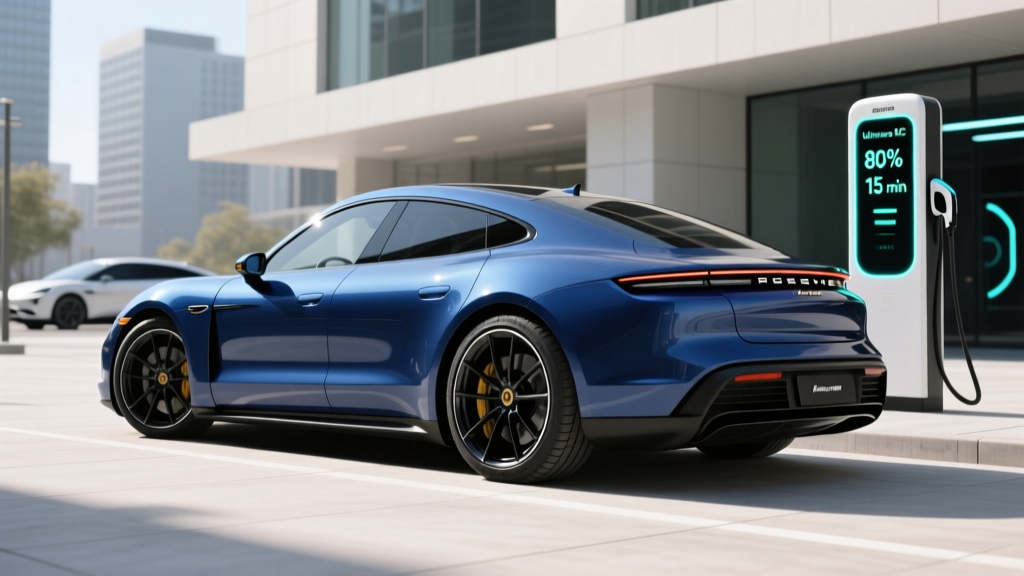
The Porsche Taycan has long been the benchmark for electric sports sedans that refuse to compromise on driving dynamics. With the 2026 model year now in showrooms, Porsche has refined its flagship EV with updated battery chemistry, faster charging architecture, and a broader trim lineup than ever before. But for many prospective buyers, the question isn't whether the Taycan is impressive — it's whether the numbers pencil out. That's where Porsche Taycan lease deals become a strategic path into one of the most capable EVs on the road, especially given the sticker prices involved.
In this review, we break down the 2026 Taycan's real-world range, charging performance, pricing across all trims, and how lease economics compare to purchasing — including the nuances of the federal EV tax credit under IRS §30D.
2026 Porsche Taycan: Trims, Specs, and Pricing at a Glance
The 2026 Taycan lineup spans five core trims, from the single-motor base model to the range-topping Turbo GT. All models use an 800-volt architecture, a hallmark of the Taycan platform since its debut. Here's the full spec breakdown:
| Spec | Taycan (Base) | Taycan 4S | Taycan GTS | Taycan Turbo | Taycan Turbo GT |
|---|---|---|---|---|---|
| Drivetrain | RWD | AWD (dual-motor) | AWD (dual-motor) | AWD (dual-motor) | AWD (dual-motor) |
| Horsepower | 402 hp | 590 hp | 690 hp | 815 hp | 1,019 hp |
| 0–60 mph | 4.6 sec | 3.5 sec | 3.1 sec | 2.5 sec | 2.1 sec |
| Battery (usable) | 84 kWh (NMC) | 84 kWh (NMC) | 84 kWh (NMC) | 84 kWh (NMC) | 84 kWh (NMC) |
| EPA Range | 283 mi | 272 mi | 263 mi | 258 mi | 244 mi |
| MPGe (combined) | 83 MPGe | 79 MPGe | 76 MPGe | 73 MPGe | 68 MPGe |
| Efficiency | 40 kWh/100mi | 42 kWh/100mi | 44 kWh/100mi | 46 kWh/100mi | 49 kWh/100mi |
| Max DC Charge | 320 kW | 320 kW | 320 kW | 320 kW | 320 kW |
| 10–80% DCFC | ~18 min | ~18 min | ~18 min | ~18 min | ~18 min |
| Level 2 (11 kW) | ~33 mi/hr | ~33 mi/hr | ~33 mi/hr | ~33 mi/hr | ~33 mi/hr |
| Base MSRP | $92,900 | $109,400 | $134,100 | $163,500 | $217,000 |
Sources: fueleconomy.gov, Porsche USA 2026 spec sheets. All MSRP figures are before destination charges.
Real-World Range: What the EPA Number Doesn't Tell You
EPA Estimate: 272 miles
Real-World Highway (70 mph, 72°F): ~235–245 miles
Real-World City/Commuting: ~260–275 miles (regen-heavy driving recovers energy)
Cold Weather (32°F, highway): ~195–215 miles (20–25% reduction typical for NMC chemistry)
Aggressive/Spirited Driving: ~180–200 miles — this is a Porsche, and it shows on the consumption meter.
The Taycan's 84 kWh usable battery uses NMC (nickel manganese cobalt) chemistry, which prioritizes energy density and performance over the cycle-life advantages of LFP. Porsche's thermal management system is among the best in the industry — the Taycan consistently holds battery temperature in the optimal zone, which is why its charging curve remains aggressive even after repeated fast-charge sessions.
That said, efficiency is the Taycan's acknowledged trade-off. At 42 kWh/100mi for the 4S, it consumes noticeably more energy per mile than a Tesla Model S (~28 kWh/100mi) or even the Lucid Air (~26 kWh/100mi). The 800-volt architecture recovers some of this through superior charging speed, but if you commute long distances without home charging access, range planning matters more here than in more efficiency-focused EVs.
Charging Performance: 320 kW Peak and the 800V Advantage
The 2026 Taycan retains its class-leading 800-volt electrical architecture, enabling DC fast-charging at up to 320 kW on compatible chargers. This is among the fastest peak rates of any production EV sold in the United States.
| Charging Level | Power / Voltage | Rate | Time (10–80%) |
|---|---|---|---|
| Level 1 (120V household) | ~1.4 kW | ~4 mi/hr | ~60+ hours (full) |
| Level 2 (240V, 48A) | 11.5 kW | ~33 mi/hr | ~8.5 hours (full) |
| DC Fast Charge (350 kW station) | Peak 320 kW | ~150 mi in 10 min | ~18 minutes |
| DC Fast Charge (150 kW station) | Sustained ~130 kW | ~65 mi/hr avg | ~35 minutes |
Charging curve reality check: The 320 kW peak is sustained from roughly 10% to 40% state of charge. Between 40–60%, the rate tapers to approximately 200–230 kW. Above 80%, it drops sharply to protect the NMC cells — expect under 50 kW past 85%. This is why the 10–80% metric matters more than peak kW alone, and why the Taycan's ~18-minute 10–80% time is genuinely competitive.
On Level 2, the Taycan's onboard charger accepts up to 11.5 kW (48 amps at 240V). A full overnight charge from near-empty takes about 8.5 hours, which works well for daily top-ups but means you'll want a dedicated Level 2 home charger to keep this car charged conveniently. If your home electrical panel is maxed at 100 amps, a panel upgrade to 200 amps may be necessary — budget $1,500–$3,000 for that work on top of the $500–$800 Level 2 hardware and $800–$1,500 electrician installation.
The Taycan uses the NACS (North American Charging Standard) connector for 2026, granting native access to Tesla Supercharger stations without an adapter — a significant practical advantage over the CCS-equipped earlier model years.
Lease Economics: Why Porsche Taycan Lease Deals Make Sense in 2026
With base MSRPs starting at $92,900 and climbing past $217,000 for the Turbo GT, most Taycan buyers are evaluating leasing carefully. Here's why lease structures for the Taycan are particularly worth examining this year:
Depreciation protection: Luxury EVs have historically seen steeper depreciation than their ICE counterparts, driven by rapid tech obsolescence and battery-health concerns among used buyers. A lease transfers that depreciation risk to Porsche Financial Services. The Taycan's 3-year residual values have improved but remain below brand stalwarts like the 911.
The §30D tax credit complication: Under current IRS rules, the federal EV tax credit of up to $7,500 is subject to MSRP caps ($80,000 for sedans), buyer income limits ($150,000 single / $300,000 joint AGI), and critical-mineral/battery-sourcing requirements. Here's the catch: no Taycan trim qualifies for the §30D new-vehicle credit because every trim exceeds the $80,000 sedan MSRP cap. This is a critical detail that many shoppers overlook.
However, some dealerships have structured lease deals that factor in manufacturer incentives or loyalty bonuses that offset monthly payments. Porsche Financial Services periodically offers lease cash on select trims — typically $2,000–$5,000 depending on the model and region. Always confirm current offers directly with your dealer's finance department.
| Trim | Base MSRP | §30D Eligible? | Typical Lease (36 mo, 10K mi/yr)* |
|---|---|---|---|
| Taycan (Base) | $92,900 | No (exceeds $80K sedan cap) | $1,150–$1,350/mo |
| Taycan 4S | $109,400 | No | $1,400–$1,650/mo |
| Taycan GTS | $134,100 | No | $1,750–$2,000/mo |
| Taycan Turbo | $163,500 | No | $2,200–$2,600/mo |
| Taycan Turbo GT | $217,000 | No | $3,000–$3,500/mo |
*Estimated lease payments based on typical money factors and residual values for 2026. Actual terms vary by dealer, credit tier, region, and available incentives. Verify with Porsche Financial Services. Tax credit rules per IRS §30D guidelines.
Performance, Tech, and Daily Livability
The Taycan's driving experience is its primary justification. Even the base RWD model delivers 402 hp and a 4.6-second 0–60 time with a immediacy of throttle response that only an EV can provide. The 2-speed rear transmission (unique among EVs) gives the Taycan a distinctive character: brutal initial acceleration followed by a perceptible shift that extends the power band at highway speeds.
The dual-motor AWD trims add torque vectoring and rear-axle steering (standard on GTS and above), making the Taycan feel smaller than its 195.4-inch length suggests. In Sport Plus mode with launch control, the Turbo GT's 2.1-second 0–60 time places it in hypercar territory — and it does so silently, with zero drivetrain lash.
Interior and technology: The Taycan's cabin features a curved 16.8-inch digital instrument cluster, a 10.9-inch central touchscreen running Porsche Communication Management (PCM), and an optional 10.9-inch passenger display. Wireless Apple CarPlay and Android Auto are standard. The available head-up display with augmented-reality navigation overlays is one of the best implementations in the luxury segment.
Driver assistance: Porsche InnoDrive with Active Lane Keeping is the brand's Level 2 ADAS suite. It includes adaptive cruise control, lane centering, and predictive speed adjustment based on navigation data. This is not a hands-free system like GM's Super Cruise or Ford's BlueCruise — you must keep your hands on the wheel. It's competent for highway cruising but doesn't aim to compete with Tesla's FSD (Supervised) in feature scope.
Cargo and passenger space:
- Front trunk (frunk): 2.9 cu ft — enough for a charging cable bag and a small duffel
- Rear trunk: 14.3 cu ft — adequate for two carry-on suitcases
- Rear legroom: 32.7 inches — tight for adults over 6 feet on longer trips
- Total cargo: 17.2 cu ft combined
The Taycan is a driver's car first and a practical family hauler a distant second. The Cross Turismo wagon variant (available on 4S and GTS trims) adds approximately 4 cu ft of rear cargo volume and slightly more headroom, making it the more pragmatic choice if you need utility without switching to the Cayenne or Macan EV.
Warranty, Battery Longevity, and Ownership Costs
Porsche backs the 2026 Taycan with the following coverage:
- Limited vehicle warranty: 4 years / 50,000 miles
- Battery warranty: 8 years / 100,000 miles (minimum 70% capacity retention)
- Powertrain warranty: 8 years / 100,000 miles
- Complimentary maintenance: 1 year / 10,000 miles (first scheduled service)
The 70% capacity retention threshold is industry-standard for luxury EVs. Real-world degradation data from earlier Taycan model years (2020–2024) suggests most owners see 90–95% state of health after 3 years and 30,000–40,000 miles, aided by the robust liquid-cooling system. NMC chemistry generally degrades faster than LFP under high-heat, high-charge conditions, but Porsche's thermal management mitigates this effectively.
Insurance costs: Expect annual premiums of $3,200–$5,500 depending on trim, driving record, and state. The Turbo and Turbo GT command significantly higher rates due to repair costs and performance classification. Get a quote before signing — this line item surprises many first-time Porsche buyers.
Charging cost per mile (home Level 2, $0.14/kWh national average): Approximately $0.056–$0.069 per mile depending on trim efficiency, versus $0.12–$0.15/mile for a comparably powerful gasoline sports sedan on premium fuel. Over 12,000 annual miles, that's roughly $700–$830 in electricity versus $1,440–$1,800 in gasoline — a meaningful but not transformative savings at this price point.
Pros and Cons: The Honest Assessment
- Class-leading 320 kW DC fast charging with 10–80% in ~18 minutes
- 800V architecture enables consistent charge performance
- Best-in-class driving dynamics — steering feel, chassis balance, braking
- NACS connector (2026) grants native Supercharger access
- 8-year/100,000-mile battery and powertrain warranty
- Exceptional build quality and interior materials
- 2-speed rear transmission provides unique acceleration character
- No federal §30D tax credit eligibility (all trims exceed $80K sedan MSRP cap)
- Efficiency is below competitors — 42+ kWh/100mi on the 4S
- Real-world highway range 15–20% below EPA on the Turbo trims
- Rear seat space is tight for taller adults
- Frunk is small (2.9 cu ft) compared to rivals
- Insurance premiums are steep, especially on Turbo/GT trims
- InnoDrive ADAS is competent but not class-leading in features
Is the 2026 Taycan Worth It vs. the Competition?
The Taycan's competitive set includes the Tesla Model S, Lucid Air, BMW i7, and Mercedes-Benz EQS. Each makes a different case:
- Tesla Model S Plaid ($89,990): Faster to 60 (1.99 sec), longer EPA range (~396 mi), significantly more efficient, and far cheaper. But it can't match the Taycan's build quality, steering feel, or chassis refinement. Choose Tesla for value and range; choose Porsche for the drive.
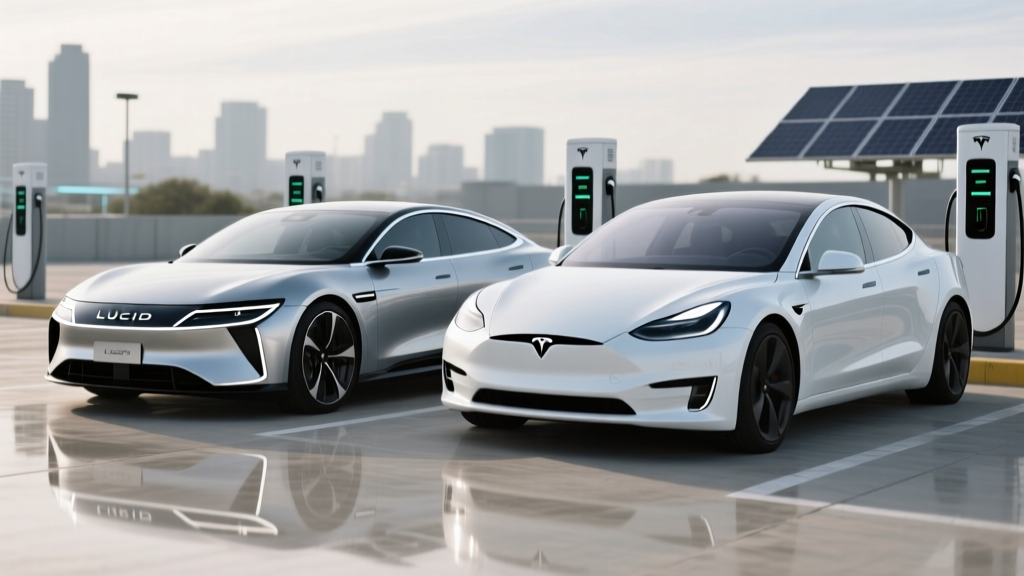
- Lucid Air Pure ($69,900): Over 400 miles of EPA range, best-in-class efficiency (~26 kWh/100mi), and a spacious interior. Lucid wins on range and luxury-per-dollar, but its charging speed (~200 kW peak) and dealer network can't match Porsche's infrastructure.
- BMW i7 xDrive60 ($120,295): Larger, more luxurious, and more spacious — a true limousine-class EV. But it's not a sports sedan. The i7 is for passengers; the Taycan is for drivers.
- Mercedes-Benz EQS 580 ($105,550): Plush ride quality and strong range (~345 mi EPA). However, the EQS's brake feel and steering feedback are noticeably less engaging than the Taycan's.
The Taycan wins when driving engagement, charging speed, and build integrity are your top priorities. It loses on efficiency, range-per-dollar, and rear-seat comfort. If you prioritize road-trip range above all, the Lucid Air or Tesla Model S serve you better. If you want a sports sedan that happens to be electric — and you have home charging and access to 350 kW DC fast chargers — the Taycan is still the one to beat.
Frequently Asked Questions
Does the 2026 Porsche Taycan qualify for the federal EV tax credit?
No. Under current IRS §30D rules, new EV sedans must have an MSRP at or below $80,000 to qualify for the up-to-$7,500 federal clean vehicle credit. Every 2026 Taycan trim starts above $92,900, making the entire lineup ineligible regardless of buyer income or battery sourcing. Some state-level incentives may still apply — check your state's energy office for local rebates.
What is the real-world range of the Porsche Taycan?
The EPA rates the 2026 Taycan at 244–283 miles depending on trim. In real-world highway driving at 70 mph, expect approximately 235–245 miles from the 4S trim, with a 20–25% reduction in freezing temperatures. City driving with regenerative braking can match or slightly exceed the EPA estimate.
How fast does the Taycan charge at home and on the road?
On a 350 kW DC fast charger, the Taycan peaks at 320 kW and charges from 10–80% in approximately 18 minutes. At home on a Level 2 (240V, 48A) charger, it adds about 33 miles of range per hour, fully charging overnight in roughly 8.5 hours.
Is leasing a Taycan better than buying in 2026?
Leasing transfers depreciation risk to Porsche Financial Services, which matters for luxury EVs with uncertain long-term residual values. Since no Taycan qualifies for the §30D federal credit, there's no purchase-side tax advantage to offset the higher upfront cost of buying. If you plan to keep the car beyond 3–4 years and can absorb depreciation, purchasing may still make sense — but leasing remains the lower-risk path for most buyers at this price point.
What's the biggest drawback of the Taycan compared to rivals?
Efficiency. The Taycan consumes 40–49 kWh per 100 miles depending on trim, versus 26–30 kWh/100mi for the Lucid Air and Tesla Model S. This translates to shorter real-world range and higher per-mile electricity costs. Combined with no federal tax credit eligibility, the Taycan's total cost of ownership is meaningfully higher than efficiency-focused competitors.
Does the Taycan have a NACS or CCS connector?
The 2026 Taycan uses the NACS (North American Charging Standard) connector, providing native compatibility with Tesla Supercharger stations. This is a significant change from earlier model years that used CCS1 and required an adapter for Supercharger access.
How much cargo space does the Taycan offer?
The Taycan sedan provides 2.9 cu ft in the front trunk (frunk) and 14.3 cu ft in the rear trunk, for 17.2 cu ft total. The Cross Turismo wagon variant adds approximately 4 cu ft of rear cargo capacity. Neither configuration is ideal for large hauling — this is a sports sedan, not a crossover.
For the latest IRS incentive rules, visit irs.gov/credits-deductions/clean-vehicle-credit. For official EPA range and efficiency data, see fueleconomy.gov. Safety ratings from NHTSA and IIHS should be reviewed before purchase.