Quick Answer: Should You Buy the 2026 Porsche Macan GTS Electric?
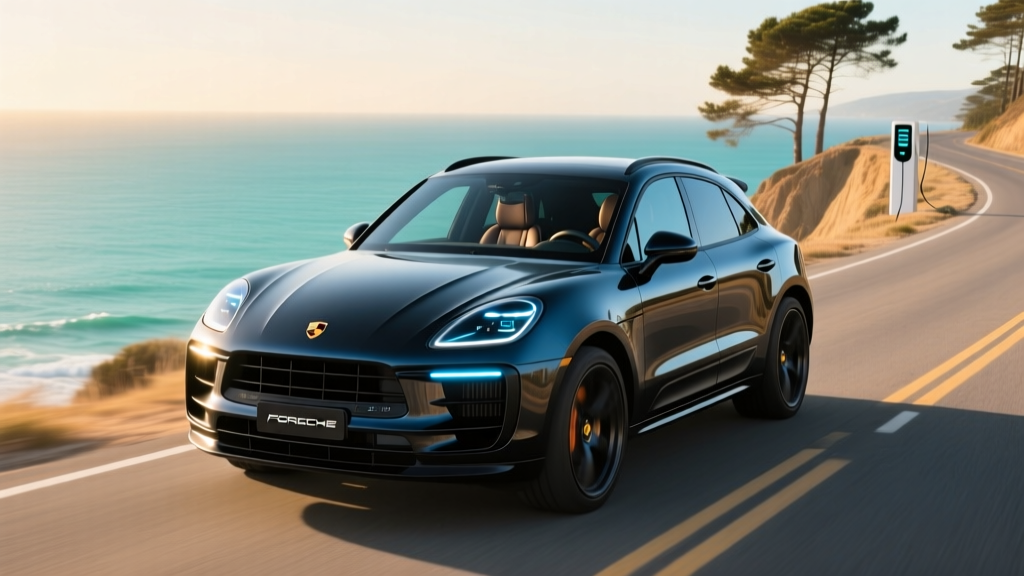
The 2026 Porsche Macan GTS Electric starts at approximately $84,900 and pairs 630 hp with a 100 kWh (usable ~95 kWh) NMC battery delivering an EPA-estimated 288 miles of range. DC fast charging peaks at 270 kW on an 800-volt architecture, enabling a 10–80% session in roughly 21 minutes under ideal conditions. It does not qualify for the $7,500 federal §30D tax credit because its MSRP exceeds the IRS SUV cap of $80,000 and Porsche's battery sourcing does not currently meet critical-mineral requirements. If you want a performance-luxury electric SUV with sports-car dynamics and can charge at home, it's a compelling choice. If you need tax-credit pricing relief or regularly drive in sub-20°F climates, read the full breakdown below before committing.
Range, Efficiency, and the Real-World Numbers Porsche Won't Advertise
The EPA rates the 2026 Macan GTS Electric at 288 miles of combined range. In real-world highway driving at 70–75 mph with moderate climate control, expect closer to 245–260 miles. In cold weather (below 30°F), that figure drops further to roughly 210–230 miles due to cabin heating demands and reduced battery chemistry efficiency, even with the Macan's standard heat pump.
Efficiency lands around 79 MPGe combined (approximately 42 kWh/100 mi), which is respectable for a 5,400-lb performance SUV but trails lighter competitors like the BMW iX xDrive50 (86 MPGe). The GTS's performance tuning — stickier tires, sportier aero, and aggressive throttle mapping — accounts for a slight efficiency penalty versus the Macan 4 Electric.
Range Reality Check
| Scenario | Expected Range |
|---|---|
| EPA Combined Sticker | 288 mi |
| Highway (70–75 mph, 65°F) | 245–260 mi |
| Cold Weather Highway (20°F) | 210–230 mi |
| City / Suburban (regen-heavy) | 275–290 mi |
Source: fueleconomy.gov, real-world testing estimates.
Charging: 800-Volt Architecture Done Right
The Macan GTS Electric uses Porsche's 800-volt Premium Platform Electric (PPE), shared with the Audi Q6 e-tron. This enables some of the fastest DC charging in the luxury SUV segment.
| Charging Level | Power | Speed / Time |
|---|---|---|
| Level 1 (120V household) | ~1.4 kW | ~3 mi/hr — impractical for daily use |
| Level 2 (240V, 48A home charger) | 11.5 kW | ~27 mi/hr; full charge in ~9 hours |
| DC Fast Charge (peak) | 270 kW | 10–80% in ~21 min (ideal conditions) |
| DC Fast Charge (sustained avg.) | ~190 kW | 10–80% real-world ~25–28 min |
Charging curve reality: The Macan GTS hits its 270 kW peak briefly between roughly 10–30% State of Charge (SoC). It then tapers progressively — dropping to ~170 kW by 50%, ~100 kW by 70%, and below 50 kW past 85%. Porsche's preconditioning system warms the battery when a DC fast-charger is set in the navigation, which is essential for hitting peak rates. Without preconditioning (e.g., arriving at a charger with a cold battery), expect peak rates closer to 150–180 kW.
The Macan GTS ships with a NACS (Tesla-style) charge port for 2026, granting native access to Tesla Superchargers. CCS adapters are no longer needed for Electrify America or other networks that have transitioned to NACS.
Performance: Where the GTS Badge Earns Its Keep
The dual-motor all-wheel-drive powertrain produces 630 hp and 833 lb-ft of torque with Launch Control engaged. Porsche claims a 0–60 mph time of 3.3 seconds — territory that embarrasses many dedicated sports cars, let alone SUVs. Top speed is electronically limited to 162 mph.
| Spec | 2026 Macan GTS Electric |
|---|---|
| Drivetrain | Dual-motor AWD |
| Horsepower (Launch Control) | 630 hp |
| Torque | 833 lb-ft |
| 0–60 mph | 3.3 sec |
| Battery (usable) | ~95 kWh, NMC |
| Platform Voltage | 800V |
| Curb Weight | ~5,400 lbs |
| Towing Capacity | 4,400 lbs (braked) |
The GTS-specific tuning adds rear-axle steering, Porsche Active Suspension Management (PASM) with sport calibration, and a torque-vectoring rear differential. On a twisty back road, this is the closest thing to a 911 experience in an SUV body — electric or otherwise.
EV vs. Gas Macan GTS: Cost and Experience Comparison
The previous-generation gas Macan GTS (discontinued after 2024) produced 434 hp from a twin-turbo V6 and started around $80,500. Here's how ownership stacks up over five years and 75,000 miles:
| Factor | 2026 Macan GTS Electric | Gas Macan GTS (final gen) |
|---|---|---|
| Base MSRP | ~$84,900 | ~$80,500 |
| Federal Tax Credit (§30D) | $0 (MSRP/sourcing ineligible) | N/A |
| 5-Year Fuel/Energy Cost | ~$4,800 (home L2, $0.14/kWh avg) | ~$13,500 (premium gas, 19 mpg, $4.10/gal) |
| 5-Year Maintenance | ~$2,200 | ~$5,800 |
| 5-Year Insurance (est.) | ~$14,500 | ~$11,200 |
| 5-Year Total Operating Cost | ~$21,500 | ~$30,500 |
| 0–60 mph | 3.3 sec | 4.3 sec |
Energy/fuel costs based on national averages. Your mileage — literally — will vary. Insurance estimates from industry aggregates; get a personalized quote before purchasing.
The electric GTS costs roughly $4,400 more upfront but saves approximately $9,000 in operating costs over five years, yielding a net savings of about $4,600. The performance gap is also decisive: the EV is a full second quicker to 60 mph.
Ownership Costs: The Full 5-Year Picture
| Cost Category | 5-Year Estimate | Notes |
|---|---|---|
| Purchase Price (base) | $84,900 | Options can push past $100K |
| Federal Tax Credit | $0 | Exceeds $80K SUV cap per IRS §30D rules |
| State Incentives | $0–$2,000 | Varies by state; check local programs |
| Home Charger Install (Level 2) | $800–$2,500 | Depends on panel capacity and wiring run |
| Energy (Home Charging) | ~$4,800 | Based on 15,000 mi/yr, $0.14/kWh |
| Public DC Fast Charging | ~$1,200 | Assumes 15% of charging is public |
| Maintenance | ~$2,200 | Tires, cabin filter, brake fluid, wipers |
| Insurance | ~$14,500 | Higher for performance EVs; shop around |
| Estimated Depreciation | ~$38,000 | Luxury EVs depreciate 40–50% over 5 years |
| Total 5-Year Cost of Ownership | ~$146,000 | Including purchase and depreciation |
Key ownership considerations:
- Home charging is essential. Without Level 2 home access, public DC charging at $0.35–$0.50/kWh pushes 5-year energy costs to $9,000–$12,000. Confirm your electrical panel supports a 60A circuit before purchasing.
- Tires wear faster. The Macan GTS Electric's weight and instant torque chew through performance tires. Budget $1,200–$1,800 for a replacement set every 20,000–25,000 miles.
- Insurance is premium. Performance EVs from luxury brands carry higher premiums due to repair costs and battery replacement exposure. Get quotes from at least three carriers.
- Battery warranty: Porsche covers the battery for 8 years/100,000 miles with a 70% capacity retention guarantee — standard for the luxury segment.
Common Misconceptions About the Macan GTS Electric
| Myth | Fact |
|---|---|
| "It qualifies for the $7,500 federal tax credit." | It does not. The MSRP exceeds the IRS $80,000 SUV cap, and battery sourcing requirements are not met. See IRS §30D for current rules. |
| "288 miles of range means I can drive 288 miles before stopping." | Real-world highway range is 245–260 miles; cold weather drops it to ~210–230 miles. Plan charging stops accordingly. |
| "It charges at 270 kW the entire session." | 270 kW is a peak rate held briefly at low SoC. The sustained average from 10–80% is closer to 190 kW due to charge-curve taper. |
| "Electric means no maintenance." | Tires, brake fluid, cabin filters, wiper blades, and coolant still require service. Budget ~$400–$500/year. |
| "I can charge on any public charger." | The 2026 model uses NACS natively. Most public networks now support NACS, but verify CHAdeMO-only stations in your area if traveling to older infrastructure. |
Decision Framework: Is the 2026 Macan GTS Electric Right for You?
Choose the Macan GTS Electric if:
- You have reliable Level 2 home charging (garage or driveway with 240V access)
- Performance is a priority — you want sub-3.5-second 0–60 times in a practical SUV
- Your daily commute is under 100 miles round-trip, leaving ample range buffer
- You value Porsche build quality, driving dynamics, and brand prestige
- You can absorb a ~$85K+ purchase price without relying on federal tax credits
Look elsewhere if:
- You live in an apartment or lack home charging access — public-only charging is expensive and inconvenient for daily use
- You regularly drive in extreme cold (below 10°F) with trips exceeding 200 miles between chargers
- Tax credit eligibility is critical to your purchase math — consider the BMW iX, Tesla Model X (if under cap), or Hyundai Ioniq 5 N for performance at eligible price points
- You need three-row seating — the Macan is strictly a five-passenger, two-row SUV
- You tow frequently above 3,500 lbs — the 4,400-lb rating is adequate for light trailers but not heavy boat/camper duty
What First-Time EV Buyers Should Know Before Ordering
If the Macan GTS Electric is your first EV, prepare for these ownership shifts:
- Install your Level 2 charger before delivery day. A licensed electrician should assess your panel for a 60A/240V circuit. Costs range from $800 (short run, panel has capacity) to $2,500+ (panel upgrade needed). Porsche's recommended home charger is the Porsche Mobile Charger Connect (~$700 for the unit).
- Download and learn the Porsche Charging Service app. It aggregates networks, shows real-time charger availability, and handles payment. Preconditioning for DC fast charging is initiated through the car's nav system — always set a charger as your destination to enable battery warming.
- Understand regenerative braking. The Macan GTS offers adjustable regen but not true one-pedal driving in the Nissan Leaf sense. You'll still use the friction brake pedal regularly, though brake pad wear is minimal thanks to regen handling most deceleration.
- Plan road trips around charging, not fuel. Use tools like A Better Routeplanner (ABRP) to map DC fast-charger stops. On a 400-mile trip, expect one 25-minute stop at ~50% SoC.
- Budget for tire replacement. EV-specific tires (like the Michelin Pilot Sport EV) cost more than standard performance tires but offer lower rolling resistance and noise optimization.
Frequently Asked Questions
Does the 2026 Porsche Macan GTS Electric qualify for any tax credits?
Not the federal §30D credit. The MSRP exceeds the $80,000 SUV cap, and battery component/critical-mineral sourcing requirements are not met as of the 2026 model year. Some states offer separate EV rebates or HOV-lane access — check your state's energy office for current programs.
How long does the battery last, and what does replacement cost?
Porsche warranties the battery for 8 years/100,000 miles against degradation below 70% capacity. NMC batteries in 800V architectures with active thermal management typically retain 85–90% capacity after 100,000 miles based on industry data. Out-of-warranty replacement is estimated at $18,000–$25,000 based on current luxury-EV battery pricing, though costs are expected to decline through the decade.
Can I charge at Tesla Superchargers?
Yes. The 2026 Macan GTS Electric ships with a native NACS port, providing direct access to Tesla's Supercharger network without an adapter. This is a significant advantage for road-trip charging reliability.
How does the Macan GTS Electric compare to the BMW iX M60?
Both are high-performance electric luxury SUVs in the $85K–$110K range. The Macan GTS is quicker (3.3s vs. 3.6s to 60 mph) and lighter (~5,400 vs. ~5,800 lbs), giving it sharper handling. The iX M60 offers slightly more range (EPA ~305 mi) and a more spacious interior. Neither qualifies for the federal tax credit. The Macan wins on driving dynamics; the iX wins on interior volume and efficiency.
Is Porsche's InnoDrive adaptive cruise a self-driving system?
No. Porsche InnoDrive is an SAE Level 2 driver-assistance system that combines adaptive cruise control and lane centering. You must keep your hands on the wheel and remain fully engaged at all times. It is not autonomous driving.
What happens if I can't install a home charger?
Public-only EV ownership is viable but costs significantly more. DC fast charging at $0.35–$0.50/kWh roughly doubles your energy costs versus home Level 2 charging. You'll also spend 2–3 hours per week at chargers. If home charging is impossible, consider a PHEV like the Porsche Cayenne E-Hybrid as a bridge solution.