The Short Answer: Who Is the 2026 Porsche Cayenne Electric For?
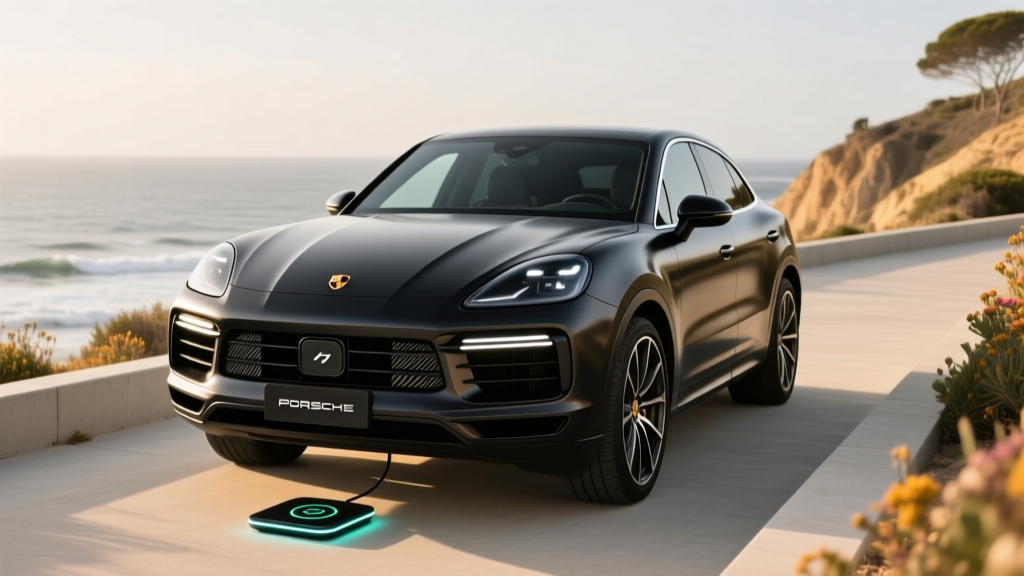
The 2026 Porsche Cayenne Electric is a premium three-row-capable luxury SUV built on Porsche's 800-volt PPE platform, targeting an EPA-estimated range near 300 miles, DC fast charging up to approximately 270 kW (10–80% in roughly 18–20 minutes), and 0–60 mph times dipping below 3.5 seconds in top trims. Pricing starts in the low-$80,000 range before options and destination, rising past $120,000 for Turbo variants. It directly competes with the BMW iX, Mercedes EQE SUV, and Tesla Model X — but its closest cross-shop is the gas Cayenne it replaces. Buyers should know: it does not qualify for the federal §30D new-vehicle tax credit due to MSRP and battery-sourcing rules, and real-world highway range will likely land 30–50 miles below the EPA sticker. If you have Level 2 home charging and prioritize driving dynamics over maximum range, it's one of the most compelling luxury EVs of 2026.
Range, Battery & Real-World Efficiency
Porsche has confirmed the electric Cayenne uses a large NMC (nickel manganese cobalt) lithium-ion pack with usable capacity expected around 100–108 kWh, paired with the Volkswagen Group's Premium Platform Electric (PPE) architecture shared with the Macan Electric and Audi Q6 e-tron. The 800-volt system is the backbone of both its efficiency and charging performance.
EPA-estimated range (preliminary): ~290–310 miles depending on trim and wheel size.
Real-world expectation: Plan for 240–270 miles in mixed highway driving at 70+ mph, and 200–230 miles in sustained cold weather (below 30°F) without aggressive preconditioning. Larger 21- and 22-inch wheel packages reduce range by approximately 10–15 miles versus base 20-inch wheels.
| Spec | Base / S Trim | Turbo / Turbo GT |
|---|---|---|
| Battery (usable, est.) | ~100 kWh NMC | ~108 kWh NMC |
| EPA Range (est.) | ~300 mi | ~270–280 mi |
| Efficiency (est.) | ~85–90 MPGe | ~78–83 MPGe |
| Peak DC Charge Rate | ~270 kW | ~270 kW |
| 10–80% DC Fast Charge | ~18–20 min | ~18–20 min |
| Level 2 (AC) Charge Rate | 11 kW (22 kW optional) | 11 kW (22 kW optional) |
| Horsepower | ~402 hp (S) | ~603+ hp (Turbo) |
| 0–60 mph | ~4.7 sec (S) | <3.5 sec (Turbo GT) |
| Drivetrain | Dual-motor AWD | Dual-motor AWD |
Efficiency in the real world is heavily influenced by Porsche's standard heat pump, which recovers waste heat from the drivetrain to warm the cabin — a meaningful advantage in northern climates. Still, buyers in Minnesota or Maine should budget 25–35% range loss in January versus July. The EPA's fueleconomy.gov database will carry finalized MPGe figures once testing is complete.
Charging: 800V Architecture in Practice
The 800-volt PPE platform is the Cayenne Electric's strongest ownership differentiator. Here's what that means at the plug:
| Level | Power | Approx. Miles Added per Hour | Typical Use Case |
|---|---|---|---|
| Level 1 (120V) | ~1.4 kW | ~4–5 mi/hr | Emergency/trickle only |
| Level 2 (240V, 48A) | 11 kW | ~35–38 mi/hr | Home overnight charging |
| Level 2 (240V, optional) | 22 kW | ~70–75 mi/hr | Home/workplace fast AC |
| DC Fast (peak) | ~270 kW | ~180+ mi in 10 min | Road trips, 350 kW stations |
The charge curve matters more than peak kW. The Cayenne Electric will sustain its highest charge rate between roughly 10% and 40% State of Charge, then progressively taper. Expect 10–80% in approximately 18–20 minutes at a compatible 350 kW station (like Electrify America or Ionity in Europe). Above 80%, charging slows dramatically — a 90–100% top-off can take as long as the 10–80% session. Porsche's navigation system includes battery preconditioning, which warms the pack en route to a charger to hit peak rates faster — always use it.
Connector note: The 2026 Cayenne Electric will use the NACS (North American Charging Standard) connector in the US market, granting native access to Tesla's Supercharger network — a significant infrastructure advantage over older CCS-only luxury EVs.
EV vs Gas Cayenne: Cost Comparison
The most relevant cross-shop for buyers is the outgoing gas Cayenne. Here's how a five-year ownership picture compares, assuming 12,000 miles/year, national-average electricity at $0.16/kWh, and premium gasoline at $4.40/gallon.
| Category | Cayenne Electric (S) | Gas Cayenne (Base V6) |
|---|---|---|
| Starting MSRP | ~$85,000 | ~$82,000 |
| Federal Tax Credit (§30D) | $0 (exceeds MSRP cap) | $0 |
| Energy/Fuel (5 yr) | ~$5,800 | ~$14,500 |
| Maintenance (5 yr) | ~$2,200 | ~$4,800 |
| Insurance (5 yr avg) | ~$16,500 | ~$14,000 |
| Estimated Depreciation | ~$38,000 | ~$34,000 |
| 5-Year Total (est.) | ~$147,500 | ~$149,300 |
The electric Cayenne breaks even or slightly wins on five-year cost despite a higher purchase price, driven primarily by fuel savings of roughly $8,700 and halved maintenance spend (no oil changes, fewer brake replacements due to regenerative braking, no transmission fluid). Insurance premiums run 10–20% higher on the EV — a common pattern for high-performance EVs due to repair-cost data. Depreciation remains the largest wildcard; Porsche's strong brand residual values help, but the luxury EV segment as a whole has seen steeper drops than gas equivalents.
Tax Credits, Incentives & the MSRP Problem
Here's what every prospective buyer must understand about the IRS §30D federal tax credit:
- MSRP cap: SUVs must be priced at or below $80,000 to qualify. Most Cayenne Electric trims exceed this.
- Income cap: Modified AGI limits — $300,000 joint filers, $225,000 head of household, $150,000 individual.
- Battery sourcing: Critical minerals and battery components must meet phased-in domestic/free-trade-agreement thresholds that tighten annually through 2026.
- Point-of-sale transfer: If eligible, the $7,500 credit can be applied as a down-payment reduction at the dealer.
Bottom line: The Cayenne Electric is extremely unlikely to qualify for the federal credit due to its MSRP. Some state incentives (California's CVRP, Colorado's innovative motor vehicle credit) may apply — check your state's energy office. Always consult a tax professional for eligibility confirmation.
Common Misconceptions — Myth vs Fact
| Myth | Fact |
|---|---|
| "It'll never handle like a gas Cayenne — too heavy." | The PPE platform places the battery low, giving a lower center of gravity than the gas Cayenne. Porsche's rear-axle steering and adaptive air suspension carry over. Curb weight is higher (~5,400 lb), but weight distribution and chassis tuning compensate significantly in real-world driving. |
| "I'll be stranded — 300 miles isn't enough." | With 270 kW DC charging and the Supercharger network (via NACS), you can add ~150 miles in under 10 minutes. For 95% of trips, home Level 2 charging means you start every day with a full "tank." |
| "The battery will need replacing in 5 years." | Porsche's high-voltage battery warranty covers 8 years/100,000 miles with a capacity-retention threshold (typically 70%). NMC chemistries with active thermal management routinely exceed 200,000 miles before significant degradation. |
| "I can charge from any public station." | With NACS, you get Tesla Superchargers natively. For CCS-only Electrify America or EVgo stations, you'll need an adapter (Porsche is expected to include or offer one). CHAdeMO stations are essentially incompatible. |
| "Cold weather makes EVs useless." | Cold reduces range 25–35%, but preconditioning, heat-pump cabin heating, and battery thermal management mitigate this. A garage-kept Cayenne Electric in Chicago will still deliver 200+ usable miles in January. |
Ownership Practicalities: What First-Time EV Buyers Need to Know
Home Charging Is Non-Negotiable for This Vehicle
The Cayenne Electric's 100+ kWh battery makes Level 1 (120V) charging impractical — you'd add only ~4 miles per hour, meaning a full charge takes over 24 hours. A Level 2 home charger (240V, 48A circuit on a 60A breaker) is essential. Installation costs typically run:
| Component | Cost Range |
|---|---|
| Level 2 charger (Porsche Mobile Charger Connect or ChargePoint Home Flex) | $500–$800 |
| Electrician labor (standard install, panel nearby) | $600–$1,500 |
| Electrical panel upgrade (if 200A service needed) | $1,500–$3,500 |
| Permit and inspection | $100–$350 |
| Total (no panel upgrade) | $1,200–$2,650 |
| Total (with panel upgrade) | $2,700–$6,150 |
If you live in an apartment or condo without charging access, the Cayenne Electric is a difficult ownership proposition — relying solely on public DC fast charging is expensive ($0.35–$0.55/kWh), time-consuming, and accelerates battery wear if done exclusively.
Driving Patterns Matter
This SUV excels for daily commutes of 30–80 miles round-trip with weekend road trips under 250 miles one-way. For frequent 500+ mile road trips (LA to SF, Dallas to Houston), plan one 20-minute charging stop. The 800V architecture makes this genuinely painless at modern stations.
Maintenance Is Minimal but Not Zero
Expect cabin air filter replacements, tire rotations, brake fluid checks, and wiper fluid. Brake pads last far longer than on the gas Cayenne thanks to regenerative braking — many EV owners see 80,000+ miles on original pads. Tires wear faster due to higher vehicle weight and instant torque; budget $1,200–$1,800 for a set of premium tires every 25,000–35,000 miles.
Decision Framework: Should You Buy the 2026 Cayenne Electric?
Choose the Cayenne Electric if:
- You have (or can install) Level 2 home charging
- Your daily driving is under 100 miles round-trip
- You want Porsche driving dynamics with instant EV torque
- You value 800V fast-charging for road trips
- You want NACS/Supercharger access natively
- You can absorb the higher insurance premium
Stick with the gas Cayenne (or wait) if:
- You live in an apartment/condo with no charging access
- You regularly tow over 5,000 lb (EV towing cuts range ~40–50%)
- You drive in extreme cold frequently and need maximum range certainty
- The lack of a federal tax credit pushes the effective price beyond your budget
- You prefer the proven long-term resale data of the gas Cayenne
Consider a PHEV alternative (Cayenne E-Hybrid) if:
- You want electric commuting (~25–30 mi electric-only) but gas flexibility for long trips
- Charging access is partial or unreliable
- You want the Cayenne badge without full EV commitment
Frequently Asked Questions
What is the expected starting price of the 2026 Porsche Cayenne Electric?
Porsche has not published final US MSRP, but industry estimates place the base trim around $82,000–$85,000, the S trim near $95,000, the Turbo around $115,000, and a potential Turbo GT above $130,000. Destination charges (~$1,650) and options add significantly — Porsche's options list is extensive and expensive.
Does the 2026 Cayenne Electric qualify for the $7,500 federal EV tax credit?
Almost certainly not. The IRS §30D credit caps eligible SUVs at $80,000 MSRP, and virtually all Cayenne Electric trims will exceed this. State-level incentives may partially offset the cost — check your state's clean-vehicle program.
How long does a full charge take at home?
On a standard 11 kW Level 2 charger, a full 0–100% charge of the ~100 kWh battery takes approximately 9–10 hours. With the optional 22 kW onboard charger and a compatible 80A circuit, that drops to roughly 5 hours. Most owners charge from 20–80% overnight, which takes about 5–6 hours at 11 kW.
Will it use NACS or CCS?
The 2026 Cayenne Electric will use NACS (Tesla's connector standard) in the US market, giving native access to Tesla Superchargers. For legacy CCS stations, an adapter will likely be required — confirm inclusion with your dealer.
How does towing affect range?
Towing a 4,000–5,000 lb trailer will reduce range by approximately 40–50%. If the EPA sticker says 300 miles, expect 150–180 miles while towing. This is a universal EV limitation, not specific to Porsche. If towing is a primary use case, the gas Cayenne remains more practical for long-distance hauling.
What is the battery warranty?
Porsche typically covers its high-voltage battery for 8 years or 100,000 miles (whichever comes first), guaranteeing a minimum capacity retention (historically 70%). The general vehicle limited warranty is 4 years/50,000 miles. These are preliminary figures — confirm with Porsche at launch.