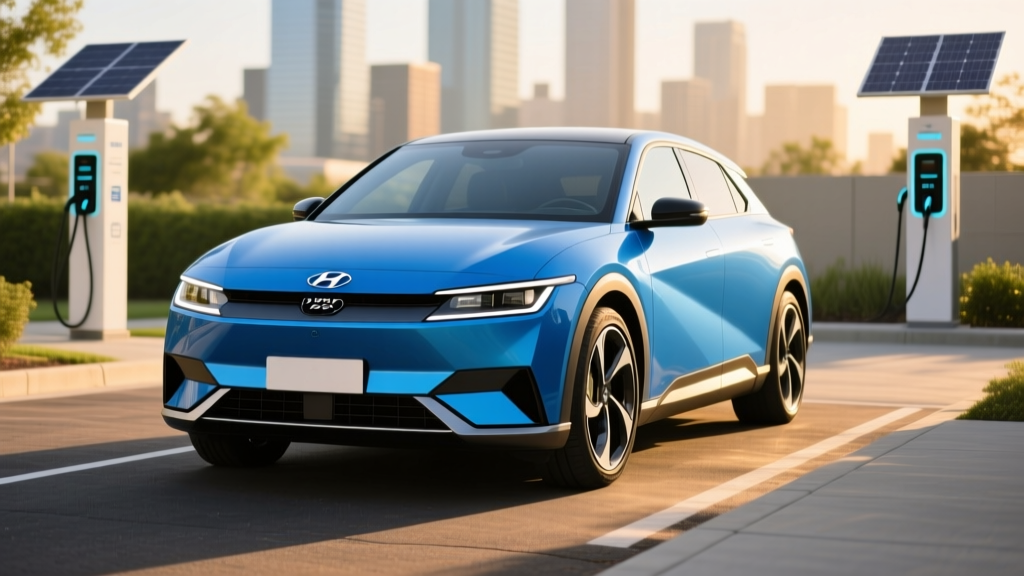
The 2026 Polestar 4 deletes the traditional rear window and replaces it with a camera-fed digital display — a design gamble that defines the entire vehicle. Beyond that headline feature, the Polestar 4 pairs a 102 kWh NMC battery, up to 200 kW DC fast charging, and a minimalist Scandinavian cabin into a luxury coupe-SUV that undercuts European rivals on price. But with an EPA-estimated range starting around 300 miles and a starting MSRP near $56,000, does the Polestar 4 deliver enough substance to back up its striking design? Here's the full breakdown.
2026 Polestar 4 Specs at a Glance
| Spec | Long Range Single Motor | Long Range Dual Motor |
|---|---|---|
| EPA Est. Range | ~300 mi | ~270 mi |
| Battery (usable) | 102 kWh, NMC | 102 kWh, NMC |
| Drivetrain | RWD | AWD (dual motor) |
| Horsepower | 272 hp | 544 hp |
| 0–60 mph | 7.1 sec | 3.7 sec |
| Max DC Charge Rate | 200 kW | 200 kW |
| 10–80% DC Time | ~30 min | ~30 min |
| Level 2 Home Charge | 22 kW (AC) | 22 kW (AC) |
| EPA Efficiency | ~95 MPGe | ~87 MPGe |
| Base MSRP | $56,300 | $62,900 |
| Battery Warranty | 8 yr / 100,000 mi | |
The Polestar 4 Interior: Digital Cockpit Meets Scandinavian Minimalism
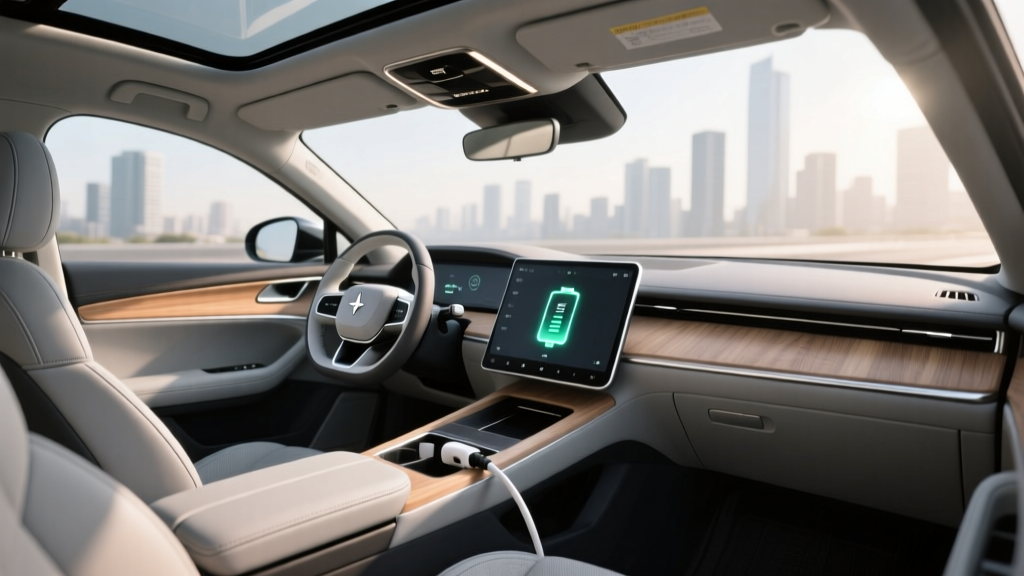
The Polestar 4 interior is the primary reason buyers search out this SUV. Polestar has stripped away most physical buttons and channeled nearly all vehicle controls through a 15.4-inch center touchscreen running Android Automotive OS with Google built-in. That means native Google Maps navigation (with real-time EV route planning and charger preconditioning), Google Assistant voice control, and access to the Google Play store for streaming apps.
Behind the steering wheel, a 10.2-inch driver display handles speed, range, and ADAS visualization. But the showpiece is the rear-view digital mirror: because the Polestar 4 has no rear glass, a roof-mounted camera feeds a high-definition display where you'd expect a rear window. After about 20 minutes of driving, most users adjust to the wider field of view and obstruction-free sightline — though the camera can struggle in heavy rain or direct low-angle sunlight.
Materials and Space
Polestar continues its sustainability-forward material strategy. The 4 offers bio-attributed vinyl, MicroTech upholstery (a petroleum-reduced synthetic), and available Nappa leather from a traceable supply chain. The cabin feels premium without the heavy chrome or wood that defines German competitors.
Passenger space is generous for a coupe-SUV silhouette:
- Front legroom: ~41.1 inches
- Rear legroom: ~37.4 inches (surprisingly roomy given the sloping roofline)
- Headroom rear: adequate for passengers under 6'2", though the low roofline requires a slight duck on entry
- Cargo volume: ~18.6 cu ft behind the rear seats, expanding to ~50 cu ft with seats folded
- Frunk: small front trunk for charging cables (~1.4 cu ft)
The flat floor and long 118-inch wheelbase translate to rear-seat comfort that rivals the BMW X4 and Audi Q5 e-tron, making the Polestar 4 viable as a family hauler for two adults and two children.
Real-World Range: What to Expect Beyond the EPA Sticker
EPA Estimated Range: 300 miles (Single Motor) / 270 miles (Dual Motor)
Real-World Expectation: In mixed suburban/highway driving at 70°F, expect ~260–280 miles from the Single Motor and ~235–255 miles from the Dual Motor. At sustained 75–80 mph highway speeds, range drops to ~230–250 miles (Single Motor). In cold weather (below 30°F), expect a 20–30% reduction, putting the Single Motor closer to 210–240 miles and the Dual Motor around 185–215 miles without preconditioning.
The Polestar 4's 102 kWh usable battery is one of the largest in its class, but the dual-motor AWD variant's added weight and drivetrain losses trim range noticeably. For buyers in northern climates who regularly face sub-freezing commutes, the Single Motor Long Range is the more range-conservative pick. Preconditioning the battery while plugged in (via the Polestar app) mitigates cold-weather losses significantly — always use it if you have home charging.
Charging Speed: DC Fast, Level 2, and the Curve
| Charging Level | Power | Miles Added per Hour | Notes |
|---|---|---|---|
| Level 1 (120V) | ~1.4 kW | ~4 mi/hr | Emergency/trickle only |
| Level 2 (240V, 48A) | ~11.5 kW | ~33 mi/hr | Typical home Wall Connector |
| Level 2 (240V, max AC) | 22 kW | ~63 mi/hr | Requires 100A circuit; rare at home |
| DC Fast Charge | 200 kW peak | ~650 mi/hr (peak) | 10–80% in ~30 min |
The 200 kW peak DC fast-charge rate is competitive with the Tesla Model Y Long Range (~250 kW) and BMW iX xDrive50 (~195 kW). On a 350 kW Electrify America or Tesla Supercharger (NACS adapter included with the 2026 model), the Polestar 4 sustains above 150 kW through roughly 40% SoC, then tapers progressively. The 10–80% charge takes approximately 30 minutes under ideal thermal conditions.
At home on a standard 48-amp Level 2 charger (like the ChargePoint Home Flex or Emporia Level 2), a full overnight session from 20% to 100% takes roughly 9 hours — adequate for most daily routines. The 22 kW onboard AC charger is a standout spec, but exploiting it requires a 100-amp dedicated circuit, which most residential panels won't support without an upgrade. Plan on 11.5 kW for realistic home charging.
For the latest on the expanding NACS Supercharger network access for non-Tesla EVs, check Polestar's official charging page.
Performance and Driving Dynamics
The dual-motor Polestar 4 is genuinely quick: 544 horsepower and 506 lb-ft of torque push the 5,100-pound SUV to 60 mph in 3.7 seconds — territory normally occupied by the Porsche Macan Electric and Tesla Model Y Performance. The single-motor variant's 7.1-second sprint is more sedate but still adequate for confident highway merging.
Where the 4 shines is ride quality. Polestar tunes the adaptive dampers (standard on dual-motor, optional on single) for a firm-but-compliant character that absorbs highway expansion joints without floating. Steering is precise and well-weighted, though numb at the extremes — a common trait of electric power steering systems.
Regenerative braking offers one-pedal driving in most scenarios, though the maximum regen strength falls short of Tesla or Hyundai's one-pedal feel. Expect to use the brake pedal for final stops in city driving.
Pricing, Trims, and Federal Tax Credit Eligibility
| Trim | MSRP | Est. After Federal Credit* |
|---|---|---|
| Long Range Single Motor | $56,300 | ~$48,800 |
| Long Range Single Motor Plus | $62,400 | ~$54,900 |
| Long Range Dual Motor | $62,900 | ~$55,400 |
| Long Range Dual Motor Performance | $68,400 | ~$60,900 |
*Assumes full $7,500 §30D credit eligibility. Point-of-sale transfer available at participating dealers.
The Polestar 4's starting price undercuts the BMW iX, Audi Q8 e-tron, and Mercedes EQB while offering comparable cabin quality and more range. However, federal tax credit eligibility is not guaranteed. Under IRS §30D rules for 2026:
- MSRP cap: SUVs must be priced at or below $80,000 (all Polestar 4 trims qualify).
- Income cap: Modified AGI ≤ $150,000 (single), $225,000 (head of household), $300,000 (married filing jointly).
- Battery sourcing: Critical minerals and battery components must meet escalating North American/free-trade-partner thresholds. Polestar manufactures the 4 in China (Geely's SEA platform), which complicates critical-mineral compliance.
- FEOC exclusion: Vehicles with battery components from a Foreign Entity of Concern are disqualified from partial or full credit.
Because the Polestar 4 is assembled in China and uses CATL-sourced cells, credit eligibility varies by model year and production batch. Always verify current eligibility on fueleconomy.gov and consult a tax professional before relying on the credit. The point-of-sale transfer option (available since January 2024) lets you apply the credit as a down payment at the dealer if you qualify.
Driver Assistance and Tech
The Polestar 4 ships with Pilot Pack as standard, which includes adaptive cruise control with stop-and-go, lane-centering assist, blind-spot monitoring, and rear cross-traffic alert. This is an SAE Level 2 system — the driver must remain attentive, hands on or near the wheel, and ready to take over at any moment. It is not self-driving.
An available Pilot Pack with Navi adds Google Maps–integrated adaptive cruise (the car adjusts speed for upcoming curves and speed limits) and lane-change assist. A 360-degree camera and Park Assist Pilot round out the tech suite.
For the latest NHTSA safety ratings and IIHS crash-test performance as they're published, check nhtsa.gov — the 4's large battery pack and SEA platform architecture suggest strong crashworthiness, but official U.S. test results are still rolling in for the 2026 model year.
Pros and Cons
Pros
- Striking design with the rear digital mirror — no blind rear window
- 102 kWh battery delivers competitive real-world range
- 22 kW onboard AC charger (class-leading for home/workplace)
- Android Automotive OS with native Google Maps EV routing
- Generous rear legroom for a coupe-SUV profile
- 544 hp dual-motor variant is legitimately fast
- 8-year/100,000-mile battery warranty
Cons
- Digital rear mirror takes acclimation; struggles in heavy rain
- Range drops significantly in cold weather without preconditioning
- Chinese assembly complicates §30D federal tax credit eligibility
- No physical buttons for climate or volume — everything is on-screen
- Charging network still requires NACS adapter for Supercharger access
- Cargo volume trails boxier SUVs like the Kia EV6 or Hyundai Ioniq 5
Who Should Buy the Polestar 4?
The 2026 Polestar 4 fits best as a premium commuter and weekend-trip vehicle for design-conscious buyers who want something distinct from the Tesla Model Y sea of sameness. It's ideal if:
- You have access to reliable Level 2 home charging (critical for daily convenience).
- You carry two adults and two children regularly but don't need third-row space.
- You value cabin material quality and minimalist design over maximum cargo volume.
- You want dual-motor AWD performance without paying BMW or Porsche prices.
Look elsewhere if you need maximum range (consider the Lucid Gravity), three-row seating (Kia EV9), or guaranteed federal tax credit eligibility (check the Ford Mustang Mach-E or VW ID.4).
Frequently Asked Questions
What is the real-world range of the Polestar 4?
Expect approximately 260–280 miles from the Single Motor and 235–255 miles from the Dual Motor in mixed driving. Highway-only at 75+ mph reduces this by 15–20%, and sub-30°F temperatures can knock off 20–30% without battery preconditioning.
How fast does the Polestar 4 charge?
On a DC fast charger, it peaks at 200 kW and charges from 10–80% in roughly 30 minutes. At home on a 48-amp Level 2 charger (240V), expect ~33 miles of range added per hour, or about 9 hours for a near-full charge from 20%.
Does the Polestar 4 qualify for the $7,500 federal EV tax credit?
It may, but eligibility is not guaranteed. The 4 meets the MSRP cap (under $80,000 for SUVs) and most buyers meet income limits, but Chinese assembly and CATL battery sourcing create potential FEOC compliance issues. Always verify on fueleconomy.gov before purchase and consult a tax professional.
How much does the Polestar 4 cost after incentives?
The Single Motor starts at $56,300 and drops to approximately $48,800 with the full $7,500 federal credit (if eligible). State incentives (like California's CVRP or New York's Drive Clean Rebate) may reduce the price further — check your local DMV or energy office for current programs.
Is the Polestar 4 worth buying over the Tesla Model Y or BMW iX?
If you want Supercharger convenience and the lowest operating cost, the Model Y wins. If you want a more luxurious cabin and don't mind higher pricing, the BMW iX is refined but costs $30,000+ more. The Polestar 4 sits in between: more distinctive design and better materials than Tesla, significantly cheaper than BMW, with competitive range and charging.
What is the Polestar 4's battery warranty?
Polestar covers the high-voltage battery and electric powertrain for 8 years or 100,000 miles, whichever comes first. The warranty guarantees the battery will retain at least 70% of its original capacity during that period.
Does the Polestar 4 have a rear window?
No. The Polestar 4 replaces the rear glass with a roof-mounted camera that feeds a digital display where the rearview mirror would normally be. This provides a wider, unobstructed field of view but requires a brief adjustment period.