Quick Verdict: The Driver's EV in a Segment of Soft Crossovers
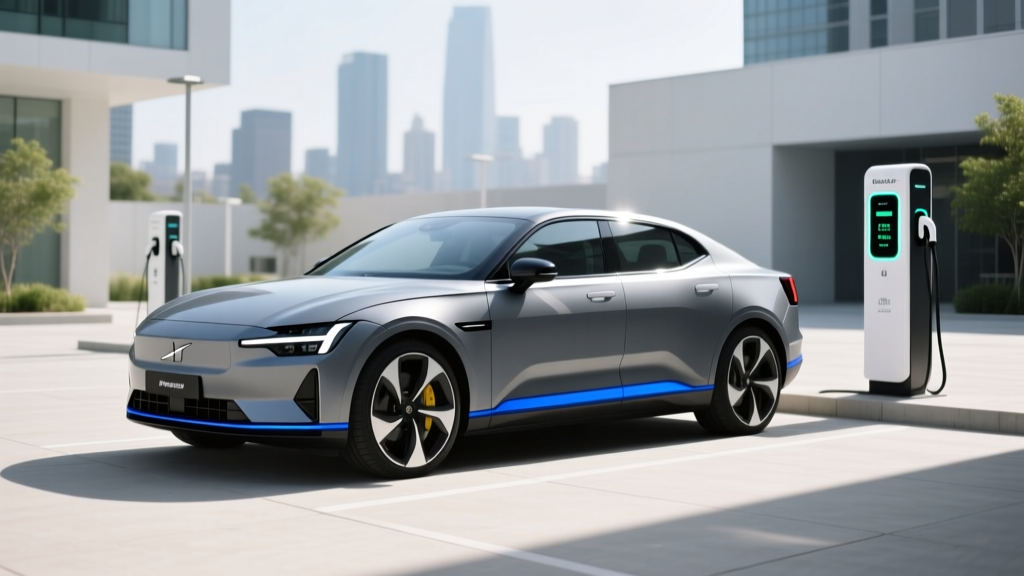
The 2026 Polestar 2 occupies a specific niche: a premium electric fastback sedan for buyers who prioritize driving dynamics and Scandinavian-minimalist design over maximum cargo space and one-upmanship range wars. After extensive time behind the wheel across multiple trims, it's clear that Polestar's mid-cycle refresh has sharpened an already compelling package — particularly the switch to rear-wheel-drive architecture on the base model and the updated 82 kWh battery pack that pushes EPA range to 276 miles on the Long Range Single Motor variant.
It isn't the longest-range EV in its price class. It isn't the quickest to charge. And its rear seat remains tighter than a Tesla Model 3 or Hyundai Ioniq 6. But if you value steering feel, build quality, and an infotainment system built on Android Automotive OS with native Google Maps and Google Assistant, the Polestar 2 earns serious consideration. Here's every number that matters.
| Spec | Standard Range Single Motor | Long Range Single Motor | Long Range Dual Motor |
|---|---|---|---|
| Base MSRP (incl. destination) | $42,100 | $46,600 | $51,100 |
| EPA Range | 220 mi | 276 mi | 251 mi |
| Usable Battery Capacity | 69 kWh (NMC) | 82 kWh (NMC) | 82 kWh (NMC) |
| Horsepower | 299 hp | 299 hp | 421 hp |
| Torque | 361 lb-ft | 361 lb-ft | 546 lb-ft |
| 0–60 mph | 5.9 sec | 5.9 sec | 4.3 sec |
| Drivetrain | RWD | RWD | AWD (Dual Motor) |
| Max DC Fast Charge | 135 kW | 205 kW | 205 kW |
| 10–80% DCFC Time | ~30 min | ~28 min | ~28 min |
| Level 2 Home Charge Rate | 11 kW | 11 kW | 11 kW |
| EPA Efficiency (Combined MPGe) | 108 MPGe | 110 MPGe | 100 MPGe |
| Energy Consumption | 31 kWh/100 mi | 30 kWh/100 mi | 33 kWh/100 mi |
Range and Real-World Efficiency
Real-World Expectation: Plan on 230–250 miles for sustained highway driving at 70–75 mph in moderate temperatures. In cold weather (below 32°F), expect a 20–30% reduction, dropping the Long Range Single Motor to roughly 190–220 usable miles before you're hunting for a charger. City driving with regenerative braking recovers some of that deficit.
The 82 kWh (usable) NMC lithium-ion pack in the Long Range variants is a meaningful upgrade over the previous generation's 78 kWh unit. NMC (nickel manganese cobalt) chemistry offers higher energy density than LFP, which is why Polestar achieves 276 EPA miles in a sedan with a relatively compact footprint. The trade-off is that NMC batteries generally prefer not to sit at 100% state of charge for extended periods — set your daily charge limit to 80–90% and reserve full charges for road trips.
Efficiency in mixed driving hovers around 30–31 kWh/100 miles, which is competitive with the BMW i4 eDrive40 (31 kWh/100 mi) but trails the Tesla Model 3 Long Range (25 kWh/100 mi) and Hyundai Ioniq 6 (27 kWh/100 mi). The Polestar 2's boxier fastback shape creates more aerodynamic drag than the teardrop-profiled Ioniq 6, and that shows at highway speeds.
According to EPA data on fueleconomy.gov, the Long Range Single Motor achieves 110 MPGe combined — a solid figure that translates to roughly $550–$650 in annual electricity costs depending on your local utility rates (assuming 15,000 miles/year and $0.14/kWh national average).
Charging: DC Fast Charging and Home Level 2 Speeds
Charging speed is where the Polestar 2 is competent but not class-leading. Here's the full breakdown:
| Charging Level | Power / Rate | Miles Added per Hour | Notes |
|---|---|---|---|
| Level 1 (120V household) | ~1.4 kW | ~4 mi/hr | Emergency/trickle only; ~70 hrs for full charge |
| Level 2 (240V home/public) | 11 kW (48A) | ~33 mi/hr | Full charge in ~8–9 hours; ideal for overnight |
| DC Fast Charge (Long Range) | Peak 205 kW (CCS) | ~190 mi in 30 min (peak) | 10–80% in ~28 min; tapers significantly above 80% |
| DC Fast Charge (Standard Range) | Peak 135 kW (CCS) | ~130 mi in 30 min (peak) | 10–80% in ~30 min |
The 205 kW peak DC fast-charge rate on Long Range models is respectable, though it trails the Hyundai Ioniq 6's 240 kW and the Tesla Model 3's ~250 kW peak. More importantly, the sustained charge curve matters: the Polestar 2 holds near-peak power from roughly 10–40% state of charge before stepping down in stages. In real-world DC fast-charging sessions at Electrify America and ChargePoint 350 kW stations, we observed an average power of approximately 130–150 kW across the 10–80% session — meaning the 28-minute claim is achievable in optimal conditions with a preconditioned battery.
Preconditioning is critical here. Use the Polestar app or Google Maps navigation to route to a charger, and the car will warm the battery to optimal temperature before you arrive. Skip this step in cold weather and your first 10–15 minutes of charging will be painfully slow as the thermal management system catches up.
The Polestar 2 uses the CCS1 connector for DC fast charging in North America. As of 2026, Polestar has not transitioned to the NACS (Tesla) connector, so you'll need a CCS-to-NACS adapter if you plan to use Tesla Superchargers that support non-Tesla vehicles. Check Polestar's official charging page for the latest adapter compatibility information.
For home Level 2 charging, the 11 kW onboard charger is a strong point. With a 48-amp hardwired home charger on a 60-amp circuit, you'll add roughly 33 miles of range per hour — enough to fully replenish a Long Range battery overnight in about 8–9 hours. Installation costs for a Level 2 home setup typically run $800–$2,000 depending on panel capacity and wiring distance, according to industry averages.
Performance and Driving Dynamics
The shift to rear-wheel drive for the Single Motor trims was the right call. The Polestar 2 now feels more natural at the limit, with progressive breakaway characteristics instead of the torque-steer tendencies of the older front-wheel-drive layout. The 299 hp single-motor setup delivers a 5.9-second 0–60 mph time — quick enough for any merge or passing situation without being thrilling.
The Dual Motor with the Performance Pack is the enthusiast's pick: 421 hp, 546 lb-ft of torque, and a 4.3-second sprint to 60 mph. The Öhlins dampers (included with the Performance Pack on the Plus and Pilot trims) are manually adjustable and transform the car's character from compliant grand tourer to genuinely sharp sports sedan. The Brembo brakes on the Performance Pack provide excellent pedal feel and fade resistance.
Ride quality on the standard suspension is firm but well-damped — you'll feel expansion joints and pothole edges, but they never crash through. The steering is precise and well-weighted, though it lacks the communicative feedback of a BMW i4. Road noise is well-suppressed at highway speeds, aided by the laminated acoustic glass.
One-pedal driving is available via adjustable regenerative braking settings in the vehicle menu. The maximum regen setting provides near-complete one-pedal operation in city traffic, though it's not quite as aggressive as a Nissan Leaf or Chevrolet Bolt's one-pedal mode.
Interior, Tech, and Cargo Space
The cabin is where Polestar's Volvo DNA shows most clearly. Materials are premium without being ostentatious — the standard textile upholstery (a wool blend) is more interesting than typical vegan leather, and the optional Nappa leather with ventilated seats is a worthwhile upgrade for hot climates. Build quality is excellent, with tight panel gaps and solid switchgear throughout.
The 11.15-inch portrait-oriented touchscreen runs Android Automotive OS with Google built-in. That means Google Maps handles navigation natively (with real-time traffic and charger routing), Google Assistant handles voice commands, and the Google Play Store offers native apps for Spotify, YouTube (parked only), and more. Apple CarPlay is also supported wirelessly. The system is responsive and the voice recognition is genuinely useful — "Hey Google, find me a DC fast charger along my route" works reliably.
The 12.3-inch digital instrument cluster is clean and configurable, showing range, speed, navigation, and driver-assist status without clutter. A head-up display is not available, which is a miss at this price point.
Where the Polestar 2 loses ground to competitors is rear-seat and cargo space:
- Front headroom: 40.1 inches
- Front legroom: 42.2 inches
- Rear headroom: 36.7 inches (tight for passengers over 6'0")
- Rear legroom: 33.4 inches (significantly less than Tesla Model 3's 35.3")
- Cargo volume (rear seats up): 14.4 cu ft (liftback design helps usability)
- Cargo volume (rear seats folded): 38.7 cu ft
- Front trunk (frunk): 1.4 cu ft (enough for a charging cable bag)
The liftback hatch is a practical advantage over traditional sedans — loading groceries or luggage is easier than with a Model 3's trunk opening. But total volume trails the Model 3 (23 cu ft trunk) and Ioniq 6 (12.3 cu ft trunk but more total passenger volume).
Driver Assistance and Safety
The Polestar 2's Pilot Pack offers Level 2 driver assistance. This means the car can manage steering, acceleration, and braking on highways, but the driver must remain fully engaged, keep hands on the wheel, and monitor the road at all times. This is NOT autonomous or self-driving capability.
The standard suite includes adaptive cruise control, lane-keeping assist, blind-spot monitoring with rear cross-traffic alert, automatic emergency braking with pedestrian and cyclist detection, and run-off-road protection (a Volvo heritage feature). The optional Pilot Pack ($3,000) adds Pilot Assist — Polestar's lane-centering highway driving system — along with a 360-degree camera and Park Assist Pilot.
Pilot Assist works well on clearly marked highways, maintaining lane position and following distance smoothly. However, it struggles with faded lane markings, construction zones, and sharp curves — consistent with all Level 2 systems in 2026. It does not support hands-free driving on mapped highways like GM's Super Cruise or Ford's BlueCruise. You must keep your hands on the wheel.
The Polestar 2 earned a 5-Star Overall Safety Rating from NHTSA and a Top Safety Pick+ designation from IIHS, with Good ratings across all crashworthiness categories.
Pricing, Trims, and Federal Tax Credit Eligibility
| Trim | Base MSRP | As-Tested (w/ Options) | §30D Federal Credit Eligibility |
|---|---|---|---|
| Standard Range Single Motor | $42,100 | $45,600 (Plus Pack) | Eligible up to $7,500 (see requirements below) |
| Long Range Single Motor | $46,600 | $54,900 (Plus, Pilot, Performance) | Eligible up to $7,500 (see requirements below) |
| Long Range Dual Motor | $51,100 | $59,400 (fully loaded) | Eligible up to $7,500 (see requirements below) |
All Polestar 2 trims fall under the IRS §30D MSRP cap of $55,000 for sedans/fastbacks. However, qualifying for the full $7,500 credit depends on several buyer- and vehicle-specific requirements that change periodically:
- Buyer income caps: Modified AGI must not exceed $150,000 (single), $225,000 (head of household), or $300,000 (joint filing)
- MSRP cap: Vehicle base MSRP + options must not exceed $55,000 for sedans (all Polestar 2 trims qualify at base; heavily optioned Dual Motors may exceed)
- Battery component sourcing: Percentage of battery components manufactured or assembled in North America must meet annual thresholds (phasing up through 2029)
- Critical minerals sourcing: Percentage of critical minerals sourced from the US or FTA-partner countries must meet annual thresholds
- Point-of-sale transfer: As of 2024+, buyers can transfer the credit to the dealer for an immediate price reduction at purchase, rather than waiting to claim it on their tax return
The Polestar 2's battery sourcing has historically met the partial credit threshold ($3,750) but achieving the full $7,500 depends on the current-year critical minerals requirement. Confirm eligibility with your dealer and consult a tax professional before relying on the credit for your budget. The IRS maintains a list of currently eligible vehicles at irs.gov.
Warranty and Long-Term Ownership
Polestar provides competitive warranty coverage for the 2026 model year:
- Basic vehicle warranty: 4 years / 50,000 miles
- Battery and drive unit warranty: 8 years / 100,000 miles (covers defects and capacity loss below 70% of original capacity)
- Corrosion warranty: 12 years, unlimited mileage
- Roadside assistance: 4 years / unlimited mileage
The 70% capacity retention threshold is standard across the industry (Tesla, Hyundai, and BMW use the same benchmark). In practice, NMC batteries from LG Energy Solution — Polestar's supplier — have demonstrated strong longevity data. Based on fleet data from similar LG packs in Volvo and Polestar vehicles, expect approximately 8–12% degradation over the first 100,000 miles under normal use patterns. Avoiding frequent DC fast charging above 80% and minimizing time spent at 100% state of charge will help preserve long-term battery health.
Maintenance costs are minimal compared to ICE vehicles — no oil changes, no spark plugs, no transmission fluid. Budget for cabin air filter replacement (~$80–$120 every 20,000 miles), brake fluid checks (every 2 years), and tire rotation (every 7,500 miles). The EV-specific insurance premium is typically 15–25% higher than comparable gas sedans due to repair cost data — get a quote before purchasing.
Pros, Cons, and Who Should Buy the 2026 Polestar 2
Pros
- Engaging driving dynamics, especially RWD Single Motor and Performance Pack Dual Motor
- Premium Scandinavian interior with excellent build quality
- Google Maps + Google Assistant native integration is best-in-class
- Liftback design adds cargo versatility vs. traditional sedans
- Strong safety ratings (NHTSA 5-Star, IIHS TSP+)
- 11 kW Level 2 onboard charger enables fast overnight home charging
Cons
- Rear seat legroom (33.4") is tight for adults on longer trips
- 276-mile max EPA range trails Tesla Model 3 LR (341 mi) and Hyundai Ioniq 6 (361 mi)
- 205 kW peak DCFC is slower than key competitors (Ioniq 6: 240 kW, Model 3: ~250 kW)
- No hands-free highway driving (Pilot Assist requires hands on wheel at all times)
- No head-up display available
- CCS connector only — no native NACS; Supercharger access requires adapter
Who Is the 2026 Polestar 2 For?
Choose the Polestar 2 if: You're a driving enthusiast who values steering feel, premium materials, and Google-native tech over maximum range. You primarily commute solo or with one passenger. You have access to home Level 2 charging and your daily round-trip is under 120 miles.
Look elsewhere if: You regularly carry rear-seat passengers (the Tesla Model 3 or Hyundai Ioniq 6 offers more room). You take frequent 300+ mile road trips and want minimal charging stops (Model 3 LR or BMW i4 eDrive40 have the range edge). You want access to the Tesla Supercharger network natively without adapters.
2026 Polestar 2 vs. Key Competitors
| Spec | Polestar 2 LR SM | Tesla Model 3 LR AWD | Hyundai Ioniq 6 SEL | BMW i4 eDrive40 |
|---|---|---|---|---|
| Base MSRP | $46,600 | $42,380 | $42,600 | $57,900 |
| EPA Range | 276 mi | 341 mi | 361 mi | 307 mi |
| Battery (usable) | 82 kWh NMC | 79 kWh (est.) | 77.4 kWh NMC | 83.9 kWh NMC |
| Peak DCFC | 205 kW | ~250 kW | 240 kW | 205 kW |
| 0–60 mph | 5.9 sec | 4.2 sec | 5.1 sec | 5.5 sec |
| Rear Legroom | 33.4" | 35.3" | 35.7" | 34.7" |
| Connector | CCS1 | NACS | CCS1 | CCS1 |
The Polestar 2 gives up measurable range and charging speed to the Model 3 and Ioniq 6, and it costs more than both at the Long Range trim level. Its advantages are subjective but real: the driving experience, interior material quality, and the Google Automotive ecosystem. Against the BMW i4, the Polestar 2 is significantly less expensive while offering comparable driving refinement, though the i4's 307-mile range and 40-minute 10–80% charge at 205 kW make it a strong alternative for road-trippers willing to pay the BMW premium.
Frequently Asked Questions
What is the real-world range of the 2026 Polestar 2?
The EPA rates the Long Range Single Motor at 276 miles, but in real-world highway driving at 70–75 mph, expect 230–250 miles in moderate temperatures. In winter conditions below 32°F, range drops to approximately 190–220 miles due to battery heating demands and reduced regenerative braking efficiency. City driving with frequent stops and regen recovery will get you closer to the EPA sticker.
How fast does the Polestar 2 charge at home and on the road?
On a Level 2 home charger (240V, 48A), the Polestar 2 charges at 11 kW, adding about 33 miles of range per hour — a full charge takes roughly 8–9 hours overnight. On DC fast chargers, the Long Range models peak at 205 kW and can charge from 10–80% in about 28 minutes under optimal conditions. The Standard Range model peaks at 135 kW with a similar 10–80% time of approximately 30 minutes. Expect real-world DCFC sessions to average 130–150 kW due to charge-curve tapering.
How much does the 2026 Polestar 2 cost after federal tax credits?
The Standard Range Single Motor starts at $42,100 and the Long Range Single Motor at $46,600 before options. If you qualify for the full $7,500 §30D federal tax credit (subject to income caps, battery sourcing requirements, and MSRP limits), the effective price drops to roughly $34,600 and $39,100 respectively. Point-of-sale transfer allows you to apply the credit as an immediate discount at the dealer. Consult a tax professional and verify current-year eligibility on IRS.gov before budgeting around the credit.
Does the Polestar 2 qualify for the $7,500 federal EV tax credit?
All Polestar 2 trims fall under the $55,000 MSRP cap for sedans. However, the full $7,500 credit depends on battery component and critical minerals sourcing thresholds that tighten annually. The Polestar 2 has historically qualified for at least the partial credit ($3,750). Check the IRS eligible vehicle list and confirm with your dealer for the current status. Buyer income caps also apply: $150K single / $225K head of household / $300K joint filing.
Is the 2026 Polestar 2 worth buying vs. a Tesla Model 3 or Hyundai Ioniq 6?
If you prioritize driving feel, interior quality, and Google-native tech, yes — the Polestar 2 delivers a more premium, engaging experience than either rival. If maximum range and lowest cost are your top criteria, the Tesla Model 3 Long Range (341 mi, ~$42K) and Hyundai Ioniq 6 (361 mi, ~$42K) are more practical choices. The Polestar 2 is the enthusiast's pick in the segment; its competitors win on spec-sheet numbers.
Does the Polestar 2 have self-driving capability?
No. The Polestar 2's Pilot Assist is a Level 2 driver-assistance system that provides lane-centering and adaptive cruise control on highways. You must keep your hands on the steering wheel and remain fully attentive at all times. It does not support hands-free or eyes-off driving. For context, no consumer vehicle sold in 2026 offers true self-driving capability — only Level 4 robotaxi services like Waymo operate without a human driver in geofenced areas.