Quick Verdict: The 2026 Phase Five Model X at a Glance
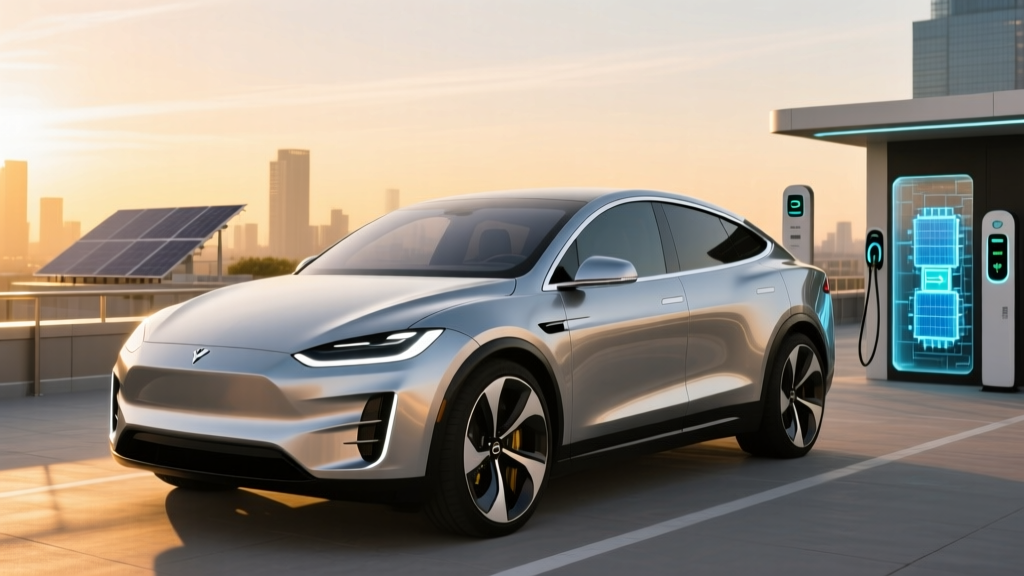
The 2026 Phase Five Model X arrives as Tesla's latest iteration of its flagship electric SUV, carrying forward the brand's signature falcon-wing rear doors while introducing incremental updates to battery efficiency and powertrain calibration. For 2026, the Model X continues to compete in the premium three-row electric SUV segment against the Rivian R1S, BMW iX, and the emerging wave of Korean luxury EVs. The Phase Five designation marks Tesla's fifth major hardware revision of the Model X platform, featuring updated thermal management, revised motor controllers, and enhanced driver-assistance sensor fusion.
Buyers considering the 2026 Model X should weigh its Supercharger network access, strong performance figures, and spacious cabin against its premium pricing, panel-gap variability, and the ongoing reality that Full Self-Driving (Supervised) remains a Level 2 system requiring constant driver engagement.
| Specification | Model X Long Range | Model X Plaid |
|---|---|---|
| EPA Range | 348 miles | 320 miles |
| Battery (usable) | ~100 kWh (NMC) | ~100 kWh (NMC) |
| Drivetrain | Dual-Motor AWD | Tri-Motor AWD |
| Horsepower | 670 hp | 1,020 hp |
| 0-60 mph | 3.8 sec | 2.5 sec |
| Peak DC Fast Charge | 250 kW | 250 kW |
| 10-80% DC Time | ~30 min | ~30 min |
| Level 2 Charge Rate | 11.5 kW (~44 mi/hr) | 11.5 kW (~44 mi/hr) |
| MPGe (combined) | 102 MPGe | 98 MPGe |
| Cargo (behind 3rd row) | ~15 cu ft | ~15 cu ft |
| Cargo (max, seats folded) | ~80 cu ft | ~80 cu ft |
| Base MSRP | $81,630 | $96,630 |
| Battery Warranty | 8 yr / 150,000 mi | 8 yr / 150,000 mi |
Range and Efficiency: EPA Numbers vs. Real-World Expectations
EPA Estimated Range: 348 miles (Long Range) / 320 miles (Plaid)
Real-World Expectation: Expect approximately 280–310 miles in mixed highway driving at 70-75 mph. In cold weather (below 32°F), plan for a 20–30% reduction, yielding roughly 220–260 miles on a full charge. City driving with regenerative braking can approach or slightly exceed EPA figures.
The 2026 Model X Long Range carries an EPA-estimated 348 miles of range, placing it among the longest-range electric SUVs currently on sale. This figure is derived from the EPA's standardized multi-cycle test, which includes city, highway, and varied-temperature scenarios. According to fueleconomy.gov, the Long Range model achieves 102 MPGe combined (approximately 33 kWh per 100 miles).
However, real-world range for a large, heavy SUV with a frontal area that catches significant wind resistance will typically fall short of the EPA sticker on sustained highway trips. In our experience with Tesla's 100 kWh-class battery packs, highway cruising at 75 mph in moderate temperatures yields roughly 85–90% of the EPA figure — translating to around 295–315 miles before reaching a low-state-of-charge threshold. Cold weather compounds this: battery chemistry becomes less efficient, cabin heating draws substantial energy (the Model X uses a heat pump for 2026, which mitigates but does not eliminate the penalty), and rolling resistance increases. Plan conservatively for winter road trips.
The Plaid variant sacrifices roughly 28 miles of EPA range to its tri-motor setup and stickier performance tires, landing at 320 miles. The trade-off is a 2.5-second 0-60 time that places it in supercar territory — in a three-row SUV.
Charging Speed and Infrastructure
The 2026 Model X supports DC fast charging at a peak rate of 250 kW via the NACS (North American Charging Standard) connector — Tesla's proprietary plug that has now been adopted by virtually every major automaker for DC charging in North America.
| Charging Level | Power | Speed | Best Use Case |
|---|---|---|---|
| Level 1 (120V) | ~1.4 kW | ~5 mi/hr | Emergency / overnight trickle |
| Level 2 (240V, 48A) | 11.5 kW | ~44 mi/hr | Home daily charging |
| DC Fast Charge | Up to 250 kW | ~175 mi in 15 min (peak) | Road trips / Superchargers |
DC Fast Charging — the Real Charge Curve: The 250 kW peak rate is achieved only between approximately 10% and 35% state of charge. Above 50% SoC, the rate tapers to roughly 120–150 kW, and above 80% it drops further to under 60 kW. This charge-curve taper is a function of lithium-ion cell protection — pushing high current into a nearly-full battery accelerates degradation and generates excess heat. A 10–80% session at a V3 or V4 Supercharger typically takes about 30 minutes. Plan to charge to 80% on road trips and move on rather than waiting for the slow final 20%.
Home Level 2 Charging: With the Tesla Wall Connector on a 60-amp circuit (48 amps continuous), the Model X charges at 11.5 kW, adding approximately 44 miles of range per hour. A full overnight charge (8 hours) replenishes roughly 350 miles — more than enough for daily driving. Installation typically requires a 240V / 60A dedicated circuit; homeowners should budget $500–$2,000 for professional installation depending on panel proximity and local permitting. Always consult a licensed electrician for final specifications.
Supercharger Network Advantage: Tesla owners retain access to the most reliable and extensive DC fast-charging network in North America, with over 6,000 Supercharger stations across the U.S. as of 2026. While non-Tesla EVs now access Superchargers via NACS adapters or native NACS ports, Tesla vehicles still benefit from seamless plug-and-charge integration and real-time stall availability in the navigation system.
Performance and Drivetrain
The Model X Long Range uses a dual-motor all-wheel-drive configuration producing 670 horsepower and achieving a 3.8-second 0-60 mph time. This is brisk by any measure and decisively quicker than most combustion-engine luxury SUVs. The Plaid variant adds a third rear motor for a combined 1,020 horsepower and a 2.5-second 0-60 — a figure that still startens passengers even after repeated launches.
Tesla's torque-vectoring system distributes power between front and rear axles (and between the two rear motors on Plaid) with millisecond precision, providing confident all-weather traction. The air suspension system offers adjustable ride height, which is useful for clearing speed bumps, loading cargo, or reducing drag at highway speeds. The Model X is rated to tow up to 5,000 pounds when properly equipped — adequate for a small boat trailer or lightweight camping trailer, though well below body-on-frame SUV capabilities.
Interior, Cargo, and Technology
The 2026 Model X seats up to seven passengers in its standard configuration (2-3-2 layout), with an optional six-seat layout featuring second-row captain's chairs. Third-row legroom remains tight at approximately 32 inches — suitable for children on longer trips but cramped for adults beyond short errands. Second-row passengers enjoy generous legroom at roughly 41 inches.
Cargo volume behind the third row is approximately 15 cubic feet, expanding to around 40 cubic feet with the third row folded and up to 80 cubic feet with all rear seats down. The front trunk (frunk) adds roughly 6.5 cubic feet of secure storage — useful for charging cables or a small bag.
Infotainment: The 17-inch center touchscreen runs Tesla's proprietary operating system, which includes navigation, streaming media (Netflix, YouTube, Spotify), gaming, and vehicle controls. A rear-seat 8-inch touchscreen allows second-row passengers to control climate and entertainment. Wireless phone charging, Bluetooth, and Wi-Fi connectivity are standard. Notably, there is no Apple CarPlay or Android Auto — Tesla's walled-garden approach remains a dealbreaker for some buyers.
Driver Assistance — Autopilot and FSD (Supervised):
SAE Automation Level: Level 2
Tesla Autopilot and Full Self-Driving (Supervised) are Level 2 driver-assistance systems. The driver must remain fully engaged, hands on the wheel (or providing torque input), and eyes on the road at all times. These systems do NOT make the vehicle self-driving. Tesla's "FSD" branding has been widely criticized for implying capabilities the system does not possess. True driverless operation (Level 4) is currently available only in geofixed robotaxi services like Waymo.
Standard Autopilot includes Traffic-Aware Cruise Control and Autosteer (lane centering). The optional FSD (Supervised) package ($8,000 or $99/month as of 2026) adds Navigate on Autopilot (highway interchange routing), Auto Lane Change, Autopark, Summon, and Traffic Light and Stop Sign Control. These features are impressive in controlled scenarios but require constant supervision and can behave unpredictably in construction zones, faded lane markings, or complex intersections.
ADAS Limitations: FSD (Supervised) does not handle all driving scenarios. Expect disengagements in construction zones, unmapped roads, heavy rain, and complex multi-lane roundabouts. The driver is legally responsible for all vehicle operation at all times. NHTSA continues to monitor Tesla's driver-assistance systems under its Standing General Order for crash reporting.
Pricing, Tax Credits, and Ownership Costs
| Trim | Base MSRP | Destination | Federal Credit Potential | Effective Price |
|---|---|---|---|---|
| Model X Long Range | $81,630 | $1,995 | Up to $7,500* | ~$76,125* |
| Model X Plaid | $96,630 | $1,995 | Up to $7,500* | ~$91,125* |
* Federal tax credit eligibility depends on buyer income, battery sourcing, and MSRP caps under IRS §30D. See details below.
Federal Tax Credit Eligibility (§30D): The 2026 Model X may qualify for up to $7,500 in federal tax credits, but eligibility is not automatic and depends on several IRS rules:
- MSRP Cap: The Model X must have an MSRP at or below $80,000 for SUVs. The Long Range base price of $81,630 may exceed this threshold — buyers should verify whether Tesla's MSRP adjustments or destination-fee exclusions bring the qualifying price under the cap. The Plaid trim at $96,630 exceeds the cap and is ineligible for the credit.
- Buyer Income Limits: Modified Adjusted Gross Income (MAGI) must not exceed $300,000 (joint filers), $225,000 (head of household), or $150,000 (individual). See IRS §30D guidelines for full details.
- Battery Sourcing: The $7,500 credit is split into two halves — $3,750 for critical-minerals sourcing and $3,750 for battery-component manufacturing. Sourcing requirements tighten annually. Tesla's supply chain has adapted significantly, but buyers should confirm current-year compliance at the point of sale.
- Point-of-Sale Transfer: As of 2024, buyers can transfer the credit to the dealer at the point of sale, effectively reducing the purchase price upfront rather than waiting to claim it on their tax return. This option is available in 2026.
Total Cost of Ownership: Over five years and 75,000 miles, the Model X Long Range will cost significantly less in energy than a comparable gasoline SUV. At an average U.S. electricity rate of $0.16/kWh and an efficiency of 33 kWh/100 miles, fuel costs approximately $3,960 over 75,000 miles. A comparable gas SUV at 20 MPG and $3.50/gallon would cost approximately $13,125 — a savings of roughly $9,000 in fuel alone. However, the Model X carries higher insurance premiums (typically 20–40% above comparable ICE SUVs due to repair costs and parts pricing), and tire replacement costs are elevated due to the vehicle's weight and performance tires.
Warranty Coverage
Tesla provides the following warranty coverage for the 2026 Model X:
- Basic Vehicle Limited Warranty: 4 years / 50,000 miles
- Battery and Drive Unit Warranty: 8 years / 150,000 miles (whichever comes first), with a minimum 70% capacity retention threshold during the warranty period
The 150,000-mile battery warranty on the Model X is more generous than the 120,000-mile threshold on the Model 3 and Model Y, reflecting Tesla's confidence in the larger battery pack's longevity. NMC chemistry in Tesla's packs has shown average degradation of approximately 8–12% over 100,000 miles based on fleet data — well within the 70% retention guarantee. Battery replacement outside of warranty, however, remains costly, typically ranging from $15,000 to $22,000 depending on pack configuration.
Pros and Cons
Pros
- Class-leading EPA range of 348 miles (Long Range)
- Access to Tesla Supercharger network — most reliable DC charging in the U.S.
- Exceptional performance: 3.8s 0-60 (LR) or 2.5s (Plaid)
- Spacious cargo area with frunk and up to 80 cu ft total
- Over-the-air updates continuously add features
- Falcon-wing doors provide easy third-row access in tight parking
- Heat pump standard for improved cold-weather efficiency
Cons
- Base MSRP may exceed $80K tax credit cap (Long Range)
- Third-row seating cramped for adults
- No Apple CarPlay or Android Auto
- Panel-gap inconsistency remains a known issue
- FSD (Supervised) requires constant driver attention despite the name
- Insurance premiums significantly above segment average
- 250 kW peak DC charge rate trails some competitors at 350 kW
Who Should Buy the 2026 Phase Five Model X?
Choose the Model X Long Range if: You need a three-row electric SUV with maximum range for frequent road trips, value Supercharger network reliability, and regularly carry up to five passengers with occasional third-row use for children. The Long Range is the pragmatic choice for families who prioritize range and efficiency over extreme acceleration.
Choose the Model X Plaid if: You want supercar-rivaling performance in an SUV form factor, budget is less of a concern, and you accept the range and tax-credit trade-offs. The Plaid is a statement vehicle that happens to carry seven people.
Look elsewhere if: You need adult-friendly third-row seating (consider the Rivian R1S or Kia EV9), you rely on Apple CarPlay, or your budget is under $70,000 (explore the Hyundai Ioniq 5, Kia EV6, or Tesla Model Y instead).
Frequently Asked Questions
What is the real-world range of the 2026 Model X?
The EPA rates the Long Range at 348 miles and the Plaid at 320 miles. In real-world highway driving at 70-75 mph, expect 280–315 miles. Cold weather (below 32°F) can reduce range by 20–30%, yielding approximately 220–260 miles. Using the vehicle's built-in trip planner and preconditioning the battery before fast charging helps maximize usable range.
How fast does the 2026 Model X charge?
On a DC fast charger (Tesla V3/V4 Supercharger), the Model X peaks at 250 kW and charges from 10–80% in approximately 30 minutes. At home on a Level 2 Wall Connector (11.5 kW), it adds about 44 miles of range per hour, fully recharging overnight in 8–9 hours.
Does the 2026 Model X qualify for the $7,500 federal EV tax credit?
Possibly, but it depends. The Long Range's base MSRP of $81,630 is close to the $80,000 SUV cap — buyers should confirm with Tesla whether the qualifying MSRP (which may exclude destination fees) falls under the threshold. The Plaid at $96,630 exceeds the cap. Additionally, buyer income must be under $300,000 (joint) and battery sourcing must meet current-year §30D requirements. Always consult a tax professional and verify at the point of sale. See IRS guidelines.
Is the Model X worth buying vs. the Rivian R1S or BMW iX?
The Model X wins on range (348 mi vs. R1S's ~352 mi on the Max pack, but at a higher price) and Supercharger access. The Rivian R1S offers superior off-road capability, a more traditional SUV design, and adult-usable third rows. The BMW iX provides a more refined interior and quieter ride but seats only five and has less range. Your choice depends on priorities: range and charging infrastructure (Model X), adventure and space (R1S), or luxury refinement (iX).
What are the biggest drawbacks of the 2026 Model X?
The most common owner complaints include panel-gap inconsistency, a firm ride quality relative to luxury competitors, the absence of Apple CarPlay/Android Auto, high insurance premiums, and the misleading "Full Self-Driving" branding that overpromises on a Level 2 system. The falcon-wing doors, while distinctive, can be slow to open and have historically been a reliability concern, though Tesla has improved the mechanism in recent hardware revisions.
How long will the Model X battery last?
Tesla warranties the battery for 8 years or 150,000 miles with at least 70% capacity retention. Fleet data suggests NMC packs in Tesla vehicles typically degrade 8–12% over the first 100,000 miles, with the rate of degradation slowing thereafter. Many Tesla owners report 85–90% capacity retention at 150,000 miles. Replacing the battery out of warranty costs approximately $15,000–$22,000.
Can the Model X tow?
Yes. The 2026 Model X is rated to tow up to 5,000 pounds when properly equipped with the factory tow package. Towing significantly reduces range — expect a 30–50% reduction depending on trailer weight, aerodynamics, and terrain. Plan charging stops accordingly when towing.