Quick Verdict: The Leaf's Place in the 2026 EV Market
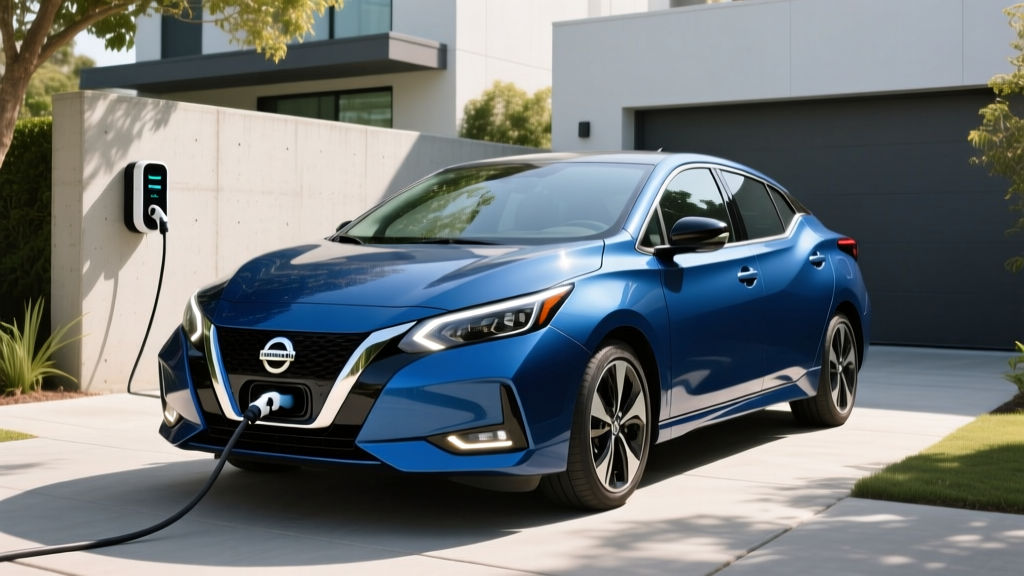
The Nissan Leaf holds a unique position as one of the original mass-market EVs, now in its final generation before Nissan transitions to newer platforms. For 2026, the Leaf continues with two battery options — a 40 kWh pack in the base S trim and a 60 kWh pack in the SV Plus — delivering between 149 and 212 miles of EPA-estimated range. Starting at $28,140 before incentives, it remains one of the most affordable new EVs available, though its CHAdeMO charging connector and passive battery thermal management place it behind competitors like the Chevrolet Bolt EV, Hyundai Kona Electric, and Tesla Model 3 in key ownership metrics.
This review examines the 2026 Nissan Leaf specs that matter most to buyers: real-world range expectations, charging speed limitations, total cost after federal and state incentives, and whether this aging platform still makes sense for your driving needs.
Range and Efficiency: EPA Estimates vs. Real-World Reality
Real-World Expectation: 125-135 miles highway (S) | 180-195 miles highway (SV Plus). Cold weather (below 32°F) reduces range by 20-30%, dropping the SV Plus to approximately 150-170 miles in winter conditions.
The Leaf's efficiency ratings tell a straightforward story. The base S trim achieves 123 MPGe combined (27 kWh/100 miles), while the SV Plus with its larger battery rates at 111 MPGe combined (30 kWh/100 miles). The slight efficiency penalty in the Plus model comes from its 160 kW motor and additional weight — the 60 kWh pack adds roughly 200 pounds compared to the 40 kWh version.
Real-world range varies significantly based on driving conditions. Highway driving at 70+ mph consumes energy 15-20% faster than the EPA combined cycle, which blends city and highway driving. The Leaf lacks a heat pump (standard on many 2026 competitors), so cabin heating in cold weather draws directly from the traction battery, compounding range loss. Owners in northern climates should plan for 150-170 miles of usable winter range from the SV Plus, not the 212-mile sticker figure.
The Leaf's passive air-cooled battery thermal management system also affects range consistency. On hot days or during repeated fast-charging sessions, the battery temperature rises, triggering power reduction to protect cell health. This "Rapidgate" phenomenon — well-documented in earlier Leaf generations — is less severe in the 2026 model but still present compared to actively cooled competitors.
Battery Chemistry, Capacity, and Longevity
The 2026 Leaf uses NMC (nickel-manganese-cobalt) lithium-ion cells manufactured by Envision AESC. The base S trim carries a 40 kWh usable capacity battery pack, while the SV Plus steps up to 60 kWh usable. These are modest capacities by 2026 standards — the Hyundai Kona Electric offers 65 kWh, and the Tesla Model 3 Standard Range provides 60 kWh with superior thermal management.
Battery degradation is a legitimate concern for Leaf buyers. Nissan's NMC chemistry and passive cooling result in faster capacity loss than actively cooled systems. Independent testing shows 2018-2023 Leaf models losing 8-12% capacity over 5 years and 60,000 miles, compared to 4-6% for Tesla's actively cooled packs. The 2026 model benefits from incremental chemistry improvements, but the fundamental thermal limitation remains.
Nissan provides an 8-year/100,000-mile battery warranty that guarantees the pack will retain at least 66% of original capacity (9 bars out of 12 on the battery health gauge). This is the minimum threshold required by federal law, and notably lower than competitors like Hyundai (8-year/100,000-mile with 70% retention) and Tesla (8-year/100,000-mile with 70% retention). If your Leaf's battery drops below 66% capacity within the warranty period, Nissan will repair or replace it — but expect a replacement to be a refurbished unit, not new.
| Specification | S Trim | SV Plus Trim |
|---|---|---|
| Battery Capacity (usable) | 40 kWh | 60 kWh |
| Battery Chemistry | NMC | NMC |
| Thermal Management | Passive air-cooled | Passive air-cooled |
| Motor Power | 110 kW (147 hp) | 160 kW (214 hp) |
| Torque | 236 lb-ft | 250 lb-ft |
| Drivetrain | FWD | FWD |
| 0-60 mph | 7.9 seconds | 6.5 seconds |
| Battery Warranty | 8 yr / 100,000 mi (66% retention) | 8 yr / 100,000 mi (66% retention) |
Charging Speed: The Leaf's Biggest Limitation
Charging infrastructure compatibility is where the 2026 Leaf falls furthest behind the competition. Nissan continues to use the CHAdeMO connector for DC fast charging, a standard that has lost the infrastructure war to CCS (Combined Charging System) and Tesla's NACS (North American Charging Standard). As of 2026, Electrify America, EVgo, and most other networks prioritize CCS and NACS connectors, leaving CHAdeMO ports with fewer available stalls and slower maintenance priority.
| Charging Level | S Trim (40 kWh) | SV Plus (60 kWh) |
|---|---|---|
| Level 1 (120V, 12A) | 1.4 kW | ~4 mi/hr | 1.4 kW | ~4 mi/hr |
| Level 2 (240V, 32A) | 6.6 kW | ~22 mi/hr | 7 hr full charge | 6.6 kW | ~22 mi/hr | 10 hr full charge |
| DC Fast Charge (CHAdeMO) | 50 kW peak | 10-80% in ~45 min | 100 kW peak | 10-80% in ~40 min |
The SV Plus's 100 kW peak charge rate sounds competitive, but real-world charging curves tell a different story. The passive thermal management system causes charge rates to taper aggressively above 80% state of charge and during repeated sessions. On a 90°F day, expect peak rates of 70-80 kW for the first 10-15 minutes, dropping to 40-50 kW as battery temperature rises. A 10-80% charge typically takes 40-50 minutes, not the theoretical 30 minutes a sustained 100 kW rate would deliver.
For home charging, the Leaf's 6.6 kW onboard charger is adequate but not class-leading. A full charge from empty takes 7 hours (S trim) or 10 hours (SV Plus) on a 240V Level 2 station. Most owners charge overnight and wake to a full battery, making this a non-issue for daily commuting. However, the Leaf lacks vehicle-to-load (V2L) capability found in competitors like the Hyundai Ioniq 5, which can power external devices from the traction battery.
The CHAdeMO connector's declining infrastructure support is a serious ownership concern. Tesla's Supercharger network — the most reliable in North America — requires an adapter for CHAdeMO vehicles, and even then, access is limited to older stalls. Buyers should verify CHAdeMO availability along their regular routes before purchasing a 2026 Leaf.
Pricing, Trims, and Federal Tax Credit Eligibility
The 2026 Nissan Leaf starts at $28,140 for the S trim and $36,540 for the SV Plus, making it one of the least expensive new EVs on the market. However, federal tax credit eligibility is complex and depends on multiple factors beyond the vehicle's MSRP.
| Trim Level | Base MSRP | As-Tested Price* | Federal Credit Eligibility |
|---|---|---|---|
| S | $28,140 | $30,500 | Up to $3,750 (partial) |
| SV Plus | $36,540 | $39,200 | Up to $3,750 (partial) |
*As-tested prices include destination charge and common options like floor mats, cargo cover, and splash guards.
Under IRS Section 30D rules effective in 2026, the Leaf qualifies for a partial $3,750 federal tax credit — not the full $7,500. The credit splits into two $3,750 components: one for battery component manufacturing in North America, and one for critical minerals sourcing from U.S. free trade agreement partners. The Leaf's Envision AESC battery cells are manufactured in Tennessee (meeting the component requirement), but the cathode materials do not fully satisfy the critical minerals sourcing threshold, limiting the credit to $3,750.
Additional eligibility requirements include:
- Buyer income caps: Modified adjusted gross income (MAGI) must not exceed $150,000 (single filers), $225,000 (head of household), or $300,000 (joint filers)
- MSRP caps: The Leaf's pricing falls well under the $55,000 sedan cap
- Point-of-sale transfer: Buyers can transfer the credit to the dealer at purchase, reducing the out-of-pocket cost immediately rather than waiting for tax filing
State and local incentives vary widely. California's Clean Vehicle Rebate Project (CVRP) offers $2,000 for income-eligible buyers, while Colorado provides a $5,000 state tax credit. Check your state's energy office or the Alternative Fuels Data Center for current programs. Consult a tax professional to verify your personal eligibility — IRS rules are subject to change and interpretation.
Interior Space, Technology, and Driver Assistance
The Leaf's interior reflects its 2017-origin platform. Front legroom measures 42.1 inches, and rear legroom is 33.5 inches — adequate for adults but tighter than the Hyundai Kona Electric (38.2 inches rear) or Chevrolet Bolt EUV (39.1 inches rear). Cargo volume behind the rear seats is 23.6 cubic feet, expanding to 30.0 cubic feet with the 60/40 split rear seats folded. The load floor is high due to the battery pack underneath, and there's no front trunk (frunk) — a missed opportunity given the compact motor.
Infotainment centers on an 8-inch touchscreen (S trim) or 12.3-inch screen (SV Plus) with wireless Apple CarPlay and Android Auto. The interface is functional but dated compared to Tesla's minimalist approach or Hyundai's latest infotainment suite. Physical buttons for climate control and volume are a welcome ergonomic choice, though the lack of wireless phone charging on the S trim is a 2026 oversight.
Nissan's ProPILOT Assist provides Level 2 driver assistance with adaptive cruise control and lane centering. This is a hands-on-wheel system — not self-driving — and requires constant driver attention. ProPILOT performs competently on highways but lacks the sophistication of GM's Super Cruise or Ford's BlueCruise, which allow hands-free operation on mapped roads. The Leaf also includes automatic emergency braking, blind-spot warning, and rear cross-traffic alert as standard equipment across all trims.
Notable technology gaps include the absence of over-the-air updates (the Leaf requires dealer visits for software updates), no vehicle-to-load capability, and limited regenerative braking customization. The "e-Pedal" mode provides aggressive regen for one-pedal driving but cannot be finely tuned like competitors' systems.
Performance and Driving Dynamics
The Leaf SV Plus delivers respectable acceleration with its 160 kW (214 hp) motor and 250 lb-ft of torque, reaching 0-60 mph in 6.5 seconds. The base S trim's 110 kW (147 hp) motor takes 7.9 seconds — adequate for merging but noticeably slower. Both trims use front-wheel drive with a single-speed reduction gear, typical for mainstream EVs.
Driving dynamics are comfortable rather than sporty. The Leaf's 3,400-3,600 pound curb weight and soft suspension tuning prioritize ride quality over handling precision. Steering is light and numb, and body roll is pronounced in corners. This is an appliance-like commuter car, not a performance EV. For comparison, the Tesla Model 3 Standard Range hits 0-60 mph in 5.8 seconds with rear-wheel drive and sharper handling, though at a $38,990 starting price.
The Leaf's turning radius of 34.4 feet and compact 176.4-inch length make it maneuverable in urban environments. Visibility is good, and the low step-in height aids accessibility. However, the lack of all-wheel-drive option limits the Leaf's appeal in snow-belt states — competitors like the Subaru Solterra and Toyota bZ4X offer AWD for similar pricing.
Who Should Buy the 2026 Nissan Leaf?
- You need the lowest-cost new EV and qualify for the $3,750 federal credit
- Your daily commute is under 100 miles round-trip with home Level 2 charging
- You rarely take road trips over 150 miles or have CHAdeMO infrastructure nearby
- You prefer physical buttons and a traditional automotive interior over minimalist tech
- You need fast-charging capability for regular road trips (look at Hyundai Kona Electric, Tesla Model 3)
- You live in a hot climate where battery thermal management matters (Tesla, Hyundai, Ford)
- You want access to Tesla's Supercharger network without adapters (any NACS-equipped 2026 model)
- You need all-wheel drive for snow or towing capability (Subaru Solterra, Toyota bZ4X)
The Leaf makes sense as a second car or dedicated commuter vehicle for budget-conscious buyers with predictable routines. Its low purchase price, comfortable ride, and adequate range for daily driving are genuine strengths. However, the CHAdeMO connector's declining infrastructure support, passive battery cooling, and aging platform make it a compromised choice for buyers who need flexibility or plan to keep the vehicle 8+ years.
Pros and Cons Summary
- Low starting price ($28,140) among new EVs
- Comfortable ride quality and easy urban maneuverability
- Physical buttons and straightforward infotainment
- Standard safety features across all trims
- Eligible for partial $3,750 federal tax credit
- CHAdeMO connector with declining charging infrastructure
- Passive battery thermal management limits fast-charging consistency
- Real-world range significantly below EPA in cold weather
- Tight rear seat and limited cargo space vs. competitors
- No over-the-air updates or vehicle-to-load capability
- Aging platform design from 2017
Frequently Asked Questions
What is the real-world range of the 2026 Nissan Leaf?
The SV Plus delivers approximately 180-195 miles in mixed highway/city driving at moderate temperatures. In cold weather (below 32°F), expect 150-170 miles due to cabin heating demands and battery chemistry limitations. The base S trim provides 125-135 miles in fair conditions, dropping to 100-115 miles in winter.
How fast does the Leaf charge at home and on DC fast chargers?
Home Level 2 charging (240V, 32A) adds about 22 miles of range per hour, fully charging the SV Plus in 10 hours. DC fast charging peaks at 100 kW (SV Plus) but tapers quickly due to passive thermal management, delivering 10-80% in 40-50 minutes. Real-world charge rates often drop to 50-70 kW after the first 15 minutes.
Does the 2026 Leaf qualify for the full $7,500 federal tax credit?
No. The Leaf qualifies for $3,750 under 2026 IRS Section 30D rules. It meets the battery component manufacturing requirement (Tennessee-built cells) but falls short on critical minerals sourcing. Eligibility also depends on buyer income (under $150K single / $300K joint) and the vehicle's MSRP (under $55K for sedans — the Leaf qualifies).
Is the Leaf worth buying vs. the Chevrolet Bolt EV or Hyundai Kona Electric?
The Leaf's primary advantage is its lower base price ($28,140 vs. $26,500 for the Bolt EV and $32,975 for the Kona Electric). However, the Bolt offers 259 miles of range, CCS charging, and a more modern platform. The Kona Electric provides 261 miles of range, CCS charging, and active battery thermal management. Unless the Leaf's price advantage is decisive, competitors offer better long-term value and charging flexibility.
How long will the Leaf's battery last before needing replacement?
Based on degradation data from 2018-2023 models, expect 8-12% capacity loss over 5 years and 60,000 miles. The battery should remain functional for 10-12 years before dropping below 70% capacity, though hot climates accelerate degradation. A replacement battery pack costs $6,500-$9,000 installed as of 2026 — a significant expense that buyers should factor into long-term ownership costs.
Can I charge the Leaf at Tesla Superchargers?
Technically yes, but with significant limitations. Tesla offers a CHAdeMO adapter, but access is restricted to older Supercharger stalls, and availability is limited. Most 2026 Tesla Superchargers use NACS connectors, and Tesla prioritizes NACS-equipped vehicles. Relying on Supercharger access with a Leaf is not practical for regular road trips.
Sources: EPA fuel economy data from fueleconomy.gov, Nissan USA specifications, IRS Section 30D guidance from irs.gov.