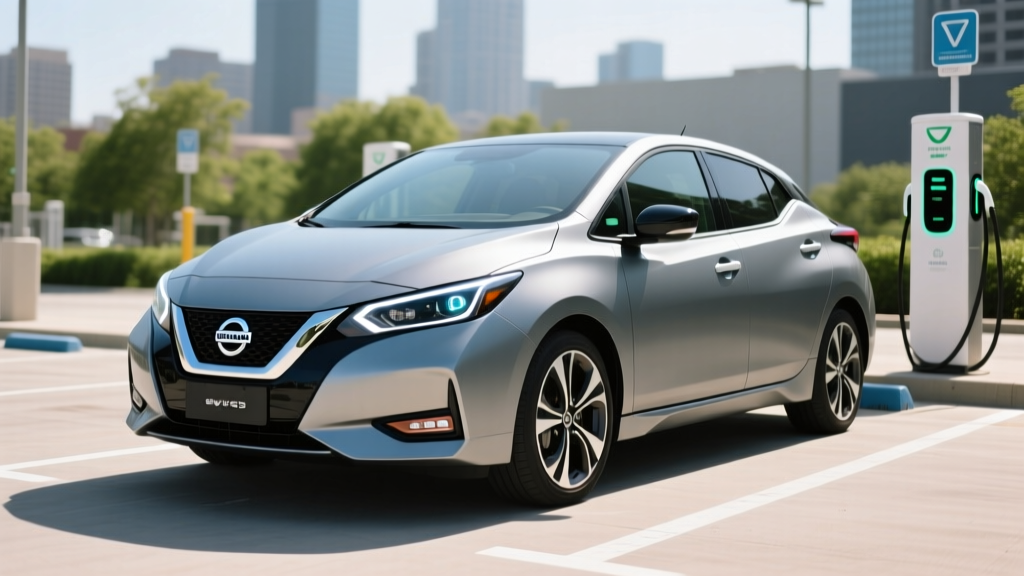
The Nissan Leaf holds a unique place in the EV landscape: the original mass-market electric car, now entering its twilight years. For 2026, the Leaf S remains the most affordable new EV you can buy from a legacy automaker — a 40 kWh, CHAdeMO-equipped hatchback aimed squarely at budget-conscious commuters who charge at home. But with the industry pivoting to NACS connectors, larger batteries, and 250+ kW charging, the question isn't whether the Leaf is a good car. It's whether it's still the right car for you.
I've spent time with the Leaf across multiple model years, and the 2026 Leaf S delivers exactly what it promises: predictable, no-drama electric commuting at a rock-bottom entry price. What it doesn't deliver is road-trip confidence, fast public charging, or the latest in battery chemistry. Let's break down every number that matters.
2026 Nissan Leaf S: Key Specifications at a Glance
| Specification | Value |
|---|---|
| EPA Estimated Range | 149 miles |
| Battery Capacity (usable) | 40 kWh (lithium-ion, NMC chemistry) |
| Motor Output | 147 hp / 236 lb-ft torque |
| Drivetrain | Front-wheel drive (single motor) |
| 0–60 mph | ~7.9 seconds |
| Max DC Fast Charge Rate | 50 kW (CHAdeMO) |
| 10–80% DC Fast Charge | ~44 minutes |
| Level 2 Onboard Charger | 6.6 kW (J1772) |
| EPA Efficiency | 111 MPGe combined (30 kWh/100 mi) |
| Cargo Volume (rear seats up) | 23.6 cu ft |
| Cargo Volume (rear seats folded) | 30.0 cu ft |
| Base MSRP (Leaf S) | $28,140 (before destination) |
| Battery Warranty | 8 years / 100,000 miles |
Range and Efficiency: What 149 EPA Miles Means in Practice
The EPA rates the 2026 Leaf S at 149 miles on a full charge. That number is the result of a 40 kWh usable battery paired with one of the most aerodynamically compromised shapes in the EV segment — the Leaf's tall hatchback profile was designed for 2011, not 2026 efficiency benchmarks.
EPA sticker: 149 miles
Expect in mixed city/highway driving (65–75°F): ~130–140 miles
Highway-only at 70+ mph: ~115–125 miles
Cold weather (below 32°F, cabin heat on): ~95–110 miles (30–35% loss typical for NMC packs without a heat pump)
Best-case city driving with regen, mild temps: Up to 155 miles
The Leaf S does not come equipped with a heat pump — it uses resistive cabin heating, which is one of the biggest range killers in cold climates. If you live in the upper Midwest or Northeast and plan to drive year-round without preconditioning in a garage, plan for 100 miles of usable range on the coldest days. That's not a dealbreaker for a 30-mile round-trip commute, but it eliminates any margin for detours.
Efficiency lands at 111 MPGe combined, or roughly 30 kWh per 100 miles. That's competitive with older EV architectures but trails the Hyundai Kona Electric (120 MPGe) and Chevrolet Bolt EV (120 MPGe) — both of which also offer more range. The Leaf's efficiency penalty comes mostly from its shape and weight distribution, not the powertrain itself.
Charging: The CHAdeMO Problem in a NACS World
Here's where the 2026 Leaf's age shows most clearly. The Leaf remains the last mainstream EV sold in the U.S. using the CHAdeMO DC fast-charging connector, while every other major automaker has adopted or is transitioning to Tesla's NACS standard.
| Charging Level | Connector | Max Power | Speed (approx.) |
|---|---|---|---|
| Level 1 (120V household) | J1772 | 1.4 kW | ~5 miles per hour |
| Level 2 (240V home/public) | J1772 | 6.6 kW | ~22 miles per hour (full charge in ~6 hours) |
| DC Fast Charge | CHAdeMO | 50 kW (peak) | 10–80% in ~44 minutes |
DC fast charging tops out at 50 kW, which was respectable in 2018 but is painfully slow by 2026 standards. For context, a Hyundai Ioniq 5 peaks at 240 kW and charges 10–80% in about 18 minutes. The Leaf will take roughly 44 minutes to go from 10% to 80% at a 50 kW CHAdeMO station — and that's assuming the station delivers its rated power, which many aging CHAdeMO stalls do not.
The bigger issue is infrastructure availability. As networks like Electrify America and EVgo invest in NACS and CCS stalls, CHAdeMO charger counts are stagnating or declining in many markets. Before buying a Leaf, check PlugShare for CHAdeMO stations along your regular routes. If your commute is entirely within home-charging range and you rarely road-trip, this may not matter. If you need public fast charging even occasionally, it's a genuine concern.
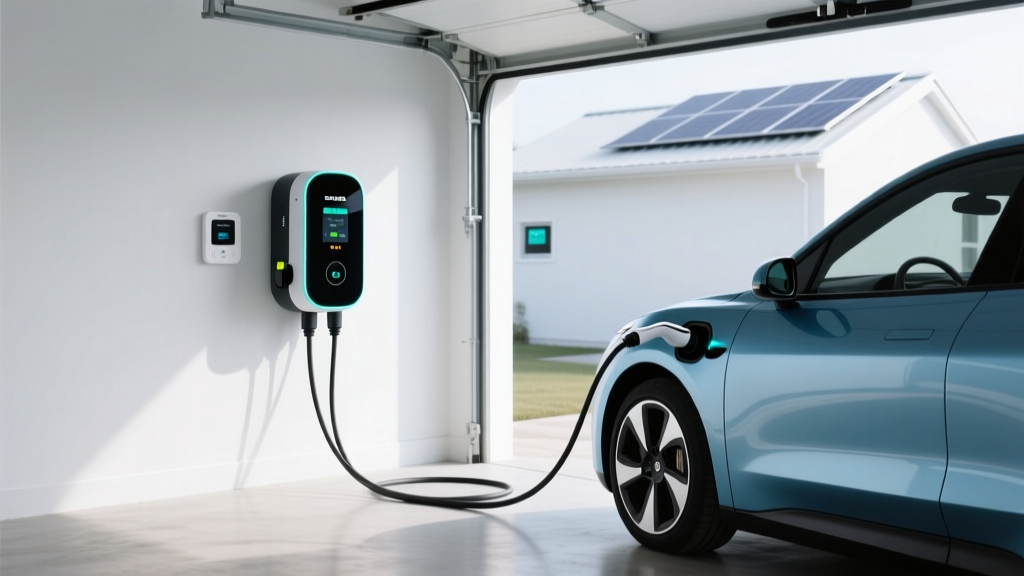
Home Level 2 charging at 6.6 kW is perfectly adequate for overnight replenishment. A full 0–100% charge takes about 6 hours, meaning you'll wake up to a full battery every morning with a standard Level 2 wallbox installation.
Performance and Driving Impressions
The Leaf S uses a single front-mounted electric motor producing 147 horsepower and 236 lb-ft of torque. That's enough for a 0–60 mph time of approximately 7.9 seconds — adequate for highway merging and city driving, but not quick by modern EV standards. The SV Plus trim bumps output to 214 hp with a larger 60 kWh battery, but the S trim keeps things modest.
Driving dynamics are competent rather than engaging. The Leaf is tuned for comfort, with soft suspension tuning that absorbs potholes well but produces noticeable body lean in corners. The steering is light and numb — fine for parking lots, less ideal on winding roads. Regenerative braking is adjustable via the e-Pedal mode, which enables near one-pedal driving in city traffic. However, the Leaf's regen doesn't bring the car to a complete hold on inclines the way some competitors do, so you'll still use the brake pedal at stoplights on hills.
Ride quality is a genuine strength. At this price point, the Leaf's cabin isolation and bump absorption outperform expectations. Nissan's Zero Gravity front seats remain some of the most comfortable in the compact EV segment for long commutes.
Pricing, Trims, and Federal Tax Credit Eligibility
| Trim | MSRP (before destination) | Key Additions |
|---|---|---|
| Leaf S (40 kWh) | $28,140 | Base model: 149-mi range, 147 hp, CHAdeMO, ProPILOT Assist |
| Leaf SV (40 kWh) | $31,140 | Upgraded wheels, fog lights, charge timer, leather-wrapped steering wheel |
| Leaf SV Plus (60 kWh) | $36,140 | 214 hp, 212-mi range, faster DC charging capability |
The Leaf S starts at $28,140 before the $1,095 destination charge, making it one of the least expensive new EVs available in the U.S. for 2026. Add destination, and you're looking at roughly $29,235 out the door before any incentives — and before dealer markups, which have been less common on the Leaf than on higher-demand EVs but still occur in some markets.
Does the 2026 Leaf S Qualify for the Federal EV Tax Credit?
This is where careful research is essential. Under current IRS §30D rules, the federal clean vehicle credit offers up to $7,500 — but eligibility depends on a matrix of requirements that the Leaf faces challenges meeting:
- MSRP cap: The Leaf S ($28,140) and SV ($31,140) fall well under the $55,000 sedan/hatchback cap. ✓
- Buyer income cap: Modified AGI must not exceed $150,000 (single), $225,000 (head of household), or $300,000 (joint). Check your situation. ✓ (if you qualify)
- Battery component manufacturing: A percentage of battery components must be manufactured or assembled in North America, with the threshold increasing annually. Nissan's battery sourcing for the U.S.-market Leaf must meet these escalating thresholds — verify current-year status on the fueleconomy.gov credit lookup.
- Critical minerals sourcing: A percentage of critical minerals must be sourced from the U.S. or free-trade-agreement countries. This requirement tightens each year and is the most common reason vehicles lose partial or full credit eligibility.
- Point-of-sale transfer: If eligible, you can transfer the credit to the dealer at purchase for an immediate price reduction — you don't need to wait until tax filing.
Bottom line: The Leaf's price and body style easily meet MSRP caps, but battery sourcing requirements are the wildcard. Check fueleconomy.gov for the definitive current-year eligibility status before relying on the credit in your budget. Consult a tax professional for your specific situation.
Interior, Cargo, and Technology
The Leaf's interior reflects its platform age. The dashboard layout is functional, materials are hard plastics in most areas, and the 8-inch touchscreen infotainment system supports Apple CarPlay and Android Auto (wired, not wireless on the S trim). There's no digital instrument cluster — the S uses a conventional analog speedometer with a small digital information display between the gauges.
Cargo space is a Leaf strength: 23.6 cubic feet behind the rear seats, expanding to 30.0 cubic feet with the 60/40 split rear seatbacks folded. That's meaningfully more than the Chevrolet Bolt EV (16.6 cu ft behind rear seats) and competitive with compact crossovers. The wide, flat load floor makes the Leaf surprisingly practical for hauling gear, groceries, or a week's worth of luggage for two.
Rear-seat legroom measures 33.5 inches — adequate for adults on shorter trips but tight for taller passengers on longer drives. Headroom is generous thanks to the tall roofline.
Driver Assistance: ProPILOT Assist
The Leaf S comes standard with Nissan's ProPILOT Assist, a Level 2 driver-assistance system combining adaptive cruise control with lane-centering steering. This is not self-driving — it's a competent highway companion that reduces fatigue on long stretches but requires your hands on the wheel and eyes on the road at all times. The system performs reliably in clear conditions but can struggle with faded lane markings and sharp curves, as with most Level 2 systems in this price range.
ProPILOT Assist is a driver-assistance system, not an autonomous driving feature. You must remain fully engaged, monitor the road, and be prepared to take over instantly. No current consumer vehicle sold in the U.S. offers Level 3 or higher autonomy for general use.
Standard safety features also include automatic emergency braking with pedestrian detection, lane departure warning, blind-spot monitoring, rear cross-traffic alert, and rear automatic braking. The Leaf has historically performed well in NHTSA crash testing.
Warranty and Battery Longevity
Nissan covers the Leaf's lithium-ion battery with an 8-year / 100,000-mile warranty against capacity loss below 9 bars (out of 12) on the battery health gauge — roughly equivalent to about 66% of original capacity. The powertrain warranty mirrors this at 8 years / 100,000 miles. The basic vehicle warranty is 3 years / 36,000 miles.
The Leaf's battery uses NMC (nickel manganese cobalt) chemistry. Unlike LFP batteries found in some newer EVs, NMC packs are more susceptible to degradation from repeated charging to 100% and exposure to extreme heat. Nissan's passive battery thermal management (air-cooled, not liquid-cooled) has historically led to faster degradation in hot climates — a known concern for Leaf owners in Arizona, Texas, and the Southeast. If you live in a hot region, this is worth factoring into long-term ownership expectations.
For a commuter car that's charged to 80% nightly and garage-parked, the battery should comfortably last the warranty period and well beyond. But the lack of active liquid thermal management remains a technical disadvantage versus competitors like the Bolt, Kona Electric, and Ioniq 5, all of which use liquid-cooled packs.
Pros, Cons, and the Verdict
✓ Pros
- Lowest MSRP of any new EV from a legacy automaker
- Generous cargo space (23.6 cu ft) for a compact hatchback
- Comfortable ride quality and excellent Zero Gravity seats
- ProPILOT Assist standard on all trims
- Adequate Level 2 home charging (6.6 kW, ~6 hours full)
- Proven, simple platform with low maintenance costs
✗ Cons
- CHAdeMO connector — declining public charging infrastructure
- 50 kW max DC fast charge is slowest in the segment
- 149-mile EPA range limits road-trip utility
- No active (liquid) battery thermal management
- No heat pump — significant cold-weather range loss
- Dated interior materials and infotainment interface
- Wired-only CarPlay/Android Auto on base S trim
Who Should Buy the 2026 Nissan Leaf S?
Choose the Leaf S if: You need the cheapest possible new EV for a predictable daily commute under 60 miles round-trip, you can charge at home every night, you rarely take road trips, and you want a practical hatchback with real cargo room.
Look elsewhere if: You need public fast charging regularly, you live in a very hot or very cold climate, you take highway road trips more than a few times a year, or you want modern infotainment and wireless connectivity.
Key competitors to cross-shop: Hyundai Kona Electric (261 mi range, CCS/NACS), Chevrolet Bolt EV/EUV (if still available in your market), and the upcoming next-generation Nissan EVs on the CMF-EV platform.
Frequently Asked Questions
What is the real-world range of the 2026 Nissan Leaf S?
Expect 130–140 miles in mixed driving during mild weather, 115–125 miles at sustained highway speeds, and as little as 95–110 miles in freezing temperatures with cabin heat. The EPA sticker says 149 miles, but plan your daily driving around 120 miles of usable range for a comfortable buffer.
How fast does the 2026 Leaf S charge?
DC fast charging peaks at 50 kW via CHAdeMO, taking about 44 minutes from 10% to 80%. Home Level 2 charging runs at 6.6 kW, replenishing a full battery in roughly 6 hours — more than adequate for overnight charging. Level 1 (standard 120V outlet) adds about 5 miles per hour, suitable for topping off but not for daily full recharges.
Does the 2026 Nissan Leaf qualify for the $7,500 federal tax credit?
Eligibility depends on current-year battery sourcing and critical minerals requirements under IRS §30D, which tighten annually. The Leaf's MSRP ($28,140) easily clears the $55,000 hatchback cap. Check fueleconomy.gov for definitive current eligibility, and consult a tax professional. If eligible, you can transfer the credit to the dealer at point of sale for an immediate price reduction.
Is the CHAdeMO connector a dealbreaker?
It depends entirely on your usage. If you charge at home 95% of the time and rarely use public fast chargers, CHAdeMO is an inconvenience but not a dealbreaker. If you rely on public DC fast charging for road trips or apartment living, the declining CHAdeMO infrastructure is a genuine problem. The industry has standardized on NACS, and CHAdeMO stations are not being expanded.
How does the Leaf S compare to the Hyundai Kona Electric?
The Kona Electric offers 261 miles of EPA range (vs. 149), a CCS/NACS-compatible charging port, faster DC charging, and a more modern interior — but typically starts several thousand dollars higher. If your budget can stretch, the Kona Electric is the more capable and future-proof EV. The Leaf S wins purely on entry price and cargo versatility.
Will Nissan discontinue the Leaf?
Nissan has confirmed the current-generation Leaf will be replaced by a new EV built on the CMF-EV platform, expected to arrive in showrooms with NACS charging, a larger battery, and competitive range. The 2026 model year may represent one of the final years for this generation. If you're considering a Leaf, factor in that this is a sunset product — which can mean strong dealer discounts but also potentially reduced long-term parts support and faster depreciation.