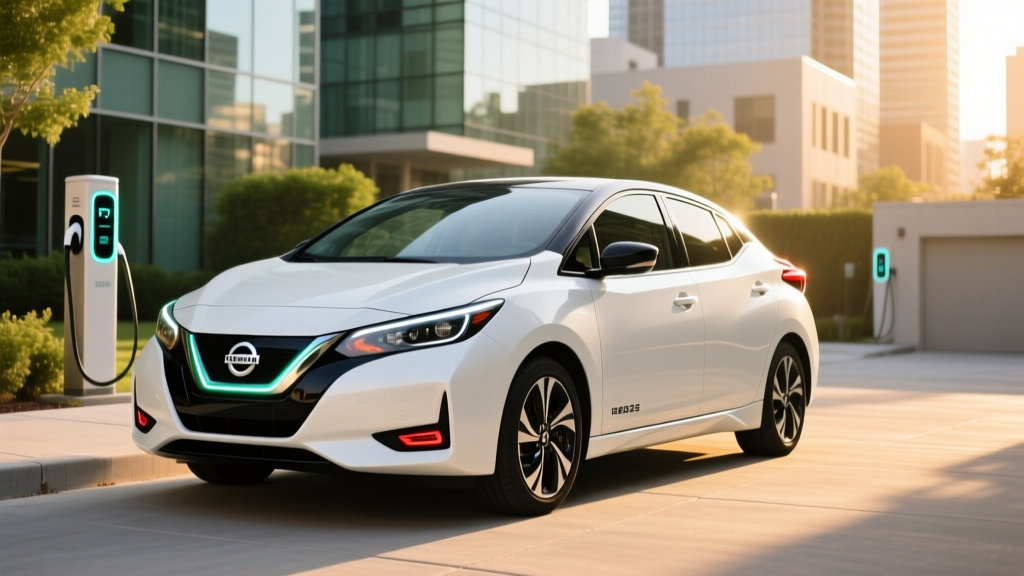
The Nissan Leaf has been the everyman's electric car since 2011, and as it enters what is widely expected to be its final generation before a crossover-based successor arrives, the value proposition has shifted almost entirely to one thing: Nissan Leaf lease deals. With aggressive manufacturer incentives, sub-$200/month lease offers in many markets, and point-of-sale federal tax credit eligibility, the 2026 Leaf remains the cheapest way to get into a new EV in America — even as its CHAdeMO connector and air-cooled battery reveal its age.
This review covers the 2026 Nissan Leaf SV PLUS and S trims with exact EPA range figures, real-world charging data, 2026 tax credit rules, and a clear-eyed look at who should — and shouldn't — sign a Leaf lease today.
2026 Nissan Leaf at a Glance: Key Specs
| Spec | Leaf S (40 kWh) | Leaf SV PLUS (62 kWh) |
|---|---|---|
| EPA Range | 149 miles | 212 miles |
| Battery (usable) | 40 kWh, NMC | 62 kWh, NMC |
| Motor Output | 110 kW (147 hp) | 160 kW (214 hp) |
| Drivetrain | FWD | FWD |
| 0–60 mph | ~7.9 sec | ~6.5 sec |
| Max DC Fast Charge | 50 kW (CHAdeMO) | 100 kW (CHAdeMO) |
| 10–80% DC Time | ~40 min | ~45 min |
| Level 2 Charge Rate | 6.6 kW (~22 mi/hr) | 6.6 kW (~22 mi/hr) |
| MPGe (combined) | 111 MPGe | 104 MPGe |
| kWh/100 mi | 30 kWh | 32 kWh |
| Cargo Volume | 23.6 cu ft (rear seats up) | 23.6 cu ft |
| Rear Legroom | 33.5 in | 33.5 in |
| Base MSRP | $29,235 | $37,285 |
| Battery Warranty | 8 yr / 100,000 mi | 8 yr / 100,000 mi |
Real-World Range: What the EPA Sticker Doesn't Tell You
EPA Estimate: 149 mi (S) / 212 mi (SV PLUS)
Real-World Expectation: 120–135 mi highway (S); 175–195 mi highway (SV PLUS). In freezing temperatures (below 32°F), expect 20–30% range reduction due to cabin heating demands and reduced battery chemistry efficiency. The Leaf lacks a heat pump, relying on resistive PTC heating, which is a significant energy draw in winter.
The Leaf's EPA-estimated range is measured under mixed city/highway conditions at moderate temperatures. In practice, the SV PLUS's 212-mile rating holds up well in city driving with frequent regenerative braking opportunities, but highway cruising at 70+ mph pushes consumption closer to 35–37 kWh/100 mi, dropping effective range to roughly 180 miles.
Cold weather is the Leaf's Achilles' heel. Without a heat pump — standard on competitors like the Hyundai Ioniq 5 and Tesla Model 3 — the Leaf's resistive heater can consume 3–5 kW continuously. On a 20°F morning commute, SV PLUS owners should budget for 155–165 miles of real range. This makes the Leaf best suited for mild-to-moderate climates or as a second car with predictable daily mileage under 100 miles.
Charging Speed: CHAdeMO in a NACS/CCS World
| Charging Level | Power / Connector | Leaf S | Leaf SV PLUS |
|---|---|---|---|
| Level 1 (120V) | 1.4 kW / J1772 | ~4 mi/hr | ~4 mi/hr |
| Level 2 (240V) | 6.6 kW / J1772 | ~22 mi/hr (full in ~7 hr) | ~22 mi/hr (full in ~10 hr) |
| DC Fast Charge | CHAdeMO | 50 kW peak | 100 kW peak |
The most critical thing to understand about the 2026 Leaf's charging is the connector situation. Nissan uses CHAdeMO for DC fast charging — a standard that has been effectively abandoned in North America. Electrify America still maintains some CHAdeMO connectors at existing stations, but new installations are overwhelmingly CCS and, increasingly, NACS (Tesla's connector, now adopted by Ford, GM, Rivian, Hyundai, and others).
The SV PLUS peaks at 100 kW on a compatible CHAdeMO charger, but that peak is short-lived. The charge curve tapers significantly above 60% State of Charge (SoC), and the entire 10–80% session takes roughly 45 minutes. By comparison, a Hyundai Ioniq 5 on a 350 kW CCS charger can achieve 10–80% in approximately 18 minutes.
The Leaf's air-cooled (passively cooled) battery pack also means that repeated fast-charging sessions in hot weather will trigger thermal protection, further reducing charge speeds. This is a known limitation of the Leaf platform since its inception and a key reason Nissan recommends against relying on DC fast charging as your primary charging method.
Home charging is where the Leaf excels for the right owner. A 6.6 kW Level 2 home charger (requiring a 30-amp, 240V circuit) fully replenishes the SV PLUS overnight in about 10 hours. For commuters driving 40–60 miles daily, a Level 2 home setup means you never need to visit a public charger.
Lease Pricing, Tax Credits & Total Cost
| Item | Leaf S | Leaf SV PLUS |
|---|---|---|
| Base MSRP | $29,235 | $37,285 |
| Destination Charge | $1,095 | $1,095 |
| Federal Tax Credit (§30D) | Up to $3,750* | Up to $3,750* |
| Effective Price After Credit | ~$26,580 | ~$34,630 |
| Typical Lease (36 mo, 10K mi/yr) | $149–$199/mo | $199–$269/mo |
| Lease Due at Signing | $2,000–$3,500 | $2,500–$3,999 |
*Federal tax credit amount depends on battery-sourcing compliance under current IRS §30D rules. The Leaf qualifies for a partial credit (typically $3,750) because it meets the critical-minerals requirement but not the full battery-component requirement. Buyer income caps apply: $150K single / $300K joint AGI. MSRP cap for sedans/hatchbacks: $55,000. The credit can be transferred to the dealer as a point-of-sale rebate, effectively reducing your lease capitalized cost.
Nissan Leaf lease deals are consistently among the most aggressive in the EV market. Nissan frequently offers lease cash incentives of $3,000–$5,000 that stack with the federal credit transfer, driving monthly payments on the S trim below $179/month in many regions. These deals are typically advertised through Nissan's dealer network and rotate monthly — check nissanusa.com for current offers in your ZIP code.
One important nuance: when you lease, the leasing company (lessor) claims the federal tax credit, not you. However, Nissan's lease offers typically pass this benefit through as a capitalized-cost reduction, which is why lease payments are so competitive. If you prefer to claim the credit yourself, you must purchase rather than lease.
Performance, Efficiency & Daily Driving
The SV PLUS's 214-hp front motor delivers brisk acceleration — 0–60 mph in roughly 6.5 seconds — that makes highway merging and city driving feel confident. The Leaf S, at 147 hp, is adequate for commuting but noticeably slower when merging onto fast-moving freeways.
Efficiency is a bright spot. The S trim achieves 111 MPGe combined (30 kWh/100 mi), and the SV PLUS lands at 104 MPGe (32 kWh/100 mi). At a national average electricity price of $0.16/kWh, fueling the SV PLUS costs roughly $5.12 per 100 miles — compared to approximately $12–$14 for a 30 MPG gas car at $3.50/gallon.
The Leaf's e-Pedal mode enables one-pedal driving with aggressive regenerative braking, though it doesn't bring the car to a complete stop-and-hold like some competitors. You'll still need the friction brake pedal for final stopping. The ProPILOT Assist system (standard on SV PLUS, available on S) provides SAE Level 2 adaptive cruise control with lane centering — competent for highway commuting but requiring continuous driver supervision.
SAE Level 2 — Not Self-Driving: ProPILOT Assist combines adaptive cruise and lane centering but requires you to keep your hands on the wheel and eyes on the road at all times. This is a driver-assistance system, not an autonomous driving system.
Interior, Cargo & Technology
The 2026 Leaf's interior is functional but dated. An 8-inch touchscreen with wireless Apple CarPlay and wired Android Auto handles infotainment duties. The digital instrument cluster provides clear range and efficiency readouts. Heated front seats and a heated steering wheel are standard on SV PLUS — important for reducing cabin heater use in winter.
Cargo space is 23.6 cubic feet behind the rear seats and 30.0 cubic feet with the 60/40 rear seat folded. That's competitive with a Honda Civic hatchback but less than crossover alternatives like the Chevrolet Bolt EUV (which offers similar pricing). Rear legroom at 33.5 inches is snug for tall passengers on longer trips.
Notable drawbacks: no front trunk (frunk), no vehicle-to-load (V2L) capability, CHAdeMO-only DC charging, and the battery thermal management system remains passive (air-cooled), which affects both fast-charging consistency and long-term degradation in hot climates.
Pros, Cons & Who Should Lease the Leaf
Pros
- Lowest lease payments of any new EV (often under $200/mo)
- Proven, reliable platform with 15+ years of real-world data
- Excellent efficiency: 104–111 MPGe combined
- Comfortable ride quality and quiet cabin at city speeds
- ProPILOT Assist is a solid Level 2 highway companion
- Strong 8-year/100,000-mile battery warranty
Cons
- CHAdeMO connector — a dying standard in North America
- No heat pump — significant winter range loss (20–30%)
- Air-cooled battery limits fast-charge consistency
- Dated interior and infotainment vs 2024+ competitors
- SV PLUS real-world highway range closer to 180 mi than 212 mi
- No frunk, no V2L, limited rear-seat space
Who Should Lease the 2026 Nissan Leaf
Lease the Leaf if: You want the cheapest possible new EV, have reliable Level 2 home charging, commute under 80 miles round-trip, live in a mild climate, and want low monthly payments with minimal commitment (36-month lease).
Look elsewhere if: You need DC fast charging for road trips, live in a very cold climate, want modern tech/interior, need cargo versatility, or plan to keep the vehicle 8+ years (lease avoids long-term battery degradation concerns).
How the Leaf Stacks Up Against Key Competitors
The Leaf's closest rivals on price are the Chevrolet Bolt EV/EUV (discontinued after 2023 but still available as remaining inventory and certified pre-owned) and the Hyundai Kona Electric. The Bolt offers 259 miles of EPA range and CCS charging at a similar price point, while the Kona Electric delivers 261 miles with CCS and a heat pump. However, neither typically matches the Leaf's lease pricing, which remains the Leaf's strongest competitive moat.
If you're cross-shopping based on monthly cost alone, the Leaf wins on lease deals. If you're evaluating total capability — range, charging infrastructure compatibility, technology — the Kona Electric and newer platforms offer meaningfully more for a modest premium.
Frequently Asked Questions
What is the real-world range of the 2026 Nissan Leaf?
The SV PLUS is EPA-rated at 212 miles, but real-world highway driving yields approximately 175–195 miles. In cold weather below freezing, expect 155–165 miles. The S trim (149 mi EPA) delivers roughly 120–135 miles on the highway and 100–115 miles in extreme cold.
How fast does the Leaf charge at home and on the road?
At home on a 240V Level 2 charger (6.6 kW), the SV PLUS adds about 22 miles of range per hour, fully charging overnight in roughly 10 hours. On DC fast charging (CHAdeMO), the SV PLUS peaks at 100 kW and reaches 10–80% in approximately 45 minutes — slower than most modern competitors. CHAdeMO chargers are increasingly rare at new public charging installations.
How much does the 2026 Leaf cost after tax credits?
The Leaf S starts at $29,235 MSRP and qualifies for a partial federal tax credit of up to $3,750 under current IRS §30D rules (subject to buyer income caps and battery-sourcing requirements). On a lease, the credit is typically applied as a capitalized-cost reduction, resulting in monthly payments of $149–$199 with $2,000–$3,500 due at signing.
Does the Nissan Leaf qualify for the full $7,500 federal EV tax credit?
No. Under current IRS §30D guidelines, the Leaf qualifies for a partial credit of $3,750 because it meets the critical-minerals sourcing requirement but not the battery-component manufacturing requirement. Eligibility also depends on your income (AGI must not exceed $150K single / $300K joint) and the vehicle's MSRP (must be under $55,000 for passenger cars). Consult a tax professional for your specific situation.
Is it worth leasing a Nissan Leaf in 2026 vs buying a newer EV?
If your priority is the lowest possible monthly payment for a new EV and you have home charging, the Leaf lease is genuinely hard to beat. You're trading charging flexibility, modern tech, and range for savings of $100–$150/month vs competitors. A 36-month lease also sidesteps long-term battery degradation concerns with the air-cooled pack. For road-trippers or those without home charging, a CCS or NACS-equipped competitor is a better investment.
What is the Leaf's battery warranty?
Nissan covers the Leaf's lithium-ion battery for 8 years or 100,000 miles against defects and excessive capacity loss (below 9 bars out of 12 on the capacity gauge). The powertrain is also covered for 8 years/100,000 miles. Nissan's long track record with the Leaf platform provides reasonable confidence in battery longevity, though air-cooled packs in hot climates historically show more degradation than liquid-cooled alternatives.