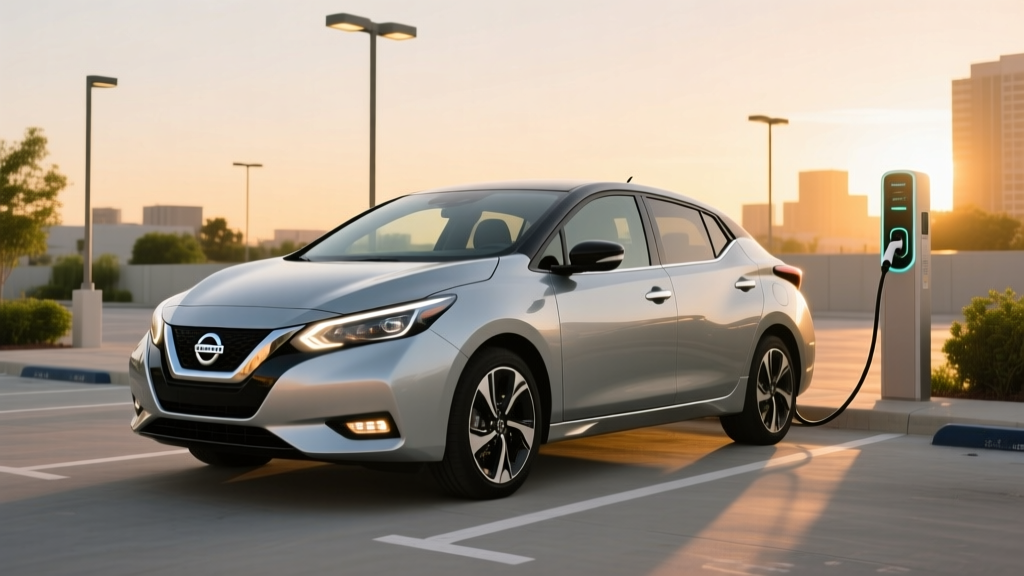
The Nissan Leaf holds a unique position in the EV market: it's one of the original mass-market electric cars, now in its twilight years as Nissan prepares its next-generation EV lineup. For 2026, the Leaf soldiers on with modest updates, but aggressive lease deals have made it one of the most affordable ways to get into a new EV — provided you understand exactly what you're getting and what you're giving up.
If you're searching for 2026 Nissan Leaf lease deals, you've likely seen monthly payments advertised well below competing EVs. Those deals are real, but they reflect a vehicle that's aging rapidly in a segment defined by 300+ mile ranges, NACS charging ports, and liquid-cooled batteries. This review gives you the exact numbers — range, charging speeds, pricing, and tax credit math — so you can decide whether a Leaf lease makes sense for your driving life.
2026 Nissan Leaf: Quick Verdict
The 2026 Nissan Leaf remains a competent, affordable commuter EV with two battery options, decent cargo space, and Nissan's ProPILOT Assist driver-aid suite. But its CHAdeMO charging connector (increasingly orphaned as the industry standardizes on NACS), passive air-cooled battery, and sub-220-mile max range place it firmly in the "budget city car" category. Lease deals as low as $199–$249/month (with $2,000–$3,000 due at signing) make it tempting for cost-conscious commuters who charge at home and rarely road-trip.
Range & Real-World Efficiency
The 2026 Leaf is offered in two battery configurations:
- Leaf S (40 kWh battery): EPA-estimated 149 miles of range
- Leaf SV Plus / SL Plus (60 kWh battery): EPA-estimated 212 miles of range
- City/suburban commuting (spring/fall): 200–220 miles achievable
- Sustained highway driving at 70+ mph: ~170–185 miles
- Cold weather (below 32°F): 150–170 miles — a 20–25% reduction is typical for the Leaf's air-cooled pack, which lacks the active thermal management that keeps competitors' batteries in their efficiency sweet spot
Efficiency on the SV Plus comes in at 114 MPGe combined (29 kWh/100 miles) according to EPA data on fueleconomy.gov. That's respectable but trails the Hyundai Kona Electric (129 MPGe) and Chevrolet Equinox EV (131 MPGe combined on higher trims).
Battery, Chemistry & Degradation
Both Leaf battery packs use NMC (nickel manganese cobalt) lithium-ion chemistry. The 40 kWh pack (Leaf S) and 60 kWh pack (SV Plus/SL Plus) are both passively air-cooled — meaning there's no liquid cooling loop to regulate battery temperature during fast charging or extreme weather operation.
This is the Leaf's most significant technical limitation in 2026. Air cooling means:
- Charge speeds throttle aggressively when the battery is warm (common after highway driving or in summer)
- Long-term degradation may be slightly higher than liquid-cooled competitors, though Nissan's warranty provides protection
- Cold-weather preconditioning is less effective — the Leaf cannot warm its battery to optimize DC fast charging in winter
Nissan provides an 8-year/100,000-mile battery capacity warranty covering defects and excessive capacity loss (below 9 bars on the 12-bar capacity gauge, roughly equivalent to ~70% state of health). The broader powertrain warranty runs 5 years/60,000 miles.
Charging Speeds: The CHAdeMO Problem
This is where prospective Leaf lessees need to pay close attention. The 2026 Leaf uses the CHAdeMO DC fast-charging connector, while virtually the entire rest of the North American market has adopted or is transitioning to Tesla's NACS standard (with CCS as a secondary standard).
| Charging Level | Power / Rate | Time / Miles Added | Connector |
|---|---|---|---|
| Level 1 (120V household) | ~1.2 kW | ~4–5 miles per hour | J1772 adapter |
| Level 2 (240V home/public) | 6.6 kW (onboard charger) | ~22–25 miles per hour; 0–100% in ~9.5 hrs (60 kWh) | J1772 |
| DC Fast Charge | Up to 100 kW peak (SV Plus); ~50 kW (S 40 kWh) | 10–80% in ~40–45 min (SV Plus, ideal conditions) | CHAdeMO |
Critical context on DC fast charging: The Leaf's 100 kW peak rate is only achievable with a cool battery and low state of charge. Real-world fast charging typically sustains 40–60 kW for much of the session due to thermal throttling — a direct consequence of the air-cooled design. On a road trip, expect 10–80% stops closer to 50–60 minutes, not the theoretical 40.
CHAdeMO infrastructure is shrinking. Electrify America, EVgo, and ChargePoint still operate CHAdeMO stalls at many locations, but new installations overwhelmingly favor NACS and CCS. If you plan to rely on public DC fast charging regularly, verify CHAdeMO availability along your routes using PlugShare or your preferred network app before committing to a lease.
Performance & Driving Dynamics
| Specification | Leaf S (40 kWh) | Leaf SV Plus / SL Plus (60 kWh) |
|---|---|---|
| Horsepower | 147 hp | 214 hp |
| Torque | 236 lb-ft | 250 lb-ft |
| Drivetrain | FWD (single motor) | FWD (single motor) |
| 0–60 mph | ~7.9 seconds | ~6.5 seconds |
| Top Speed | ~90 mph (electronically limited) | ~98 mph (electronically limited) |
The SV Plus's 214 hp and instant electric torque make it genuinely quick off the line and responsive for highway merging. The Leaf rides on a comfort-tuned suspension that absorbs urban bumps well but leans noticeably in corners. It's a commuter car, not a sport crossover, and that's fine for its intended use.
Nissan's e-Pedal feature provides aggressive regenerative braking that enables one-pedal driving in most city conditions — a feature longtime Leaf owners love. However, the Leaf does not come to a complete hold without touching the brake pedal (unlike some competitors' one-pedal implementations), so you'll still need the brake at stops.
Pricing, Lease Deals & Federal Tax Credit
| Trim | MSRP (incl. destination) | Key Features |
|---|---|---|
| S (40 kWh) | ~$29,185 | 149-mi range, 8" touchscreen, ProPILOT Assist, CHAdeMO DC charging |
| SV Plus (60 kWh) | ~$37,185 | 212-mi range, 100 kW DC charging, fog lights, leather-wrapped steering wheel |
| SL Plus (60 kWh) | ~$39,185 | Leather seats, Bose 7-speaker audio, Around View Monitor, ProPILOT Assist with Navi-link |
Understanding 2026 Nissan Leaf Lease Deals
Nissan frequently subsidizes Leaf leases to move inventory as the model nears end-of-life. Advertised deals in the $199–$269/month range (36-month term, $2,000–$3,500 due at signing) are common on the S and SV Plus trims in many markets. These are genuinely strong numbers for a new EV.
How the federal EV tax credit interacts with leases: Under IRS §30D rules, the $7,500 federal tax credit technically applies to purchased vehicles that meet MSRP caps ($55,000 for cars), buyer income limits ($150K single / $300K joint AGI), and battery sourcing/critical mineral requirements. However, when you lease a vehicle, the credit goes to the lessor (the finance company), who may or may not pass the savings through to your monthly payment. Many Nissan lease deals effectively factor in this "lease loophole" credit, which is why lease payments can be dramatically lower than purchase-equivalent monthly costs.
The Leaf's MSRP is well under the $55,000 cap for cars, so the primary gating factors for the purchase credit are your income and whether the specific vehicle's battery meets critical mineral and component sourcing thresholds as defined by current IRS guidance. Nissan has historically faced challenges meeting these sourcing requirements for the Leaf's Japan-assembled battery. Always verify credit eligibility with a tax professional before assuming you'll receive $7,500 on a purchase.
If you lease, the lessor captures any applicable commercial clean vehicle credit under §45W and typically bakes the savings into the lease rate — making the lease path potentially more advantageous than buying for this particular model.
Interior, Cargo & Technology
The Leaf's interior is functional and dated compared to newer EV competitors. The 8-inch touchscreen infotainment system supports Apple CarPlay and Android Auto (wireless on higher trims), and physical buttons for climate and volume are a welcome ergonomic choice.
| Dimension | Measurement |
|---|---|
| Front Headroom | 41.2 in |
| Rear Headroom | 37.3 in |
| Front Legroom | 42.1 in |
| Rear Legroom | 33.5 in |
| Cargo (behind rear seats) | 23.6 cu ft |
| Cargo (rear seats folded) | 38.5 cu ft |
Cargo space is generous for a compact hatchback — the 23.6 cu ft behind the rear seats exceeds the Chevrolet Bolt EV (16.6 cu ft) and rivals small crossovers. This makes the Leaf practical for grocery runs, airport trips, and weekend getaways for two.
ProPILOT Assist (standard on all 2026 trims) provides SAE Level 2 adaptive cruise control with lane centering. It works well on highways but requires hands-on-wheel engagement and does not handle complex interchanges or city driving autonomously. The SL Plus adds ProPILOT Assist with Navi-link, which adjusts speed for upcoming curves and speed limits based on navigation data.
Who Should Lease the 2026 Nissan Leaf?
- You commute 30–60 miles round-trip and charge at home nightly on Level 2
- You want the lowest monthly payment on a new EV — the subsidized lease deals are hard to beat
- You live in a mild climate where cold-weather range loss is less severe
- You rarely take road trips over 150 miles one-way
- You value hatchback cargo space and a comfortable ride over cutting-edge tech
- You need DC fast charging for regular road trips (NACS/CCS vehicles have far more infrastructure)
- You live in extreme cold or heat (the air-cooled battery struggles in both)
- You want 300+ miles of range for peace of mind
- You plan to keep the vehicle beyond a 3-year lease (long-term battery health uncertainty with air cooling)
2026 Nissan Leaf: Pros & Cons
- Aggressive lease pricing — among the cheapest new EVs monthly
- Generous hatchback cargo space (23.6 cu ft)
- Comfortable, quiet ride for daily commuting
- Standard ProPILOT Assist on every trim
- e-Pedal one-pedal driving (near-complete regen)
- Physical buttons for climate and audio
- CHAdeMO connector — shrinking public charging network
- Air-cooled battery — thermal throttling on DC fast charging
- 212-mile max range trails most competitors
- Interior design and tech feel dated vs. 2026 rivals
- FWD only — no AWD option for snow-belt buyers
- Federal purchase tax credit eligibility uncertain (sourcing rules)
- Model nearing end of production — future parts/service uncertainty
How It Compares: Leaf vs. Key Competitors
At the Leaf's lease price point, you're cross-shopping a limited field, but here's how the numbers stack up against the closest alternatives:
- Hyundai Kona Electric (2026): EPA 261 miles, CCS/NACS charging, liquid-cooled battery, 125 MPGe — a more capable EV, but lease deals typically run $50–$80/month higher
- Chevrolet Equinox EV (2026, base 2LT): EPA ~315 miles, NACS, Ultium platform — vastly more range and modern charging, but MSRP starts ~$35K and lease deals are less aggressive
- Nissan Ariya (2026): Nissan's modern electric crossover with liquid cooling, NACS adapter availability, and up to 304 miles — but leases run $400+/month
The Leaf wins purely on monthly cost. If you can stretch your budget $50–$100/month, the Kona Electric or a base Equinox EV deliver meaningfully better range, charging infrastructure access, and long-term viability.
Frequently Asked Questions
What is the real-world range of the 2026 Nissan Leaf SV Plus?
The EPA rates the SV Plus at 212 miles. In real-world mixed driving at moderate temperatures, expect 190–210 miles. Highway-only driving at 70+ mph drops that to roughly 170–185 miles. In freezing weather, plan for 150–170 miles due to the air-cooled battery's reduced efficiency in cold conditions.
Does the 2026 Nissan Leaf qualify for the $7,500 federal EV tax credit?
It depends. The Leaf's MSRP is well under the $55,000 car cap, but the IRS §30D credit also requires the buyer's AGI to fall below income limits ($150K single, $300K joint) and the vehicle's battery to meet critical mineral and component sourcing requirements. Nissan's Japan-sourced battery has faced challenges meeting these thresholds. If you lease, the lessor may capture a commercial credit and pass savings through the lease payment — often making the lease path more advantageous. Consult a tax professional and verify current eligibility at irs.gov.
How fast does the 2026 Leaf charge at home and on DC fast chargers?
On a Level 2 home charger (240V), the Leaf's 6.6 kW onboard charger adds roughly 22–25 miles per hour, fully charging the 60 kWh pack in about 9.5 hours. On DC fast chargers, the SV Plus peaks at 100 kW but typically sustains 40–60 kW due to thermal management limits, resulting in 10–80% sessions of approximately 40–60 minutes depending on battery temperature.
Is the CHAdeMO connector a dealbreaker in 2026?
It depends on your usage. If you charge at home 95% of the time and only occasionally use public DC fast chargers, CHAdeMO is manageable — Electrify America and EVgo still maintain CHAdeMO stalls at many locations. But if you road-trip frequently or rely on public fast charging, the shrinking CHAdeMO network is a legitimate concern. NACS and CCS vehicles have far broader and growing infrastructure.
Is it worth leasing a 2026 Leaf vs. buying?
For most buyers, leasing the Leaf is the smarter move in 2026. Lease deals are heavily subsidized, the commercial credit pass-through often results in lower effective cost than purchasing, and a 36-month lease means you won't own the car during the years when potential air-cooled battery degradation becomes more relevant. You also avoid the risk of owning a vehicle with an orphaned charging standard as it depreciates.
Should I get the 40 kWh Leaf S or the 60 kWh SV Plus?
The SV Plus is worth the upgrade for nearly everyone. The extra 63 miles of EPA range (212 vs. 149), faster DC charging (100 kW vs. ~50 kW), and 214 hp vs. 147 hp transform the car from a bare-bones city runabout into a genuinely capable commuter. The $8,000 MSRP gap is significant, but lease deals on the SV Plus often narrow that premium to $30–$50/month.