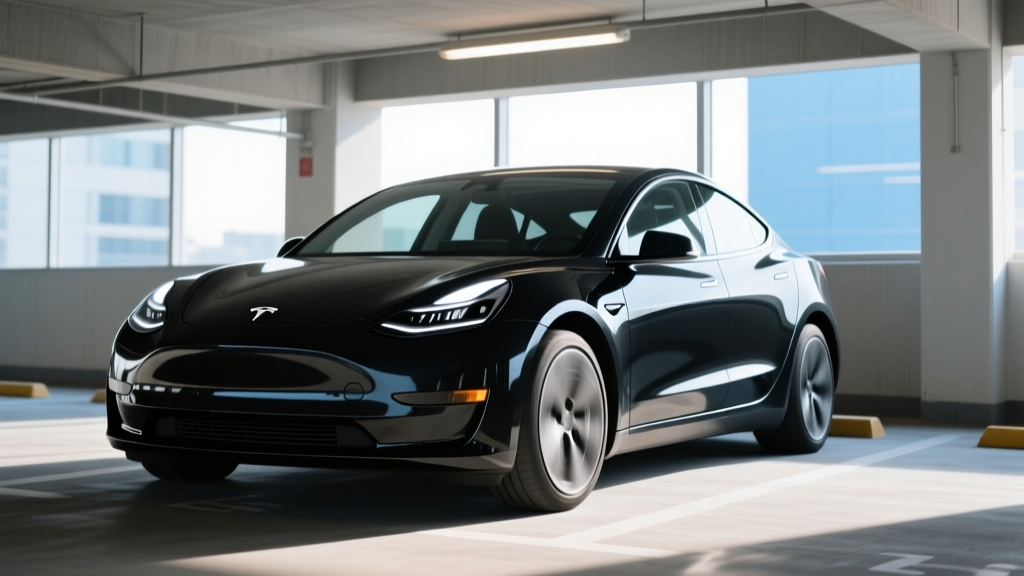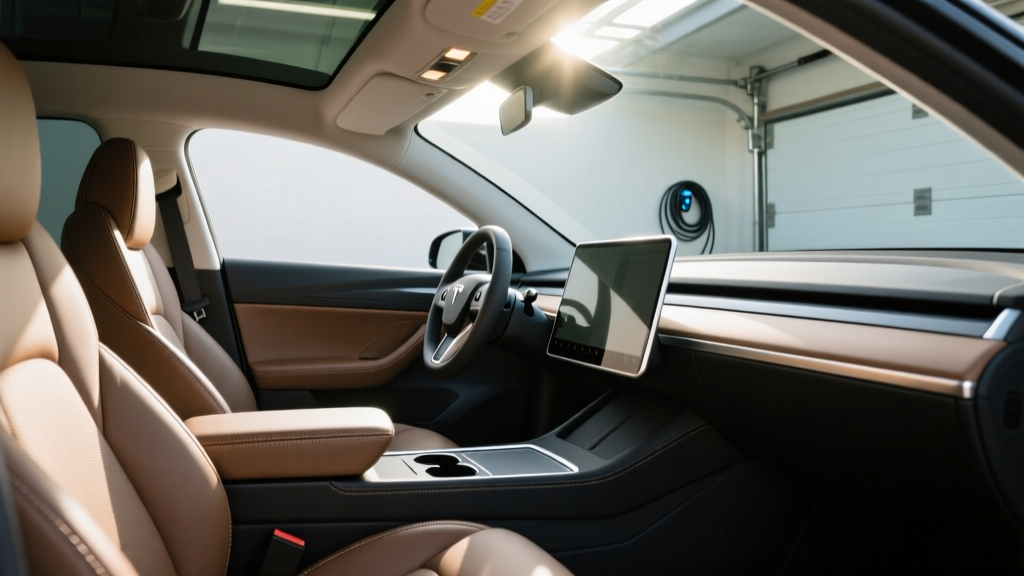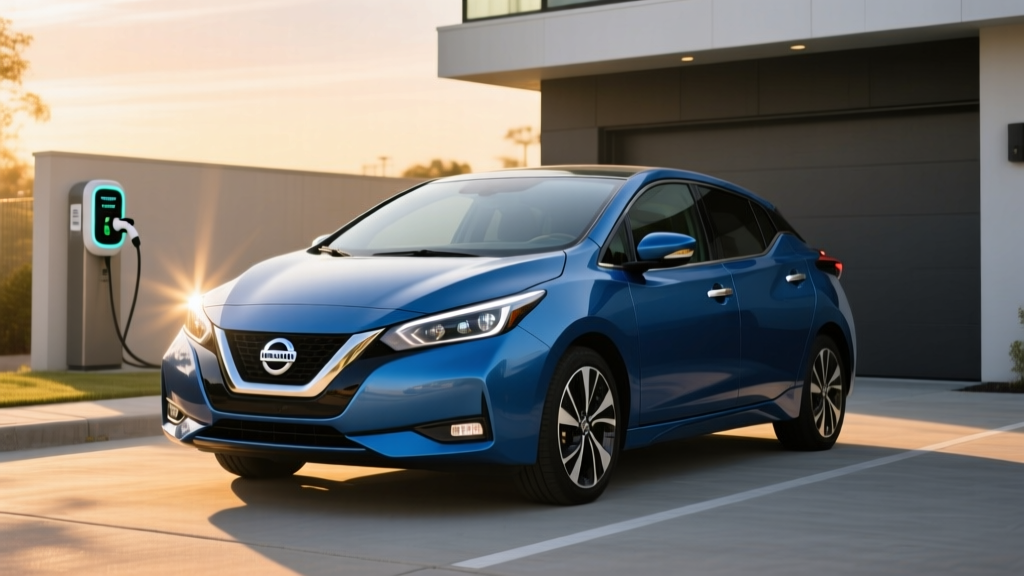
The Nissan Leaf holds a unique place in the EV market: it's the original mass-market electric car, now in its final production years with a platform that dates back to 2011. For 2026, Nissan continues to offer the Leaf in two battery configurations with aggressive lease incentives that can make it one of the cheapest ways to get into a new electric vehicle. But before you sign on the dotted line, you need to understand what you're getting — and what you're giving up — with America's aging EV pioneer.
This review dissects the 2026 Nissan Leaf's specs, real-world range, charging limitations, and whether the current Nissan Leaf lease deal makes financial sense compared to newer, more capable competitors like the Chevrolet Equinox EV, Hyundai Kona Electric, and Volvo EX30.
2026 Nissan Leaf: Quick Verdict
The 2026 Leaf remains a practical, comfortable commuter EV with a spacious hatchback body and proven reliability. The S trim with the 40 kWh battery delivers 149 miles of EPA range starting around $28,140, while the SV Plus with the 60 kWh pack pushes to 212 miles for roughly $36,190. Lease deals frequently bring monthly payments well below comparable EVs, but the Leaf's CHAdeMO charging connector, air-cooled battery, and lack of active thermal management are significant compromises in 2026.
Spec Table: 2026 Nissan Leaf at a Glance
| Specification | Leaf S (40 kWh) | Leaf SV Plus (60 kWh) |
|---|---|---|
| EPA Range | 149 miles | 212 miles |
| Battery Capacity | 40 kWh (usable) | 60 kWh (usable) |
| Battery Chemistry | NMC (laminated lithium-ion) | NMC (laminated lithium-ion) |
| Horsepower | 147 hp | 214 hp |
| Torque | 236 lb-ft | 250 lb-ft |
| 0-60 mph | ~7.9 sec | ~6.5 sec |
| Drivetrain | FWD (single motor) | FWD (single motor) |
| MPGe (Combined) | 111 MPGe | 104 MPGe |
| Efficiency | 30 kWh/100 mi | 32 kWh/100 mi |
| Max DC Fast Charge | 50 kW (CHAdeMO) | 100 kW (CHAdeMO) |
| 10-80% DC Time | ~40 min | ~45 min |
| Level 2 Charge Rate | 6.6 kW (~22 mi/hr) | 6.6 kW (~22 mi/hr) |
| Base MSRP | $28,140 | $36,190 |
| Cargo Volume | 23.6 cu ft (rear seats up) / 30.0 cu ft (folded) | 23.6 cu ft / 30.0 cu ft |
| Battery Warranty | 8 yr / 100,000 mi (capacity loss) | 8 yr / 100,000 mi |
Sources: EPA Fuel Economy, Nissan USA
Real-World Range: What the EPA Sticker Doesn't Tell You
Leaf S (40 kWh): EPA 149 mi → Expect ~125-135 mi on highway trips at 70 mph; ~105-115 mi in freezing weather with heat on.
Leaf SV Plus (60 kWh): EPA 212 mi → Expect ~180-195 mi highway; ~155-170 mi in sub-30°F conditions.
The Leaf's air-cooled battery — Nissan's passive thermal management system — is the single biggest factor separating it from modern EVs with active liquid cooling. In moderate climates (60-80°F), the Leaf performs close to its EPA estimates around town, where regenerative braking and lower speeds work in its favor.
However, sustained highway driving at 70+ mph generates significant battery heat, and without liquid cooling, the Leaf's battery management system will reduce power output to protect the cells. This "Rapidgate" phenomenon — first documented by early Leaf owners — means that on a hot summer road trip, you may experience reduced performance and slower charging speeds after the first DC fast-charge session.
Cold weather hits the Leaf harder than liquid-cooled competitors. Without a heat pump (the Leaf uses a resistive PTC heater), cabin heating in winter draws directly from the traction battery. In our experience and consistent with fueleconomy.gov data, expect a 25-35% range reduction in sustained sub-freezing temperatures. The SV Plus's 212-mile EPA rating becomes roughly 150 miles of real-world winter range — adequate for commuting, but tight for longer trips.
Charging Speed: The CHAdeMO Problem in 2026
The 2026 Leaf uses the CHAdeMO DC fast-charging connector — a standard that has been losing ground to CCS1 and, increasingly, Tesla's NACS across North America. This matters for public charging access.
| Charging Level | Power (kW) | Speed | Notes |
|---|---|---|---|
| Level 1 (120V) | 1.4 kW | ~4-5 mi/hr | Emergency/top-up only; 40+ hr full charge |
| Level 2 (240V) | 6.6 kW | ~22 mi/hr | Full charge in ~7-10 hr (overnight ideal) |
| DC Fast (CHAdeMO) | 50 kW (S) / 100 kW (SV Plus) | ~100-140 mi/hr (peak) | 10-80% in ~40-45 min; tapers above 80% |
The base Leaf S is limited to 50 kW DC fast charging — painfully slow by 2026 standards, where competitors routinely hit 150-350 kW. The SV Plus's 100 kW peak is more usable but still trails the Hyundai Kona Electric (100+ kW on CCS), Chevrolet Equinox EV (up to 150 kW), and Volkswagen ID.4 (170 kW). More importantly, CHAdeMO stations are becoming scarce. Electrify America has largely standardized on CCS1, and Tesla Superchargers require a NACS adapter that the Leaf cannot use without third-party solutions.
For home charging, the Leaf's 6.6 kW onboard charger is adequate. A full Level 2 charge from empty takes roughly 7 hours for the 40 kWh pack and 9-10 hours for the 60 kWh pack — easily accomplished overnight. The J1772 AC connector is universal, so any home Level 2 station will work.
Charging curve reality: The Leaf's DC fast-charge speed peaks only briefly. The 100 kW SV Plus typically sustains 60-80 kW from 10-40% SoC before tapering to 40 kW and below as the battery warms and fills. Expect a 10-80% session to take 40-50 minutes in practice, not the theoretical minimum.
Performance and Driving Experience
The Leaf SV Plus's 214 horsepower and 250 lb-ft of torque deliver respectable acceleration — 0-60 mph in approximately 6.5 seconds. That's quick enough for confident highway merging and around-town punch. The base S trim's 147 hp is more sedate at ~7.9 seconds to 60, but the instant electric torque still makes it feel peppy at lower speeds.
Ride quality is a genuine Leaf strength. The suspension tuning is comfortable and compliant, absorbing road imperfections better than many EV competitors that prioritize sportiness. The cabin is quiet at city speeds, though wind and tire noise become noticeable above 65 mph. The e-Pedal one-pedal driving mode provides strong regenerative braking, though it doesn't bring the car to a complete hold at zero mph like some competitors — you'll still need to use the friction brake at stops.
Handling is competent but uninspired. The Leaf's front-wheel-drive layout and 3,200-3,500 lb curb weight make it predictable and easy to drive, but it's not a car you buy for driving engagement. There's no AWD option — a notable omission for snow-belt buyers who might prefer a dual-motor competitor.
Interior, Tech, and Cargo
The Leaf's interior reflects its age. The dashboard layout is functional but dated, with a mix of soft-touch materials and hard plastics that feels a generation behind the Hyundai Kona Electric or Volvo EX30.
Infotainment: An 8-inch touchscreen with Apple CarPlay and Android Auto is standard. The SV Plus adds built-in navigation and a Bose premium audio system. The interface is straightforward but slow by modern standards, and the screen resolution shows its years.
Driver Assistance (ProPILOT Assist): The SV Plus includes Nissan's ProPILOT Assist, a Level 2 system combining adaptive cruise control with lane-centering. It works adequately on well-marked highways but requires constant driver supervision and hands-on-wheel input. It is not an autonomous or "self-driving" system — the driver remains fully responsible at all times. The base S trim includes Nissan Safety Shield 360 (automatic emergency braking, blind-spot warning, rear cross-traffic alert, lane departure warning).
Cargo and Passenger Space:
- Rear cargo: 23.6 cu ft (seats up) / 30.0 cu ft (60/40 split folded)
- Front headroom: 41.2 in | Front legroom: 42.1 in
- Rear headroom: 37.3 in | Rear legroom: 33.5 in
The hatchback shape makes the Leaf surprisingly practical for its compact footprint. The 23.6 cu ft cargo area easily swallows a week's groceries or two carry-on bags, and folding the rear seats opens up enough room for furniture or camping gear. Rear-seat legroom is adequate for adults on shorter trips but tight for tall passengers on longer rides.
Pricing, Lease Deals, and Tax Credit Eligibility
Here's where the Nissan Leaf lease deal becomes interesting. Nissan frequently offers aggressive lease incentives on the Leaf, and leasing — rather than purchasing — can unlock tax advantages that a direct purchase may not.
| Trim | Base MSRP | Typical Lease Offer* | Federal Credit (Purchase) |
|---|---|---|---|
| Leaf S (40 kWh) | $28,140 | ~$199-249/mo (36 mo, $2,500 down) | Up to $3,750† |
| Leaf SV Plus (60 kWh) | $36,190 | ~$279-349/mo (36 mo, $3,000 down) | Up to $3,750† |
*Lease offers vary by region, dealer, credit tier, and month. Check local Nissan dealer for current promotions.
Federal tax credit (§30D) details: The 2026 Nissan Leaf qualifies for a partial federal tax credit — up to $3,750 — based on current IRS §30D rules. The Leaf does not meet the full $7,500 threshold because its battery components and critical minerals do not fully satisfy the domestic-sourcing requirements that phased in through 2024-2025. The credit is available only for purchases (not leases, unless the lessor passes savings through as a capitalized-cost reduction), and buyers must meet income caps: $150,000 single / $300,000 joint / $225,000 head of household. The Leaf's MSRP is well under the $55,000 vehicle cap.
Pros, Cons, and Who Should Lease the Leaf
✅ Pros
- Very low lease payments — among the cheapest new EVs to lease
- Comfortable ride quality and quiet cabin at city speeds
- Spacious hatchback cargo area (23.6 cu ft)
- Proven long-term reliability; 8-yr/100,000-mi battery warranty
- Strong standard safety suite (Nissan Safety Shield 360)
- e-Pedal regen braking reduces brake wear
❌ Cons
- CHAdeMO connector — shrinking public charging network
- Air-cooled battery — heat buildup on highway/fast-charge
- Slow DC fast charging (50-100 kW peak) vs. 150-350 kW competitors
- No heat pump — significant winter range loss (25-35%)
- Dated interior, infotainment, and exterior design
- No AWD option; FWD only
- Only partial $3,750 federal tax credit on purchase
Who the Leaf lease deal suits best:
- Budget-focused commuters driving under 100 miles round-trip who charge at home overnight
- Mild-climate drivers in coastal or southern states where extreme cold isn't a range factor
- Second-car households needing an inexpensive electric runabout alongside a gas vehicle for road trips
- Lease-preferred buyers who want to access lower monthly payments and avoid long-term battery degradation risk
Who should skip the Leaf:
- Road-trippers who need reliable DC fast charging on highways
- Cold-climate drivers in northern states (consider the Hyundai Kona Electric, VW ID.4, or a PHEV instead)
- Tech-focused buyers who want modern infotainment and driver-assist features
- Anyone planning to keep the vehicle 5+ years (buying vs. leasing changes the calculus)
Competitor Comparison: Leaf vs. the Field
| Feature | Nissan Leaf SV Plus | Hyundai Kona Electric | Chevy Equinox EV |
|---|---|---|---|
| EPA Range | 212 mi | 261 mi | 319 mi |
| Battery | 60 kWh NMC (air-cooled) | 65 kWh NMC (liquid) | 85 kWh NMC (liquid) |
| DC Fast Charge | 100 kW CHAdeMO | 100+ kW CCS/NACS | 150 kW CCS/NACS |
| 10-80% Time | ~45 min | ~43 min | ~30 min |
| Heat Pump | No | Yes | Yes |
| Base MSRP | ~$36,190 | ~$32,975 | ~$33,600 |
| Full $7,500 Credit? | No ($3,750) | Yes (if eligible) | Yes (if eligible) |
The Leaf's primary advantage is lease pricing — Nissan's incentives can bring monthly costs below all three competitors. But on nearly every technical metric, the Kona Electric and Equinox EV are superior vehicles with modern platforms, liquid-cooled batteries, heat pumps, and CCS/NACS charging access.
Battery Warranty and Long-Term Outlook
Nissan provides an 8-year/100,000-mile battery capacity warranty that covers the Leaf's lithium-ion pack against excessive degradation (below 9 bars out of 12 on the capacity gauge, roughly equivalent to ~70-75% state of health). California and states adopting CARB emissions rules extend this to 10 years/150,000 miles.
The air-cooled battery is the Leaf's long-term Achilles' heel. Historical data from early Leaf owners shows that passive cooling accelerates degradation, especially in hot climates. First-generation Leafs (2011-2017) in Arizona and Texas commonly lost 20-30% of capacity within 5 years. The 2026 model's larger 60 kWh pack has more buffer and improved cell chemistry, but the fundamental thermal management limitation remains.
Leasing rather than buying the Leaf transfers the degradation risk to Nissan. At the end of a 36-month lease, you return the car without worrying about battery health — a meaningful advantage for this particular model.
Nissan has confirmed the Leaf will be discontinued after the 2026 model year, replaced by a next-generation crossover EV. Parts and service support should continue for years under Nissan's standard obligations, but resale values on a discontinued model are uncertain.
Frequently Asked Questions
What is the real-world range of the 2026 Nissan Leaf?
The Leaf S (40 kWh) delivers approximately 125-135 miles on highway trips and 105-115 miles in freezing weather, versus its 149-mile EPA rating. The SV Plus (60 kWh) achieves roughly 180-195 highway miles and 155-170 cold-weather miles against its 212-mile EPA estimate. City driving in moderate temperatures comes closest to the EPA numbers.
How fast does the Leaf charge at home and on the road?
At home on a 240V Level 2 charger (6.6 kW), the Leaf adds about 22 miles of range per hour — a full overnight charge takes 7-10 hours depending on battery size. On DC fast chargers, the S trim peaks at 50 kW and the SV Plus at 100 kW, but real-world 10-80% sessions take 40-50 minutes due to the charge-curve taper and thermal management limits. The CHAdeMO connector is required, and compatible public stations are declining in number.
Does the 2026 Nissan Leaf qualify for the $7,500 federal EV tax credit?
No — the Leaf qualifies for a partial credit of up to $3,750 under IRS §30D when purchased. It does not meet the full battery-sourcing and critical-mineral requirements for the complete $7,500. Buyers must also meet income caps ($150K single / $300K joint). However, leasing may unlock additional savings through the commercial credit "lease loophole" — check with your dealer for specifics.
Is the Nissan Leaf worth leasing over buying?
For the Leaf specifically, leasing is often the smarter choice. You avoid long-term battery degradation risk (a genuine concern with the air-cooled pack), benefit from lower monthly payments through Nissan's lease incentives, and may access tax credit savings via the commercial-credit pass-through. Buying makes more sense only if you plan to drive the Leaf 5+ years in a mild climate and can claim the $3,750 purchase credit.
Is the Leaf a good EV for road trips?
No — the Leaf is one of the least road-trip-friendly EVs in 2026. The CHAdeMO connector limits your public charging options, the 50-100 kW peak charge speed means long stops, and the air-cooled battery heats up during repeated fast charging, further slowing sessions. For road-trip-capable EVs, consider the Hyundai Ioniq 5, Tesla Model Y, or Chevrolet Equinox EV with CCS/NACS access and 150+ kW charging.
What happens now that Nissan is discontinuing the Leaf?
Nissan has confirmed the Leaf ends after 2026, to be replaced by a next-generation electric crossover. Existing owners will continue to receive warranty service and parts under Nissan's standard obligations. However, resale values on a discontinued model are unpredictable, and long-term CHAdeMO charging infrastructure support is uncertain. This discontinuation further supports the case for leasing rather than buying.